
First home buyer schemes can lower your entry deposit to 5% or even 2%, but they do not change the full financial picture. Monthly repayments, upfront fees, ongoing costs, and cash buffers still drive affordability. This guide walks through what schemes truly unlock, what they leave unchanged, and how to model a realistic budget before you commit.
Schemes can help, but they do not change the full picture
The Australian Government 5% Deposit Scheme now offers unlimited places, no income caps, and higher property price caps effective from October 2025. Eligible first home buyers can purchase with as little as a 5% deposit without paying Lenders Mortgage Insurance, while eligible single parents can enter with as little as 2%.
That shift is significant. According to the Reserve Bank of Australia, the median house price in Australia currently sits at $844,000, meaning a 5% deposit totals $42,200—a figure that last covered a 20% deposit back in 2002.
Meanwhile, the federal Help to Buy scheme launched in December 2025 lets the government co-own up to 40% of a new home or 30% of an existing property, reducing both your deposit and loan size. Applications are capped at 10,000 places per year, and income limits sit at $100,000 for individuals and $160,000 for joint applicants.
State-based support stacks on top. Queensland offers a $30,000 First Home Owner Grant for new builds under contracts signed before June 30, 2026, alongside stamp duty concessions on homes up to $700,000. New South Wales, Victoria, and other states provide similar relief.
Yet none of these schemes change what lenders assess when they calculate your borrowing capacity. The RBA increased the cash rate to 4.35% in May 2026, the third consecutive hike this year, driven by inflation running above the 2–3% target band. That directly lifts mortgage interest rates and shrinks the amount banks will lend you.
Affordability is not about deposit size alone. It is about whether you can service the loan month after month without stress. Schemes lower the entry barrier, but they do not eliminate the stress test. Dragan Dimovski from Buyers Agency Australia reminds every first-time buyer: securing a mortgage is only half the task—holding it safely for years is what matters.

The deposit still drives the search
Your savings determine which properties you can realistically target. According to Finder, the average Australian first home buyer needs to save $134,841 for a 20% deposit. However, 70% of first home buyers in 2025 chose not to wait for 20% and entered the market with smaller deposits, often 10% or less.
The expanded 5% Deposit Scheme means a first home buyer in Brisbane can purchase a $1 million home with a $50,000 deposit, potentially saving up to 10 years off the deposit-saving timeline and avoiding roughly $42,000 in Lenders Mortgage Insurance.
But here is what does not change: property options narrow as deposit size shrinks. A $50,000 deposit combined with a $600,000 borrowing capacity limits you to properties under $650,000. Stretching to $700,000 requires an extra $10,000 deposit plus proof you can service higher repayments.
CommBank data shows the average first home buyer is 33 years old, purchasing with an average loan of around $480,000 and entering with a deposit of around 16%—signalling buyers are finding middle ground between affordability and LMI avoidance.
State stamp duty relief can add tens of thousands to your effective deposit. In New South Wales, first home buyers pay no transfer duty on properties up to $650,000 for established homes. South Australia offers full stamp duty exemption up to $1 million under the Home Buyer Concession Scheme, income thresholds permitting.
The First Home Super Saver Scheme lets you make voluntary contributions into super and withdraw up to $50,000 towards your deposit, taxed at 15% on entry rather than your marginal rate. Combined with federal and state schemes, you can stack savings to stretch your deposit further.
But again, the deposit is the entry ticket, not the full cost. Upfront expenses run 2% to 5% of the purchase price: conveyancing, building inspections, title searches, loan application fees, prepaid insurance, and council rate adjustments. On a $700,000 home, budget an extra $14,000 to $35,000 on top of your deposit.
That is why Buyers Agency Australia starts every engagement with a comprehensive financial review. We model your deposit, borrowing capacity, and cash reserves before identifying suitable properties. That avoids the emotional trap of falling for homes you cannot realistically afford to hold.
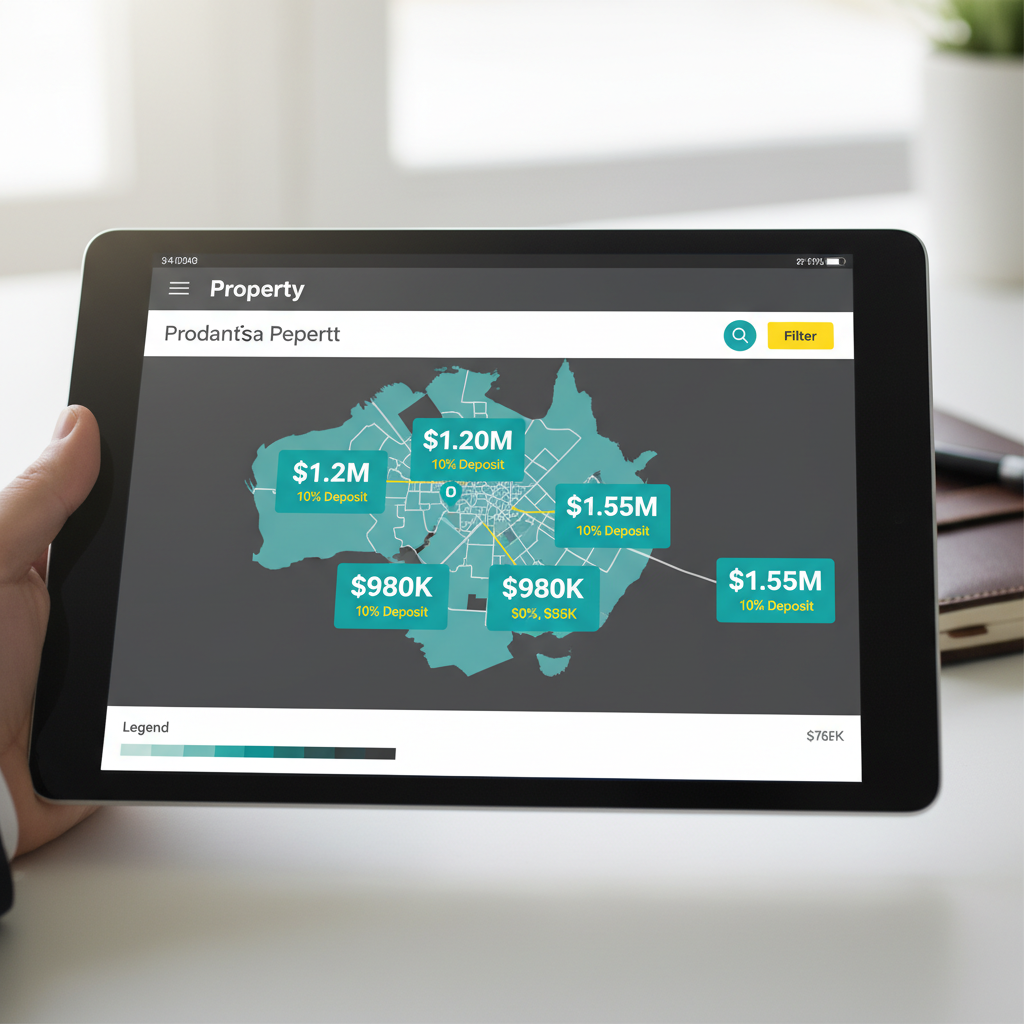
What buyers should model before they start
Affordability is not a single number. It is a combination of monthly repayments, ongoing expenses, and financial buffers. According to industry benchmarks, total housing costs—principal and interest, property taxes, homeowner's insurance, private mortgage insurance if applicable, HOA fees, and utilities—should sit under 33% to 36% of your gross monthly income.
Let's model a real scenario. You purchase a $750,000 property with a 5% deposit ($37,500) under the First Home Guarantee. You borrow $712,500 at a variable rate of 6.5% over 30 years. Monthly principal and interest repayments sit around $4,505. Add property taxes ($250/month), insurance ($150/month), maintenance reserve ($190/month), and council rates ($120/month). Total monthly housing cost: $5,215.
To keep that under 36% of gross income, you need to earn at least $14,500 per month, or $174,000 annually. If you earn $120,000, your housing cost ratio climbs to 52%—well above safe thresholds and vulnerable to rate rises, job loss, or unexpected repairs.
The RBA's May 2026 rate hike added $295 per month to repayments on a $700,000 loan compared to early 2026. That compounds over a year to $3,540 in extra cost. If your budget was tight at 4.10%, it is now underwater at 4.35%.
Housing Australia emphasizes buyers must meet ongoing obligations under the 5% Deposit Scheme, including occupying the property as an owner-occupier. If you breach these obligations, the guarantee may no longer apply, and your lender may require you to pay Lenders Mortgage Insurance or other additional costs.
Beyond monthly repayments, factor in ongoing expenses: property taxes can rise with reassessments, homeowner's insurance premiums increase annually, and maintenance and repairs typically run 1% to 3% of the home's value per year. On a $750,000 property, that is $7,500 to $22,500 annually.
New-construction homes may offer reduced maintenance costs in early years due to builder warranties, but buyers should still budget for landscaping, window treatments, and appliance upgrades not included in the base price.
Closing costs in 2026 typically run 2% to 5% of the purchase price, covering lender fees, title insurance, escrow fees, appraisal, inspection costs, prepaid taxes, and recording fees. If you are buying at auction, expect to pay 5% to 10% of the winning bid on the day, or arrange a deposit bond if your funds are tied up.
Dragan Dimovski and the team at Buyers Agency Australia model these costs for every client before property searching begins. We ensure your deposit, borrowing capacity, and cash reserves align with your 10-year financial goals—not just your ability to settle next month.
How to avoid stretching too far
The expanded First Home Guarantee scheme is injecting tens of thousands of additional buyers into the market in 2026. Research estimates this inflates prices by 3.5% to 9.9% in lower-priced areas, creating artificial demand. When government props disappear, which they always do, values correct.
You do not want to hold a $650,000 property that is really worth $580,000 in three years. Focus on locations with genuine employment drivers, infrastructure investment, and supply constraints—not subsidy-dependent outer suburbs with high investor ownership and no underlying demand.
CoreLogic and PropTrack provide market data on median prices, days on market, clearance rates, and rental yields by suburb. Cross-reference these with ABS employment data and state infrastructure pipelines to identify areas with structural growth drivers.
Stamp duty, conveyancing, building inspections, and selling costs consume 7% to 12% of your purchase price. If you sell within three years due to financial stress or life changes, you may realise a loss even if the property appreciated modestly.
Buying with a 5% deposit leaves you with minimal equity buffer. If property values dip 5% due to market correction, you are in negative equity, owing more than the home is worth. That restricts your ability to refinance, sell, or access further credit.
The Australian Prudential Regulation Authority requires lenders to assess your ability to service a loan at least 3% above the current rate. That protects you from rate shock, but it also means you may not borrow as much as you hoped.
Strategies to avoid overextension include buying below your maximum borrowing capacity, targeting properties with renovation potential to add value, and ensuring your income is stable and likely to grow. Dual-income households should model affordability based on one income in case of job loss or parental leave.
Buyers Agency Australia operates on a transparent, fixed-fee model, ensuring we negotiate hard on your behalf rather than pushing you toward higher-priced properties. Our clients typically save 3% to 7% below asking price through strategic negotiation and access to off-market opportunities.
On a $750,000 purchase, that is $22,500 to $52,500 preserved capital—funds you can redirect towards cash buffers, renovations, or your next investment. We do not sell you property; we help you buy the right property at the right price.
First home buyer schemes open doors, but they do not eliminate risk. Calm, realistic choices backed by robust financial modelling ensure you build equity safely over time rather than stretching into stress.
Frequently asked questions
Can I use the 5% Deposit Scheme and the Help to Buy Scheme together?
No, you must choose one federal scheme. However, you can stack either with state-based grants and stamp duty concessions.
Does the First Home Guarantee cover established homes or only new builds?
The Australian Government 5% Deposit Scheme covers both established and new homes. The Help to Buy Scheme offers higher government contributions for new builds.
Will my repayments change if interest rates rise after I buy?
Yes, if you hold a variable-rate mortgage, your repayments will adjust with RBA rate changes. Fixed-rate loans lock in repayments for a set period.
How much should I save for ongoing costs beyond the deposit?
Budget 1% to 3% of the property's value annually for maintenance, plus property taxes, insurance, utilities, and HOA fees if applicable.
What happens if I cannot meet the obligations under the 5% Deposit Scheme?
If you fail to occupy the property as an owner-occupier or breach other conditions, the government guarantee may be revoked, and your lender may require Lenders Mortgage Insurance or other costs.
Take the next step
First home buyer schemes lower deposit hurdles and remove LMI barriers, but they do not change the fundamentals of affordability. Your ability to service the loan, absorb rate rises, and hold the property through market cycles determines long-term success.
Buyers Agency Australia offers complimentary strategy sessions where we analyse your financial position, model your borrowing capacity, and identify specific markets and property types aligned with your objectives. No obligation, no sales pressure—just honest advice from professionals who have navigated multiple property cycles.
If you are ready to move forward with confidence and clarity, contact the team today. We work with first-home buyers who want expert guidance, property investors seeking long-term wealth, and time-poor professionals requiring end-to-end property search and negotiation.