
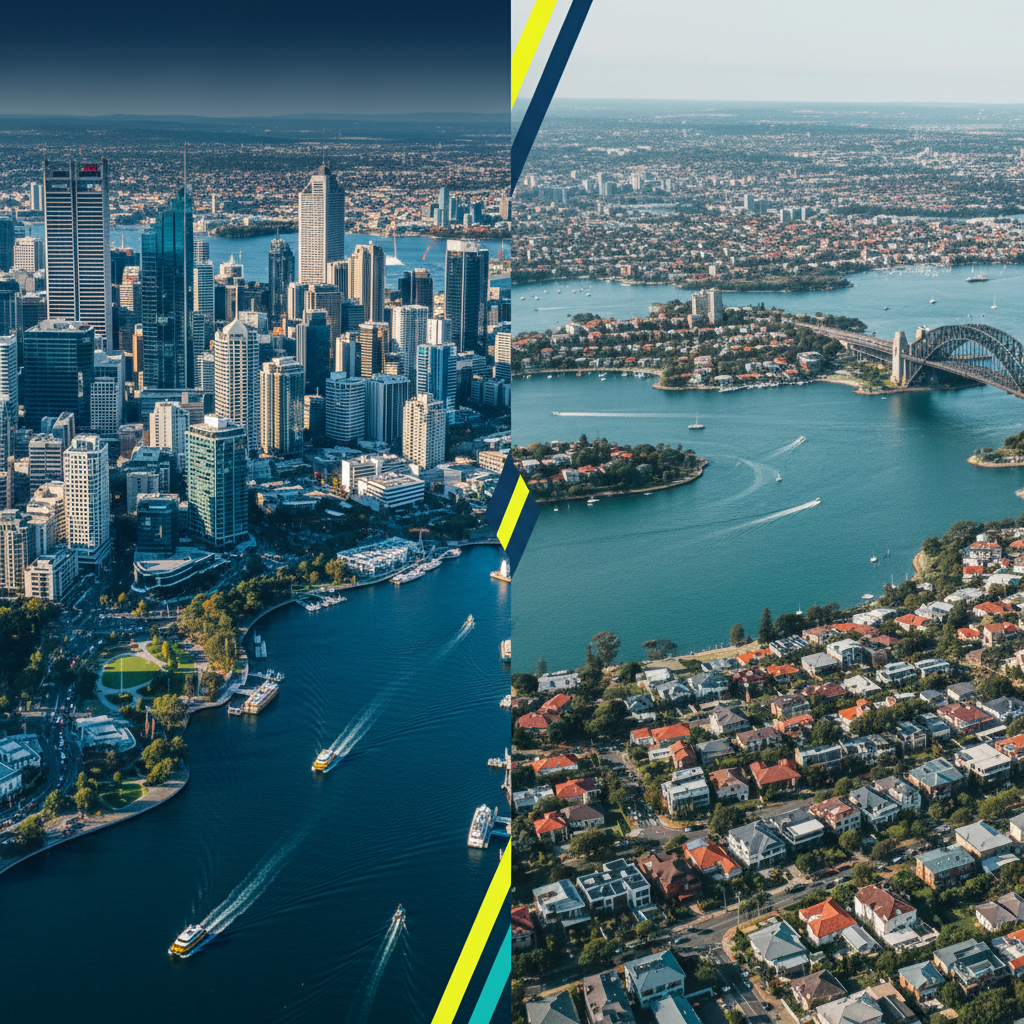
Australia's residential property market has split into two distinct performance tiers in 2026, with resource-driven cities like Perth and Brisbane posting double-digit annual gains while Sydney and Melbourne face their first meaningful price corrections in years. Understanding where capital is flowing—and why—has never been more critical for investors seeking long-term wealth creation.
What the Two-Speed Market Actually Means for Investors
We've all been there—watching property prices in one city skyrocket while another market stalls, trying to figure out which trend will last and which is just noise. The phrase "two-speed market" has become the defining feature of Australia's 2026 property landscape, but what does it actually mean for someone building a portfolio today?
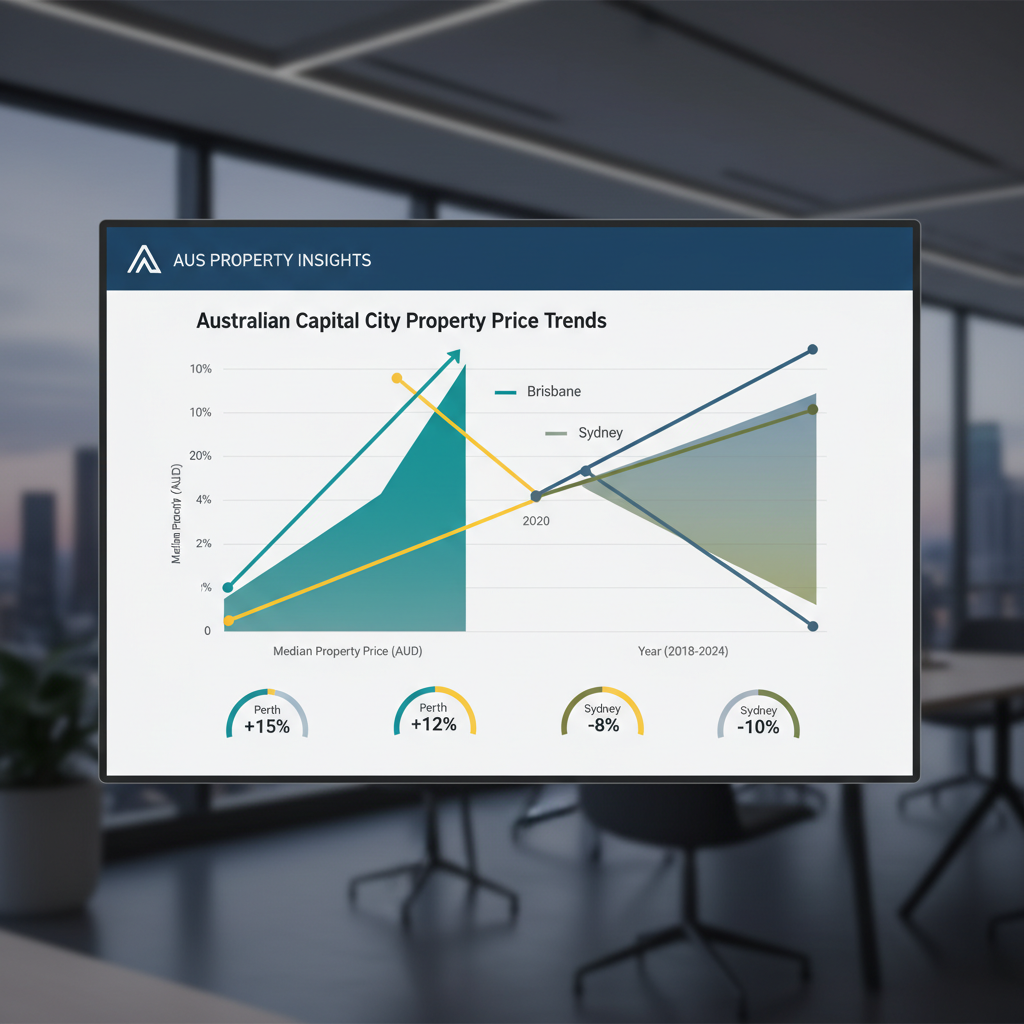
In simple terms, Australia's housing market is no longer moving as one. National dwelling values rose 0.7% in March 2026, bringing first-quarter growth to 2.1%. But that headline figure masks a dramatic divergence: Sydney home prices fell 0.2% over the first three months of the year, while Melbourne recorded a 0.6% decline. Meanwhile, Perth surged 24.3% over the year to March, with vacancy rates sitting at just 0.5%.
Let's be honest—if you're investing based on national averages in 2026, you're missing the entire story. The truth is that local supply dynamics, migration patterns, and affordability thresholds are now driving city-by-city outcomes more than interest rate settings alone.
Why Perth, Brisbane, and Adelaide Are Outperforming
Three capital cities are carrying the national growth story right now: Perth, Brisbane, and Adelaide. Each has benefited from a perfect storm of tight housing supply, strong interstate migration, and relative affordability compared to Sydney and Melbourne.
Perth dwelling values climbed 2.3% in February alone, adding more than $22,500 to the median in just 28 days. The WA capital has posted 27.1% annual growth and maintains advertised stock levels roughly 45% below the five-year average. Western Australia is also recording the fastest population growth in the country, yet construction has struggled to keep pace.
Brisbane's median dwelling value now exceeds $1.08 million, with values up 1.6% in February and 5.1% over the quarter. Properties are receiving multiple offers within a week of the first open home, and average days on market sit at just 21 days. The city's 2032 Olympic Games infrastructure pipeline continues to support long-term structural demand.
Adelaide has delivered consistent gains with less volatility than Perth or Brisbane, recording 1.3% monthly growth in February. The city remains one of the most affordable major capitals relative to income, yet vacancy rates remain tight and rental growth remains strong.
Sydney and Melbourne: Temporary Correction or Longer-Term Shift?
Australia's two largest property markets—which account for roughly 55-60% of the national market—are now exerting downward pressure on the broader index. Both cities recorded zero growth in February and are now down over the past three months.
The primary driver? Listings. Sydney's for-sale stock has surged to levels well above the five-year average, giving buyers more choice and reducing competitive pressure. Melbourne faces similar conditions. When buyers have options, fear of missing out evaporates—and with it, the urgency that drove 2025's price gains.
Higher interest rates are also playing a bigger role in these markets. Sydney's average clearance rate in March 2026 was 56%, 7% lower than March 2025. Melbourne's clearance rate was 57%, down 5% year-on-year. The Reserve Bank's back-to-back rate hikes in February and March have reduced borrowing capacity, particularly for higher-priced properties.
ANZ Research expects Sydney to finish 2026 down 0.7% and Melbourne down 1.7%, before both cities bounce back to lead a national recovery in 2027. For patient investors, this could present a rare entry opportunity in Australia's most expensive markets.
The Data Behind the Divergence: Supply, Migration, and Affordability
Three structural factors explain why some cities are booming while others cool: housing supply, population growth, and affordability constraints.
Supply Imbalances Are Driving City-by-City Performance
CommBank Senior Economist Trent Saunders notes that "in Sydney and Melbourne, construction has actually outpaced population growth," easing pressure on prices. By contrast, in Perth, Brisbane, and Adelaide, population growth has been much stronger relative to dwelling supply—driving sustained price growth even as interest rates rise.
Perth's advertised stock levels remain around 45% below the five-year average. Brisbane listings are similarly constrained. This scarcity creates fierce competition for the limited number of available homes, and "fear of missing out" still prevails in these markets.
Sydney and Melbourne, meanwhile, have a surplus of homes for sale. Buyers can be selective, reducing the need to compete aggressively at auction. This shift from seller-dominated to buyer-friendly conditions explains much of the recent price softening.
Interstate Migration Is Reshaping Demand Patterns
Population growth remains a key driver of housing demand, but the distribution of that growth has shifted dramatically. Western Australia continues to attract new residents thanks to employment opportunities, lifestyle appeal, and relative affordability compared to the eastern states. Queensland has also benefited from strong interstate migration, particularly from Sydney and Melbourne.
This migration pattern creates a self-reinforcing cycle: as more people move to Perth or Brisbane, demand for housing increases, which drives prices higher, which in turn attracts more investor capital seeking growth and yield.
Affordability Ceilings Are Creating a Two-Speed Market Within Cities
It's not just city-versus-city anymore. Within each capital, lower-priced properties are seeing stronger demand and faster price growth than higher-priced stock. Recent data shows most markets are running as a two-speed market: cheaper properties are seeing stronger demand and faster price growth than higher-priced stock.
This trend is most evident in Sydney and Melbourne, where prices in the top quartile have declined for five consecutive months. First-home buyers backed by the expanded Home Guarantee Scheme and investors seeking positive cash flow are concentrating demand in the sub-$1 million segment.
For investors, this means even in slower markets, opportunities exist at the affordable end if you know where to look.
What This Means for Investment Strategy in 2026
If you're buying investment property in 2026, your strategy needs to account for the two-speed dynamic—or you risk chasing yesterday's growth.
Yield Versus Growth: Which Markets Deliver What
Perth offers gross rental yields of around 4.3% on houses and 5.9% on units, with vacancy at 0.5%. If you're seeking both capital growth and strong cash flow, Perth remains the standout. However, affordability constraints are beginning to emerge as the median house price now sits around $845,000.
Brisbane delivers strong capital growth with ANZ forecasting 9.7% in 2026, though that pace is expected to moderate to 1.4% in 2027 as affordability ceilings bite. For investors with a medium-term horizon, Brisbane's Olympic infrastructure pipeline provides a structural growth story through to 2032.
Melbourne and Sydney offer lower capital growth in the short term but may present entry opportunities for investors willing to wait. CBRE estimates that investment returns for apartments in Sydney and Melbourne should outpace historic levels over the next three years as rental growth accelerates and supply constraints tighten.
The Risk of Buying at the Wrong Point in the Cycle
Here's the thing about two-speed markets: timing matters more than ever. Buying into Perth or Brisbane now means paying a premium for growth that has already occurred. Perth's growth cycle only kicked off in mid-to-late 2022, suggesting it's still relatively early, but rapid gains could moderate as affordability constraints spread.
Conversely, buying into Sydney or Melbourne during a correction requires conviction that the long-term fundamentals remain intact—which they do. Both cities benefit from established infrastructure, strong employment markets, and deep liquidity. Patient investors who can weather short-term volatility may be rewarded in 2027 and beyond.
Why Off-Market Properties Matter More in a Two-Speed Market
In tight markets like Perth and Brisbane, competition for listed properties is intense. Properties in Brisbane are selling within one week of the first open home, with buyers often facing multiple-offer scenarios. In this environment, access to off-market deals becomes a genuine competitive advantage.
Off-market properties allow investors to negotiate without competing against a dozen other bidders. They also tend to be marketed by vendors who value discretion and speed over maximum price extraction—creating room for strategic buyers to secure value.
For Sydney and Melbourne, where listings are abundant, the advantage shifts toward negotiation power and due diligence. Buyers have time to inspect thoroughly, compare options, and negotiate terms without the pressure of auction day.

How Buyers Agency Australia Identifies Opportunity in a Two-Speed Market
Navigating a two-speed market requires local expertise, data-driven analysis, and an understanding of where each city sits in its growth cycle. Buyers Agency Australia has built its reputation by helping investors identify high-growth opportunities before they become obvious to the broader market.
Founder Dragan Dimovski brings more than 20 years of property investment experience and manages a successful personal portfolio himself. His approach centers on 10-year portfolio modeling, ensuring every acquisition contributes to long-term wealth creation rather than short-term speculation.
In a two-speed market, that long-term focus becomes even more critical. While headlines chase the latest boom suburb, Buyers Agency Australia focuses on fundamentals: supply constraints, infrastructure investment, rental demand, and gentrification potential. This methodology has helped clients build diversified portfolios across all major Australian capital cities, positioning them to capture growth regardless of which market is leading at any given time.
The firm's transparent, fixed-fee model eliminates conflicts of interest. Unlike commission-based agents who profit from higher sale prices, Buyers Agency Australia's fee structure ensures recommendations are aligned with client outcomes—not vendor interests. For time-poor professionals and interstate investors, this alignment matters.
Whether you're targeting Perth's tight rental market, Brisbane's Olympic infrastructure boom, or opportunistic entry points in Sydney and Melbourne, working with a buyers advocate who understands the nuances of each city's cycle can mean the difference between buying at the peak and securing value at the right point.
Book a free strategy session with Buyers Agency Australia to map out your 10-year portfolio plan and identify where the two-speed market is creating opportunity for long-term investors.

Frequently Asked Questions
What does "two-speed property market" mean?
A two-speed property market refers to divergent performance across Australian capital cities, with Perth, Brisbane, and Adelaide posting strong growth while Sydney and Melbourne experience price declines or stagnation.
Which Australian cities are growing fastest in 2026?
Perth leads with 24.3% annual growth, followed by Brisbane at 9.7% and Adelaide with consistent gains above the national average, driven by tight supply and strong migration.
Are Sydney and Melbourne property prices falling?
Yes, Sydney prices fell 0.2% in Q1 2026 and Melbourne dropped 0.6%, driven by higher listings, rising interest rates, and reduced buyer competition at the upper end.
Is Perth property overvalued in 2026?
Perth remains relatively affordable compared to Sydney, though rapid price growth and constrained supply mean investors should assess yield and long-term fundamentals carefully before buying at current price points.
Should I invest in a booming or cooling market?
Both offer opportunities: booming markets like Perth deliver strong cash flow and capital growth; cooling markets like Sydney may present entry points for patient investors targeting long-term appreciation and gentrification.
Conclusion: How to Position Your Portfolio for a Two-Speed Market
Australia's property market has entered a phase where national averages tell you almost nothing about where to invest. Understanding which cities are benefiting from supply constraints, migration inflows, and affordability advantages—and which are correcting after years of outsized gains—is now the core skill for successful property investment.
The two-speed dynamic isn't a temporary blip. It reflects structural shifts in population distribution, housing construction, and buyer behavior that will shape the market for years to come. Investors who adapt their strategy to these realities—targeting high-growth corridors, accessing off-market deals, and building diversified portfolios across multiple cities—will be best positioned to build long-term wealth.
For those seeking expert guidance through this complexity, Buyers Agency Australia offers data-driven property search, transparent fixed-fee pricing, and 10-year portfolio modeling to ensure every acquisition moves you closer to financial independence. Whether you're chasing yield in Perth, infrastructure-driven growth in Brisbane, or opportunistic value in Sydney, the right strategy starts with understanding where each market sits in its cycle—and acting accordingly.