
With the RBA cash rate sitting at 4.35% after three consecutive hikes in 2026, and major tax changes to negative gearing and the CGT discount set to reshape the investment landscape from July 2027, the cost of getting your next purchase wrong has never been higher. This guide breaks down the six most common property investment mistakes Australian investors are making right now, and what a disciplined, strategy-led approach looks like instead.
Introduction: Why 2026 is Exposing Costly Investor Mistakes
Most investors do not lose money on a single bad decision. They lose it across a series of small, compounding errors made under pressure, without a clear plan, or with incomplete information.
The current environment is making those errors far more expensive. The Reserve Bank of Australia raised the cash rate to 4.35% in May 2026, the third hike of the year, unwinding every cut delivered in 2025. At the same time, the May 2026 federal Budget announced that from 1 July 2027, negative gearing on established residential properties purchased after Budget night will be restricted, and the flat 50% CGT discount will be replaced by cost base indexation with a 30% minimum tax on capital gains.
Those two forces combined, tighter borrowing conditions and a changing tax framework, mean that investors who buy without a clear property investment strategy are taking on significantly more risk than they realise. Add to that the noise from social media, headline-chasing media coverage, and a crowded market where competition for quality assets remains fierce, and the conditions for costly mistakes are very much in place.
At Buyers Agency Australia, the team works with investors across the country who arrive having already made one or more of the mistakes outlined below. The pattern is consistent, and most of these errors are entirely avoidable with the right process.
Mistake 1: Buying Without a Clear Investment Strategy
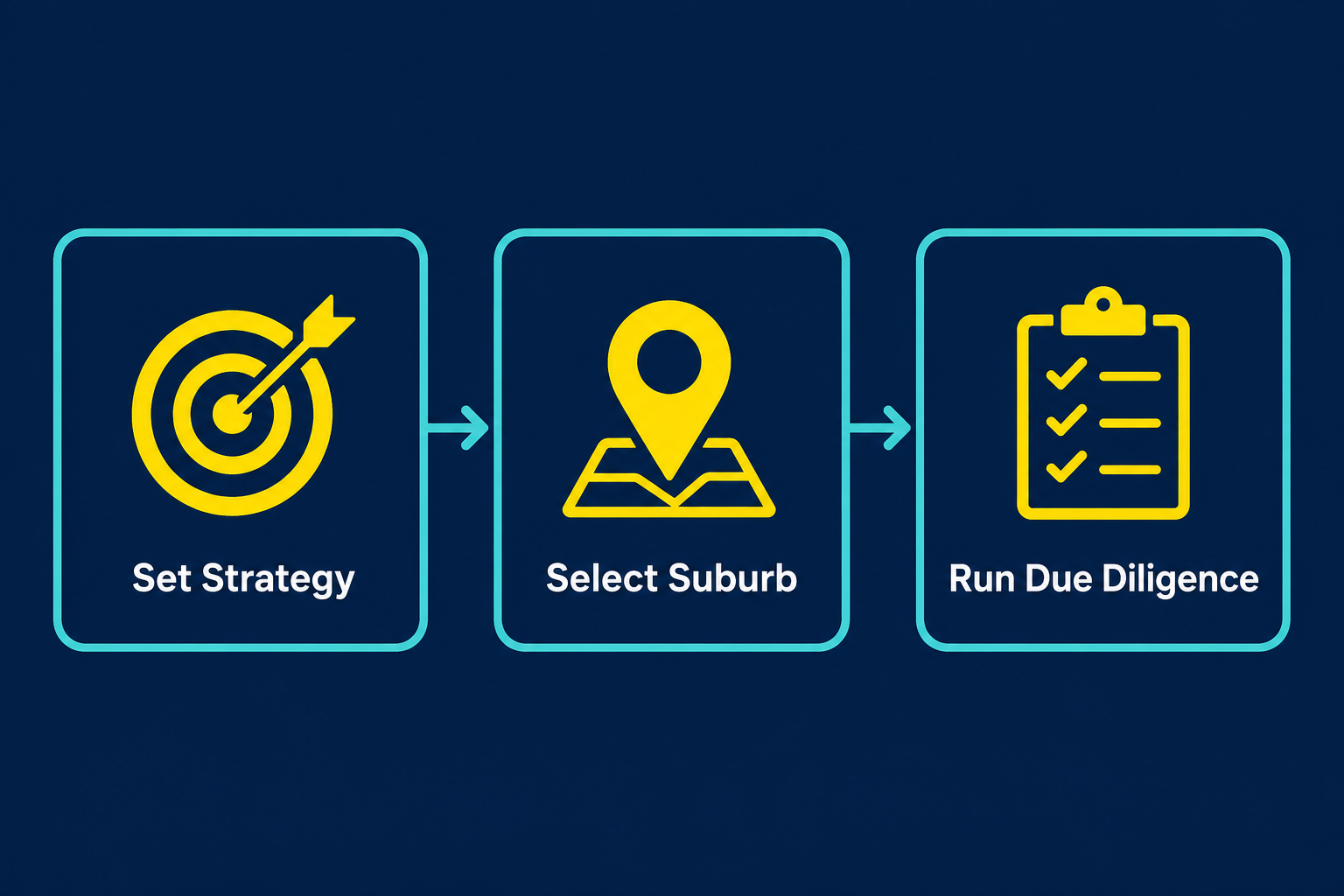
Asking "where should I buy?" before asking "what am I actually trying to achieve?" is one of the most common ways investors end up with the wrong asset in the wrong location.
A genuine property investment strategy answers specific questions before you search: Are you prioritising capital growth or rental yield? What is your target hold period? How does this purchase fit within your broader property portfolio? What does your borrowing capacity look like across the next two purchases, not just this one?
Without those answers, decisions get made reactively. Investors buy what is available and justifiable rather than what genuinely fits their goals. According to ATO data, 71% of Australian rental property owners own just one property and only 6% own three or more. That stagnation rarely reflects bad markets. It usually reflects the absence of a forward-looking plan.
Strategy also determines how well a purchase survives changing conditions. In a rising-rate environment, an investor without clear cash flow targets or a defined exit pathway is far more exposed than one who modelled their position conservatively before signing contracts.
Mistake 2: Letting Emotion Override Due Diligence
Fear of missing out remains one of the most reliable ways to overpay for an average asset. When a property feels exciting, when the open home is busy, when the agent signals competition, the emotional response can override objective assessment very quickly.
This is compounded in 2026 by headline-driven investing. As one analysis of common location mistakes put it, by the time a suburb appears in a "top 10" list, the opportunity has typically already peaked and competition has pushed prices to reflect it.
Emotional traps to watch for include:
- Skipping or rushing the building and pest inspection to avoid losing the property
- Accepting vendor narrative about rental demand without checking vacancy data independently
- Bidding beyond your pre-set limit at auction because the atmosphere made it feel reasonable
- Anchoring on recent comparable sales without accounting for the quality difference between properties
Disciplined investors set their maximum price and their non-negotiable due diligence checklist before they inspect. The process should not change based on how a property makes you feel on the day.
Mistake 3: Overlooking Total Purchase Costs and Holding Costs
A property purchase has two financial realities: the price on the contract, and the total cost of ownership. Conflating the two is a reliable way to find yourself in a worse cash flow position than you planned.
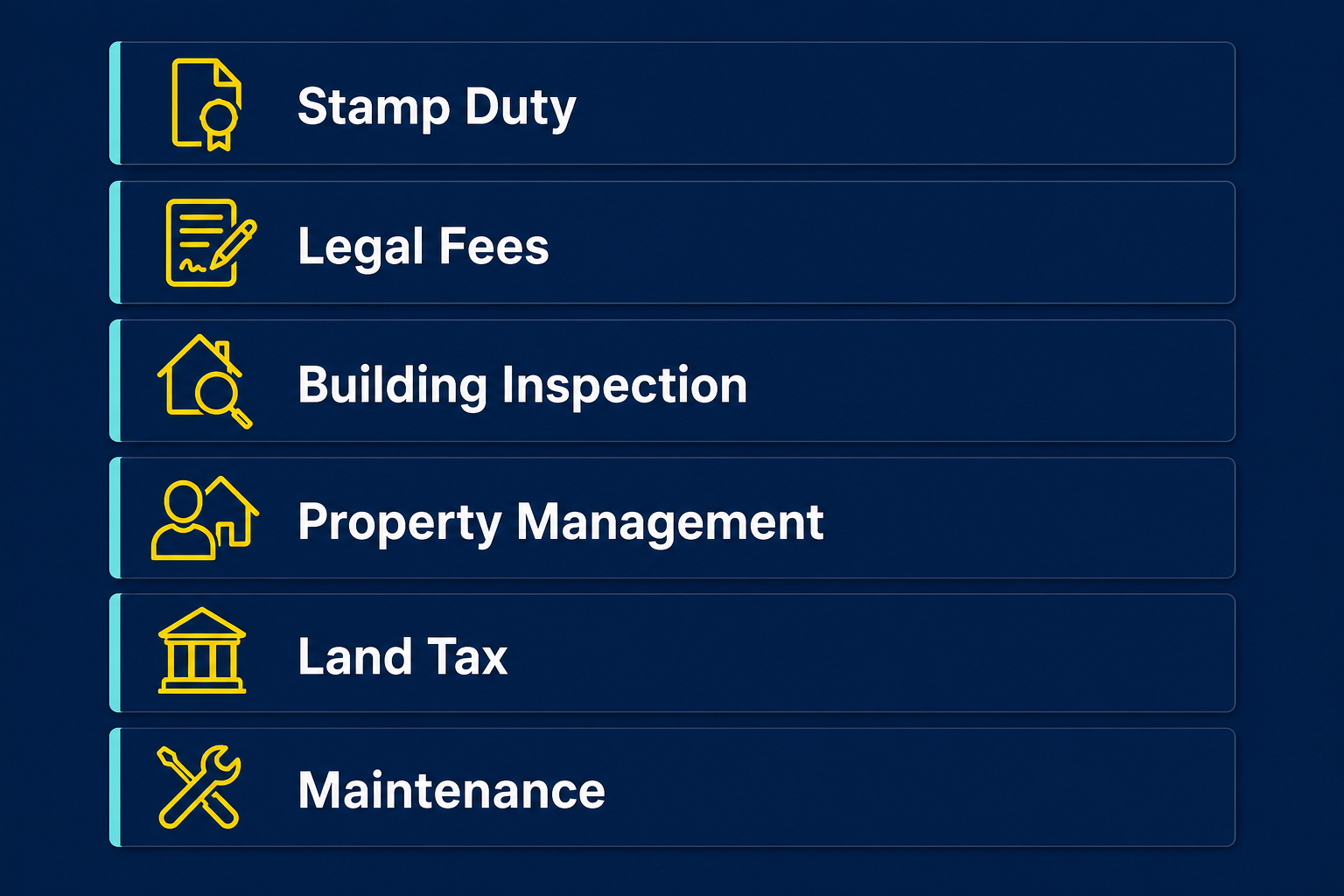
On the acquisition side, stamp duty alone on a $750,000 investment purchase in NSW sits at approximately $28,000, and that amount must be paid in cash at settlement, separate from your deposit. Stamp duty is not immediately tax-deductible; it forms part of your CGT cost base and is only relevant at sale. Conveyancing fees, building inspections, and loan establishment costs add further to your real buy-in figure. You can review state-specific stamp duty obligations through the relevant state revenue offices before budgeting.
On the holding side, investors frequently underestimate:
- Land tax once portfolio thresholds are reached (which can add $2,000 to $15,000 per year)
- Property management fees, typically 7% to 10% of gross rent
- Vacancy periods between tenancies
- Maintenance and capital works that accelerate with older stock
- Insurance, council rates, and body corporate levies where applicable
With the RBA's tightening cycle adding direct pressure to debt servicing costs, investors who modelled cash flow at lower rate assumptions in 2024 or early 2025 may now be carrying properties that are materially more expensive to hold than originally projected. Building a cash buffer of at least three months of holding costs before settlement is a minimum safeguard, not a luxury.
| Cost Category | Typical Range | Notes |
|---|---|---|
| Stamp duty | 3% to 5% of purchase price | State-dependent; not immediately deductible |
| Conveyancing and legal fees | $1,500 to $3,000 | Both purchase and sale |
| Building and pest inspection | $500 to $1,200 | Essential; never optional |
| Property management fees | 7% to 10% of gross rent | Plus letting fee and admin costs |
| Land tax (annual) | $2,000 to $15,000+ | Triggered once portfolio thresholds are exceeded |
| Maintenance and capital works | 1% of value per year (estimate) | Higher for older stock |
Mistake 4: Choosing the Wrong Suburb or Property Type
Suburb selection is where many investors feel confident and where the most costly errors actually occur. The problem is rarely a lack of information; it is how that information is interpreted and which signals are prioritised.
Chasing headlines is the most visible version of this mistake. By the time a market appears in a widely shared growth list, the smart money has often already moved. Competition has increased, yields have compressed, and the asymmetric opportunity that made the location attractive has largely been absorbed into pricing.
The deeper issue is buying a property that does not match your actual investment objectives. A high-yield regional asset may suit an investor focused on cash flow but create problems for someone who needs strong capital growth to unlock equity for their next purchase. An inner-city apartment may seem prestigious but carry body corporate risk, oversupply exposure, or land content that limits long-term growth.
PropTrack data from Q1 2025 shows the median weekly advertised rent across Australia increased 5% year-on-year to $630 per week, but that national average masks significant variation between markets. Choosing a suburb based on broad market commentary rather than suburb-level vacancy rates, population growth drivers, infrastructure pipeline, and comparable sales trends is a structural error that no amount of property management can fix.
For a framework on finding markets that actually fit your goals, the top investment hotspots and strategies for 2026 offer useful context on where conditions are currently supportive.
Mistake 5: Missing Key Due Diligence Checks
Due diligence is not a box-ticking exercise. It is the process through which a competent investor confirms that a property is what it appears to be, at the price being asked, in the context of the suburb it sits in.
Common gaps in the due diligence process include:
- Building and pest inspection: Skipping or downgrading to a cheaper report to save time or money. A structural defect or active termite presence can cost tens of thousands of dollars after settlement.
- Strata records: For units and townhouses, not reviewing the owners corporation minutes for disputes, pending special levies, or deferred maintenance.
- Rental demand verification: Accepting an agent's rental appraisal without checking current comparable listings, days on market for rentals, and the suburb's vacancy rate independently.
- Comparable sales analysis: Relying on the vendor's evidence rather than running your own assessment of recent sales for genuinely comparable stock.
- Exit flexibility: Not considering who buys this type of property in this suburb, what conditions trigger demand, and whether the asset has resale appeal beyond investors.
For investors who want a structured approach before committing, a thorough property investment due diligence checklist covers the key steps across each stage of the purchase process.
Mistake 6: Relying on Outdated or One-Size-Fits-All Advice
Property investment advice that served investors well in 2019 or even 2022 may be actively misleading in 2026. Market conditions, tax policy, lending rules, and suburb dynamics change materially over time, and generic rules of thumb rarely account for the specifics of a current market or an individual investor's situation.
Examples of outdated thinking that create real risk in 2026:
- Assuming negative gearing will remain unchanged as a wealth-building tool, without accounting for the restrictions taking effect from July 2027
- Applying gross yield benchmarks from a lower-rate environment without stress-testing cash flow at current mortgage rates
- Treating a blanket "buy houses over apartments" rule as reliable, when in some markets units are outperforming on both yield and growth due to affordability constraints
- Following suburb recommendations from advisors who have not actively transacted in that market in the past 12 to 18 months
The Australian property market does not move as a single entity. Sydney and Melbourne have both recorded value declines from their recent peaks, while other markets remain more resilient. Advice needs to reflect actual current conditions, not a generalised view of what property typically does over the long run.
For context on how 2026 conditions are reshaping the investor opportunity set, the Australian property market investor guide for 2026 is a useful reference point.
How a Strategy-Led Buyers Agent Can Help Reduce These Mistakes
Each of the six mistakes above shares a common thread: they are most likely to occur when an investor is making decisions alone, under time pressure, and without independent, buyer-side expertise.
A qualified buyers agent works exclusively for the purchaser. Their role is to keep the acquisition aligned to a defined strategy, conduct rigorous due diligence, assess suburb fundamentals without the conflict of a sales commission, and negotiate from a position of market knowledge rather than emotion.
Dragan Dimovski, the principal of Buyers Agency Australia, brings over 20 years of experience to every client engagement. The team's approach begins with a strategy session before any property search begins, ensuring every purchase decision is filtered through the investor's actual goals, cash flow tolerance, and portfolio trajectory.
Beyond the research and negotiation process, buyers agents with strong market networks can also access off-market properties that never reach the public portals. This matters in a competitive market where the best-located, tightly held assets rarely sit on Domain or realestate.com.au for long. If you want to understand what that process looks like in practice, the team's guide on how off-market properties are sourced in Australia is worth reading.
For investors who have already experienced one or more of the mistakes in this guide, the how first-time investors avoid costly mistakes using a buyers agent resource outlines how professional representation changes outcomes at every stage of the process.
If you are ready to book a free strategy session and map out a more disciplined approach to your next purchase, the team can work through your goals, current market conditions, and the options available to you before you commit to anything.

Checklist: What to Review Before You Buy in 2026
Before exchanging contracts on any investment property, run through the following:
Strategy and goals
- Is this purchase aligned to a written investment strategy?
- Does the asset type and location match your growth or yield objective?
- Have you modelled this purchase alongside your next one, not in isolation?
Finance readiness
- Is your pre-approval current and stress-tested at a rate at least 3% above your current variable rate?
- Have you budgeted for stamp duty, legal fees, inspections, and a cash buffer, separate from your deposit?
- Do you understand how this purchase affects your borrowing capacity for the next property?
Suburb and asset selection
- Have you reviewed suburb-level vacancy rates, not just national rental data?
- Have you assessed comparable sales from the past 90 days for genuinely similar stock?
- Does the property type have broad buyer appeal at resale, beyond investor demand?
Due diligence
- Has a qualified building and pest inspector assessed the property?
- For strata properties, have you reviewed the owners corporation minutes and a depreciation schedule?
- Have you obtained your own rental appraisal, independent of the selling agent?
Negotiation and settlement
- Do you have a maximum price set before the first offer or auction, based on comparable evidence?
- Have you factored in any conditions, subject to finance, subject to inspection, that protect your position?
- Is there a clear timeline from exchange to settlement that aligns with your finance approval expiry?
| Review Area | Key Question | Done? |
|---|---|---|
| Strategy | Does this fit my portfolio plan? | ☐ |
| Finance | Am I stress-tested at 4.35%+? | ☐ |
| Suburb | Have I checked vacancy and comparable sales? | ☐ |
| Building | Is the inspection report from a qualified professional? | ☐ |
| Costs | Have I modelled stamp duty, land tax, and holding costs? | ☐ |
| Exit | Who buys this asset and under what conditions? | ☐ |
Conclusion: Smarter Buying Starts Before the Search Begins
The most effective way to avoid costly property investment mistakes is not to buy faster or with more confidence. It is to establish a clear strategy, apply a consistent due diligence process, and make decisions based on current data rather than market narrative.
In 2026, with the RBA cash rate elevated, tax policy shifting, and market performance diverging sharply between cities and suburbs, the gap between a well-researched purchase and a reactive one is wider than it has been for years. Investors who take the time to understand the 2026 market environment and build their process around evidence rather than emotion are the ones who will build lasting portfolio value.
Buyers Agency Australia supports investors at every stage, from initial strategy through to settlement, with a national footprint and the depth of market knowledge to find and negotiate the right assets in the right locations.
If you want a second opinion on your current approach, or you are preparing for your next purchase, map out your next property move with the team in a free strategy session. To get started directly, contact the team and outline where you are in your investment journey.
Frequently Asked Questions
What is the biggest property investment mistake Australians make in 2026?
Buying without a clear investment strategy is the most common and costly mistake, as it leads to mismatched assets, poor suburb selection, and weak cash flow outcomes.
How do interest rate rises affect property investors in 2026?
The RBA's cash rate of 4.35% increases debt servicing costs, reduces borrowing capacity, and can turn a marginally positive cash flow position into a negative one if not modelled carefully.
What due diligence should I do before buying an investment property?
At minimum: a building and pest inspection, independent rental appraisal, comparable sales review, strata records check for units, and a full cost model covering stamp duty, land tax, and holding costs.
How does a buyers agent help investors avoid mistakes?
A buyers agent provides independent research, suburb analysis, and negotiation support without a sales commission conflict, keeping every decision aligned to your strategy rather than the vendor's interest.
Will the 2026 tax changes affect my investment property decision?
Yes. From 1 July 2027, negative gearing on established properties purchased after 12 May 2026 will be restricted, and the 50% CGT discount replaced. Understanding these changes is essential to any current purchase decision.