A $700,000 investment budget can still access Australian residential property in 2026, but the outcome depends on whether that figure includes purchase costs, how much is borrowed and which market you choose. According to the Australian Bureau of Statistics, the national mean dwelling price fell 0.7 per cent to approximately $1.1 million in the June quarter 2026, confirming that $700,000 sits well below the national average. That gap does not make the budget unworkable; it means property type, location and strategy carry more weight than the number alone.
Many investors arrive at a $700,000 figure and immediately ask "where should I buy?" The more useful question is what the next property needs to do for the portfolio, because location follows strategy, not the other way around.
The budget figure itself also needs clarity before market research begins. Whether $700,000 represents your total available cash and equity, your purchase-price ceiling, or your borrowing limit changes every calculation that follows.
This article is general information only. It does not constitute personal financial, tax, lending, legal or investment advice. Readers should consult a lender or mortgage broker, licensed conveyancer or solicitor, accountant or tax adviser, financial adviser, and relevant building and pest inspectors before making any property decision. Buyers Agency Australia's investment approach is to define strategy before shortlisting markets, and this guide follows that same sequence.
How much of the $700,000 budget is available for the property itself?
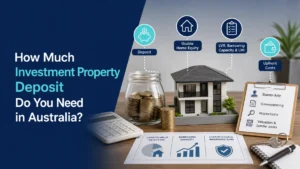
This is the question most generic budget guides skip. If $700,000 is your total acquisition budget, your maximum purchase price will be below $700,000 because transfer duty and other transaction costs must be funded separately. ASIC MoneySmart confirms that upfront costs regularly include transfer duty, conveyancing, legal fees, building and pest inspections, finance costs, lenders mortgage insurance where applicable, and an ongoing cash reserve.
Scenario one: $700,000 is the total cash and equity budget
When $700,000 is everything available, transaction costs come off the top. The table below uses approximate illustrative ranges, not guaranteed figures. Verify the exact duty payable for your state, contract date, property type and purchaser status using the relevant state revenue office calculator before signing anything.
| Cost item | Approximate range (illustrative only) |
|---|---|
| Transfer duty (investor, no concession) | $15,700 to $37,000 depending on state |
| Conveyancing and legal fees | $1,500 to $3,500 |
| Building and pest inspection | $500 to $1,200 |
| Loan application or establishment fees | $0 to $800 |
| Lenders mortgage insurance (if LVR above 80%) | Variable; can be significant |
| Cash reserve for vacancies and repairs | $5,000 to $15,000 recommended |
| Estimated total acquisition costs | $23,000 to $57,500+ |
State duty varies substantially. For a $700,000 investment property, indicative investor duty is broadly around $24,500 in Queensland, around $27,900 in New South Wales and around $37,000 in Victoria, based on publicly available 2026-27 rate schedules from the Queensland Revenue Office and Revenue NSW. Always use the State Revenue Office Victoria calculator and the Government of Western Australia transfer duty assessment tool for your exact circumstances. These figures are illustrative only and can differ based on contract date, structure and purchaser status.
The practical result: a $700,000 total budget may translate to a purchase price of roughly $643,000 to $677,000 after costs in most states, before the cash reserve.
Scenario two: $700,000 is the purchase-price limit
When $700,000 is the maximum property price, transaction costs must be funded separately. The deposit, loan-to-value ratio, lenders mortgage insurance and lender serviceability assessment are all independent questions. No published figure can confirm that a $700,000 purchase is affordable for a given investor without individual assessment. A lender or mortgage broker should model this for your specific income, debts and expense profile.
What changes when you use borrowing or existing equity?
Investors who draw on usable equity from an existing property may be able to fund the deposit and transaction costs without additional cash savings. However, the lender still assesses overall serviceability, total debt levels, LVR and borrowing capacity. Using equity to buy an investment property does not remove those tests; it changes where the funds come from. Speak to a lender or mortgage broker for a personalised assessment before assuming equity makes the purchase straightforward.
If you would like to book a free strategy session to clarify how your budget translates into a workable acquisition brief, that is a productive first step before comparing markets.
What can a $700,000 investment budget realistically buy in Australia?
The ABS Total Value of Dwellings released on 8 September 2026 reports June 2026 state mean dwelling prices of $1,304,900 in New South Wales, $918,400 in Victoria, $1,130,600 in Queensland, $979,600 in South Australia and $1,123,700 in Western Australia. These are state-level mean figures blended across all dwelling types and all locations. They are not suburb medians, asking prices or a direct guide to what $700,000 buys.

What they confirm is that $700,000 sits below the mean in every state. That shifts the decision to property type, distance from high-demand centres, dwelling age and condition, and the trade-offs the investor is willing to accept.
| Market | Likely access at $700,000 | Main trade-off |
|---|---|---|
| Sydney | Units, older townhouses, outer-ring opportunities | Limited land, strata costs, distance from employment |
| Melbourne | Broader unit and townhouse range, some house options | Duty costs, land tax, condition risk |
| Brisbane | Houses in outer areas, townhouses, some units | Body corporate exposure, condition screening required |
| Adelaide | Houses and units across a wider geographic spread | Liquidity, tenant depth, resale pace |
| Perth | Houses in established suburbs, some inner units | Vacancy sensitivity, insurance, supply watch |
| Regional Australia | Houses with larger land content | Employment concentration, liquidity, management risk |
Source: Illustrative market framing based on ABS June 2026 mean dwelling data and general market context. No suburb-level guarantee is implied. Verify current comparable sales and rental evidence before any purchase.
What can $700,000 buy in Australia's major capital cities?
Capital city markets do not move together, and $700,000 buys a different asset in each one. The sections below describe likely access categories and the evidence checks each market requires. They are not suburb rankings or return forecasts.

Sydney: usually a smaller dwelling or more peripheral option
With a state mean dwelling price of $1,304,900 in June 2026, a $700,000 budget in Sydney is more likely to align with units or older townhouses in middle-ring or outer-ring locations than with established houses in high-demand areas. That is a general framing, not a guarantee. Some outer suburbs do have properties at or near that price point, but land content, strata exposure and distance from employment hubs are consistent trade-offs to weigh. Confirm current sold prices, rental evidence, body corporate records and comparable sales from a recognised property data provider before proceeding to any suburb shortlist.
Melbourne: broader access, but property quality and location still matter
Victoria's state mean of $918,400 suggests the budget produces more choice in Melbourne than in Sydney, including some houses in selected areas alongside a wider unit and townhouse range. However, Victoria applies among the highest investor transfer duty rates nationally, and annual land tax applies to all Victorian investment properties regardless of value. Property condition, flood risk, supply pipeline and resale depth in each suburb still require independent verification. Relative affordability at the state level is not the same as investment quality at the property level.
Brisbane: budget pressure means screening land, condition and body corporate carefully
Queensland's June 2026 mean of $1,130,600 reflects strong price growth that has compressed buying power in Brisbane significantly over recent years. At $700,000, the budget may reach outer-ring houses, established townhouses or some units, each with distinct ownership costs and tenant profiles. Body corporate records, insurance costs, building condition and land content should be reviewed carefully before shortlisting. For a closer look at Brisbane location research, the team's Brisbane investment suburb research provides useful context, though current comparable sales must be verified independently before any decision.
Adelaide: compare affordability with liquidity and tenant demand
South Australia's mean of $979,600 places Adelaide below the national average but above $700,000, meaning the budget still requires careful targeting. Lower entry points in some locations must be assessed alongside employment diversity, rental vacancy, tenant depth and resale liquidity. A property with an attractive entry price in a suburb with thin transaction volumes may create holding and exit risk that is not visible at the point of purchase.
Perth: test yield claims against vacancy, tenant demand and resale risk
Western Australia's June 2026 mean of $1,123,700 reflects a market that has moved substantially from its earlier lows. Perth's headline yields attracted investor attention in recent years, but any yield figure must be tested against current vacancy rates, local employment reliance, insurance costs, property condition and the depth of future buyer demand. The WA Government transfer duty assessment tool should be used to confirm duty for any specific transaction. Require dated vacancy and rental evidence from a recognised provider before accepting a yield claim.
What can $700,000 buy in regional Australian markets?
Regional markets can offer larger dwelling sizes or land content relative to the purchase price, but a lower entry point is not automatically a better investment. The risk profile differs materially from capital cities.
When a regional house may fit the budget better
In major regional centres with established employment bases, population growth and reasonable transaction volumes, a $700,000 budget may access a larger freestanding house with meaningful land content. That can suit an investor seeking rental appeal for families or longer-term tenants. Confirm current comparable sales, rental evidence and vacancy rates from a recognised data provider, and check the local council's planning portal for supply pipeline before shortlisting any location.
Why cheaper entry prices can create additional risk
Smaller regional towns with concentrated employment, thin transaction volumes or limited tenant pools carry risks that headline price comparisons do not capture. These include:
- Concentrated employer risk (one major employer, one industry)
- Limited resale buyer pool, slowing exit timelines
- Higher landlord insurance premiums in flood or bushfire-exposed locations
- Distance management complexity and vacancy during tenant transitions
- Difficulty attracting tradespeople for maintenance
The National Housing Supply and Affordability Council's State of the Housing System 2026 report provides national rental-market context that underpins the need to use current, location-specific evidence rather than generalisations. A cheaper entry price and a good investment are not the same thing.
Should you buy a house, unit or townhouse with $700,000?
Property type affects acquisition cost, ongoing costs, tenant profile, resale audience and portfolio fit. The decision matrix below highlights the key trade-offs.

| Factor | House | Unit | Townhouse |
|---|---|---|---|
| Land content | High | Low to nil | Low to medium |
| Maintenance responsibility | Fully owner-managed | Shared or strata | Partly shared |
| Body corporate costs | Usually nil | Present; review records | Present; lower than unit blocks |
| Tenant appeal | Families, long-term | Singles, couples, downsizers | Families, couples |
| Resale audience | Broad: investors and owner-occupiers | Narrower in some markets | Moderate |
| Vacancy risk | Market-dependent | Higher in oversupplied areas | Market-dependent |
| Entry price at $700,000 | Limited in premium areas | Broader geographic access | Middle ground |
House
A freestanding house gives the investor full control of the land and building. Maintenance sits entirely with the owner, which creates cost certainty but also full liability for repairs and upgrades. In capital city markets, $700,000 may not access a house in established middle-ring suburbs, but outer-ring or regional houses are more within reach. Land content is often cited as a growth driver, but land alone does not guarantee appreciation; tenant demand, supply, employment and location quality all contribute.
Unit
Units typically offer a lower entry price for a given location, which can improve gross yield as a percentage of purchase price. The trade-off includes body corporate fees, potential special levies, shared building risk, and a resale pool that can be more sensitive to supply. Before purchasing any unit, review strata records, meeting minutes, the maintenance plan, levy history and the building's defect register if available. Older unit buildings in particular may carry deferred maintenance costs that are not visible in the listing price.
Townhouse
A townhouse sits between a house and a unit on most attributes: some land allocation, a body corporate obligation, shared infrastructure and a tenant profile that often spans families and couples. Body corporate fees are generally lower than high-rise apartment buildings, but records should still be reviewed. A townhouse in a well-managed complex with strong owner-occupier demand in the resale pool can suit an investor seeking a balance between maintenance simplicity and asset quality.
For a strategy-led Australian suburb shortlist that factors in property type alongside market selection, the team at Buyers Agency Australia has published research worth reviewing alongside your own due diligence.
How should you balance rental yield and capital growth on a $700,000 property?
Gross yield is a useful screening metric, but it is not a complete investment verdict. The formula is straightforward: annual rent divided by purchase price, multiplied by 100. On a $700,000 property generating $35,000 in annual rent, the gross yield is 5.0 per cent. That figure looks clean, but it does not reflect what arrives in the investor's account.
What is the difference between gross yield and net cash flow?
Net cash flow subtracts the actual cost of ownership from rental income. ASIC MoneySmart identifies the key variables that reduce gross yield to a net figure:
- Council rates
- Landlord and building insurance
- Property management fees (typically 7 to 12 per cent of rent)
- Maintenance and repairs
- Land tax (state-dependent)
- Body corporate fees where applicable
- Interest on the mortgage
- Vacancy periods between tenancies
On a hypothetical $700,000 property with 5.0 per cent gross yield, those costs could reduce the net position substantially, particularly when a mortgage is involved and vacancy is factored in. Tax treatment, including any negative gearing offset, depends on individual circumstances and current ATO guidance. Always consult a qualified accountant or tax adviser for a personal tax assessment.
Which investment strategy fits your borrowing capacity and portfolio?
The yield-versus-growth decision is really a question about what the next property must do in context of the whole portfolio. An investor who needs cash-flow support to maintain borrowing capacity for a future purchase has different needs from an investor who can hold a negatively geared property for a decade. The property investment strategy framework published by Buyers Agency Australia explores how this sequencing works in practice. Neither strategy is universally correct; the right answer depends on your income, existing portfolio, hold period and risk tolerance.
What due diligence should you complete before buying?
Due diligence is not a single checklist; it is a layered process across the market, suburb, property and legal dimensions. Here is what a thorough review covers, with the professional responsible for each item.

Market and suburb checks
- Employment base and diversity (council, ABS regional data)
- Population growth and net migration trends (ABS)
- New supply pipeline and approved developments (local council, state planning portal)
- Current vacancy rates (REIA, Cotality, PropTrack or equivalent with a reference date)
- Comparable sales with dates and property-type specifics (licensed property data provider or agent)
- Local infrastructure projects, noting whether they are announced, funded, approved or completed
- Owner-occupier versus investor ratio in the suburb (affects resale depth)
Property and ownership checks
- Building and pest inspection (licensed inspector; not a desktop review)
- Strata records including meeting minutes, levy notices and maintenance plan (solicitor or strata specialist)
- Flood and bushfire risk for the specific lot (state hazard maps, local council, insurer quote)
- Insurance availability and premium ranges for that property and location
- Zoning and any easements on title (solicitor or conveyancer)
- Special levies on a strata property or pending body corporate works
- Contract review by a licensed solicitor or conveyancer before exchange
The step-by-step investment property guide from Buyers Agency Australia covers the acquisition sequence in more detail and is a useful companion to this section.
What mistakes do investors make with a $700,000 budget?
The following are the patterns that most reliably turn a sound budget into a poor outcome. Each has a corrective action.
-
Allocating the budget before defining the strategy. The property should serve a clear portfolio role. Decide what the next purchase must do before deciding where to look. Corrective action: write a one-page acquisition brief before searching.
-
Treating gross yield as a complete investment verdict. High gross yield can coincide with high vacancy, concentrated employment or thin resale demand. Corrective action: model net cash flow including all ownership costs and a realistic vacancy allowance.
-
Spending the full $700,000 on the property. Transaction costs, a cash buffer and ongoing vacancy reserves must all be funded. Corrective action: calculate total acquisition cost using state revenue office calculators before committing to a price ceiling.
-
Buying the cheapest property in a market without investigating why. Below-market pricing often reflects condition, strata risk, flood exposure, difficult tenancy history or local oversupply. Corrective action: require a building and pest inspection and strata records review before exchanging contracts.
-
Relying on suburb hype or a popular suburb list. A suburb that appeared in a magazine list twelve months ago may have already repriced, oversupplied or attracted investor-only development. Corrective action: check current comparable sales, vacancy and supply pipeline, not published rankings.
-
Overextending finance based on one income scenario. Interest rate changes, vacancy and unexpected repairs can all pressure cash flow simultaneously. Corrective action: stress-test the position with a mortgage broker at a rate 1.5 to 2 percentage points above your current rate.
-
Skipping professional inspections to close quickly. Building defects, pest damage and strata liabilities are not visible in photos. Corrective action: make inspections a non-negotiable condition of any offer.
How Buyers Agency Australia can help allocate a $700,000 investment budget
This section describes Buyers Agency Australia's own buyer-side approach and is not an independent ranking.

For investors who want structured support in translating a $700,000 budget into a property decision, Dragan Dimovski and the team at Buyers Agency Australia follow a defined strategy-first sequence. Dragan brings more than 20 years of experience to property acquisition and approaches each client engagement by clarifying goals before shortlisting markets.
The process typically follows these steps:

- Define the investor brief. Confirm whether $700,000 is the total budget, purchase price or borrowing limit. Establish cash-flow requirements, hold period, risk tolerance and portfolio context.
- Assess suitable markets. Compare capital city and regional options against the investor's brief using current data, not assumptions.
- Narrow by property type. Identify whether a house, unit or townhouse best fits the strategy, budget and target tenant profile.
- Source suitable opportunities. Buyers Agency Australia accesses both listed and off-market properties across its national footprint.
- Coordinate due diligence. Arrange building and pest inspections, strata record reviews, rental appraisals and legal checks before exchange.
- Negotiate and support settlement. Represent the buyer's interests through offer, contract and settlement without conflicting vendor obligations.
For investors interested in commercial property including office, retail or industrial assets, the team provides a separately scoped service through its commercial property buying support, which requires distinct lease, tenant, outgoings and vacancy analysis beyond the residential framework covered here.
Book a free strategy session to discuss how a structured brief can sharpen the $700,000 decision before property search begins.
When this buyer-side approach may not be the right fit
A buyers agent is not the right choice for every investor. If you already have strong market knowledge, a clear acquisition brief, reliable professional support and the time to conduct thorough due diligence independently, managing the search yourself may be more practical. A buyers agent does not replace a lender or mortgage broker, licensed solicitor or conveyancer, qualified accountant or tax adviser, financial adviser, or building and pest inspector. The NSW Government's guidance on using a real estate agent to buy a property outlines the scope and obligations of buyer-side representation for anyone assessing whether the service is appropriate for their situation.
A practical next-step checklist for a $700,000 investment property
Use this sequence before making any offer. Strategy, finance and evidence come before property selection.
- Confirm borrowing capacity. Speak to a lender or mortgage broker and obtain a written serviceability assessment before comparing markets.
- Define whether $700,000 is total funds or the purchase-price ceiling. If it is total funds, calculate the available purchase price after duty and costs using state revenue office tools.
- Reserve funds for transaction costs and a cash buffer. Do not allow transaction costs and a vacancy reserve to come as a surprise at settlement.
- Write a one-page acquisition brief. State the property's job in the portfolio: cash flow support, capital growth, tenant stability or portfolio diversification.
- Shortlist two to three target markets. Use current vacancy data, employment analysis and comparable sales to screen markets, not suburb popularity lists.
- Select property type after market analysis. Let the target market and tenant profile guide the decision between house, unit and townhouse, not personal preference alone.
- Verify every property independently. Require a building and pest inspection, strata records review and independent rental appraisal before exchanging contracts.
- Obtain legal and tax advice. Have a licensed conveyancer or solicitor review the contract and consult an accountant or tax adviser on the purchase structure before signing.
- Set an offer ceiling before negotiation begins. Decide the maximum price and conditions before entering any negotiation, and hold to it.
- Document the reason for proceeding. If you cannot write a clear sentence explaining why this property fits the brief, it may not be the right property.
For a detailed walkthrough of the full acquisition process, the step-by-step investment property guide on the Buyers Agency Australia blog covers each stage in depth.
Frequently asked questions about investing $700,000 in Australia
Can I buy an investment property in Australia with $700,000?
Yes, $700,000 can still provide access to Australian residential property, but the property type and location depend on whether the figure includes buying costs and how much is borrowed. A total-budget figure will support a lower purchase price after duty and costs are deducted.
Is $700,000 enough to buy an investment property in Sydney?
It can be enough for some Sydney units, older townhouses or outer-market opportunities, but not every property type or location. Confirm current comparable sales and rental evidence from a recognised provider before targeting any suburb.
Which Australian city gives the most choice for a $700,000 investment budget?
No single city gives every investor the most choice. The right answer depends on property type, strategy, acceptable trade-offs, duty costs and risk tolerance. Melbourne's lower mean price provides broader statistical access, but duty costs, land tax and property-level risk still apply.
What costs reduce a $700,000 investment property budget?
Transfer duty, conveyancing, legal fees, inspections, finance costs, insurance and a cash buffer can all reduce the amount available for the property itself. Duty alone ranges from roughly $15,700 to $37,000 on a $700,000 purchase depending on state. Use state revenue office calculators with your specific contract details.
Should I buy a house, unit or townhouse with $700,000?
The right property type depends on land content, ownership costs, tenant demand, building risk and portfolio fit. The decision matrix earlier in this guide compares all three across the key factors. There is no universally correct answer.
Is a higher rental yield better for a property investor?
A higher gross yield is not automatically better. High yield can coincide with high vacancy, concentrated employment, body corporate risk, thin resale demand or poor property condition. Net cash flow after all ownership costs is the more useful measure.
Can I use equity to buy a $700,000 investment property?
You may be able to use usable equity, but a lender still assesses total income, debts, expenses, LVR and serviceability. Using equity changes the source of funds, not the lending criteria. Confirm your position with a mortgage broker before assuming equity removes the finance question.
Should I buy an investment property in a regional market?
A regional market may suit an investor who understands and accepts additional liquidity, employment concentration and management risk. Major regional centres with diverse employment and reasonable transaction volumes carry lower risk than smaller single-industry towns. Current local evidence is required before any regional decision.
What should I check before buying a $700,000 investment property?
Check the market, rental evidence, comparable sales, property condition, title, strata or body corporate records, zoning, flood and bushfire hazards, insurance availability and your finance assumptions. The due diligence checklist above provides the full sequence.
Can a buyers agent help me invest $700,000?
A buyers agent can help define the brief, research markets, assess properties, coordinate due diligence and negotiate, but cannot guarantee returns or replace legal, tax, lending or inspection professionals. For Buyers Agency Australia's specific process and scope, including its commercial investment acquisition process for office, retail and industrial assets, confirm current service details directly with the team.
Your decision framework for a $700,000 investment property
A $700,000 budget is a meaningful starting point for investment property australia, but the final decision rests on a framework, not a suburb shortlist.
- Confirm whether $700,000 means total funds, purchase price or available equity.
- Confirm borrowing capacity and realistic cash-flow tolerance with a lender or mortgage broker.
- Define the job the next property must perform in the portfolio.
- Compare markets and property types using dated evidence, not published suburb rankings.
- Reserve funds for transaction costs, vacancy periods and repairs before setting a purchase-price ceiling.
- Complete property-level, legal, tax, finance and insurance checks before exchange.
- Set an offer limit before negotiation begins and hold to it.
For investors who want strategy-led property buying support before shortlisting properties, the team at Buyers Agency Australia can help map the brief, compare markets and assess opportunities that match the investor's actual criteria.
Ready to move forward? Map out your next property move with a free strategy session, or contact the Buyers Agency Australia team to discuss your specific situation.
This article is general information only and does not constitute personal financial, legal, tax, lending or investment advice. Property investment involves risk, including the potential loss of capital and income. Readers should seek independent professional advice from a lender or mortgage broker, licensed solicitor or conveyancer, qualified accountant or tax adviser, financial adviser, and relevant inspectors before making any property decision.