
Choosing the right property investment strategy in 2026 is more critical than ever, with regional markets outperforming capitals by 9.7% vs 8.2% and interest rates sitting above 6%. The difference between a positively geared property and one draining your cash flow could be the difference between building wealth or stalling at one property like 70% of investors.
Why Most Australian Investors Choose the Wrong Strategy
We've all been there. You see a property advertised with a headline rental yield of 5%, buy without running the full cost analysis, and six months later you're topping up $400 a month out of pocket.
The truth is, most investors jump into property without understanding the fundamental difference between strategies designed for income versus those built for long-term growth. In 2026, with mortgage rates near 6.5% and rental yields averaging just 3.57% nationally, choosing the wrong approach can lock you out of your second property for years.
Here's the reality: there is no single "best" strategy. The right choice depends on your income, timeline, risk tolerance, and whether you need cash flow today or equity growth tomorrow.
Buyers Agency Australia has evaluated thousands of investment opportunities across every Australian capital since 2003. With over 20 years of experience and a $10M+ personal portfolio, founder Dragan Dimovski has seen every market cycle and knows what actually works beyond the hype.

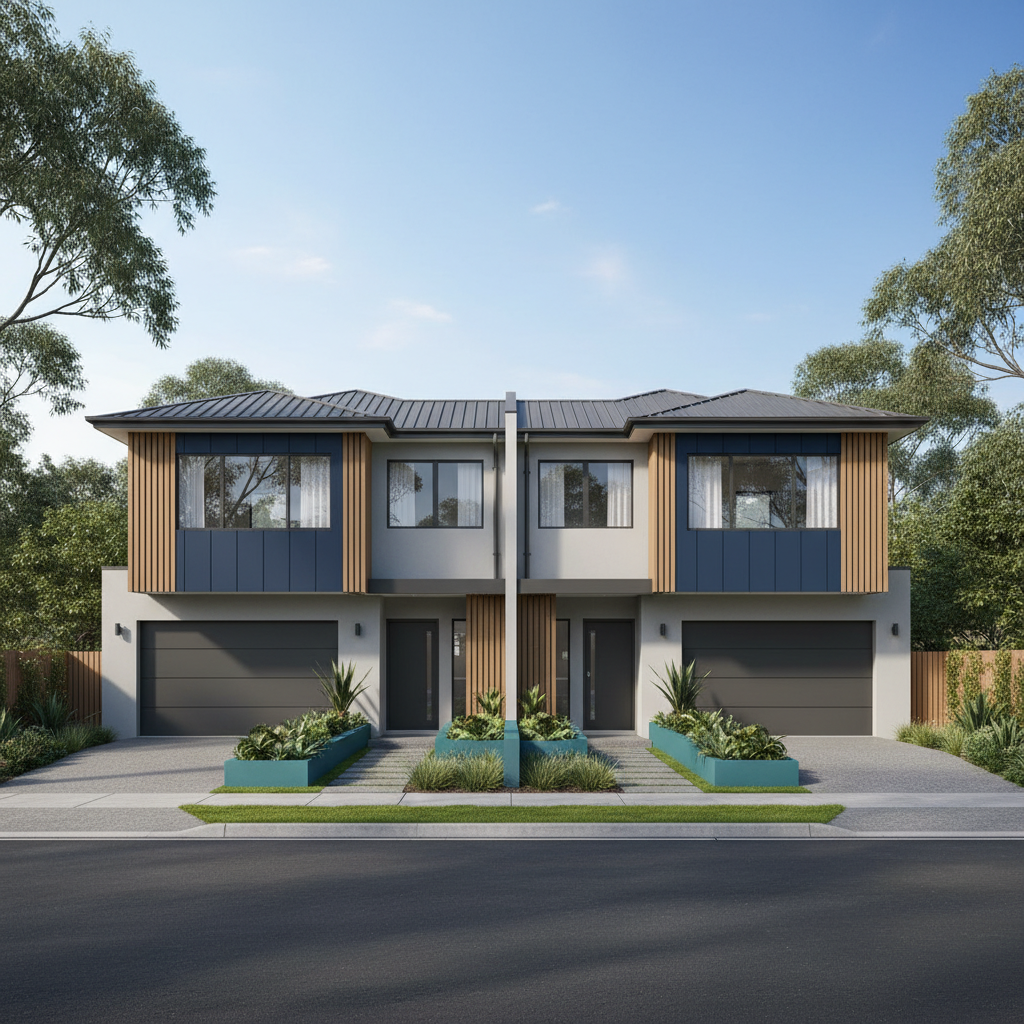
The Four Core Property Investment Strategies for 2026
Australian property investors have four main pathways to wealth creation, each with distinct risk and return profiles.
Buy and Hold (Capital Growth Focus)
This is the classic Australian wealth-building strategy: purchase a quality property in a high-demand location, hold it for 7 to 15 years, and let compounding growth do the heavy lifting.
How Capital Growth Properties Work
Capital growth properties typically deliver 6% to 10% annual appreciation over a full property cycle. According to Propertyology's 2026 market outlook, five out of eight capital cities achieved 6%+ growth in 2025, with Perth (13%), Brisbane (12%), and Adelaide (9%) leading the charge.
The buy-and-hold model relies on scarcity. You're purchasing in locations where land is limited, owner-occupier demand is strong, and infrastructure investment is planned or underway. These properties rarely deliver high rental yields—often sitting between 2.5% and 4%—but the equity uplift can be substantial.
Real-World Capital Growth Example
Let's say you purchase a house in a middle-ring Brisbane suburb for $750,000 in 2026. Rental income is $550 per week ($28,600 annually), delivering a gross yield of 3.8%. After mortgage costs, council rates, insurance, and property management, you're negatively geared by approximately $8,000 per year.
But if that property grows at 7% annually, it's worth $1,050,000 in five years—delivering $300,000 in equity. That's a 40% return on your initial $150,000 deposit, even after accounting for holding costs.
Who Should Use This Strategy
Buy-and-hold capital growth works best for high-income earners who can absorb short-term negative cash flow and benefit from tax deductions via negative gearing. If you earn $120,000+ annually and want to build a portfolio of 3 to 5 properties over 10 to 15 years, this is your foundation strategy.
Key markets for 2026 include Brisbane's growth corridors, Adelaide's middle-ring suburbs, and Perth's infrastructure-linked zones, where supply constraints and population growth are driving sustained price increases.
Positive Cash Flow (Yield Focus)
If capital growth is the long game, positive cash flow is the survival strategy. These properties generate more rental income than they cost to hold, putting money in your pocket every week.
What Yields You Actually Need in 2026
With investor loan rates at approximately 6.5%, you need a gross rental yield of at least 6% to 6.5% to achieve cash flow neutrality after all expenses. To be genuinely positively geared, you're looking at yields north of 7% to 8%.
According to Picki's March 2026 analysis, suburbs delivering 6%+ yields are concentrated in regional Queensland (Townsville, Cairns, Mackay), regional Western Australia (Kalgoorlie, Geraldton), and outer Adelaide pockets.
Real-World Positive Cash Flow Example
A three-bedroom house in Kirwan, Townsville, purchased for $400,000 with rental income of $480 per week ($24,960 annually) delivers a gross yield of 6.2%. With an 80% loan at 6.5%, your annual mortgage cost is approximately $20,800. Factor in $4,500 for rates, insurance, management, and maintenance, and you're cash flow neutral or slightly positive after tax.
The trade-off? Capital growth in high-yield regional markets averages 3% to 5% annually—slower than metro markets but still meaningful over time.
Who Should Use This Strategy
Positive cash flow properties suit investors with limited surplus income, those building their first or second property, or anyone prioritising portfolio scalability. When your properties pay for themselves, banks are more willing to lend you money for property number three, four, and five.
Buyers Agency Australia frequently recommends a "cash flow anchor plus growth asset" approach: start with one or two high-yield properties to stabilise your finances, then layer in capital growth assets once your borrowing capacity improves.
Co-Living (High Yield with Multiple Income Streams)
Co-living—also called rooming houses or share accommodation—has emerged as one of the highest-yielding property strategies in Australia, delivering gross yields between 8% and 14% when structured correctly.
How Co-Living Properties Generate Superior Returns
Instead of renting a property to one household at $600 per week, a co-living property rents four or five individual rooms at $250 to $375 per week each. A typical four-bedroom co-living home in Melbourne or Adelaide can generate $1,200 to $1,500 per week in total rental income—double or triple the yield of a standard residential property on the same land.
Knight Frank's 2026 co-living report found that the national supply has surpassed 10,000 units, with Sydney accounting for 90% of completed schemes. However, Melbourne, Adelaide, and Brisbane are seeing rapid expansion as investors seek higher returns.
Real-World Co-Living Example
You purchase a purpose-designed co-living property in Adelaide for $850,000. It contains four bedrooms, each with ensuite and kitchenette, renting at $350 per week each. Total weekly income: $1,400 ($72,800 annually). Gross yield: 8.6%.
With an 80% loan at 6.5%, your annual mortgage is approximately $44,200. Add $8,000 for higher management fees, utilities, insurance, and maintenance. Net cash flow after costs: approximately $20,600 annually—positively geared from day one.
Risks and Compliance Requirements
Co-living is not a set-and-forget strategy. These properties require Class 1B building certification, specialist property management, higher fit-out costs, and compliance with local council zoning laws. Tenant turnover is higher, and if not managed professionally, vacancy rates can spike.
Only work with buyers agents and developers who understand co-living regulations and have a proven track record. Buyers Agency Australia partners with certified co-living specialists to ensure compliance and protect investor returns.
Subdivision and Value-Add (Manufactured Equity)
Subdivision strategies involve purchasing a larger block, splitting it into two or more titles, and either selling the surplus lots or developing multiple dwellings. This is an active wealth-creation strategy that manufactures equity rather than waiting for market growth.
How Subdivision Creates Value
When you subdivide a $800,000 block into two $500,000 lots, you've created $200,000 in gross value uplift. Subtract $50,000 to $80,000 in subdivision costs (surveying, approvals, infrastructure), and you've manufactured $120,000 to $150,000 in equity within 12 to 18 months.
According to Feasly's 2026 subdivision guide, successful two-lot subdivisions in familiar markets can deliver 20% to 30% margins, while more complex projects should target 30% to 45% returns to justify the execution risk.
Real-World Subdivision Example
You purchase a 1,200 square metre block in outer Brisbane for $650,000. You subdivide it into a 600 square metre front lot (with existing house) and a 600 square metre rear lot. Total subdivision costs: $55,000.
The front lot with house is valued at $450,000. The rear vacant lot sells for $380,000. Total value: $830,000. Less original cost ($650,000) and subdivision expenses ($55,000), your net profit is $125,000—a 19% return on capital in 14 months.
Alternatively, you could build a second dwelling on the rear lot, hold both as rentals, and generate dual rental streams while benefiting from long-term capital growth.
Who Should Use This Strategy
Subdivision suits experienced investors or those working with a buyers agent who can identify properties with subdivision potential. It requires higher upfront capital, patience with council approvals, and the ability to manage construction timelines if you're building on the new lot.
Buyers Agency Australia conducts full feasibility analysis on subdivision opportunities, including zoning checks, cost modelling, and exit strategy planning, to ensure clients don't overpay or underestimate holding costs.

The Hidden Risk of Choosing the Wrong Strategy
Here's what no one tells you: the wrong strategy doesn't just limit your returns—it can lock you out of future growth entirely.
If you buy a negatively geared property in a low-growth market, you're paying out of pocket every month while your equity barely moves. Banks assess your serviceability based on rental income, so if your properties are bleeding cash, your borrowing capacity for property number two evaporates.
This is why 70% of Australian investors never move past one property. They choose based on price or proximity, not strategy.
Buyers Agency Australia uses a 10-year portfolio modelling framework to ensure every purchase aligns with your long-term wealth goals, not just today's budget.
How Off-Market Buying Gives You the Competitive Edge
In 2026, the best investment properties rarely hit the open market. High-quality assets in growth corridors are often sold off-market to buyers agents, developer networks, and investors with established relationships.
Buyers Agency Australia has access to off-market listings across all major Australian capital cities. This means you're competing with fewer buyers, negotiating from a position of strength, and securing properties before the general public even knows they're available.
Off-market buying is particularly valuable in subdivision and co-living strategies, where finding the right land or property configuration is the difference between a 12% yield and a 6% yield.
How Buyers Agency Australia Helps You Choose the Right Strategy
Every investor's situation is different. Your income, deposit size, risk tolerance, timeline, and portfolio goals all determine which strategy will deliver the best outcome.
Buyers Agency Australia takes a transparent, data-driven approach to property investment. During your initial strategy session, we'll model your borrowing capacity, identify cash flow requirements, and map out a 10-year acquisition plan that aligns with your wealth goals.
Whether you need positive cash flow today, capital growth for retirement, or a hybrid approach that balances both, we'll show you exactly what to buy, where to buy, and when to buy.
Our fixed-fee model means you'll never pay commission-based markups, and our 20+ years of market experience means you're getting advice based on real results, not sales targets.

Frequently Asked Questions
What is the best property investment strategy for beginners in Australia?
Positive cash flow properties in regional Queensland or outer Adelaide are ideal for beginners, as they self-fund and improve borrowing capacity for future purchases.
How much deposit do I need to invest in property in 2026?
Most lenders require 20% deposit to avoid Lenders Mortgage Insurance (LMI). For a $600,000 property, that's $120,000 plus $15,000 to $25,000 in buying costs.
Is negative gearing still worth it in 2026?
Yes, for high-income earners targeting capital growth in metro markets. The tax deductions offset holding costs, but only if the property is in a genuine growth corridor.
What rental yield do I need for positive cash flow in 2026?
With interest rates at 6.5%, you need at least 6.5% to 7% gross yield to achieve cash flow neutrality after all expenses.
Should I buy in capital cities or regional areas in 2026?
It depends on your strategy. Capital cities offer stronger capital growth but lower yields. Regional markets deliver higher yields but slower growth. A balanced portfolio includes both.
Take Control of Your Investment Strategy in 2026
Property investment isn't about picking the cheapest listing or chasing the highest advertised yield. It's about aligning your purchases with a clear, long-term strategy that matches your income, risk profile, and wealth goals.
Whether you're buying your first investment property or scaling to property number five, the right strategy and the right guidance make all the difference.
Book a free strategy session with Buyers Agency Australia to model your 10-year portfolio plan, identify the best markets for your goals, and access off-market opportunities before they're publicly listed.