
Most Australian investors get stuck at one property because they rely on saving income instead of using equity. Smart investors scale from one to five properties by extracting equity from existing assets, buying below market value, and managing cash flow to maintain borrowing capacity—all without needing a pay rise.
Here's the truth nobody tells you.
Most Australians think property investing is only for the wealthy. The reality is different. You don't need a six-figure salary to build a five-property portfolio. You need a system.
The average Australian property investor owns just one property. According to the ATO, 71 per cent of Australia's 2.05 million property investors never buy a second asset. They get stuck because they misunderstand how wealth creation actually works. They think it's about earning more. It's not.
It's about using what you already have.
Buyers Agency Australia has worked with hundreds of investors who started with one property and scaled to five or more. They didn't get lucky. They followed a repeatable strategy based on equity, timing, and smart buying. This guide shows you exactly how they did it.
Why Most Investors Get Stuck at One Property
The majority of investors fail to scale for three reasons: fear, cash flow, and lack of strategy.
Fear of Debt Holds Investors Back
Many investors are paralysed by the idea of taking on more debt. They see their first property as a risk, not a tool. This mindset keeps them stuck.
Successful investors understand that good debt—debt secured against appreciating assets—is the foundation of wealth. The key is ensuring the asset pays for itself.
Poor Cash Flow Kills Growth
According to industry data, around 50 per cent of Australian property investors own negatively geared properties. That means they're paying money out of pocket every month to hold the asset.
Negative gearing can work if you have the income to support it. But if you're struggling to cover the shortfall, you can't borrow again. Your borrowing capacity is shot.
Cash flow is the oxygen of property investing. Without it, you suffocate.
No Clear Strategy from Day One
The biggest mistake investors make is buying their first property without thinking about property number two, three, or four.
They choose a property they like, in a location they know, at a price they can barely afford. Then they wonder why the bank won't lend them money for a second purchase.
Every property you buy should serve a purpose in your overall portfolio. If it doesn't, you're just collecting assets—not building wealth.
How Equity Works in Simple Terms

Equity is the difference between what your property is worth and what you owe on it.
Let's say you bought a property for $600,000 with a 20 per cent deposit. You borrowed $480,000. Five years later, that property is worth $750,000. You've paid your loan down to $460,000.
Your equity is $290,000.
But here's the magic: you don't need to sell the property to access that equity. You can refinance and borrow against it.
Most lenders will let you borrow up to 80 per cent of your property's value without paying lenders mortgage insurance. That's $600,000 on a $750,000 property. After paying out your existing loan of $460,000, you could access $140,000 in usable equity.
That $140,000 becomes your deposit for property number two.
This is how investors scale without saving for years. They don't wait. They use the equity they've already created.
National property values rose 10 per cent in 2025, according to PropTrack. Markets like Perth, Brisbane, and Adelaide delivered even stronger growth. If you bought in the right location, your equity grew significantly—even if you did nothing.
Buyers Agency Australia helps clients identify high-growth markets early in the cycle. That's how equity gets created faster.
The Step-by-Step Path from One to Five Properties
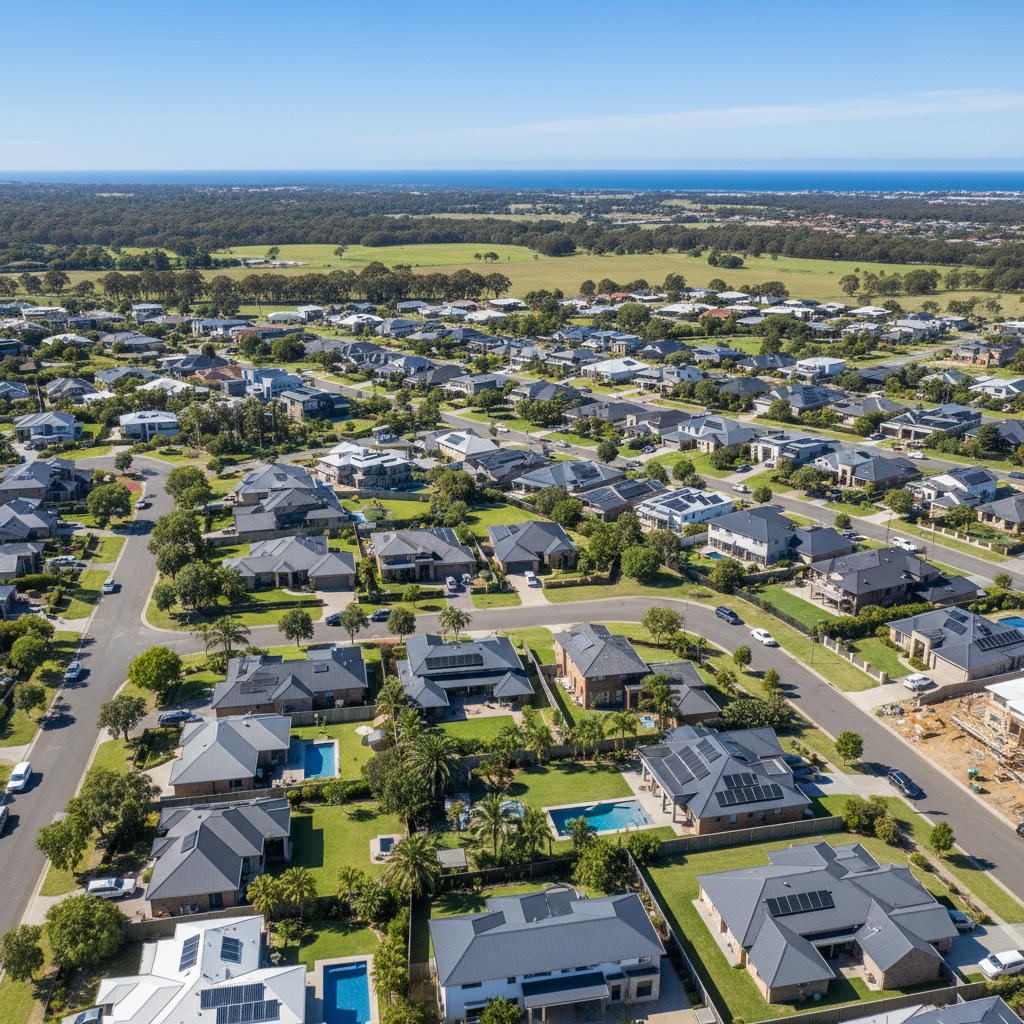
Scaling from one property to five is not about luck. It's about sequencing.
Property One: The Cash Flow Anchor
Your first property should prioritise cash flow. You need something that doesn't drain your income.
In 2026, cash flow positive properties typically require gross rental yields above 5.5 per cent for houses and 6 per cent for units, assuming standard 80 per cent LVR lending at current interest rates around 5.8 per cent.
Regional markets in Queensland and Western Australia often deliver these yield profiles. The goal is not to chase the highest yield. It's to ensure you can hold the property comfortably while it grows in value.
If your first property is bleeding cash, you'll never buy a second one.
Property Two: The Growth Engine
Once your first property is cash flow stable, property two shifts focus toward capital growth.
You're looking for markets with strong fundamentals: population growth, infrastructure investment, and tight vacancy rates. Brisbane's median house price pushed above $1 million in late 2025, while Perth recorded 13 per cent annual growth.
These markets don't offer the same yields as regional areas, but they deliver equity faster. And equity is what funds your next purchase.
By this stage, you're using the equity from property one to fund the deposit for property two. You're not saving from your salary. You're recycling capital.
Properties Three to Five: Balancing Yield and Growth
By the time you reach properties three, four, and five, your strategy becomes more sophisticated.
You need to manage borrowing capacity carefully. Every new property impacts your ability to borrow again. That's why you balance high-yield properties (to maintain cash flow) with high-growth properties (to build equity).
Some investors use interest-only loans to improve short-term cash flow. Others spread their loans across multiple lenders to maximise borrowing power.
Dragan Dimovski, founder of Buyers Agency Australia, uses a 10-year portfolio modelling approach to ensure every property purchase supports the next. His clients don't just buy properties. They build systems.
The Role of Buying Below Market Value
Buying below market value is one of the most misunderstood strategies in Australian property investing.
It doesn't mean chasing distressed sales or buying rubbish properties in bad locations. It means identifying opportunities where the seller is motivated, the market is underpriced, or the property has hidden upside.
What Below Market Value Actually Means
A property is below market value when you pay less than it would sell for under normal market conditions. This can happen for several reasons: deceased estates, divorces, off-market deals, or properties that need minor cosmetic work.
The key is to ensure the property still meets your investment criteria. A cheap property in a weak location is not a bargain. It's a liability.
Some investors claim they can secure properties 20 per cent below market value. While this is possible in specific circumstances, it's rare. A more realistic target is 5 to 10 per cent below comparable sales.
That 5 to 10 per cent discount gives you instant equity. And instant equity means you can move to your next purchase faster.
How Buyers Agents Find These Deals
Most below-market opportunities don't hit the public market. They're sold off-market or through private networks.
Buyers Agency Australia has access to off-market listings across all major Australian capital cities. This gives clients a competitive edge.
When a property is listed publicly, multiple buyers compete. Prices get pushed up. Off-market deals reduce competition and improve negotiation leverage.
This is one of the biggest advantages of working with a professional buyers agent.
Importance of Cash Flow and Borrowing Capacity
Cash flow and borrowing capacity are the two pillars of portfolio growth.
Cash Flow Keeps You in the Game
If your properties are losing money every month, you can't scale. It's that simple.
Negative gearing might deliver tax benefits, but it also limits your ability to borrow. Lenders assess your income after all expenses, including investment property shortfalls.
If you're covering a $500 per month shortfall on one property, that's $6,000 per year. That $6,000 reduces your borrowing capacity by approximately $30,000 to $40,000, depending on the lender's serviceability formula.
Cash flow positive properties, on the other hand, increase your borrowing capacity. The rental income is treated as additional income, which means you can borrow more.
Borrowing Capacity Determines How Far You Can Scale
Borrowing capacity is calculated based on your income, existing debts, living expenses, and the rental income from your investment properties.
APRA mandates that lenders assess borrowers at a 3 per cent serviceability buffer above the actual interest rate. If your loan rate is 6.2 per cent, you must demonstrate the capacity to repay at 9.2 per cent.
This buffer is why many investors hit a wall after two or three properties. Their income can't support more debt under the stress test.
The solution is to increase rental income, reduce expenses, or restructure loans across multiple lenders. A specialist mortgage broker can help you navigate these options.
Each 0.25 per cent rate rise reduces borrowing capacity by approximately $12,000 for an average income earner, according to 2026 data from Canstar. This makes cash flow management even more critical in a rising rate environment.
Common Mistakes to Avoid
Even experienced investors make costly errors. Here are the biggest mistakes to avoid.
Buying in the Wrong Location
Location drives everything. A cheap property in a declining market will never deliver the growth you need.
Focus on markets with strong population growth, infrastructure investment, and vacancy rates below 2 per cent. Don't buy somewhere just because you know the area or because your friend made money there five years ago.
Overleveraging Without a Buffer
Some investors borrow as much as possible, leaving no room for error. Then interest rates rise, or a tenant leaves, and they can't cover the shortfall.
Always maintain a cash buffer. Aim for at least three to six months of holding costs in reserve.
Ignoring Depreciation and Tax Benefits
Depreciation is one of the most powerful tax tools available to property investors. A new or recently renovated property can deliver $10,000 to $15,000 per year in depreciation deductions.
These deductions reduce your taxable income, which improves your cash flow. Many investors fail to claim depreciation because they don't get a depreciation schedule prepared.
Failing to Plan Beyond Property One
The biggest mistake is buying your first property without thinking about how it fits into a broader portfolio strategy.
Every property you buy should make it easier to buy the next one. If it doesn't, you've picked the wrong asset.
How Buyers Agency Australia Helps Investors Scale

Buyers Agency Australia specialises in helping investors build scalable, high-performing portfolios.
Dragan Dimovski brings over 20 years of property investment experience and a personal portfolio worth more than $10 million. He understands what works and what doesn't.
Unlike traditional buyers agents who charge percentage-based fees, Buyers Agency Australia operates on a transparent, fixed-fee model. This means clients know exactly what they're paying upfront—no hidden costs, no surprises.
The firm uses 10-year portfolio modelling to ensure every property purchase supports long-term wealth creation. Clients don't just buy properties. They build systems designed to scale.
Whether you're buying your first investment property or your fifth, Buyers Agency Australia provides end-to-end support: market research, property shortlisting, negotiation, and settlement.
The team operates across all major Australian capital cities, giving clients access to high-growth markets nationwide.
If you're serious about scaling your portfolio, book a free strategy session today at https://buyersagencyaustralia.com.au/free/.
Frequently Asked Questions
How long does it take to scale from one property to five?
Most investors take 10 to 15 years to build a five-property portfolio, depending on market conditions and equity growth.
Do I need to earn more money to buy more properties?
No. You use equity from existing properties to fund deposits for new purchases, not salary savings.
What is the minimum equity I need to buy a second property?
You typically need at least $100,000 to $120,000 in usable equity to cover a 20 per cent deposit plus costs on a $500,000 property.
Are buyers agent fees tax deductible?
Yes. Buyers agent fees for investment properties are generally tax deductible as they relate to the acquisition of an income-producing asset.
Should I focus on cash flow or capital growth?
Both. Your first property should prioritise cash flow. Subsequent properties can focus more on growth, as long as your overall portfolio remains cash flow neutral or positive.
Take the First Step Today
Building a five-property portfolio is not a dream. It's a process.
You don't need a massive salary. You don't need perfect timing. You need a strategy, the right properties, and the discipline to execute.
Buyers Agency Australia has helped hundreds of investors turn one property into five. The same system that worked for them can work for you.
Stop waiting. Start building.
Book your free strategy session now at https://buyersagencyaustralia.com.au and take control of your financial future.