Key Takeaways
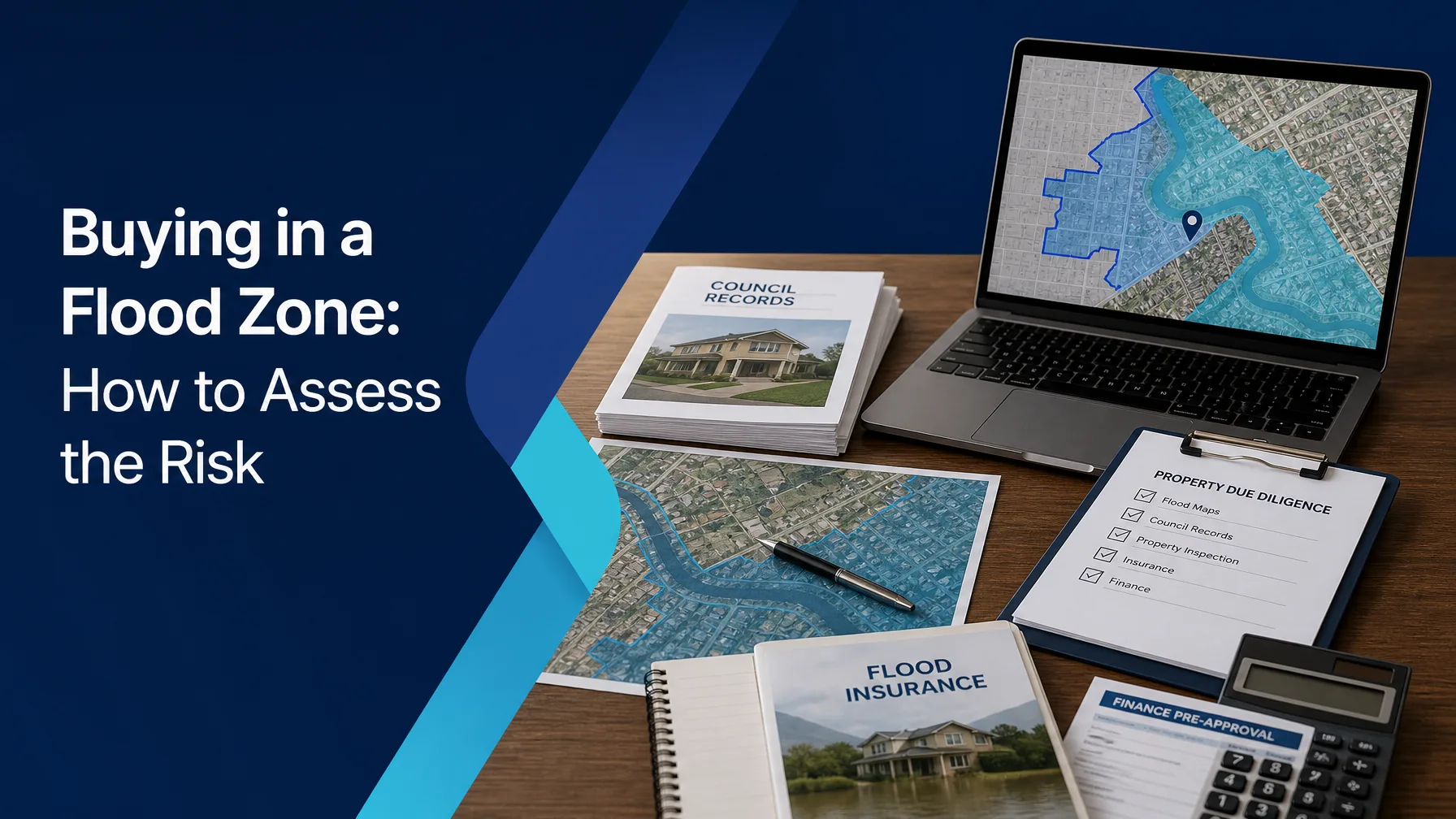
- To assess the risk of buying in a flood zone, check current state and council flood maps, request property-level council records, inspect the land, building and access, get written insurance and finance positions, then decide against the evidence.
- A map result is a screening tool: no mapped data does not mean no risk, and a mapped zone may touch only part of a lot.
- Insurance is a decision point: high flood risk can mean higher premiums or flood cover being excluded, so read the quote and Product Disclosure Statement before going unconditional.
- There are three outcomes, not two: pause for missing evidence, proceed with price and conditions that reflect documented risk, or walk away.
Table of Contents
- Before You Start: Know What a Flood Map Can Tell You
- Check Official Flood Maps and Planning Overlays
- Request Council Records and Flood History
- Identify the Flood Path and Property-Level Exposure
- Inspect the Building, Drainage and Access
- Get Insurance and Finance Positions Before Committing
- Decide Whether to Proceed, Negotiate or Walk Away
- Common Mistakes When Assessing Flood Risk
- How Buyers Agency Australia Can Support Flood-Risk Due Diligence
- FAQ
- Choose Based on the Evidence, Not the Map Label
- Resources
A listing mentions a flood overlay, a map layer shades part of the street, or a vendor says the place has never gone under. None of that tells you what the risk means for the home you actually want to buy.
This guide is for Australian home buyers, with a short aside for investors. It walks through a staged assessment: official records first, then site and access checks, then insurance and finance. Buyers Agency Australia shares the process as part of its strategy-led property buying support.
This is general information, not legal or financial advice; speak to the right professional about your circumstances. Council fee and turnaround example checked November 2026.
Quick answer: Work in this order: official maps, council records, flood pathway, building and access inspection, insurance and finance, then the offer decision. There is no universal Australian turnaround; the City of Sydney flood information certificate is a local example at $246 and around two weeks, so lodge requests early. The step that matters most is current, property-level council information, because a map alone cannot settle the question.
Before You Start: Know What a Flood Map Can Tell You
Flood terms and mapped classifications differ by state and council, so treat every map as a starting point. South Australia’s Flood Awareness Map says mapped extents are not a boundary between flood-prone and flood-free land, and that no study data does not mean no flood risk. Queensland tells buyers to contact the local council for property-level flood mapping. A blank result is not evidence of safety.
Gather these before you search:
- The exact street address and lot/plan details.
- The contract, plus finance and cooling-off or condition deadlines.
- Contact details for the council, a conveyancer, an insurer or broker, a lender or broker and a building inspector.
1. Check Official Flood Maps and Planning Overlays
Search the address in your state or council tool, then zoom in to the parcel edges rather than trusting the pin. Victoria’s risk map bases results on the property-centre pin and warns that a mapped zone may touch only part of a property. South Australia’s map adds that a lack of study data does not establish a lack of risk.

Note which layer or overlay appears, the study date if shown, and whether the map shows extent, depth or hazard. Screenshot each result with the date. Then ask the council which property-level report or planning record applies to your lot.
Warning: never assume one state’s classification means the same thing in another.
2. Request Council Records and Flood History
Ask the council in writing for property-level flood information, relevant flood studies and known historical records. Queensland’s flood mapping guidance points buyers to the council and to FloodCheck, a tool with regional flood studies and historic flood lines. Regional maps are not property-level information. Councils differ: the City of Sydney, for instance, issues a certificate reporting flood levels, depths and hazard ratings, while a standard Section 10.7 planning certificate carries flood notations.
Copy these questions into your enquiry:
- Does the mapping cover riverine, overland-flow and coastal flooding for this lot?
- Is there a current flood certificate or planning record for the property?
- Which known flood events are on record?
Ask the vendor or agent about past water entry, repairs and mitigation, then request documents. A verbal answer is not evidence. Document requirements differ across councils.
3. Identify the Flood Path and Property-Level Exposure
Work out how water would reach the property. Riverine flooding comes from rivers and creeks overtopping; overland flow and stormwater flooding come from heavy rain running across land or overwhelming drains; coastal flooding comes from tides and surges. A home far from a river can still sit on an overland path.

Ask what the map measures and whether it shows depth or hazard. Then judge whether water could reach the dwelling, yard, access road or essential services. If you see Annual Exceedance Probability (AEP), read it as a yearly chance, not a timetable; the Victorian government explains that a 1% AEP event has a 1% chance of being equalled or exceeded in any year.
Use the parcel-edge and no-data limits from Step 1 here too. Never call a property safe because it misses one layer.
4. Inspect the Building, Drainage and Access
Book a building and pest inspection and ask the inspector to note visible water entry, dampness, repair evidence, ground levels, drainage, and where services sit. Walk the street too: check whether roads and nearby infrastructure could cut off entry or exit. A general inspection records observations; it does not replace specialist flood modelling.
Queensland’s homeowner flood-risk guidance lists raising air-conditioning units and hot-water systems as possible resilience measures, and notes that raising a home may need planning or building approval. If a vendor cites mitigation, ask the council and a qualified professional whether it is feasible and permitted.
Want a second set of eyes on your enquiries? You can book a free property strategy session.
5. Get Insurance and Finance Positions Before Committing
Request an address-specific insurance quote before you go unconditional. Moneysmart says high flood risk can mean higher premiums or flood cover being excluded, and tells buyers to check the Product Disclosure Statement. Look for whether flood is included, optional or excluded, how the policy defines flood versus storm or rainwater, the excess and the conditions.
Ask your lender or broker whether the property affects your finance. Do not assume every lender treats flood risk the same way.
Investors buying commercial property should note the Insurance Council of Australia says commercial flood cover is not standard and must be opted into. Check the commercial policy wording with your broker.
6. Decide Whether to Proceed, Negotiate or Walk Away
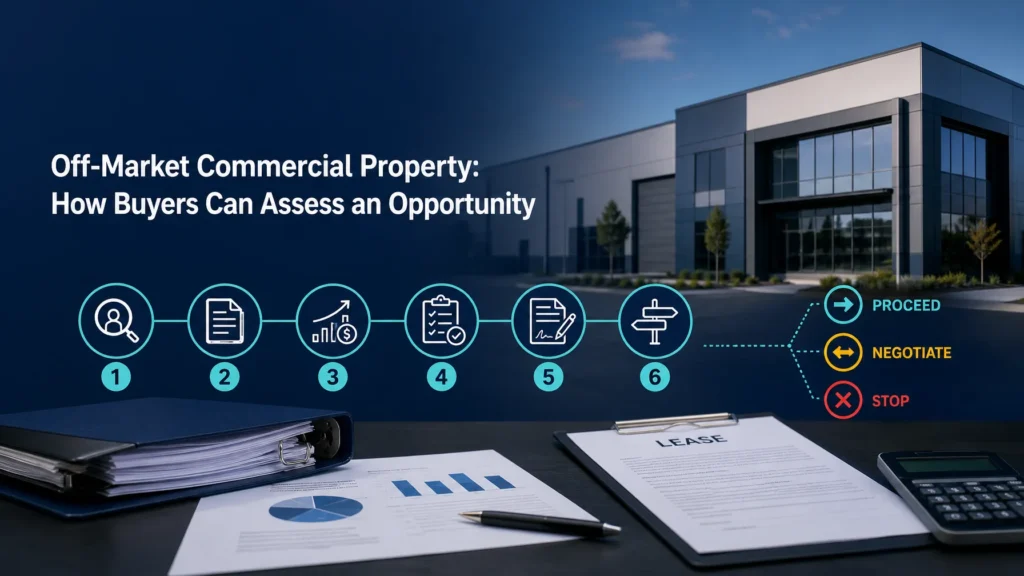
Weigh the documented flood pathway, physical condition, access, insurance terms, lender response, intended use and mitigation feasibility against your risk tolerance. Use this decision aid, which is original editorial analysis rather than advice:
- Pause: material evidence is missing, so obtain it and advice before offering.
- Proceed on conditions: exposure is understood and manageable, so price and contract conditions should reflect documented costs and risk.
- Walk away: exposure is unacceptable, or insurance, finance or intended use does not work.

A discount does not automatically compensate for exposure, and not every flood-affected property should be rejected. Investors should test flood exposure against portfolio goals, where strategy-led property buying support can help.
Final Pre-Contract Checklist
Before signing, confirm you have the current map, council records, flood history, inspection report, written insurance position, lender feedback and conveyancer review. Our property investment due diligence checklist covers the wider checks.
Common Mistakes When Assessing Flood Risk
Most errors come from treating one data point as the whole answer. Each has a fix:
- Relying on a single map: cross-check state and council sources.
- Reading no result as no risk: South Australia’s map says otherwise.
- Checking only the pin: inspect the parcel edges, as Victoria advises.
- Confusing flood with stormwater or rainwater cover: read the policy definitions, as Moneysmart and the Insurance Council of Australia stress.
- Accepting a verbal history: ask for records.
- Assuming works are permitted: check approvals first.
- Seeking insurance or finance feedback after going unconditional: get both beforehand.
How Buyers Agency Australia Can Support Flood-Risk Due Diligence
Flood checks involve many parties and tight timelines, which is where buyer-side coordination helps. Buyers Agency Australia takes a strategy-led, data-informed approach: it aligns a property with your goals, organises inspections and due-diligence enquiries, compares documented costs and risks, and supports negotiation and settlement. Dragan Dimovski brings 20+ years of property experience to that process.
If you’re buying an investment property, our property investment advisory service can help you assess flood risk before you make an offer.

Council, engineering, insurance, lending and legal conclusions stay with the relevant specialists, and no one can promise a risk-free purchase. You can see the full range of buyer-side support from research to settlement.
FAQ
Does a flood overlay mean a property will definitely flood?
- An overlay shows mapped or modelled risk. It does not establish what will happen at a particular building, so seek property-level council information.
Is a 1% AEP flood the same as a flood that happens once every 100 years?
- The Victorian government describes it as a 1% chance of that size event being equalled or exceeded in any year.
Can flood cover be excluded from home insurance?
Yes. Moneysmart notes high flood risk can mean flood cover is excluded, so check your quote and Product Disclosure Statement.
Are flood maps and classifications the same across Australia?
- Tools and mapped information are state- and council-specific, so ask the relevant council for property-level detail.
Who should interpret a council flood certificate or advise on contract terms?
A qualified engineer can help interpret technical flood information; a solicitor or conveyancer should advise on the contract.
Choose Based on the Evidence, Not the Map Label
No single label decides whether a flood-affected property suits you. A shaded overlay can hide a manageable lot, and a clear map can hide a real overland path. What counts is the combined picture: official records, the physical property and its access, a written insurance position, lender feedback and your intended use.
So the path is simple. If evidence is missing, pause and collect it. If the documented risk is understood, make the offer reflect it through price and conditions. If insurance, finance or use cannot work, walk away without regret; that is due diligence doing its job.
Buyers Agency Australia can help you work through these checks in order. To start, book a free property strategy session and map out your next property move, or contact the Buyers Agency Australia team with your address and timeline.
Resources
Internal resources
- strategy-led property buying support
- book a free property strategy session
- buyer-side support from research to settlement
- property investment due diligence checklist
- contact the Buyers Agency Australia team
External resources