
The Reserve Bank of Australia raised the cash rate to 4.1% in March 2026, following back-to-back hikes that reversed 2025’s brief easing cycle. Borrowing power has contracted, price growth forecasts have been cut from 6-10% to 0-5%, and auction clearance rates are softening. But here’s what the headlines won’t tell you: the long-term property case hasn’t broken. This is a filtering phase, not a crash.
We’ve all been there. You spend months preparing to buy, you watch the market heat up, and just when you’re ready to pull the trigger, the RBA yanks the rug out.
That’s exactly what happened in February and March 2026. After cutting rates three times in 2025, the central bank reversed course with two consecutive 25-basis-point increases, taking the cash rate from 3.6% to 4.1%. Inflation remained stubbornly above target, geopolitical risks in the Middle East spooked energy markets, and labour markets stayed tighter than expected.
For buyers, it’s frustrating. For investors, it’s a test. And for first-home buyers stretching to afford Sydney or Melbourne, it feels like a door slamming shut. But if you’re serious about building wealth through property, this moment matters more than any other. Because while short-term momentum has slowed, the structural drivers of Australian property, supply shortages, population growth, and wealth accumulation, haven’t changed.
Buyers Agency Australia has guided clients through every rate cycle since 2003. We’ve seen panic, we’ve seen euphoria, and we’ve seen the investors who win by staying disciplined when others freeze. This article breaks down what’s really happening with interest rates in 2026, how it’s affecting borrowing power and property prices, and how to position yourself to succeed in a tighter lending environment.
What Just Happened: The RBA’s 2026 Rate Reversal
From Cuts to Hikes in 90 Days
In 2025, the RBA delivered three rate cuts, taking the cash rate from 4.35% down to 3.6% by August. Markets priced in further easing into 2026, with some forecasts expecting rates to fall as low as 2.9% by early 2026.
That optimism lasted until January 2026, when headline inflation climbed to 3.8% and trimmed mean inflation hit 3.3%. The RBA’s statement in February made it clear: inflation risks had “tilted further to the upside,” and the board was prepared to act.
On February 3, the cash rate rose to 3.85%. On March 17, it jumped again to 4.1%. Both moves were split decisions, five board members voting to hike, four to hold. The RBA now expects inflation to remain above its 2-3% target band until 2028.
Why the RBA Changed Course
Three factors drove the reversal:
- Persistent inflation: Core inflation remained above 3%, driven by services, housing costs, and sticky wage pressures.
- Geopolitical shocks: The escalation of conflict in the Middle East disrupted energy markets, raising concerns about imported inflation.
- Labour market resilience: The unemployment rate held at 4.1%, below the RBA’s full-employment threshold, signalling capacity pressures.
Governor Michele Bullock emphasized that “every meeting is live,” meaning further hikes remain on the table if inflation doesn’t moderate.
What This Means for Borrowers
Each 0.25% rate increase adds roughly $90 per month to repayments on a $600,000 loan over 30 years. For a borrower who secured approval in late 2025 at 3.6%, their monthly repayment has now increased by approximately $180 since February.
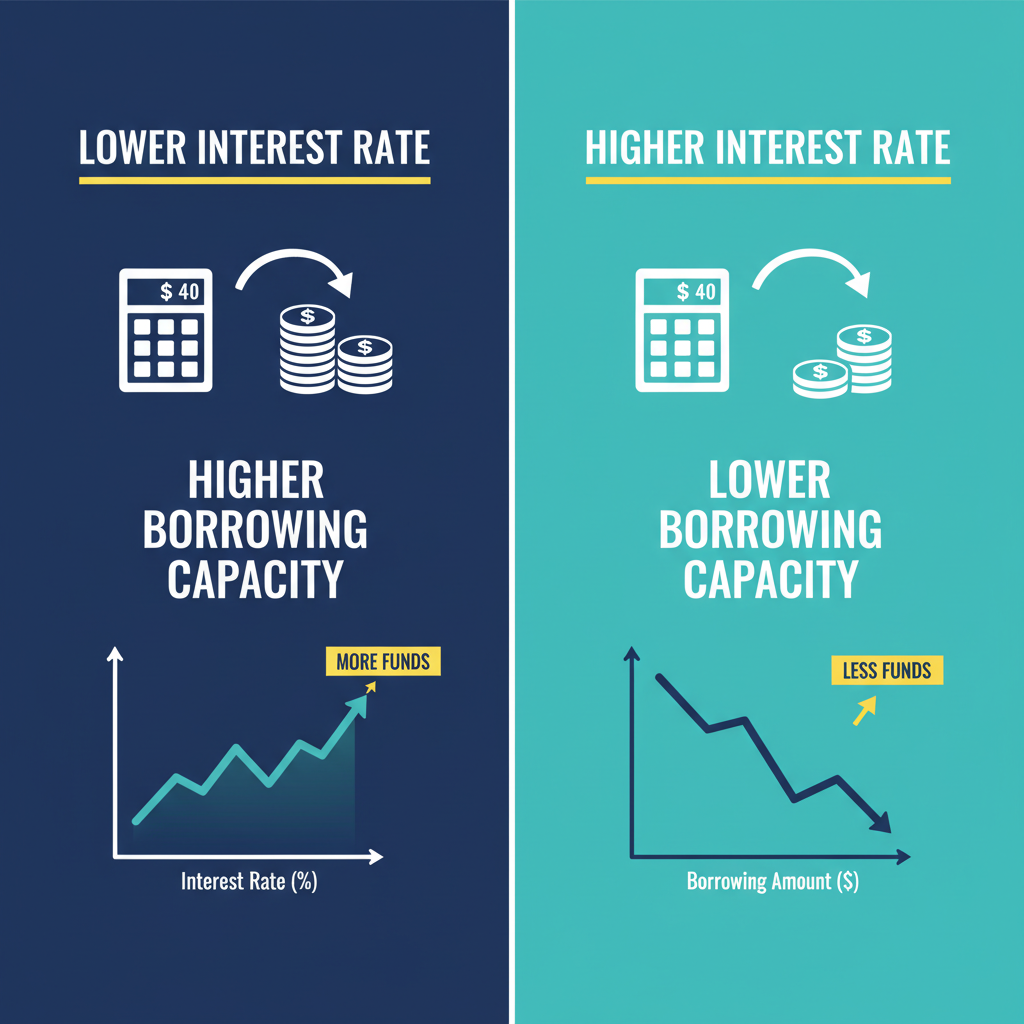
More importantly, borrowing capacity has contracted. A 0.5% rate rise can reduce borrowing power by $20,000 to $50,000, depending on income level. That’s the difference between winning and losing at auction.
How Rising Rates Impact Borrowing Power in 2026
The Serviceability Buffer Squeeze
Australian lenders assess borrowing capacity using the loan’s interest rate plus a 3% serviceability buffer, per APRA guidelines. When variable rates rise, the assessment rate climbs even higher, compressing how much you can borrow.
Here’s a practical example:
| Income | Rate (Feb 2025) | Rate (Mar 2026) | Assessment Rate (Feb 2025) | Assessment Rate (Mar 2026) | Borrowing Power (Feb 2025) | Borrowing Power (Mar 2026) | Reduction |
|---|---|---|---|---|---|---|---|
| $100k | 3.6% | 4.1% | 6.6% | 7.1% | $520,000 | $480,000 | $40,000 |
| $150k | 3.6% | 4.1% | 6.6% | 7.1% | $780,000 | $720,000 | $60,000 |
If you’re a couple earning $150k combined, you’ve lost $60,000 in borrowing power since February. In Sydney’s median house market ($1.83 million forecast for 2026), that matters.
Why Investors Are Hit Harder
Investors face additional hurdles:
- Rental income shading: Lenders only count 80% of projected rental income when assessing serviceability.
- Higher interest rates: Investment loans typically carry a 0.3-0.5% premium over owner-occupier rates.
- Portfolio complexity: Existing debt on other properties reduces capacity for new acquisitions.
Buyers Agency Australia structures loan submissions to maximise borrowing capacity, working with brokers who understand how to position investment income, offset accounts, and equity release.
Strategies to Protect Borrowing Power
If you’re planning to buy in the next 12 months, take these steps now:
- Reduce personal debts: Pay down credit cards, car loans, and Buy Now Pay Later accounts. Even unused credit limits reduce borrowing capacity.
- Extend loan terms: A 30-year loan produces lower monthly repayments than a 25-year loan, increasing your borrowing capacity under serviceability tests.
- Shop lenders: Borrowing power can vary by 20-40% across lenders due to different expense benchmarks and income shading policies. A good mortgage broker is worth their weight in gold.
- Secure pre-approval early: Pre-approvals typically last 90 days. Lock in your borrowing capacity before rates rise again.
Dragan Dimovski, founder of Buyers Agency Australia, has helped over 300 clients secure properties in rising-rate environments by focusing on fundamentals: cashflow, location quality, and long-term capital growth potential.
Property Price Forecasts: From Boom to Modest Growth
What the Experts Are Saying
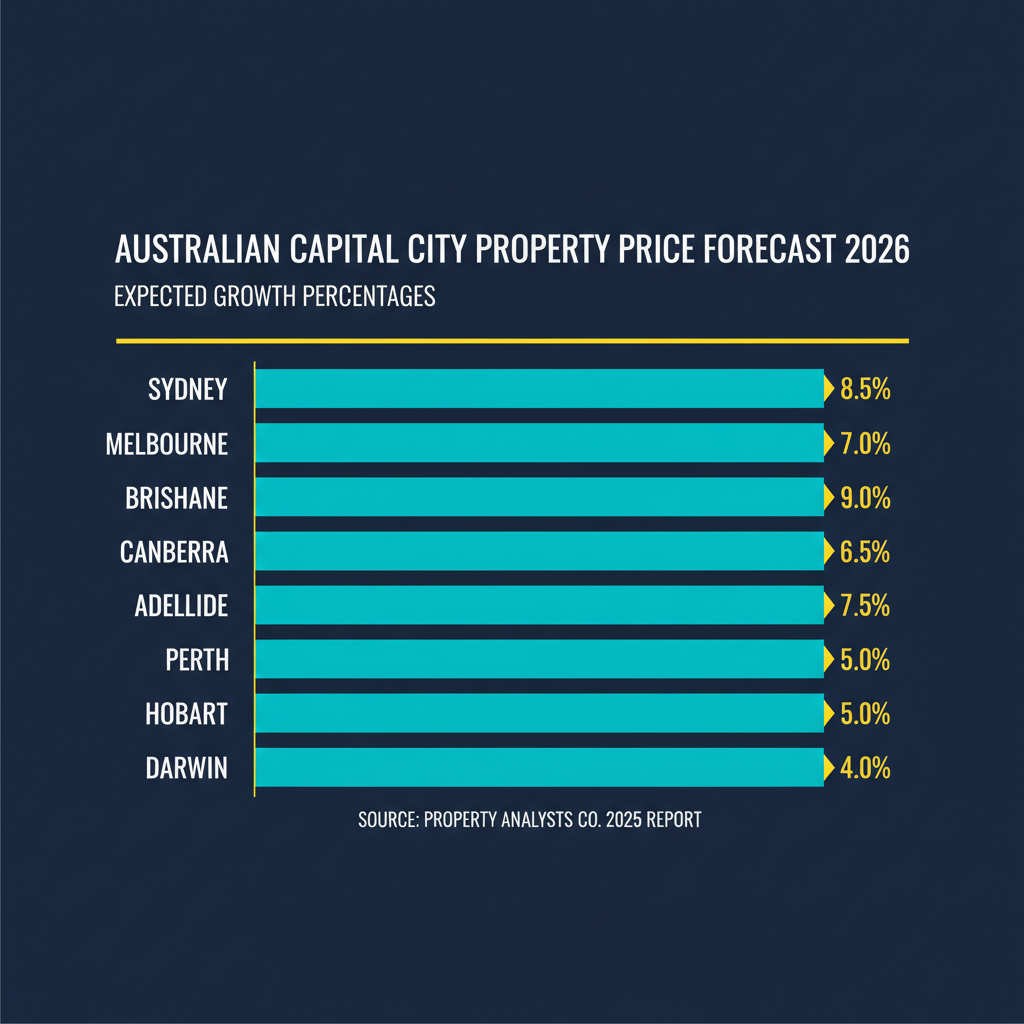
In January 2026, before the rate hikes, most forecasters expected national house price growth of 5-8% in 2026. By March, those forecasts had been slashed.
Here’s what the major institutions are now predicting:
| Forecaster | National Growth 2026 | Sydney | Melbourne | Brisbane | Perth |
|---|---|---|---|---|---|
| KPMG | 7.7% (houses), 7.1% (units) | 5.8% | 6.8% | 10.9% | 12.8% |
| AMP | 5-7% | 4-6% | 5-7% | 8-10% | 10-12% |
| Domain | 6% (combined capitals) | 7% | 6% | 5% | 5% |
| Cotality | Modest growth, uneven | Flat-2% | Flat-2% | 4-6% | 8-10% |
The consensus: growth will continue, but at a slower pace. KPMG forecasts national house prices to rise 7.7% in 2026, with Perth leading at 12.8% and Sydney moderating to 5.8%.
Cotality (formerly CoreLogic) expects the first half of 2026 to remain strong, driven by pent-up demand from 2025’s rate cuts. But the second half will slow as affordability constraints bite.
Why Growth Is Slowing (But Not Stopping)
Three factors are moderating price growth:
- Affordability ceiling: In Adelaide, mortgage repayments now absorb 51.5% of household income, up from 27% in 2019. Sydney and Melbourne are similarly stretched.
- Tighter lending conditions: APRA has signalled it may tighten macroprudential controls if housing credit growth accelerates.
- Softening sentiment: The Westpac-MI consumer sentiment index dropped 9% in December 2025, and the “time to buy a dwelling” index remains deeply negative.
But here’s the thing: demand hasn’t collapsed. It’s just shifted.
Buyers are moving down the price ladder. First-home buyers are targeting units instead of houses. Investors are hunting for high-yield properties in regional Queensland and Perth. And expats returning from overseas are still competing for quality stock in Sydney and Melbourne.
The Supply Side: Why Prices Won’t Crash
Australia’s housing undersupply remains the single biggest structural support for property prices. KPMG estimates a housing shortfall of 200,000 to 300,000 dwellings after years of underbuilding.
New dwelling approvals remain well below the 20,000 per month required to meet the National Housing Accord targets. Construction costs, labour shortages, and rising insolvency rates among builders have choked supply.
In Perth, advertised stock is 40% below the five-year average. In Brisbane, it’s 29% below. That’s why prices in these markets are still rising at 10-15% annually, despite two rate hikes.
Supply shortages don’t disappear overnight. Even if rates rise another 50 basis points, the structural imbalance between housing demand and supply will keep prices supported.
How Buyers Agency Australia Navigates Rising Rate Environments

Focus on Cashflow, Not Speculation
When rates rise, leverage becomes expensive. The investors who win in this environment are the ones who prioritise cashflow over speculative capital gains.
Buyers Agency Australia targets properties with:
- Rental yields above 5%: Strong rental income offsets higher interest costs.
- 10-year infrastructure pipelines: Properties near planned transport, health, or education hubs benefit from long-term demand drivers.
- Defensive locations: Middle-ring suburbs with diverse employment bases, strong schools, and owner-occupier appeal hold up better in downturns.
Dragan Dimovski’s 20+ years of experience and a personal portfolio were built by buying quality assets in every rate cycle, boom or bust.
The Power of Off-Market Deals
When on-market competition softens, off-market opportunities increase. Sellers who don’t want to test the public auction market are often willing to negotiate.
Buyers Agency Australia maintains relationships with over 200 agents across Sydney, Melbourne, Brisbane, and Perth. We source off-market listings before they hit realestate.com.au, giving our clients first access.
In rising-rate environments, speed matters. The buyers who move decisively, backed by pre-approval and a clear acquisition strategy, win the best deals.
10-Year Portfolio Modeling
Most buyers think in 12-month cycles. Buyers Agency Australia thinks in decades.
We model every acquisition over a 10-year horizon, stress-testing it against:
- Interest rate scenarios: What happens if rates hit 6%? What if they fall to 3%?
- Vacancy risk: Can you hold the property if it’s vacant for three months?
- Capital growth potential: Is the suburb in a long-term uptrend, or is it cycling?
This approach filters out speculative plays and focuses on assets that build wealth regardless of short-term rate movements.
Book a free strategy session with Buyers Agency Australia to stress-test your portfolio against rising rates.
What to Do Right Now: Actionable Strategies for 2026
For First-Home Buyers
Rising rates make it harder to enter the market, but they also reduce competition. Here’s how to adapt:
- Target lower price points: Consider units, townhouses, or outer suburbs with strong rental demand.
- Maximise government support: The expanded First Home Guarantee allows eligible buyers to purchase with a 5% deposit and no lenders mortgage insurance.
- Wait for the second half: If the RBA pauses or cuts rates later in 2026, borrowing capacity will improve. Use this time to save and secure pre-approval.
For Investors
Investors with existing portfolios need to review their debt structures and cashflow buffers:
- Switch to fixed rates: If you’re on a variable rate, consider fixing 50-70% of your debt at current levels to lock in certainty.
- Review interest-only periods: Interest-only loans reduce cashflow pressure but require discipline. If your IO period is expiring, refinance early to avoid forced principal repayments.
- Sell underperformers: Rising rates expose weak assets. If a property has low yield, high vacancy, or poor capital growth prospects, consider selling and redeploying equity into stronger markets.
For Time-Poor Professionals
If you’re a doctor, IT executive, or business owner with limited time to research markets, a buyers agent is your leverage point.
Buyers Agency Australia handles due diligence, suburb analysis, property inspections, and negotiation, delivering turnkey acquisition services with fixed-fee pricing.
You focus on your career. We focus on building your portfolio.
The Bottom Line: This Is a Filtering Phase, Not a Crash
Let’s be honest: rising interest rates suck if you’re trying to buy. They reduce your borrowing power, they increase your repayments, and they create uncertainty.
But they don’t break the long-term property case.
Australia’s population is forecast to hit 30 million by 2030. We’re building fewer homes per capita than at any time in the last 20 years. Rental vacancy rates remain below 2% in most capitals. And household wealth, driven by superannuation, equity, and rising incomes, continues to grow.
Short-term slowdowns are normal. They shake out speculators, reduce overleveraged buyers, and create opportunities for disciplined investors.
The investors who win in 2026 won’t be the ones chasing headlines. They’ll be the ones who buy quality assets, lock in strong cashflow, and hold for the long term.
If you’re serious about property investment, now is the time to act. Not in panic. Not in fear. But with clarity, discipline, and the right advice.
Contact Buyers Agency Australia to build a rate-resilient portfolio that performs in any market.
FAQs
Will the RBA keep raising rates in 2026?
Possibly. Major banks forecast another 25bp hike in May 2026, taking the cash rate to 4.35%.
How much has borrowing power fallen since February 2026?
Approximately $40,000 to $60,000 for most borrowers, depending on income and existing debt.
Are property prices going to crash in 2026?
No. Forecasters expect modest growth of 0-7%, with supply shortages preventing sharp declines.
Should I wait to buy until rates fall again?
Not necessarily. Waiting means competing with more buyers when rates eventually drop. Quality assets sell in all rate environments.
How can a buyers agent help in a rising rate market?
Buyers agents source off-market deals, negotiate aggressively, and structure acquisitions for long-term cashflow, reducing rate sensitivity