
A dual occupancy property in Australia is a single block of land with two separate dwellings that generate two distinct rental income streams, typically delivering gross rental yields of 5–8% compared to 3–4% for single-dwelling houses. These properties include duplexes, granny flats, and dual-key homes that let investors earn more rent per dollar invested without buying multiple properties.
We've all been there—hunting for positive cash flow while watching auction prices climb into the stratosphere. You want investment property that actually pays for itself, not another negatively geared drain on your monthly budget.
That's where dual occupancy and granny flat conversions come in. Instead of buying two separate properties, you get two income streams from one asset. The maths is simple: more rent, same mortgage, better cash flow. Regional Queensland, Perth's outer suburbs, and Brisbane's growth corridors are delivering 6–8% gross yields right now, and investors are using these properties to scale portfolios faster than traditional single-dwelling strategies ever allowed.
What Dual Occupancy Properties and Granny Flats Actually Are
Let's cut through the jargon. A dual occupancy property contains two separate dwellings on one parcel of land. That could be a duplex (two side-by-side homes), a house with a detached granny flat, or a dual-key property where one structure houses two self-contained units.
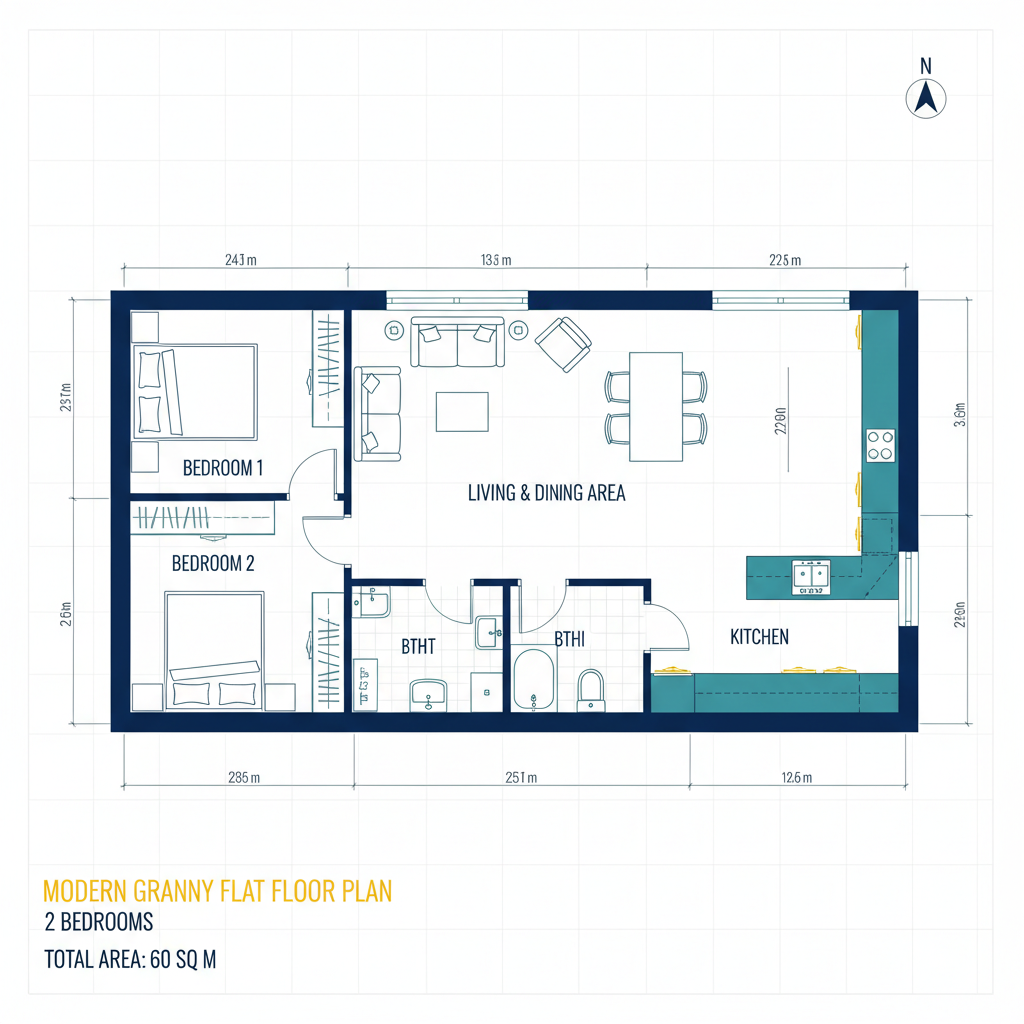
Granny flats—also called secondary dwellings—are self-contained living spaces with their own kitchen, bathroom, and bedroom. They're built on the same lot as your primary dwelling but generate standalone rental income.
Here's the difference that matters for investors:
Duplex vs Dual Key vs Granny Flat
A duplex is two separate homes on one lot, often mirror images, each with its own title. You can sell one side later if you choose. Construction costs run higher because you're building two full-size homes, typically $400,000–$700,000 total in regional markets.
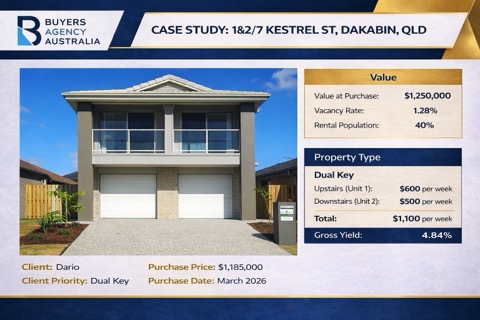
A dual-key property is one building split into two lockable, self-contained sections—usually a larger 3-bedroom and smaller 1-bedroom. Both sit on the same title. Build costs are lower than duplexes because shared walls and services cut expenses. You can't sell them separately, but rental returns rival duplex performance at 60–70% of the build cost.
Granny flats are the most affordable entry point. Construction ranges from $120,000–$200,000 depending on size and finishes. They're capped at 60 square metres in most states but deliver gross yields of 5–8% because land is already owned.
According to planning regulations in Queensland, secondary dwellings can now be rented to anyone—not just family members—opening up investor demand statewide.
Why Council Rules Matter More Than You Think
Every council has different rules. Brisbane allows duplexes on blocks over 400 square metres in most zones. Sydney's complying development rules cap granny flats at 60 square metres and require minimum 450-square-metre lots.
Some councils limit secondary dwelling size to 48 square metres. Others ban dual occupancy outright in certain zones. That's why Buyers Agency Australia screens every property for council restrictions before clients waste time on dead-end deals.
You'll need development approval (DA) or complying development certificates (CDC). CDCs are faster—10 days instead of 12 weeks—but only if your design ticks every box. Miss one setback requirement and you're back to a full DA.
Fire separation, parking (usually one space per dwelling), and BASIX energy ratings also apply. Budget $5,000–$12,000 for approvals, surveys, and certifiers before construction even starts.
How Dual Income Properties Create Multiple Revenue Streams
Two tenants, two leases, two rent payments hitting your account every month. That's the core appeal.
Let's say you buy a house in regional Queensland for $550,000. Rent it as a single dwelling and you'll collect $450–$500 per week—roughly 4.2% gross yield.
Now add a $150,000 granny flat. Your total investment is $700,000. The main house still rents for $450/week. The granny flat pulls $350/week. Combined weekly income: $800. That's $41,600 per year on a $700,000 asset—5.9% gross yield.
You've lifted cash flow by 40% without buying a second property in a different suburb. One mortgage, one set of council rates, one insurance policy.
Real Numbers from Brisbane and Perth Markets
A client of Buyers Agency Australia purchased a 3-bedroom house in Brisbane's northern growth corridor for $580,000. They built a 2-bedroom granny flat for $180,000, bringing total outlay to $760,000.
Rental income:
- Main house: $520/week
- Granny flat: $380/week
- Total: $900/week = $46,800/year
- Gross yield: 6.15%
Compare that to a standalone $760,000 house in the same suburb renting for $550/week (3.76% yield). The dual-income setup generated an extra $18,200 per year before expenses.
In Perth's outer suburbs, investors are seeing similar patterns. A $480,000 house plus $140,000 granny flat delivers combined rent of $780/week—6.5% gross yield in markets where standalone houses yield 4.2%.
According to SQM Research, vacancy rates across Brisbane and Perth sit below 1.2% in early 2026, meaning tenants compete for available properties. Dual-income properties rarely sit vacant because you're targeting two tenant profiles at once—families in the main house, couples or singles in the flat.
Tax Benefits and Depreciation Advantages
Granny flats qualify for tax depreciation on both structure (Division 43) and plant & equipment (Division 40). First-year depreciation claims on a $180,000 granny flat can exceed $5,000, according to Duo Tax Quantity Surveyors.
You're also deducting:
- Loan interest on the construction cost
- Council rates (proportionate to rental use)
- Insurance, repairs, and property management fees
- Depreciation on appliances, carpets, blinds, and air conditioning
If you're negatively geared overall, losses offset your taxable income. But with dual-income properties, many investors achieve positive cash flow after tax, meaning the property pays for itself and puts money in your pocket monthly.
Capital gains tax splits proportionally if you live in one dwelling and rent the other. The ATO's granny flat exemption also applies to family arrangements, removing CGT on creation or termination of certain life-tenancy agreements.
Typical Yields and Cash Flow Benefits Across Australia
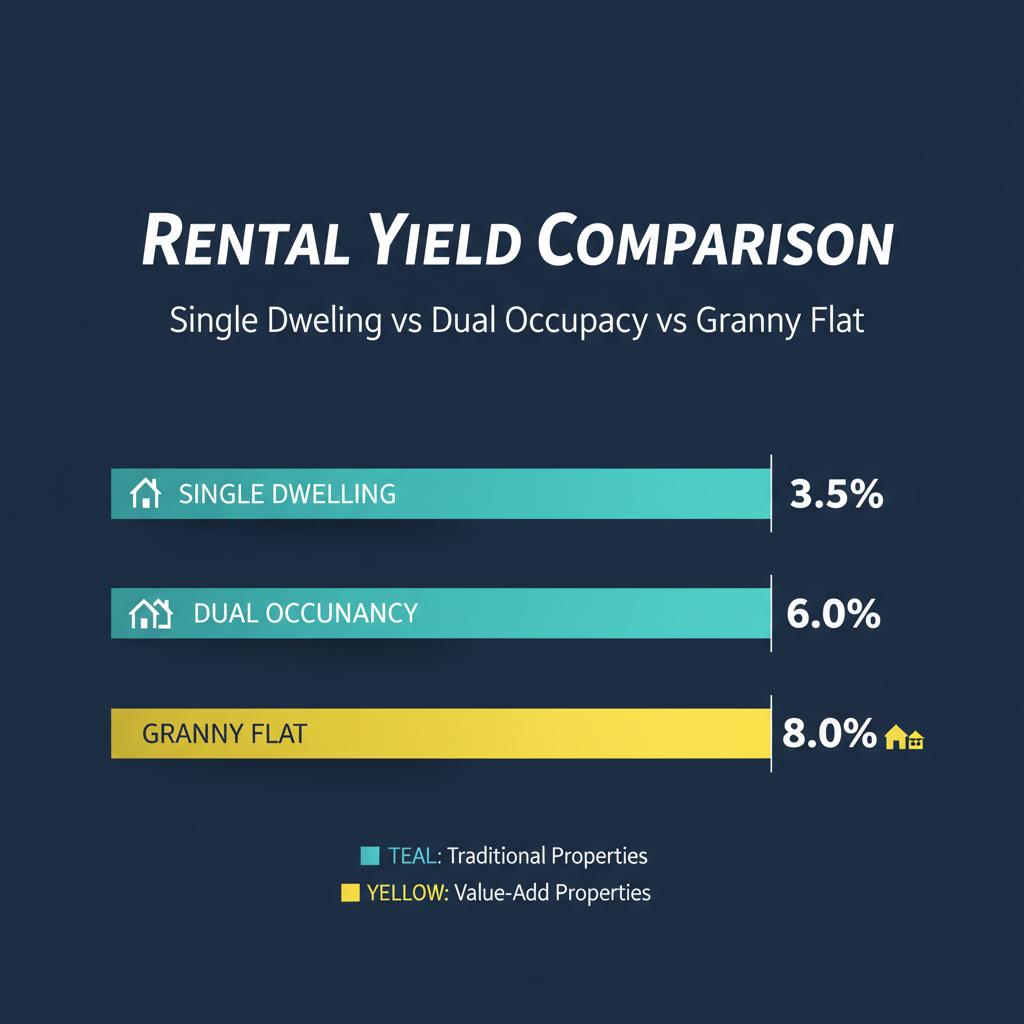
Dual-occupancy properties consistently outperform single-dwelling investments on rental yield. The national average gross yield for houses sits around 4.69% in Q1 2026, per Global Property Guide. Dual-income properties deliver 5–8% in the same markets.
Here's why: you're renting two separate spaces to two separate tenants. Families want 3-bedrooms. Couples or professionals want affordable 1–2 bedroom units. You're capturing both segments on one title.
Yield Comparison by Property Type
| Property Type | Average Gross Yield | Typical Locations |
|---|---|---|
| Single house | 3.5–4.5% | Sydney, Melbourne |
| Duplex (both sides rented) | 5.5–7% | Brisbane, Perth, Adelaide |
| House + granny flat | 6–8% | Regional QLD, NSW Central Coast |
| Dual-key property | 6–7.5% | Gold Coast, Sunshine Coast |
A 2026 rental yield study showed Richmond (Melbourne) 2-bedroom units hitting 5.5% gross yield, but dual-income properties in the same postcodes were delivering 6.8–7.2% because investors owned the land outright and added secondary dwellings for $150,000–$180,000.
Cash Flow Breakeven and Positive Gearing
Cash flow is where dual-income properties shine. Let's model a Perth example:
Purchase price: $500,000 (house)
Granny flat build: $160,000
Total investment: $660,000
Loan amount (90% LVR): $594,000
Interest rate: 6.2% (principal + interest)
Monthly repayment: $3,640
Rental income:
- Main house: $480/week = $2,080/month
- Granny flat: $360/week = $1,560/month
- Total rent: $3,640/month
Monthly expenses:
- Strata/rates: $220
- Insurance: $180
- Maintenance (8% of rent): $290
- Property management (7%): $255
- Total expenses: $945/month
Net cash flow: $3,640 (rent) – $3,640 (loan) – $945 (expenses) = –$945/month
That's still negatively geared, but barely. Now add depreciation. A $5,200 first-year claim at a 37% marginal tax rate saves $1,924 in tax—$160/month.
Adjusted cash flow: –$785/month, or just $182/week out of pocket for a $660,000 asset delivering equity growth.
Compare that to a standalone $660,000 house renting for $550/week with the same loan. Monthly rent: $2,383. Same expenses minus one dwelling's share: roughly $650/month. Net cash flow: –$1,907/month—more than double the shortfall.
Investors using Buyers Agency Australia's 10-year portfolio modelling often target neutral or positive cash flow within 3–5 years as rents rise and loan principal reduces. Dual-income properties get there faster because rental income compounds across two streams.
How Return on Investment Stacks Up
Granny flats typically pay for themselves in 6–10 years through rental income alone, according to Master Granny Flats. Average ROI on granny flat construction runs 10–20%, significantly outperforming the 6.8% average return on all real estate investments reported by the ASX.
A Saltair Modular case study showed a $180,000 granny flat generating $500/week rent delivers a 14.4% gross rental yield on construction cost. Even after expenses, net yield sits above 10%—exceptional for property investment.
Capital growth adds another layer. CoreLogic research suggests granny flats can boost property values by 20–30%. A $150,000 granny flat might add $200,000–$250,000 to sale price in high-demand suburbs, creating instant equity for refinancing or portfolio expansion.
Key Risks: Council Rules, Construction Costs, and Tenant Demand
Dual-income properties aren't foolproof. Here are the traps investors fall into—and how to dodge them.
Council Approval Nightmares
Not every block allows dual occupancy. Zoning overlays, heritage restrictions, and minimum lot sizes can kill deals before they start.
In Brisbane, dual occupancy is code-assessable in most residential zones if your block exceeds 400 square metres. But impact-assessable projects require public notification and council discretion, adding 3–6 months and $10,000–$20,000 in consultant fees.
Sydney's rules are stricter. Granny flats must be subordinate to the main dwelling, comply with 60-square-metre caps, and meet setback requirements. Miss one detail and your CDC application fails, forcing a full DA.
Council approval timelines blow out constantly. Budget 12–20 weeks minimum for DAs, per Brisbane City Council guidelines. Delays cost money—holding costs, lost rental income, and price escalations if builders re-quote after six months.
Work with a buyer's agent who understands local planning schemes. Dragan Dimovski from Buyers Agency Australia flags council risks during initial property screening, saving clients from buying blocks that can't deliver dual income.
Construction Cost Blowouts
Granny flat costs in Australia range from $80,000 for basic prefabs to $250,000+ for custom builds, according to Yellow Pages 2026 data.
But advertised prices rarely include:
- Site preparation (excavation, levelling, retaining walls): $10,000–$40,000
- Service connections (water, sewer, power): $8,000–$15,000
- Council and certifier fees: $5,000–$12,000
- Landscaping and driveways: $5,000–$20,000
Sloping blocks, poor soil, or restricted access push costs higher. A Central Coast builder quoted $225,000 starting price for turnkey 1-bedroom granny flats in 2026, inclusive of approvals and standard finishes.
Always get fixed-price contracts. Progress payments protect you if builders abandon jobs, but retain 5–10% as a defects liability holdback until final inspection.
Tenant Demand and Vacancy Risks
Two dwellings mean two tenants to find, two leases to manage, two sets of maintenance callouts. If both sit vacant, you're covering the full mortgage solo.
The upside: you're diversifying tenant risk. Families rent the main house on 12-month leases. Young professionals or students rent the granny flat short-term. If one tenant leaves, the other's rent still covers 50–60% of your mortgage.
Location determines tenant demand. A granny flat in a mining town might yield 8% when the mine's hiring, but vacancy spikes when contracts dry up. Regional Queensland markets near universities, hospitals, or defence bases deliver stable demand year-round.
Property management fees run 7–10% of rent. For dual-income properties, that's 7% of two rent amounts—higher absolute cost but worth it when juggling multiple tenants, maintenance, and compliance.
Check vacancy rates before buying. SQM Research publishes suburb-level data monthly. Anything below 2% signals strong tenant demand. Above 4% and you'll struggle to keep both dwellings leased consistently.
Financing Challenges for Construction
Most lenders value the land and existing dwelling but won't lend 90% against a granny flat that doesn't exist yet. You'll need equity or cash to fund construction, then refinance post-completion based on the new valuation.
Construction loans release funds in stages—slab, frame, lockup, completion—usually five progress payments. Builders charge more for staged payments because their cash flow tightens. Some demand 50% upfront, which ties up capital before you see bricks.
If you're refinancing, expect a 3–4 week settlement after the granny flat is built and certified. Budget for double mortgage payments during that gap or use a construction loan with interest-only payments during the build.
Buyers Agency Australia connects clients with mortgage brokers who specialise in dual-income property finance, structuring loans to minimise holding costs and maximise serviceability.
Best Locations for Dual Occupancy and Granny Flat Investments
Not all markets suit dual-income strategies. You want strong rental demand, council-friendly planning rules, and affordable land prices that leave room for construction costs.
Regional Queensland: The Cash Flow Champion
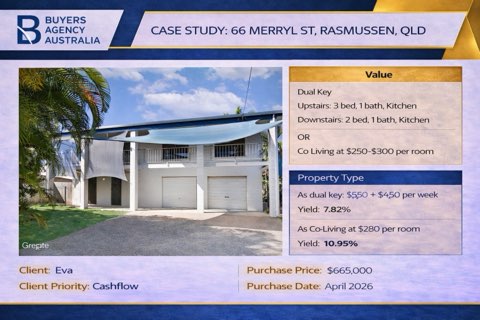
Brisbane's northern growth corridor—Caboolture, Morayfield, Burpengary—delivers house + land packages from $550,000–$650,000. Add a $160,000 granny flat and you're all-in under $800,000 with gross yields pushing 6.5%.
Ipswich and Logan also perform. These suburbs attract families priced out of inner Brisbane, plus renters working in logistics hubs and new employment nodes. Vacancy rates sit below 1%, and rents have grown 12–15% over the past two years.
Toowoomba and the Sunshine Coast hinterland offer similar yield potential with lower land costs. A $480,000 house plus $140,000 granny flat in Toowoomba delivers $720/week combined rent—6.5% gross yield—while benefiting from university and hospital employment anchors.
Queensland's 2022 planning reforms let homeowners rent granny flats to anyone, not just family, turbocharging investor demand. Queensland Government data confirms secondary dwellings no longer face occupancy restrictions statewide.
Perth's Outer Suburbs: Capital Growth + Yield
Perth's northern and southern corridors—Baldivis, Ellenbrook, Alkimos—combine 6–7% gross yields with 10–12% annual capital growth as WA's mining boom reignites.
House prices in these suburbs run $500,000–$600,000. Granny flats cost $140,000–$180,000. Combined rent hits $750–$850/week, delivering yields most Sydney and Melbourne investors only dream about.
WA's planning reforms streamline granny flat approvals. Compliant secondary dwellings on any residential lot size no longer require development approval, cutting timeframes from 12 weeks to under 10 days.
Perth's vacancy rate dropped to 0.8% in late 2025, the tightest in Australia. Tenant demand is fierce, and landlords are capturing 5–8% annual rent increases. Dual-income properties fill faster because you're offering two different price points on the same block.
NSW Central Coast: Sydney Spillover Demand
Gosford, Wyong, and Lake Macquarie attract Sydney renters seeking affordability without losing access to capital city jobs. Median house prices sit around $700,000–$850,000, with granny flat construction costs of $180,000–$225,000.
Combined rental income runs $850–$1,000/week, delivering 5.5–6.2% gross yields. Capital growth tracks 6–8% annually as Sydney's northern sprawl pushes demand outward.
The Central Coast's complying development rules allow granny flats on blocks over 450 square metres, provided you meet setbacks and height limits. Most suburbs qualify, making council approval straightforward.
Transport infrastructure upgrades—faster trains to Sydney, new motorway links—are lifting property values and rental demand. Investors who bought five years ago are sitting on 40–50% equity growth while collecting dual rent streams.
Adelaide's Affordable Entry Points
Adelaide offers the cheapest entry into dual-income property. Houses in growth suburbs like Munno Para, Smithfield, and Elizabeth start at $400,000–$500,000. Granny flats cost $120,000–$160,000.
Total investment: $550,000–$650,000. Combined rent: $650–$750/week. Gross yield: 5.8–6.5%.
Adelaide's rental vacancy sits at 1.3%, and population growth is accelerating as interstate migrants discover affordability. The state government's recent secondary dwelling reforms removed family-only occupancy rules, opening granny flats to all tenants.
Capital growth lags Perth and Brisbane, but cash flow is king in Adelaide. Investors prioritising monthly income over equity gains find exceptional opportunities here.
How Buyers Agency Australia Identifies High-Yield Dual Income Properties

Dragan Dimovski built his $10M+ portfolio using the same strategies he teaches clients—targeting cash flow over hype, screening for council approval risks, and running 10-year financial models before buying.
Buyers Agency Australia specialises in dual-income property acquisition across Brisbane, Perth, Adelaide, and regional growth markets. Here's how the process works:
Step 1: Cash Flow Modelling Before Purchase
Every property gets a 10-year financial projection. That includes rent growth assumptions, interest rate sensitivity testing, maintenance reserves, and tax benefits from depreciation.
If a property can't deliver positive cash flow within five years under conservative assumptions, it's rejected. No exceptions.
Clients see exactly what their monthly out-of-pocket cost will be in year one, year three, and year five. No surprises, no glossy brochures hiding negative cash flow.
Step 2: Council and Zoning Due Diligence
Before clients make offers, Buyers Agency Australia checks:
- Zoning overlays and planning scheme codes
- Minimum lot size requirements for dual occupancy
- Setback, height, and floor area restrictions
- Easements, covenants, or heritage listings that block development
If a block can't support a granny flat or duplex, it's off the list. Clients only see properties where dual income is council-approved and financially viable.
Step 3: Sourcing Off-Market Deals and Builder Networks
Many dual-income opportunities never hit the open market. Builders with house + granny flat packages, developers offering duplex pre-sales, and vendors willing to include granny flat construction in sale contracts.
Buyers Agency Australia maintains relationships with builders, quantity surveyors, and mortgage brokers who specialise in dual-income finance. Clients get fixed-price construction quotes and pre-approved loan structures before signing contracts.
Step 4: Negotiation and Post-Purchase Support
Dragan's 20+ years of experience means he knows what properties are worth—and what vendors will accept. Clients regularly save $20,000–$50,000 on purchase price, covering buyer's agent fees and then some.
Post-settlement, Buyers Agency Australia coordinates granny flat construction, council approvals, and refinancing. Clients aren't left scrambling to manage builders and certifiers solo.
For time-poor professionals—doctors, IT workers, business owners—this end-to-end service removes the stress of DIY property investment. You get the dual income without the headaches.
Book a free strategy session to discuss your dual-income property goals and portfolio plans.
Frequently Asked Questions
What is the average rental yield for a granny flat in Australia?
Granny flats typically deliver 6–8% gross rental yields, with construction costs of $120,000–$200,000 generating $350–$500 weekly rent in most regional and outer-metro markets.
Can I build a granny flat on any residential block?
No. Minimum lot sizes vary by council—usually 450 square metres in NSW, 400 square metres in Queensland. Zoning, heritage overlays, and easements can also prohibit secondary dwellings.
How long does granny flat construction take?
Physical construction takes 10–14 weeks for prefab builds, 16–20 weeks for custom builds. Add 8–12 weeks for council approvals unless you qualify for complying development (10 days).
Are dual-income properties harder to sell?
No. Properties with proven rental income attract investor buyers and families wanting multi-generational living. Many sell faster and for higher prices than single-dwelling equivalents in the same suburb.
What are the tax benefits of owning a granny flat?
You can claim depreciation on structure and fittings, deduct loan interest, rates, insurance, and repairs. First-year depreciation often exceeds $5,000, reducing taxable income significantly.
Final Thoughts: Why Dual Income Beats Buying Two Properties
Dual-occupancy and granny flat strategies let investors scale portfolios faster with less capital. Instead of scraping together deposits for two separate properties, you're building equity and cash flow on one block.
The maths is compelling: higher yields, lower vacancy risk, one set of holding costs, and faster paths to positive cash flow. Regional Queensland, Perth, and NSW Central Coast markets are delivering 6–8% gross yields right now, with tenant demand tight and rents rising.
But success depends on getting council approvals right, controlling construction costs, and buying in locations where tenant demand stays strong long-term. That's where Buyers Agency Australia's fixed-fee, transparent approach removes the guesswork.
If you're serious about building a cash-flow-positive portfolio without the fluff, dual-income properties deserve a hard look. The rental crisis isn't easing, and investors who position now will capture the yield premiums while everyone else chases capital growth in overpriced metro markets.
Ready to explore dual-income opportunities in your target market? Contact Buyers Agency Australia to start your portfolio strategy session today.