Rentvesting is a property investment strategy where you rent a home in your preferred lifestyle location while purchasing an investment property in a more affordable area. This approach allows Australians to enter the property market sooner without sacrificing their desired living arrangements, building equity through strategic property ownership while maintaining lifestyle flexibility.
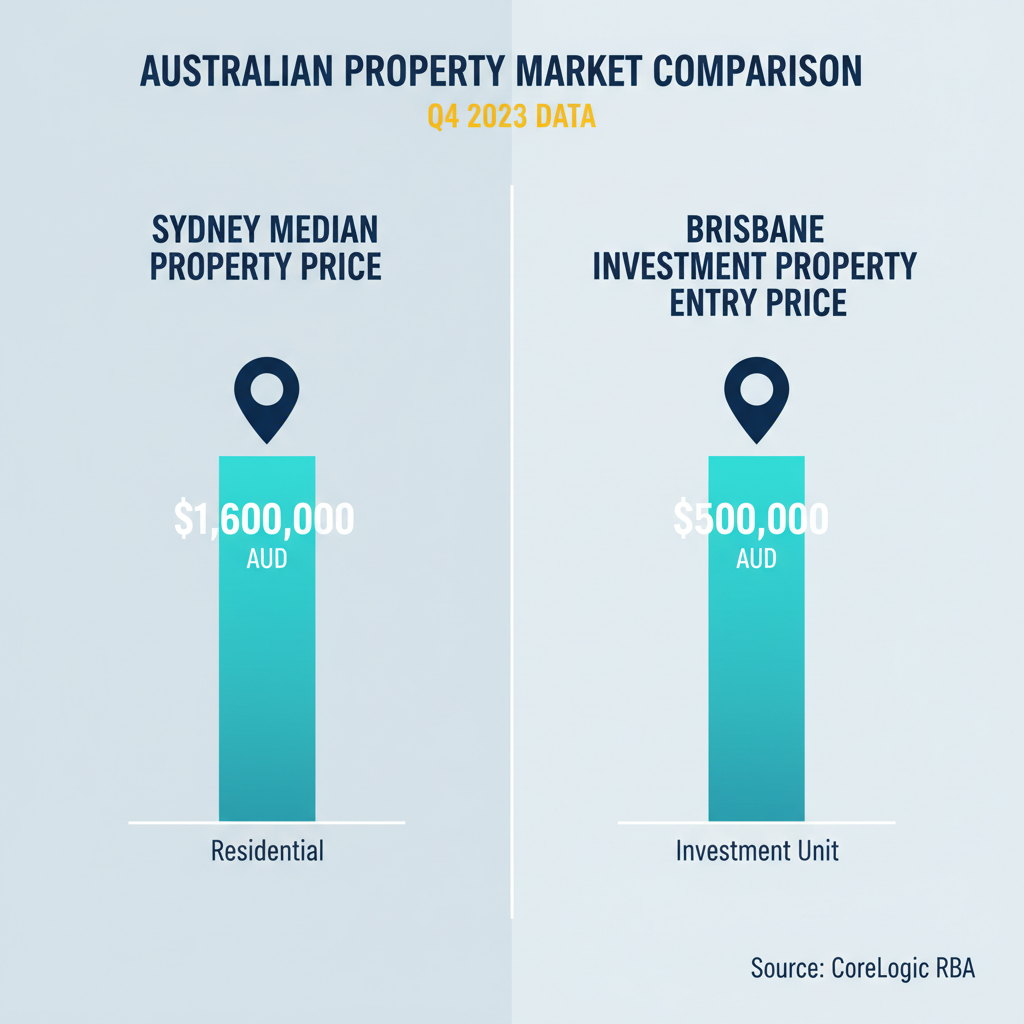
We've all been there. You're earning good money, saving diligently, but the gap between what you can afford and what it costs to buy in your dream suburb keeps widening. Sydney's median dwelling price sits at $1.29 million, Melbourne at $826,000, and even Brisbane has climbed to $1.08 million as of February 2026.
For many Australians locked out of buying where they live, rentvesting offers a practical path forward. Instead of waiting years to save enough for a deposit in an expensive area, you can start building wealth through property investment today. Buyers Agency Australia helps investors and first-home buyers across Sydney, Melbourne, Brisbane, Perth, and Adelaide identify high-growth investment opportunities that align with their long-term goals.
Let's explore how rentvesting works, who it suits, and the benefits and risks you need to understand before taking this path.
Understanding the Rentvesting Challenge
Why Australians Are Priced Out of Their Preferred Markets
The November 2025 Cotality Housing Affordability Report revealed that Australia's median house price in major cities is more than eight times the average household income. Saving a standard 20% deposit now takes more than a decade in most capital cities.
Since the 2020 COVID lockdowns, Australian home values have risen 47.3%. If you're a young professional renting in Bondi, Fitzroy, or New Farm, buying a property in these suburbs may feel impossible. The entry price for a two-bedroom apartment in inner Sydney often exceeds $1 million.
Meanwhile, rental payments are typically lower than mortgage repayments in expensive suburbs. This creates a financial paradox: you can afford to live in a premium area as a renter, but not as an owner.
The Traditional Home Ownership Model vs Modern Reality
The traditional Australian dream followed a linear path: save a deposit, buy a home where you live, and build equity over decades. This model worked when property prices grew steadily at 2-3 times average household income.
Today's reality is different. Young Australians face:
- Record-high property prices relative to wages
- Fierce competition from investors and upgraders with substantial equity
- Rising interest rates that reduce borrowing capacity
- Limited supply in desirable inner-city areas
Rentvesting emerged as a response to these pressures. Rather than delaying property ownership indefinitely, this strategy separates where you live from where you invest.
How Rentvesting Bridges the Gap
Rentvesting allows you to maintain your lifestyle in a location close to work, amenities, and social networks while purchasing an investment property in a high-growth, affordable area elsewhere.
For example, you might continue renting a two-bedroom apartment in Melbourne's inner east for $600 per week while purchasing a three-bedroom house in Brisbane's growth corridor for $650,000. Your tenant's rent covers most of your mortgage repayments, and you benefit from potential capital growth in a stronger market.
According to the Australian Bureau of Statistics, approximately 8,283 first-home buyers chose investment home loans in 2024, a 12% increase from 2023. This growth significantly outpaced the 5% rise in owner-occupier loan commitments over the same period.
How the Rentvesting Strategy Works
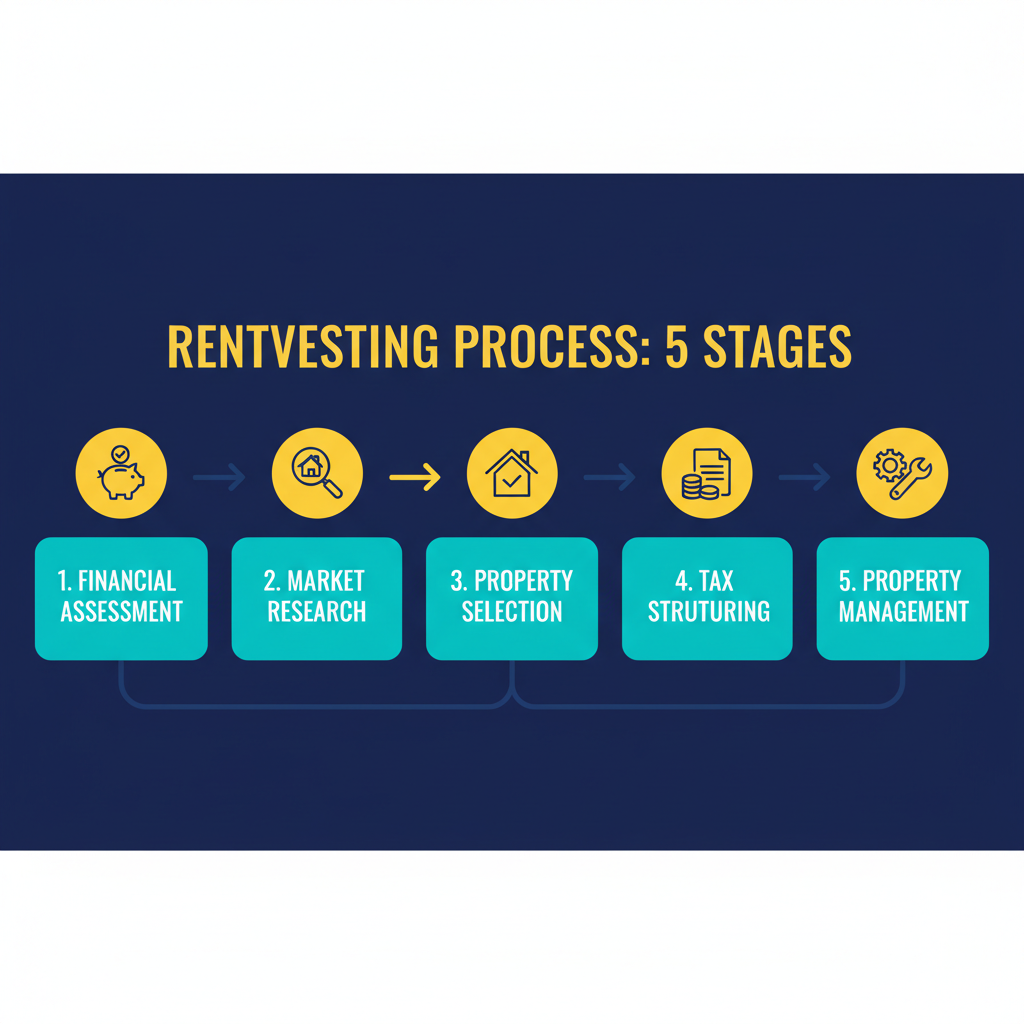
Step 1: Assess Your Financial Position
Before pursuing rentvesting, you need to understand your borrowing capacity. Lenders assess investment property loans differently from owner-occupier loans. Expect higher interest rates (typically 0.2-0.5% higher) and stricter serviceability tests.
Calculate these key metrics:
- Your deposit amount (typically 10-20% for investment properties)
- Stamp duty costs in your target state
- Ongoing holding costs (council rates, insurance, property management fees, maintenance)
- Your rental expenses for where you currently live
Working with a buyers agent who understands investment lending can save you time. Buyers Agency Australia offers a free strategy session to help investors structure their finances correctly from the start.
Step 2: Identify High-Growth Investment Markets
Successful rentvesting depends on buying in the right location. You're not looking for your dream home. You're looking for a property with strong fundamentals:
- Population growth and infrastructure investment
- Rental demand and low vacancy rates (below 2%)
- Entry prices that allow positive or neutral cash flow
- Capital growth potential over 7-10 years
As of 2026, Perth, Brisbane, and Adelaide continue to outperform Sydney and Melbourne. Perth jumped 2.3% in February 2026 alone, adding $22,500 to the median dwelling value. Regional markets like Geelong, Ballarat, and Newcastle also deliver strong rental yields (4.5-5.5%) with lower entry prices.
Dragan Dimovski, founder of Buyers Agency Australia, uses his 20+ years of experience and $10M+ personal portfolio to identify markets at the right point in the property cycle. This boots-on-the-ground research helps investors avoid overpaying in overheated markets.
Step 3: Select the Right Property Type
The property you buy matters as much as the location. Rentvestors typically prioritise:
- Broad tenant appeal (3-bedroom houses, 2-bedroom units near transport)
- Low maintenance requirements (newer properties with minimal defects)
- Strong rental yield (4-6% gross yield depending on market)
- Potential for long-term capital growth
Avoid niche properties that limit your tenant pool, such as studios, one-bedroom apartments in oversupplied areas, or properties with unusual layouts. Your investment property should appeal to families, professionals, or downsizers who form the stable rental market.
Step 4: Structure Your Finances for Tax Efficiency
Rentvesting offers significant tax advantages that owner-occupiers don't receive. When you borrow money to purchase an investment property, 100% of your loan interest is tax-deductible against your assessable income.
Other deductible expenses include:
- Property management fees (typically 7-8% of rental income)
- Council rates, water rates, and land tax
- Building and contents insurance
- Repairs and maintenance
- Depreciation on the building and fixtures
Depreciation is particularly valuable because it's a non-cash deduction. You can claim the declining value of your property and its contents as a tax deduction even though no money leaves your pocket. A depreciation schedule from a quantity surveyor typically identifies $10,000-$15,000 in annual deductions for newer properties.
Higher income earners receive greater tax benefits from the same investment expenses. If you're in the 37% tax bracket plus 2% Medicare levy, every $1,000 in deductible expenses saves you $390 in tax.
For detailed guidance on negative gearing and tax structuring, consult with a property tax specialist or explore resources from the Australian Taxation Office.
Step 5: Engage a Property Manager
Unless you live near your investment property, professional property management is essential. A good property manager handles:
- Tenant screening and lease agreements
- Rent collection and arrears management
- Routine inspections and maintenance coordination
- Compliance with state tenancy legislation
Property management fees typically range from 7-8% of rental income plus letting fees (equivalent to one to two weeks' rent when a new tenant moves in). This cost is tax-deductible and provides peace of mind, especially for interstate investors.
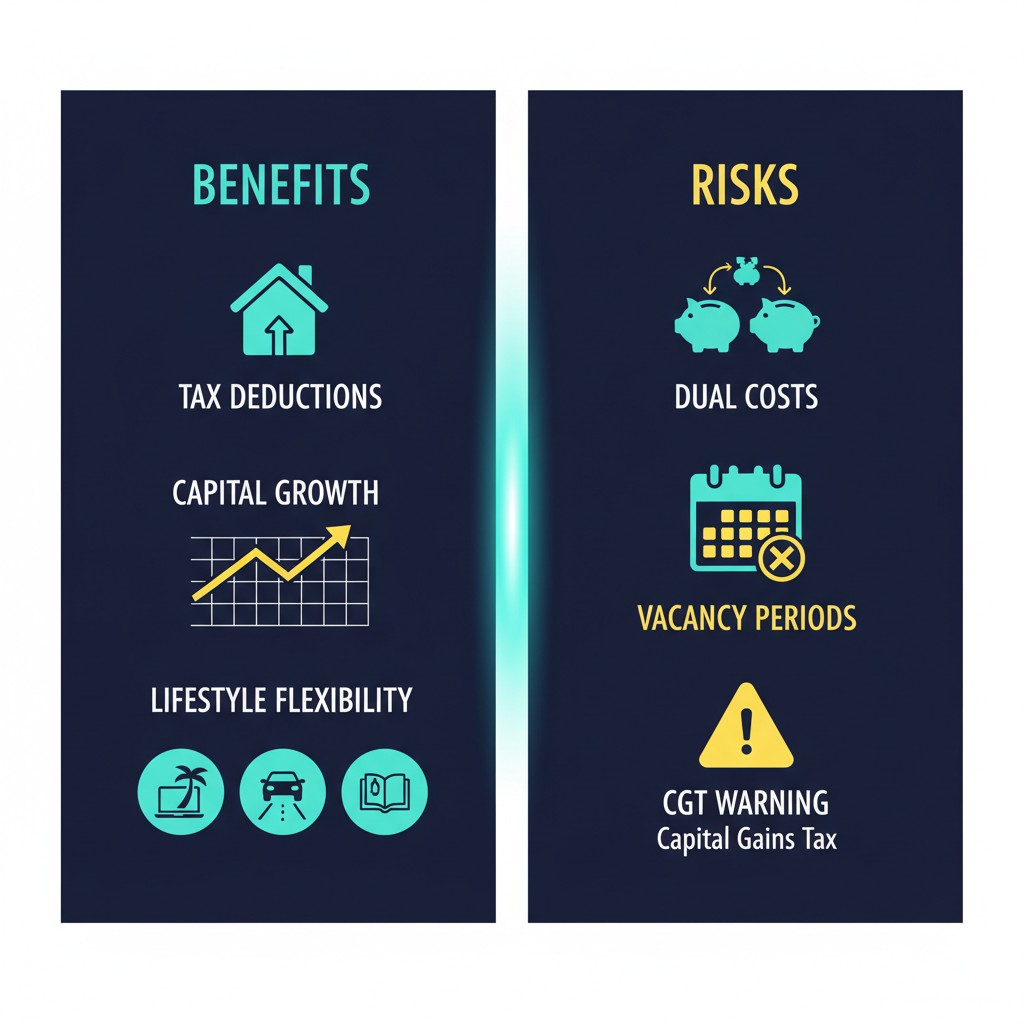
Key Benefits of Rentvesting
Enter the Property Market Sooner
Rentvesting removes the need to save a deposit for an expensive property in your preferred suburb. Instead of waiting 10-15 years to save $200,000 for a 20% deposit in inner Sydney, you can enter the market with $60,000-$80,000 in a high-growth regional or interstate area.
Time in the market beats timing the market. Starting your property investment journey earlier means you benefit from compound capital growth over a longer period. A property purchased today for $600,000 that grows at 6% annually will be worth approximately $1.07 million in 10 years.
Maintain Your Preferred Lifestyle
Rentvesting lets you live where you want now without financial compromise. You can rent an apartment near the beach, close to your workplace, or in a vibrant urban precinct while your investment property builds equity elsewhere.
This lifestyle flexibility is particularly valuable for young professionals, couples without children, or anyone whose location priorities may change over the next 5-10 years. Renting gives you mobility that ownership doesn't provide.
Build Wealth Through Capital Growth and Rental Income
Investment properties generate wealth through two channels: capital growth and rental income. Over a 10-year period, capital growth typically contributes 70-80% of total returns, with rental income providing 20-30%.
According to CoreLogic data, combined regional areas have experienced 54% growth over five years, while combined capital cities rose 36%. Top-performing regional markets delivered returns between 90-100% over the same period.
When selected correctly, your investment property's rental income should cover most or all of your mortgage repayments, council rates, and insurance. In some cases, rental income may exceed expenses, creating positive cash flow that supplements your income.
Tax Advantages Not Available to Owner-Occupiers
Owner-occupiers receive no tax deductions for mortgage interest, rates, or maintenance. Investment property owners can deduct all of these expenses.
Negative gearing makes property investment more affordable by allowing you to offset any loss against your other taxable income. While making a loss on an investment property might seem counterintuitive, many investors accept short-term negative cash flow expecting that capital gains when they sell will more than offset those losses.
A 50% capital gains tax (CGT) discount applies to investment properties held for more than 12 months. If you purchase a property for $600,000 and sell it 10 years later for $1 million, you'll pay CGT on only 50% of the $400,000 gain (less purchase and sale costs).
Diversification Beyond Your Principal Residence
Rentvesting allows you to spread your investments across different asset types and locations. Rather than having all your wealth tied up in one expensive property in one city, you can diversify your portfolio with properties in different states or regions.
This strategy reduces concentration risk. If your local market experiences a downturn due to economic changes, your investment property in another market may continue performing strongly.
Many experienced rentvestors limit their search to properties within a three-hour drive or one-hour flight of where they live. Brisbane is a one-hour flight from both Sydney and Melbourne, making it ideal for rentvestors in those cities who want periodic access to their investment.
Risks and Considerations of Rentvesting
Dual Housing Costs and Cash Flow Pressure
Rentvesting means paying rent and a mortgage simultaneously. While rental income from your investment property offsets some mortgage costs, you need sufficient cash flow to cover both obligations comfortably.
If your investment property experiences vacancy periods or requires unexpected repairs, you must cover the full mortgage repayment plus your own rent. Emergency funds equivalent to 3-6 months of combined housing costs are essential.
Interest rate rises also impact investment properties more severely. Lenders apply higher rates to investment loans, and when the Reserve Bank increases the cash rate, your holding costs increase accordingly.
Limited Control Over Your Living Situation
As a renter, you don't control the property you live in. Landlords may increase rent, refuse lease renewals, or decide to sell the property. Tenancy laws vary by state, but renters generally have less security than owners.
Rent increases have been significant in recent years. Premium suburbs in Melbourne and Sydney saw rent increases of up to 15% year-on-year in 2025, squeezing cash flow for rentvestors.
You also can't make major modifications to your rental property without landlord approval. This lack of control can feel frustrating, particularly if you're renting long-term.
Missing Out on First Home Buyer Incentives
When you purchase an investment property first, you may lose access to valuable first home buyer incentives in some states. These include:
- First Home Owner Grant (typically $10,000-$15,000 for new properties)
- Stamp duty concessions or exemptions
- First Home Guarantee Scheme (5% deposit with government guarantee)
However, recent changes to the First Home Guarantee now allow eligible buyers to purchase with a 5% deposit and government guarantee, reducing this disadvantage. The key is calculating whether the potential capital gains from starting your property journey earlier outweigh the value of first home buyer concessions.
For specific state-by-state incentives, check the First Home Buyers Assistance resource.
Capital Gains Tax When You Sell
Owner-occupiers pay no capital gains tax when they sell their principal residence. Investment property owners pay CGT on any profit made from the sale.
A 50% CGT discount applies for properties held longer than 12 months, but this still represents a significant tax liability. If you're in the 37% tax bracket and sell an investment property for a $400,000 gain, you'll pay approximately $74,000 in CGT (after the 50% discount).
Proper tax planning and consultation with an accountant can help minimise this liability through strategies like holding properties long-term or timing sales during lower-income years.
Market Risk and Property Selection
Not all investment properties perform equally. Buying in the wrong location, at the wrong price, or at the wrong time in the property cycle can result in poor returns or even capital losses.
Common mistakes include:
- Purchasing off-the-plan apartments in oversupplied areas
- Buying based on rental yield alone without considering capital growth potential
- Investing in resource-dependent towns without understanding economic cycles
- Overpaying in hot markets due to fear of missing out
Working with an experienced buyers agent helps avoid these pitfalls. Buyers Agency Australia conducts thorough due diligence on every property, including building and pest inspections, strata reports, and local market analysis.
The Emotional Challenge of Not Owning Your Home
For many Australians, the Great Australian Dream means owning the home you live in. Rentvesting can feel like you're not truly achieving homeownership, even though you're building equity through investment property.
Family and friends may question your decision, viewing renting as 'dead money' without understanding the financial strategy behind rentvesting. This social pressure can be emotionally challenging, particularly if you're comparing yourself to peers who have purchased their principal residence.
It's important to remember that rentvesting is a stepping stone, not a permanent state. Many rentvestors eventually transition to owner-occupied property once they've built sufficient equity, improved their borrowing capacity, or changed their lifestyle priorities.
Example of a Rentvesting Scenario in Australia
Meet Sarah: A Sydney-Based Marketing Manager
Sarah is 32, earns $120,000 annually, and has saved $80,000 for a property deposit. She currently rents a one-bedroom apartment in Surry Hills for $650 per week, close to her workplace and social network.
Buying in Surry Hills is impossible. Even a modest two-bedroom apartment costs $1.2 million, requiring a $240,000 deposit plus $50,000 in stamp duty and purchasing costs.
Sarah could compromise and buy a two-bedroom unit in Sydney's outer west for $750,000, but this would mean moving 45km from her workplace, adding 90 minutes to her daily commute, and leaving the lifestyle she values.
Sarah Chooses to Rentvest
After speaking with a buyers agent from Buyers Agency Australia, Sarah decides to pursue rentvesting. She continues renting in Surry Hills while purchasing an investment property in Brisbane's growth corridor.
She identifies a three-bedroom, two-bathroom house in Logan Reserve, Brisbane, for $650,000. Here's how the numbers work:
Purchase Details:
- Purchase price: $650,000
- Deposit (10%): $65,000
- Stamp duty and costs: $15,000
- Total upfront: $80,000
- Loan amount: $585,000
Monthly Cash Flow:
- Mortgage repayment (6.5% interest): $3,800
- Council rates, insurance, property management: $600
- Total monthly costs: $4,400
- Rental income: $3,200
- Monthly shortfall: $1,200
Tax Benefits:
- Annual interest deduction: ~$38,000
- Other deductible expenses: ~$7,200
- Depreciation: ~$12,000
- Total deductions: ~$57,200
- Tax saving (39% bracket): ~$22,300 annually
- Monthly tax benefit: ~$1,860
Net Position:
- Monthly shortfall: $1,200
- Monthly tax benefit: $1,860
- Net monthly position: +$660
Sarah's investment property is positively geared after tax. She maintains her Sydney lifestyle while building equity in a Brisbane property expected to grow 8-10% annually over the next decade.
Five Years Later
After five years, Sarah's Brisbane property has grown from $650,000 to approximately $950,000 (assuming 8% average annual growth). She's built $300,000 in equity plus reduced her loan by $50,000 through mortgage payments.
Sarah's total equity is now $350,000. She can either:
- Use this equity to purchase her Sydney home while keeping the investment property
- Sell the Brisbane property and use the proceeds as a deposit in Sydney
- Continue rentvesting and purchase a second investment property
Rentvesting gave Sarah a 5-year head start compared to waiting to save enough for a Sydney deposit. That time in the market generated substantial wealth that wouldn't exist if she'd continued renting without investing.
Who Rentvesting May Suit
First Home Buyers Priced Out of Preferred Markets
If you're earning good income but can't afford to buy where you want to live, rentvesting offers a practical entry point. This strategy is particularly suited to first home buyers in expensive markets like Sydney, Melbourne, and inner Brisbane.
You maintain your lifestyle and social connections while building equity in a more affordable market. Over time, that equity can become the deposit for your dream home.
Young Professionals with Career Mobility
If your career may require relocation over the next 5-10 years, rentvesting provides flexibility. You're not locked into living in the property you own, so job opportunities in different cities remain accessible.
Your investment property continues generating returns regardless of where you live. Professional property management handles day-to-day operations remotely.
High-Income Earners Seeking Tax Benefits
Rentvesting is particularly tax-effective for high-income earners in the 37% or 45% tax brackets. The ability to negatively gear an investment property and deduct all expenses against your income creates significant tax savings.
For doctors, IT professionals, business owners, and other high-net-worth individuals, rentvesting can be part of a broader wealth-building strategy that includes property, shares, and superannuation.
Investors Building a Property Portfolio
Experienced investors often use rentvesting to scale their property portfolios. Rather than being emotionally attached to living in the properties they own, they treat real estate as a wealth-building vehicle.
Dragan Dimovski focuses on purchasing properties in high-growth markets with strong fundamentals, rather than limiting himself to areas where he wants to live personally.
Rentvesting allows portfolio investors to acquire multiple properties over time, each selected for investment performance rather than lifestyle suitability.
Expats and Interstate Workers
Australians working overseas or interstate often rentvest by default. If you're based in Melbourne but work on a mining site in Western Australia, or if you're living abroad temporarily, owning an investment property in Australia builds equity while you're away.
Expats returning to Australia also benefit from having a buyers agent scout properties on the ground. Buyers Agency Australia provides remote property search services for expats who can't inspect properties in person.
Who Rentvesting May Not Suit
Rentvesting isn't right for everyone. Consider alternative strategies if you:
- Need the emotional security of owning your home
- Plan to start a family and want stability for children
- Lack sufficient cash flow to cover dual housing costs
- Don't have emergency savings for vacancy or repairs
- Prefer to invest in other asset classes like shares or ETFs
Property investment requires a long-term commitment (7-10 years minimum) to ride out market cycles and benefit from capital growth. If you're not comfortable with this timeframe or the responsibilities of being a landlord, rentvesting may not align with your goals.
How Buyers Agency Australia Helps Rentvestors Succeed

Expert Market Analysis and Property Selection
Dragan Dimovski and the Buyers Agency Australia team specialise in identifying investment-grade properties across Sydney, Melbourne, Brisbane, Perth, and Adelaide. They use data-driven research combined with boots-on-the-ground local knowledge to find properties at the right point in the property cycle.
Rather than chasing hot markets or relying on marketing hype, they focus on fundamentals:
- Population growth and infrastructure investment timelines
- Rental demand metrics and vacancy rate trends
- Supply constraints that support price growth
- Entry prices that align with your budget and cash flow requirements
This disciplined approach helps rentvestors avoid common pitfalls like buying off-the-plan in oversupplied areas or overpaying in peak markets.
Transparent Fixed-Fee Pricing
Unlike commission-based agents who benefit from higher sale prices, Buyers Agency Australia uses a transparent fixed-fee model. This removes the conflict of interest and ensures their recommendations align with your investment goals, not their commission targets.
Fixed fees also make budgeting easier. You know upfront exactly what the buyers agent service will cost, with no surprises at settlement.
End-to-End Property Search and Negotiation
For time-poor professionals, Buyers Agency Australia handles the entire property search process:
- Shortlisting properties that meet your investment criteria
- Conducting thorough due diligence (building and pest inspections, strata reports, title searches)
- Attending inspections and auctions on your behalf
- Negotiating purchase prices to ensure you don't overpay
- Managing the conveyancing and settlement process
This service is particularly valuable for interstate or overseas investors who can't inspect properties in person. You receive detailed property reports, photos, and video walkthroughs before making purchase decisions.
Long-Term Wealth Strategy and Portfolio Planning
Rentvesting is rarely a one-off decision. Most investors eventually transition to owning their principal residence or expand into a multi-property portfolio.
Buyers Agency Australia provides 10-year portfolio modelling to ensure each property purchase aligns with your long-term wealth creation goals. This strategic planning helps you understand:
- When to transition from rentvesting to owner-occupied property
- How to use equity from your first investment to purchase additional properties
- Tax structuring strategies to maximise after-tax returns
- Exit strategies and timing for selling investment properties
Dragan's 20+ years of experience means he's guided investors through multiple property cycles, understanding how markets behave in different economic conditions.
Ready to explore whether rentvesting suits your financial situation? Book a free strategy session with Buyers Agency Australia to discuss your goals, budget, and timeline.
Frequently Asked Questions About Rentvesting
Is rentvesting better than buying a home to live in?
It depends on your financial goals and lifestyle priorities. Rentvesting allows faster market entry and tax benefits, while owner-occupier purchase provides emotional security and no capital gains tax when you sell.
Can I claim tax deductions on my rental property if I'm rentvesting?
Yes. Investment properties qualify for deductions including loan interest, property management fees, council rates, insurance, repairs, maintenance, and depreciation. These deductions aren't available for owner-occupied homes.
Will I lose access to first home buyer grants if I rentvest?
Possibly, depending on your state. Some first home buyer incentives only apply to owner-occupied purchases. However, earlier market entry and capital growth often outweigh the value of these grants. Consult a property strategist to model both scenarios.
How much deposit do I need to start rentvesting?
Most lenders require 10-20% deposit for investment properties. A 10% deposit ($60,000-$80,000) is achievable for properties in the $600,000-$800,000 range in Brisbane, Adelaide, or regional markets. Higher deposits reduce lenders mortgage insurance costs.
What if my investment property has vacancy periods?
Vacancy is a normal part of property investment. Choose properties with broad tenant appeal in areas with low vacancy rates (below 2%) to minimise risk. Maintain an emergency fund covering 3-6 months of mortgage payments to manage vacancy periods comfortably.
Take the Next Step Toward Property Ownership
Rentvesting offers a practical path for Australians who refuse to let high property prices delay their wealth-building journey. By separating where you live from where you invest, you can maintain your lifestyle while building equity in high-growth markets.
The strategy isn't without risks. Dual housing costs, market selection, and emotional challenges require careful consideration. But for many first-home buyers and investors, rentvesting provides the flexibility and financial advantages that traditional home ownership can't match.
Success in rentvesting depends on buying the right property, in the right market, at the right price. That's where expert guidance makes the difference.
Buyers Agency Australia specialises in helping rentvestors identify investment-grade properties across Australia's major capital cities and high-growth regional areas. With Dragan Dimovski's 20+ years of experience, transparent fixed-fee pricing, and data-driven market analysis, you'll receive personalised advice aligned with your long-term financial goals.
Speak with a property investment strategist at Buyers Agency Australia for personalised advice on whether rentvesting suits your financial goals. Book your free strategy session today and take the first step toward property ownership on your terms.