Buying an investment property in Australia involves securing pre-approval finance, researching high-growth markets, conducting thorough due diligence including building and pest inspections, negotiating the purchase price, and completing settlement within 30 to 90 days. Each stage requires careful planning to avoid costly mistakes and build long-term wealth.
If you're serious about property investment, understanding the complete process is critical. Over 87% of real estate professionals expect property values to rise in 2026, with Perth, Brisbane, and Adelaide leading growth at 6 to 20 percent annually. Yet many investors rush in without a clear roadmap, only to overpay, buy in the wrong location, or encounter unexpected repair bills.
This guide walks you through every step of the investment property journey, from securing finance through to settlement day. We'll cover the practical tasks, timelines, costs, and common traps, drawing on current 2026 market data and the expertise of Buyers Agency Australia, a national firm specialising in data-driven investment strategies and transparent fixed-fee advocacy.
Why Buy an Investment Property in 2026
Strong Market Fundamentals Support Long-Term Growth
Australia's property market continues to defy predictions of decline. National capital city dwelling prices rose 9.5% over the 12 months to February 2026, driven by chronic housing undersupply, population growth, and tight rental markets.
Perth led the charge with 13% annual growth in 2025, followed by Brisbane at 12% and Adelaide at 9%. Regional markets across Western Australia and Queensland also delivered above-average returns, with some areas posting 16% annual gains.
Rental Yields and Tax Benefits Remain Attractive
Rental vacancy rates sit near historic lows across most capital cities. Combined with rental growth averaging 5% per year, investors are seeing strong cash flow support.
Australia's negative gearing framework allows investors to offset rental losses against salary income, reducing taxable income. When combined with depreciation deductions and the 50% capital gains tax discount (for assets held over 12 months), property remains one of the most tax-effective wealth-building strategies available.
The Two-Speed Market Creates Opportunity
Not all markets are equal. Sydney and Melbourne have experienced slower growth due to affordability constraints, while Perth, Adelaide, and Brisbane continue to outperform.
This two-speed dynamic rewards investors who conduct rigorous research and select properties based on fundamentals rather than headlines. That's where having a structured process becomes essential.
Step 1: Get Your Finance Pre-Approved
Understand Your Borrowing Capacity
Before you start browsing listings, speak to a mortgage broker or lender to understand how much you can borrow. Investment loans differ from owner-occupier loans. Lenders assess rental income at 80% of market rent and apply higher interest rate buffers (typically 3%).
APRA's new debt-to-income (DTI) cap, effective February 2026, limits lenders to issuing no more than 20% of new loans at a DTI ratio of six times income or higher. This means borrowing capacity is now more constrained for investors with existing debt or lower incomes.
Secure Pre-Approval Early
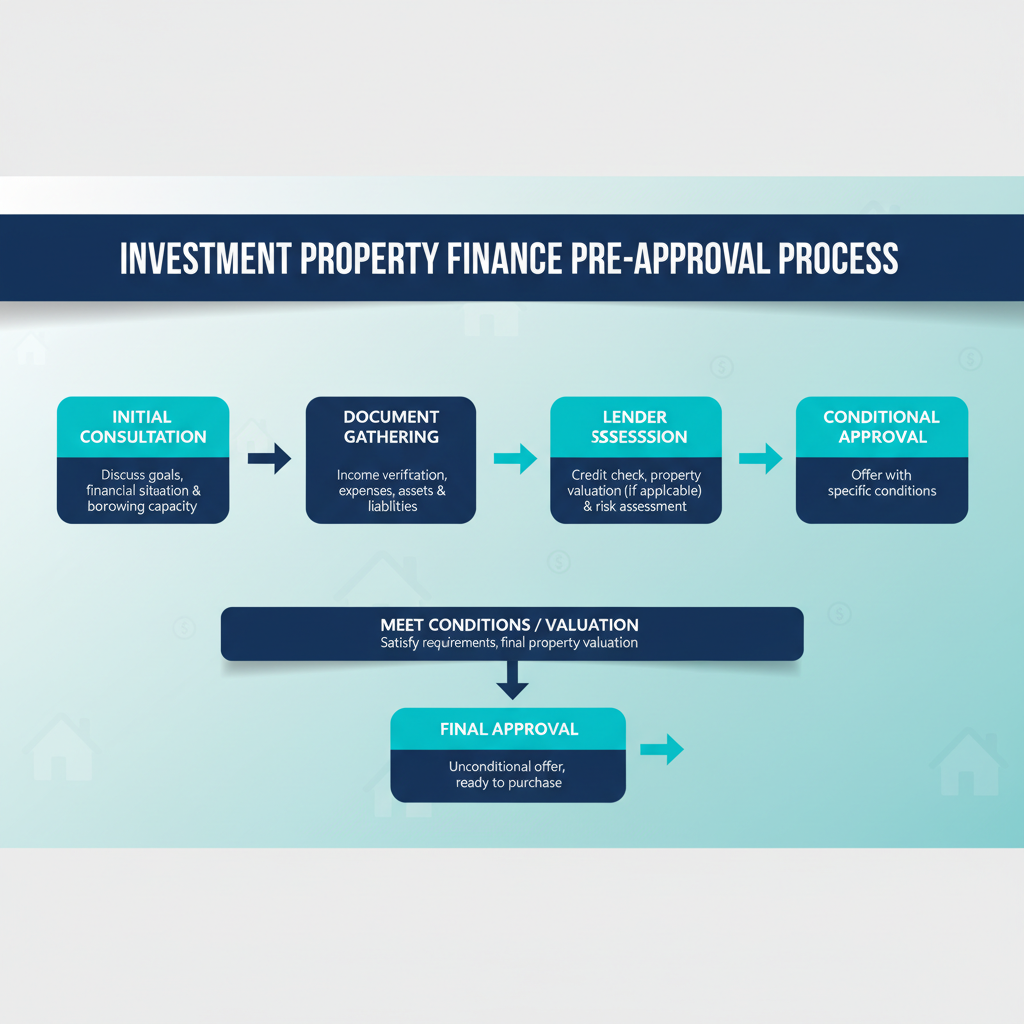
Pre-approval gives you certainty on your budget and strengthens your negotiating position. Most lenders issue pre-approval valid for 90 days.
You'll need to provide payslips, tax returns, bank statements, and details of existing debts. If you own property already, lenders will assess your equity position and may allow you to use this as a deposit for your next purchase.
Factor in Deposit and Upfront Costs
Most lenders require a 20% deposit for investment properties. If you borrow more than 80% of the property value, you'll pay Lenders Mortgage Insurance (LMI), which can cost $15,000 to $30,000 depending on the loan size.
In addition to your deposit, budget for:
- Stamp duty (varies by state, typically 4 to 5% of purchase price)
- Building and pest inspections ($500 to $900)
- Conveyancing fees ($1,200 to $2,500)
- Loan establishment fees ($600 to $1,000)
For a $650,000 property in Queensland, expect total upfront costs of around $40,000 to $50,000 (excluding deposit).
Step 2: Research and Identify Target Markets
Focus on Fundamentals, Not Hype
Successful property investment starts with rigorous market research. Avoid buying based on emotional attachment or media headlines. Instead, focus on suburbs with strong fundamentals:
- Population growth and migration trends
- Employment diversity and major infrastructure projects
- Median days on market and sales volume trends
- Rental vacancy rates below 2%
- Historical capital growth over 10+ year cycles
Buyers Agency Australia uses 10-year portfolio modeling to identify markets with sustainable growth, not just short-term price spikes.
Understand the 2026 Property Market Landscape
Perth, Adelaide, and Brisbane are forecast to deliver 6 to 8% growth in 2026. Darwin may exceed 20% due to strong local demand.
Melbourne and Canberra are expected to grow more modestly (4 to 5%) as affordability pressures and slower population growth weigh on buyer sentiment.
Regional markets in Western Australia and Queensland continue to outperform, offering lower entry prices and higher rental yields.
Define Your Investment Strategy
Are you targeting capital growth or rental yield? High-growth metro suburbs typically deliver lower initial yields (3 to 4%) but stronger long-term appreciation. Regional markets often offer higher yields (5 to 7%) but slower capital growth.
Most successful investors balance both, selecting properties in growth corridors with solid tenant demand.
Step 3: Conduct Thorough Due Diligence
Building and Pest Inspections Are Non-Negotiable
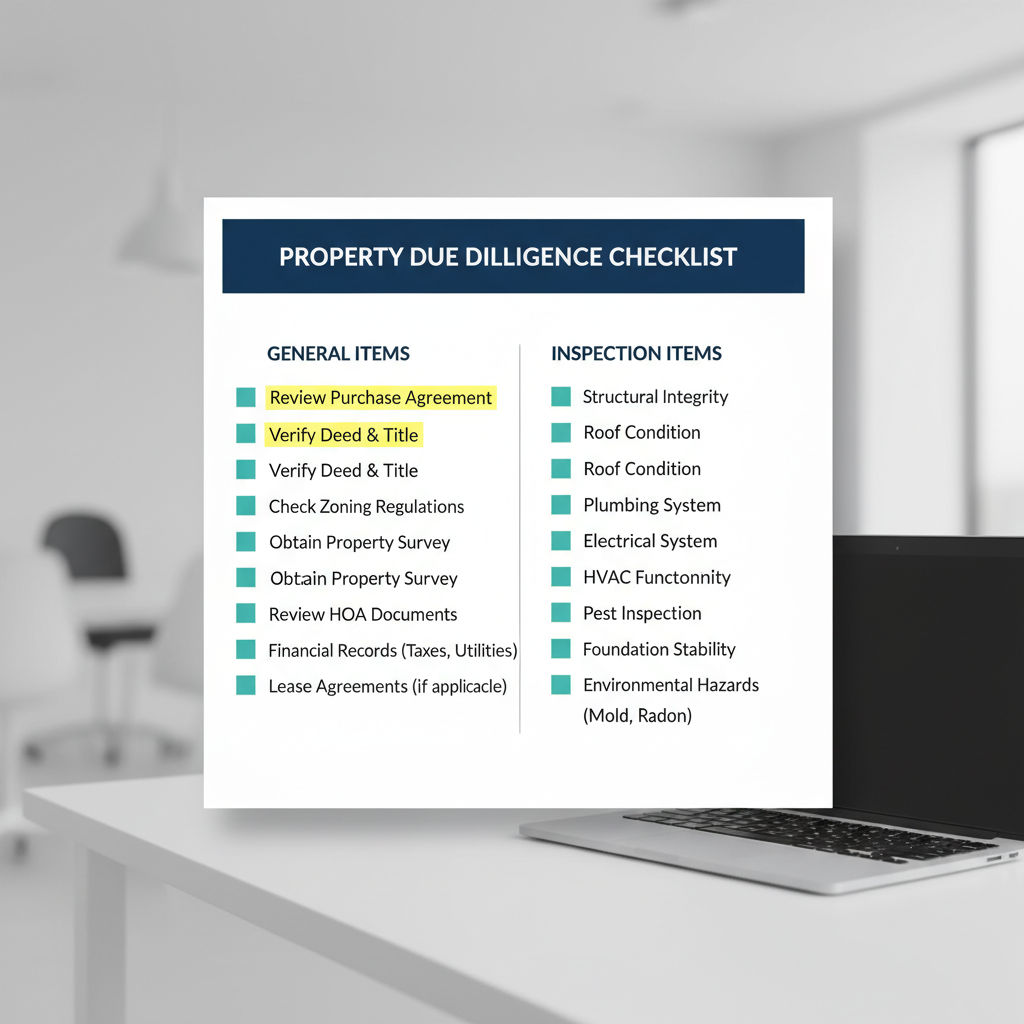
Never skip the building and pest inspection. Pre-purchase inspections cost $500 to $900 but can save you tens of thousands in unexpected repairs.
Building inspections cover structural integrity, roof condition, plumbing, electrical systems, and signs of damp or subsidence. Pest inspections identify termite activity, wood rot, and borer damage.
In 2026, the average cost of rectifying a major building defect exceeds $10,000. Termite damage alone costs Australian homeowners an estimated $1.5 billion annually.
Review Strata Reports and Body Corporate Records
If you're buying an apartment or townhouse, request the strata inspection report. This document reveals upcoming major works, sinking fund balances, disputes, and body corporate fee increases.
High body corporate fees (over $4,000 per year) can erode your cash flow. Look for buildings with healthy sinking funds and no history of special levies.
Check Title, Zoning, and Planning Overlays
Your conveyancer will conduct title searches to confirm ownership and identify easements, covenants, or caveats on the property.
Check local council planning schemes to understand zoning, potential future developments, and any planning overlays that could affect property value (e.g., flood zones, heritage listings).
Run the Numbers on Cash Flow and Returns
Before committing, calculate your expected cash flow using conservative assumptions:
- Rental income at current market rates (not aspirational)
- Interest repayments at your actual loan rate plus 1% buffer
- Ongoing costs: rates, insurance, maintenance (1% of property value per year), property management fees (7 to 9% of rent)
Most investment properties in 2026 are negatively geared, meaning expenses exceed rental income. Ensure you have sufficient cash flow from salary or other sources to cover the shortfall.
Step 4: Negotiate the Purchase Price
Understand Market Conditions and Comparable Sales
Successful negotiation starts with data. Research recent sales of comparable properties in the same suburb. Look at days on market, auction clearance rates, and vendor motivation.
In slower markets, you may achieve 5 to 10% below asking price. In hot markets like Perth or Brisbane, competition is fierce and properties often sell at or above listing price.
Use Your Buyers Agent to Strengthen Your Position
Buyers Agency Australia negotiates on behalf of investors daily. Their fixed-fee model aligns their interests with yours (no commission bias), and their market knowledge gives you a strategic edge.
Buyer's agents can assess vendor motivation, structure offers to appeal to sellers, and negotiate terms such as longer settlement periods or inclusion of chattels.
Make an Offer Subject to Finance and Inspections
Always include finance and building inspection clauses in your contract. These clauses protect you if your loan is declined or the inspection reveals major defects.
Most contracts in NSW allow 14 days for finance approval and 7 days for building inspections. In Queensland, the cooling-off period is 5 business days.
Step 5: Exchange Contracts and Prepare for Settlement
Engage a Conveyancer or Solicitor
Your conveyancer handles the legal transfer of ownership. They review the contract of sale, conduct title searches, liaise with the seller's solicitor, and prepare settlement documents.
Conveyancing fees range from $1,200 to $2,500 depending on the complexity of the transaction.
Finalise Your Loan and Transfer Deposit
Once your offer is accepted, provide your lender with the signed contract. They'll conduct a property valuation to confirm the property's market value.
If the valuation comes in below the purchase price, the lender may reduce the loan amount, requiring you to increase your deposit.
You'll typically pay a 10% deposit within 2 to 7 days of signing the contract. This deposit is held in trust by the seller's agent or solicitor until settlement.
Complete Final Inspection Before Settlement
Most contracts allow a final inspection 48 hours before settlement. This is your last chance to ensure the property is in the same condition as when you made the offer and that any agreed repairs have been completed.
Check that appliances, fittings, and fixtures listed in the contract are still present and working.
Settlement Day
Settlement typically occurs 30 to 90 days after contract exchange. The standard period in NSW is 42 days.
On settlement day, your conveyancer meets with the seller's representative (usually electronically via PEXA). Your lender transfers the loan funds, your conveyancer pays the seller, and ownership is registered in your name.
You're responsible for building insurance from settlement day (earlier in some states). Arrange landlord insurance to cover tenant damage, loss of rent, and liability.
Common Mistakes to Avoid When Buying Investment Property
Buying in the Wrong Location
Location determines 80% of your investment's success. Avoid buying in markets with declining employment, high vacancy rates, or oversupply of new stock.
Many investors buy interstate without visiting the property or understanding local market dynamics. This often leads to poor tenant quality, longer vacancy periods, and lower capital growth.
Overpaying Due to Emotional Attachment
Investment property is a numbers game. Don't fall in love with the property. Stick to your budget and walk away if the numbers don't stack up.
Skipping Due Diligence
Skipping building inspections or failing to review strata reports can cost you tens of thousands. Always invest in professional inspections and take time to review all documentation.
Underestimating Ongoing Costs
Many first-time investors focus on mortgage repayments and forget about rates, insurance, maintenance, and vacancy periods. Budget for 1 to 2% of the property value per year in maintenance and repairs.
Buying Off-the-Plan Without Independent Advice
Off-the-plan apartments carry significant risks, including construction delays, defects, and valuation shortfalls at completion. If you're considering off-the-plan, seek independent advice from a buyer's agent and always include a sunset clause.
How Buyers Agency Australia Simplifies the Investment Property Journey

Navigating the investment property process alone is time-consuming and risky. Buyers Agency Australia removes the guesswork by providing end-to-end support tailored to your investment goals.
Led by Dragan Dimovski, a property advocate with over 20 years of experience and a personal portfolio exceeding $10 million, the firm specialises in data-driven market analysis, off-market property access, and transparent fixed-fee pricing.
Unlike commission-based agents, Buyers Agency Australia works exclusively for you. Their 10-year portfolio modeling ensures you're buying in markets with sustainable growth, not just chasing short-term hype.
Whether you're a first-time investor or scaling your portfolio, their national coverage across Sydney, Melbourne, Brisbane, Perth, and Adelaide means you can invest in the right market, not just your local area.
Book a free strategy session to discuss your investment goals and receive a tailored property plan.
Frequently Asked Questions
How much deposit do I need to buy an investment property in Australia?
Most lenders require a 20% deposit for investment properties. Borrowing above 80% LVR triggers Lenders Mortgage Insurance, adding $15,000 to $30,000 to upfront costs.
How long does the settlement process take in Australia?
Settlement typically takes 30 to 90 days after contract exchange. The standard period in NSW is 42 days, though parties can negotiate shorter or longer timeframes.
Can I use equity from my home to buy an investment property?
Yes. If you own property, you can access up to 80% of its value minus your outstanding loan. This usable equity can fund your deposit without needing cash savings.
Is negative gearing still worth it in 2026?
Yes. Negative gearing allows you to offset rental losses against salary income, reducing your taxable income. Combined with capital growth and depreciation deductions, it remains a tax-effective strategy.
Do I need a buyer's agent to buy an investment property?
No, but a buyer's agent saves time, reduces risk, and often negotiates better prices. They provide market insights, access off-market listings, and handle due diligence, negotiation, and settlement coordination.
Buying an investment property in Australia doesn't have to be overwhelming. By following a structured process, securing finance early, researching markets thoroughly, and conducting rigorous due diligence, you can build a portfolio that generates passive income and long-term wealth.
Ready to take the next step? Contact Buyers Agency Australia today to discuss your investment goals and receive expert guidance tailored to your financial situation.