Property investment due diligence is the systematic process of verifying every legal, physical, and financial aspect of a property before purchase to identify risks, hidden costs, and genuine investment potential. Strong due diligence begins with the suburb, not the property, analysing vacancy rates, infrastructure pipelines, population growth, and local employment drivers before moving to property-specific checks.
You've found a property that looks perfect on paper. Great rental yield. Decent photos. The agent tells you three other buyers are circling. But here's the thing: most investors lose money not because they bought the wrong property type, but because they skipped proper due diligence.
With national home values up 10.2% year-on-year as of January 2026 and median dwelling prices sitting at $957,300 across capital cities, the stakes have never been higher. Every shortcut in your property investment due diligence can cost tens of thousands in repairs, legal disputes, or lost rental income. This checklist walks you through every critical check Australian investors must complete before signing a contract.
Why Property Due Diligence Separates Winning Investors from Expensive Lessons
Property investment due diligence Australia standards require more than a quick drive-by and a bank valuation. It's your financial armour against buying a property lemon, overpaying in a hot market, or discovering structural defects after settlement.
The Buyers Agency Australia team has reviewed thousands of properties over 20 years, and we see the same pattern: investors who commit to thorough due diligence build wealth, while those who rush in carry expensive lessons on their balance sheet.
What Due Diligence Actually Protects You From
Proper due diligence isn't bureaucracy. It protects you from:
- Hidden structural issues: Termite damage, cracked foundations, and non-compliant renovations can cost $50,000+ to fix
- Legal complications: Encumbrances, easements, and zoning restrictions that limit your property use
- Poor investment returns: Buying in suburbs with rising vacancy rates or stagnant rental demand
- Overpaying: Properties marketed as "hot" but actually priced 10-15% above comparable sales
With variable mortgage rates sitting between 6.2% and 6.7% as of early 2026, and investment loans averaging 6.02%, every dollar you save through due diligence compounds over your ownership period.
The Real Cost of Skipping Checks
According to the CSIRO, around 1 in 3 Australian homes are affected by termites at some point, responsible for more than 80% of structural damage. A building and pest inspection costs $400-800. Termite repairs? Often $30,000-$100,000.
That's the mathematics of due diligence. Small upfront investment, massive downside protection.
Start With Suburb Research Before the Property
Strong property investment due diligence always begins with location analysis. You can renovate a tired bathroom, but you can't change a suburb's fundamentals.
Infrastructure and Employment Drivers
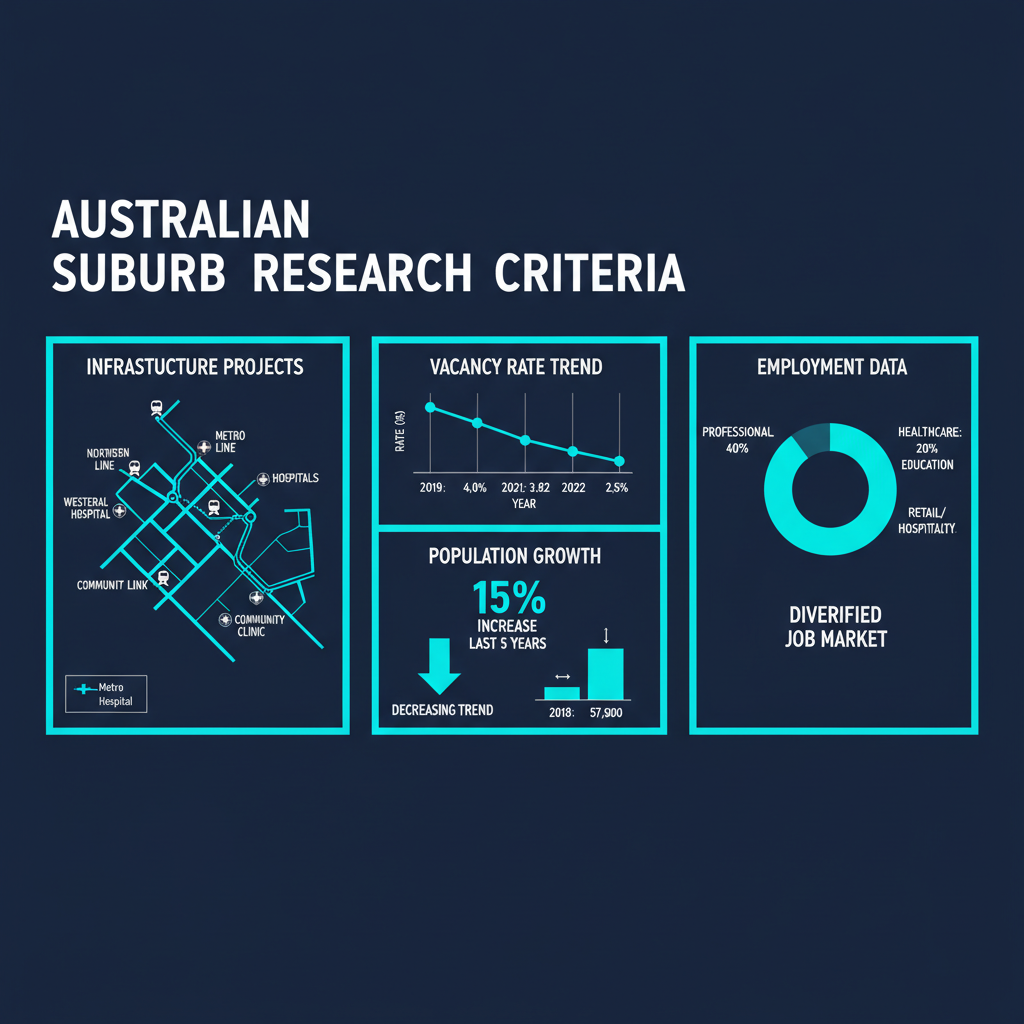
Check Infrastructure Australia's published pipeline and state planning portals for major projects within 5-10km. A new motorway, hospital precinct, or metro station can shift a suburb's growth trajectory dramatically.
Research by the University of Sydney found homes within 800m of Sydney Metro Northwest stations experienced up to 15% higher price growth than the broader market. Properties within 400m of ferry wharves commanded premiums of 10-15% over comparable properties further inland.
Key infrastructure indicators to check:
- Transport projects: New rail lines, highway upgrades, airport expansions
- Health infrastructure: Hospital developments, medical precincts
- Education: New schools, university campuses
- Commercial hubs: Business parks, retail centres, employment nodes
Vacancy Rates and Days on Market
Australia's national residential vacancy rate fell to 1.2% in January 2026, down from 1.4% in December 2025. But national averages hide crucial suburb-level differences.
Brisbane, Perth, and Darwin are sitting below 1% vacancy, indicating tight rental markets. Melbourne and Sydney show more variation across different postcodes. Use SQM Research to check suburb-specific vacancy trends over 12-24 months.
In 2026, capital city homes are selling with a median of just 26 days on market, five days faster than a year ago. If properties in your target suburb are sitting for 60+ days, that's a red flag about demand.
Population Growth and Demographic Trends
Access ABS census data and state government population projections. Look for:
- Population growth: Annual growth rate of 1.5%+ indicates healthy demand
- Age demographics: Areas attracting young families signal long-term stability
- Income levels: Median household income above $80,000 supports rental demand
- Employment participation: Areas above 65% participation typically show stronger markets
Cross-reference population data with building approvals. If supply is growing faster than population, rental yields may compress.
Legal and Title Checks Every Investor Must Complete
Before you inspect the property, verify the legal foundation. These checks cost $200-400 but protect you from title defects worth tens of thousands.
Title Search and Ownership Verification
Order a title search through your state's land titles office (PEXA, NSW Land Registry Services, Land Services SA). The search confirms:
- Registered owner: Ensures the seller actually owns the property
- Encumbrances: Mortgages, caveats, or restrictions that could affect your ownership
- Easements: Rights of way, utility access, or drainage rights that limit property use
- Covenants: Restrictions on renovations, building height, or land use
Pay special attention to easements. A drainage easement through your backyard can prevent extensions or pools. A utility easement might restrict fence heights or landscaping.
Zoning and Planning Restrictions
Check your local council's zoning maps and planning controls. Zoning determines:
- What you can build or renovate
- Whether you can subdivide or add a granny flat
- Height restrictions and setback requirements
- Future development potential
If you're buying near a commercial or mixed-use zone, check council development applications. A proposed high-rise next door can impact sunlight, privacy, and resale value.
Outstanding Rates and Levies
Request a certificate from council showing:
- Outstanding council rates: Unpaid rates transfer to the new owner
- Water usage charges: Verify the seller has paid current bills
- Special levies: Infrastructure charges or council improvements
For strata properties, request the last three years of body corporate financial statements. A depleted sinking fund in a building with ageing infrastructure is a red flag that has caught many investors off guard.
Building and Pest Inspections Are Non-Negotiable
Building and pest inspections following Australian Standards AS 4349.1-2007 and AS 4349.3-2010 are your primary defence against buying a structurally compromised property.
What Building Inspectors Check
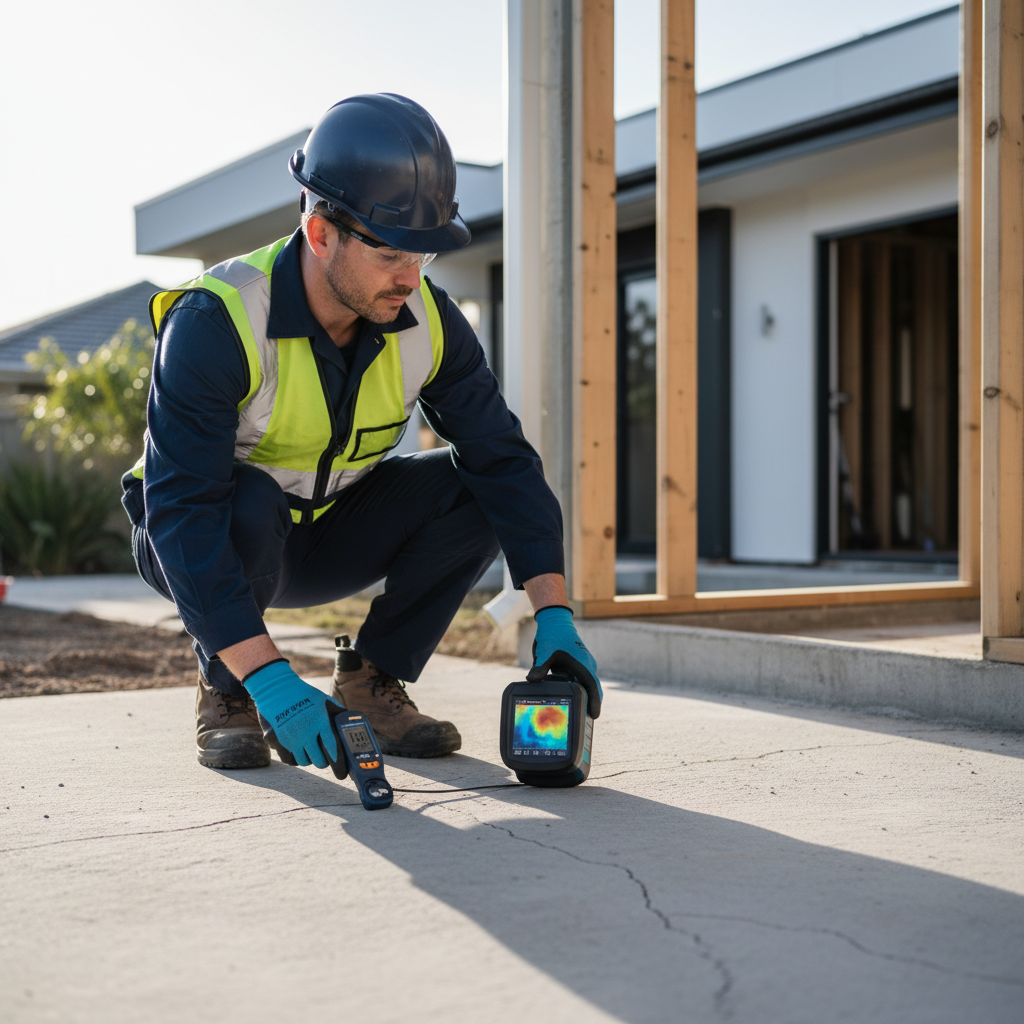
A qualified building inspector examines:
- Structural integrity: Foundation cracks, wall movement, roof condition
- Electrical and plumbing: Safety compliance, visible wiring issues
- Water damage: Dampness, mould, poor drainage
- Non-compliant work: Renovations done without permits or not to code
Building inspections typically take 2-3 hours and cost $400-600. The inspector provides a written report within 24-48 hours detailing defects, safety hazards, and recommended repairs.
Crucial: Building inspectors in most Australian states (except Queensland) don't require registration. Verify your inspector has:
- Relevant qualifications: Diploma of Building, construction qualifications
- Professional indemnity insurance: Minimum $1-2 million coverage
- Industry membership: Housing Industry Association or similar bodies
Pest Inspections for Termites and Timber Pests
Termite inspections follow AS 4349.3-2010 and check for:
- Active termite infestations: Current termite activity
- Previous termite damage: Evidence of past attacks and repairs
- Conducive conditions: Moisture, timber-ground contact, poor ventilation
- Other timber pests: Borers, fungal decay
In Queensland, sellers must provide buyers with a completed Property Inspection Report disclosing structural issues and termite infestations before signing. In other states, buyers organise their own inspections.
Termite inspections cost $250-400 when combined with building inspections. Given termites are responsible for more than 80% of structural damage to Australian homes, this is money well spent.
When to Walk Away Based on Inspection Results
Some defects are fixable. Others should end negotiations immediately:
Red flags that justify walking away:
- Active termite infestation with major structural damage
- Foundation cracks indicating significant movement
- Asbestos throughout the property requiring full removal
- Non-compliant electrical work creating fire hazards
- Major plumbing failures requiring complete re-piping
If the inspection reveals $20,000+ in essential repairs, either negotiate a price reduction equal to 1.5x the repair cost (to account for your time and risk), or move to the next property.
Financial Analysis and Comparable Sales Research
Even if the property passes physical inspections, you need to verify you're paying fair market value and the numbers actually work for investment.
Independent Valuation vs Bank Valuation
Never rely solely on the agent's appraisal or the bank's valuation. Order an independent valuation from an Australian Property Institute certified valuer for $400-600.
Independent valuers analyse:
- Recent comparable sales: Properties sold within 1km in the past 90 days
- Market conditions: Whether the suburb is rising, flat, or declining
- Property-specific features: Land size, condition, location within the suburb
- Income approach: For investment properties, valuation based on rental income
A 2026 bank valuation might come in at $800,000, but an independent valuer accounting for recent comparable sales might value it at $750,000. That $50,000 gap protects you from overpaying.
Rental Yield Calculation and Cash Flow Analysis
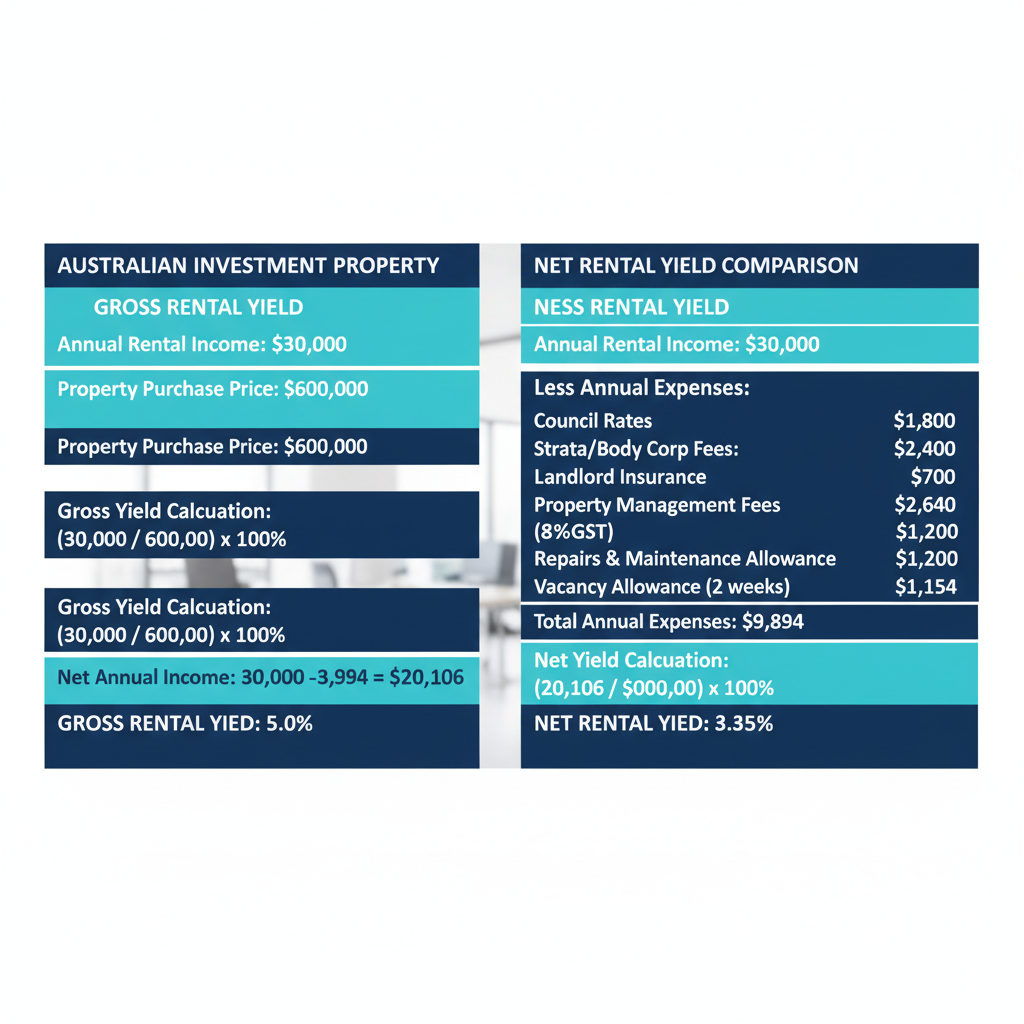
In 2026, national rents have risen 43.9% over five years. But vacancy rates in some markets are beginning to stabilise. Calculate both gross and net yield:
Gross rental yield = (Annual rent / Purchase price) × 100
Net rental yield = (Annual rent – All expenses) / Purchase price × 100
A 5% gross yield can quickly become 3.2% net in a high-cost market once you deduct:
- Council rates: $1,200-3,000 annually
- Water charges: $800-1,500 annually
- Strata fees: $3,000-8,000+ for units
- Insurance: $1,200-2,500 annually
- Property management: 7-10% of rent
- Maintenance: Budget 1% of property value annually
Rental yields of 3-6% for residential properties are considered good net yields. Regional Western Australia and Northern Territory average higher yields (6-8%), while capital city blue-chip suburbs often sit below 3%.
Verify the rental estimate by checking recent leases on Domain and realestate.com.au. If the agent quotes $600/week but similar properties lease for $520/week, adjust your cash flow projections accordingly.
Comparable Sales Analysis
Analyse at least 5-10 comparable sales within 1km sold in the past 90 days. Focus on properties with:
- Similar land size (within 50sqm)
- Similar dwelling size (within 20sqm)
- Similar condition and age
- Similar street appeal and aspect
If your target property is listed at $850,000 but three comparable properties sold for $780,000-$810,000, you have strong negotiation leverage.
Access sold price data through CoreLogic, RP Data, or your buyers agent. In some states (SA, WA), sold prices are publicly available through land titles offices.
Flood Risk, Environmental Hazards and Insurance Checks
Climate risks are increasingly pricing into property markets. Thorough environmental due diligence protects you from uninsurable properties and unexpected damage.
Flood Zone Verification
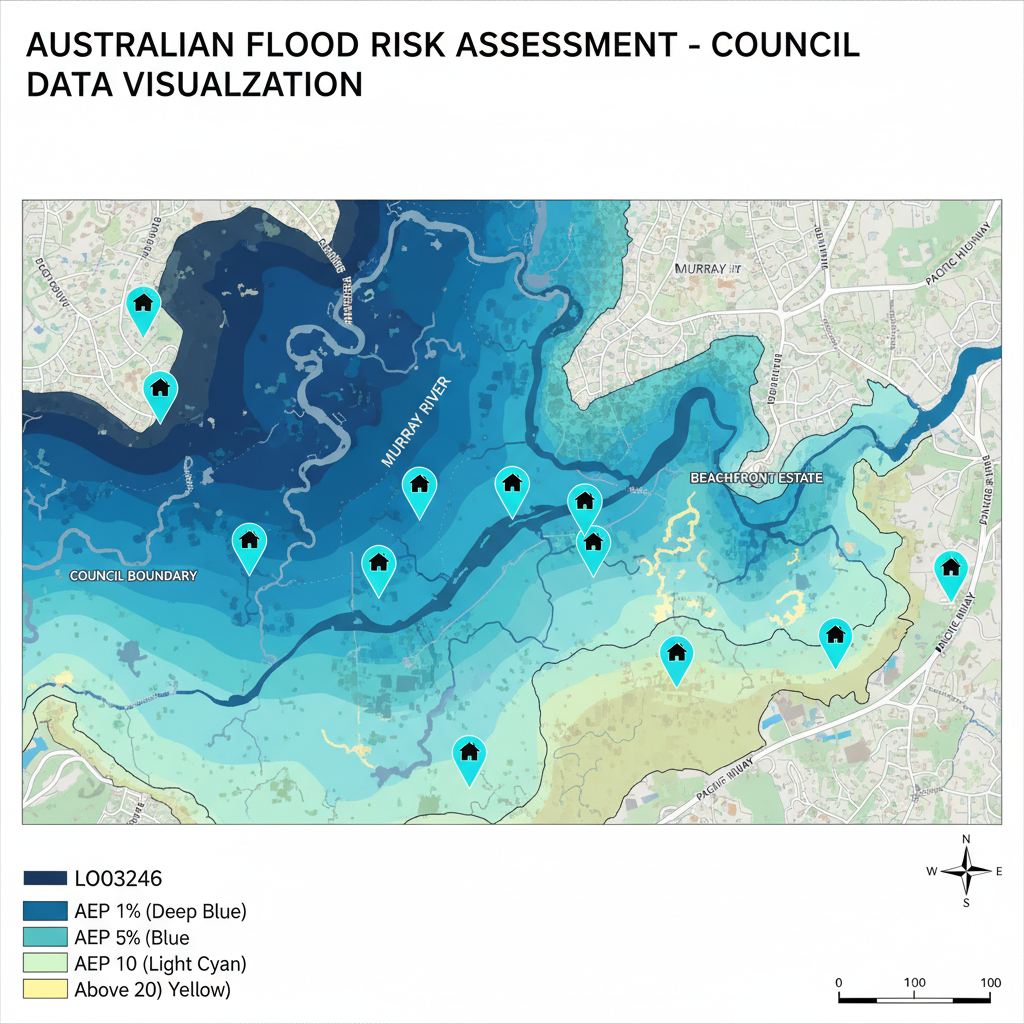
More than 1 million Australian properties (around 1 in 10 private homes) are impacted by floods annually. According to a Climate Council and PropTrack report, at least 70% of the 2 million flood-prone houses across the country have seen their value decrease.
Check flood zones through:
- Local council flood maps: Most councils publish historical flood data and risk modelling
- State planning portals: NSW Planning Portal, VicPlan, Queensland Globe
- Landchecker: Digitised flood zone data by address
Properties are typically classified by Annual Exceedance Probability (AEP):
- 1% AEP (1-in-100 year): Moderate flood risk, most banks will lend with insurance
- 2% AEP (1-in-50 year): Higher risk, some lenders hesitant
- 5% AEP (1-in-20 year): High risk, difficult to finance and insure
Even if financing is available, flood-prone properties command 4-11% discounts and require substantially higher insurance premiums. Factor these ongoing costs into your investment analysis.
Contaminated Land and Bushfire Zones
Check your state's contaminated land register. Properties on or near former industrial sites, petrol stations, or landfills may have soil contamination requiring expensive remediation.
For bushfire-prone areas, check the Bushfire Attack Level (BAL) rating. Properties in BAL-FZ (Flame Zone) or BAL-40 zones require expensive construction standards and face higher insurance costs.
Insurance Availability and Costs
Before making an offer, get insurance quotes from at least three insurers. Verify:
- Building insurance: Cost to insure the structure
- Landlord insurance: Coverage for rental-specific risks
- Flood coverage: Whether flood damage is included or excluded
Some high-risk properties are becoming uninsurable. According to a Climate Council report, one in 25 Australian homes will be uninsurable by 2030. If you can't insure the property, you can't get financing, and you shouldn't proceed with the purchase.
Strata Reports and Body Corporate Due Diligence
If you're buying a unit, townhouse, or apartment, strata due diligence is just as critical as building inspections.
What to Check in Strata Records
Request from the seller or strata manager:
- Last three years of meeting minutes: Check for disputes, special levies, or upcoming major works
- Sinking fund balance: Verify adequate reserves for future maintenance
- Outstanding debts: Ensure the body corporate isn't carrying unpaid contractor invoices
- Insurance coverage: Confirm building insurance is current and adequate
- By-laws: Understand restrictions on renovations, pets, parking, short-term rentals
A depleted sinking fund in a building with ageing infrastructure (lifts, roofs, plumbing) signals major special levies ahead. If the sinking fund is below $200 per unit, expect a special levy within 12-24 months.
Red Flags in Body Corporate Records
Walk away from strata properties showing:
- Ongoing legal disputes: Litigation with builders, contractors, or unit owners
- Unpaid levies by multiple owners: Indicates financial stress in the building
- Deferred maintenance: Major items like roof repairs pushed back repeatedly
- High owner-occupier vs investor ratio: Buildings with 70%+ investors often have maintenance issues
Strata Levies and Future Cost Estimates
Strata levies in Australian capital cities range from $3,000-$12,000 annually depending on building age, amenities, and management quality. Verify the levy covers:
- Building insurance
- Common area maintenance (lifts, pools, gardens)
- Sinking fund contributions
- Management fees
Buildings with pools, gyms, and concierge services carry higher levies. Older buildings (20+ years) with original lifts and plumbing often face special levies for replacement works.
How Buyers Agency Australia Eliminates Due Diligence Risks
Dragan Dimovski and the Buyers Agency Australia team have spent over 20 years perfecting property investment due diligence for clients building portfolios across Sydney, Melbourne, Brisbane, and Perth.
Our due diligence process includes:
Location analysis first: We analyse suburb fundamentals including infrastructure pipelines, vacancy trends, population growth, and employment drivers before shortlisting any property.
Expert network coordination: We coordinate building inspectors, pest inspectors, valuers, and conveyancers, ensuring every check meets Australian Standards and protects your interests.
Financial modelling: Our 10-year portfolio modelling shows you the true investment returns including all costs, tax implications, and realistic growth scenarios.
Negotiation leverage: Our comparable sales analysis and market intelligence give you precise negotiation leverage to avoid overpaying.
Transparent fixed-fee structure: You know exactly what due diligence costs upfront, with no percentage-based commissions inflating your purchase price.
We've helped clients avoid properties with $80,000+ in hidden termite damage, negotiate $50,000-$100,000 off asking prices based on comparable sales analysis, and identify suburbs 18-24 months before major value growth.
Book your free strategy session to access our due diligence framework and data-driven property analysis.
Property Investment Due Diligence Checklist Summary
Here's your complete investment property checklist to print and reference:
Suburb Research:
- ✓ Infrastructure projects within 5-10km
- ✓ Vacancy rates over 12-24 months
- ✓ Days on market compared to city median
- ✓ Population growth and demographic trends
- ✓ Median household income and employment participation
Legal Checks:
- ✓ Title search confirming ownership and encumbrances
- ✓ Zoning and planning restrictions
- ✓ Outstanding council rates and water charges
- ✓ Easements, covenants, and caveats
- ✓ Development applications for neighbouring properties
Physical Inspections:
- ✓ Building inspection by qualified inspector (AS 4349.1)
- ✓ Pest inspection for termites and timber pests (AS 4349.3)
- ✓ Independent valuation from API-certified valuer
- ✓ Verification of building permits for renovations
Financial Analysis:
- ✓ Comparable sales within 1km, past 90 days
- ✓ Gross and net rental yield calculations
- ✓ Cash flow analysis including all expenses
- ✓ Rental market research for realistic income projections
Environmental Risks:
- ✓ Flood zone verification through council and state portals
- ✓ Bushfire zone and BAL rating
- ✓ Contaminated land register check
- ✓ Insurance quotes from multiple providers
Strata Properties:
- ✓ Last three years of body corporate meeting minutes
- ✓ Sinking fund balance and financial statements
- ✓ By-laws affecting renovations, pets, rentals
- ✓ Upcoming special levies or major works
Frequently Asked Questions
What is property investment due diligence?
Property investment due diligence is the systematic verification of legal, physical, and financial aspects of a property before purchase to identify risks and investment potential.
How much does property due diligence cost in Australia?
Comprehensive due diligence costs $1,500-$3,000 including building inspection ($400-600), pest inspection ($250-400), valuation ($400-600), title search ($200), and legal review ($300-800).
When should I complete due diligence checks?
Complete due diligence during the cooling-off period (2-5 business days in most states) or before making an unconditional offer at auction.
Can I skip building inspections to save money?
No. Building and pest inspections protect you from $30,000-$100,000+ in structural repairs. The $600-800 cost provides massive downside protection.
What are the biggest due diligence mistakes investors make?
Skipping independent valuations, ignoring suburb vacancy trends, failing to verify rental income estimates, and not checking flood zones or environmental risks.