Property investment in 2026 remains fundamentally sound despite rate uncertainty and affordability concerns. Australia's housing shortage of 200,000 to 300,000 dwellings, combined with population growth exceeding 30 million by 2030, creates structural demand that supports long-term capital appreciation. Strategic buyers who understand market fundamentals will outperform those chasing headlines.
We've all been there. You're watching property prices climb month after month, hearing warnings about interest rate hikes, and reading headlines predicting a market correction. You're wondering if now is the right time to invest, or if you've already missed the boat.
Here's the honest answer: 2026 isn't about perfect timing. It's about understanding what drives property values over decades, not months. While national prices are forecast to rise 5% to 7.7% this year according to CoreLogic and KPMG, the real question isn't whether property is "worth it." It's whether you're buying the right property for the right reasons.
Let's cut through the noise and examine what actually matters for property investment Australia 2026.
Why Everyone's Asking This Question Right Now
The property conversation in 2026 feels different. Interest rates rose to 3.85% in February after three cuts in 2025, creating what economists call a "higher for longer" environment. First-home buyer stimulus has injected unprecedented demand into the sub-$800,000 price bracket. Migration patterns continue driving population growth, yet housing construction remains 20% behind government targets.
This creates confusion. Prices are rising, but affordability is stretched. Supply is low, but sentiment is cautious. Investors hear conflicting messages from every direction.
The Fear vs. Reality Gap
Media headlines focus on crash predictions and rate hikes. The data tells a different story. AMP estimates Australia's accumulated housing shortage sits between 200,000 and 300,000 dwellings. The National Housing Supply and Affordability Council projects the deficit will worsen by 79,000 homes through 2029.
When demand structurally exceeds supply for extended periods, prices don't collapse. They moderate, adjust, and continue climbing in fundamentally strong locations. This is basic economics, not speculation.
What Changed Since 2024
The easy money period of 2020-2023 is definitively over. Borrowing capacity has shrunk by $50,000 to $100,000 across millions of buyers due to APRA's 3% serviceability buffer. Government stimulus is now concentrated at the affordable end of the market.
For sophisticated investors, this creates opportunity. Competition has reduced in investment-grade properties above $850,000. Emotional buyers are chasing entry-level stock. Strategic buyers are securing quality assets while others hesitate.
The Supply Crisis No One's Talking About Enough
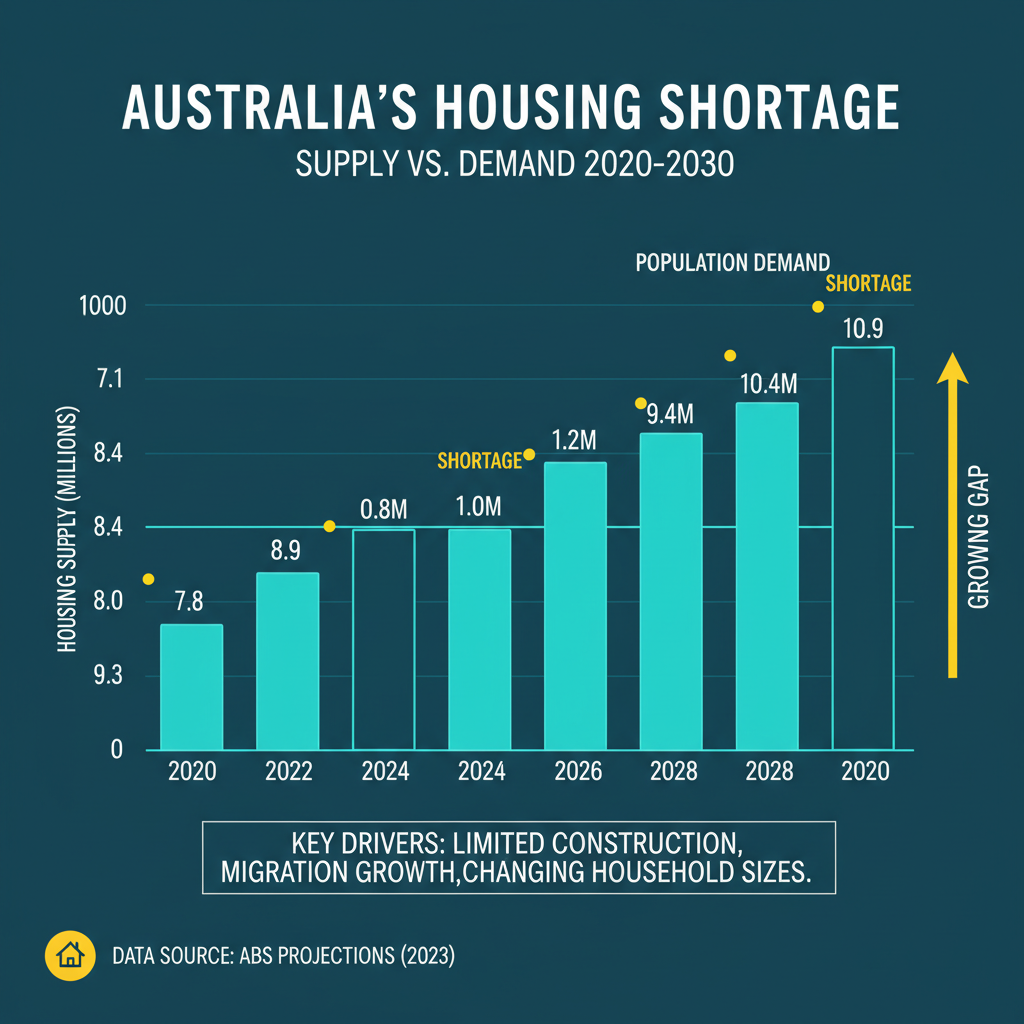
Supply isn't just "tight." It's structurally broken. Housing approvals fell 6.4% in October 2025. After 18 months of the federal Housing Accord targeting 1.2 million new homes by mid-2029, progress sits more than 20% behind schedule.
This isn't a short-term blip. Construction costs have surged 62% to 77% in key precincts over four years according to CBRE's 2026 Pacific Market Outlook. Labour shortages persist. Planning approvals take months or years in major cities.
The Math That Matters
Australia's population is forecast to exceed 30 million by 2030, up from 27.6 million today. That's 3 million additional people requiring housing. Even if construction reaches targeted levels, which it won't, supply won't catch demand for years.
Vacancy rates hover near record lows at 1.6% nationally. Perth tracks at 40% below the five-year average for advertised stock. Brisbane sits 29% below. These aren't statistics. They're structural imbalances that take decades to resolve.
Rental yields remain strong across gateway cities and growth corridors. Median apartment rents are forecast to grow 24% between 2025 and 2030 across capital cities, according to CBRE. This isn't speculation. It's the inevitable result of too many people chasing too few properties.
Why This Supports Long-Term Values
Property investment rewards patient capital. When you examine rolling 20-year periods since World War II, standard Australian houses have tripled in value or better in every cycle. This requires 6% average annual growth, a threshold five of eight capital cities achieved in 2025 alone.
Compounding is the silent wealth builder. A $750,000 property growing at 6% annually doubles in 12 years and triples in 19 years. This isn't get-rich-quick territory. It's methodical wealth accumulation backed by fundamental demand.
The Mistakes That Cost Investors Hundreds of Thousands
Here's where good intentions meet bad outcomes. Most investors don't fail because markets turn. They fail because they make avoidable errors that compound over time.
Mistake 1: Buying Emotion Over Fundamentals
Investing isn't about finding suburbs with great cafes or properties you'd live in yourself. It's about identifying locations where employment growth, infrastructure investment, and supply constraints converge.
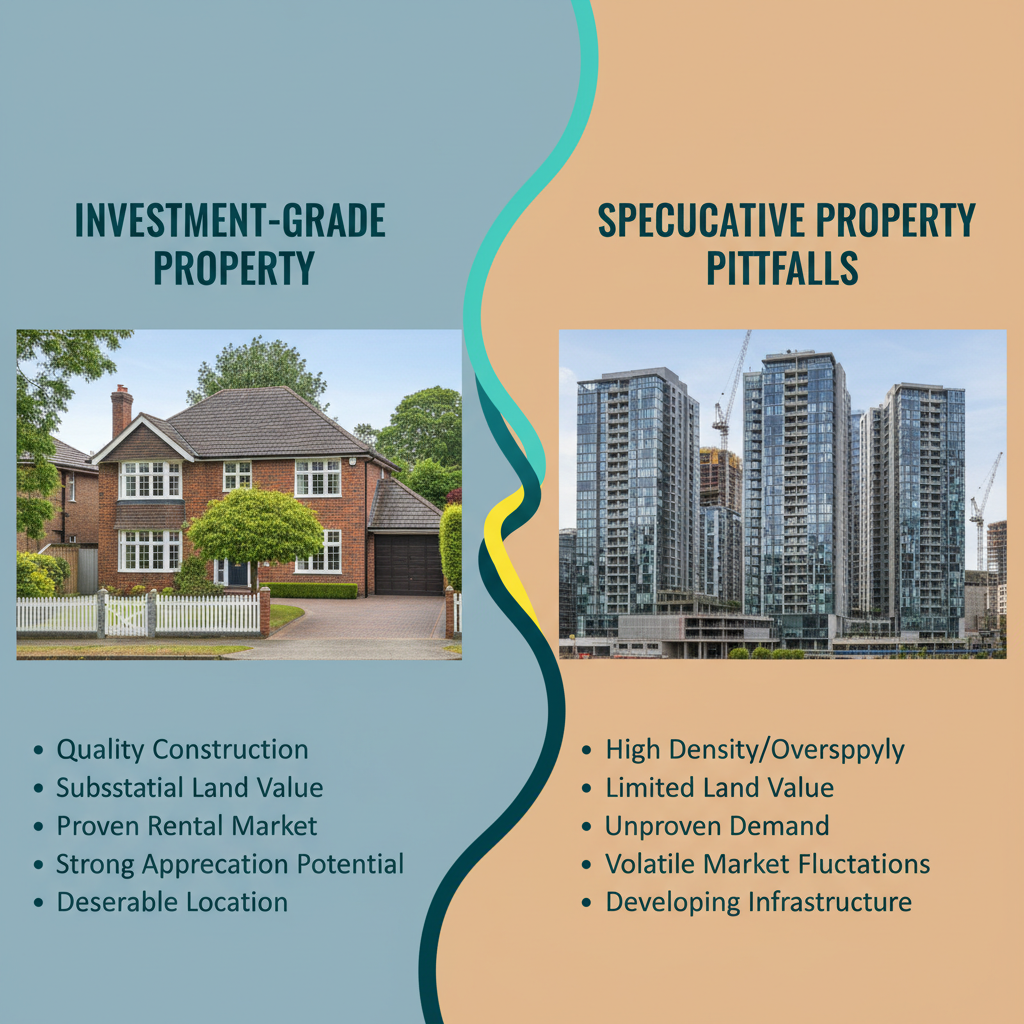
Less than 5% of properties on the market qualify as investment-grade. The rest are owner-occupier stock that will always underperform. Investors who don't understand this difference pay premium prices for average returns.
Buyers Agency Australia builds 10-year portfolio models before clients purchase a single property. We're not chasing hotspots. We're identifying markets where fundamentals support sustained growth regardless of short-term sentiment.
Mistake 2: Chasing Government Stimulus
The expanded First Home Guarantee scheme is injecting 20,000 additional buyers into the market in 2026. Research estimates this inflates prices by 3.5% to 9.9% in lower-priced areas, creating artificial demand.
Smart investors avoid these price brackets. When government props disappear, which they always do, values correct. You don't want to be holding a $650,000 property that's really worth $580,000 in three years.
Focus on locations with genuine employment drivers, not subsidy-dependent outer suburbs with 70% investor ownership and no underlying demand.
Mistake 3: Ignoring Transaction Costs
Stamp duty, conveyancing, building inspections, and selling costs consume 7% to 12% of your purchase price. In a 5% growth market, these costs eliminate most of your gain if you hold for less than five years.
Too many investors treat property like shares, buying and selling based on short-term movements. Property rewards decade-long holds. If you're not prepared to wait through at least one full property cycle, you're speculating, not investing.
Mistake 4: Stretching Finances Too Thin
Property is illiquid. You can't sell the bathroom when interest rates rise or tenants leave. Investors who deploy every dollar of capital leave no buffer for vacancy, repairs, or opportunity.
Maintain minimum six-month cash reserves. Structure finance to survive rate increases of 2% to 3% above current levels. Buy properties you can comfortably hold even if growth stalls for 18 months. Wealth isn't built by those who own the most properties. It's built by those who hold quality assets safely through market volatility.
Strategic Buying in 2026: Where Opportunity Actually Exists
So what does smart money do right now? It avoids the herd, focuses on fundamentals, and positions for long-term compounding.
Target Investment-Grade Stock
Investment-grade properties share common characteristics: established suburbs within 10km of employment hubs, owner-occupier appeal, land-to-asset ratios above 30%, and proven capital growth history exceeding 6% over rolling 10-year periods.
These properties cost more upfront but deliver superior risk-adjusted returns. A $900,000 house in an established inner-ring suburb will outperform a $650,000 house-and-land package on the city fringe over every meaningful timeframe.
Focus on Supply-Constrained Markets
Perth, Brisbane, and Adelaide demonstrate structural undersupply with forecast growth between 8% and 16% in 2026 depending on scenarios. But this doesn't mean buy anywhere in these cities.
Within each market, specific suburbs with limited developable land, strong infrastructure investment, and proximity to employment centres will capture disproportionate gains. This requires on-the-ground knowledge, not Google searches.
Value-Add Opportunities
Markets where momentum has slowed create renovation and subdivision opportunities. Melbourne's median grew 4.8% in 2025, below national averages, but specific pockets with development potential offer manufactured equity.
Buying a tired property in a strong location, adding value through strategic renovation or subdivision, and holding through the next growth phase compounds returns in ways standard "buy and hold" never achieves.
Regional Growth Corridors
Regional markets outperformed capitals in 2025, with combined regional dwelling values rising 9.7% versus 8.2% in capital cities. This isn't a short-term trend. Remote work, lifestyle migration, and relative affordability are driving sustained population shifts.
Target regional centres within two hours of major cities, with diversified employment bases beyond mining or tourism. Towns with university campuses, regional hospitals, and government infrastructure investment demonstrate resilience through economic cycles.
How Dragan Dimovski Separates Signal From Noise
Dragan Dimovski, founder of Buyers Agency Australia, has navigated property markets for over 20 years, building a personal portfolio exceeding $10 million. His approach differs from typical buyer's agents because it starts with financial modelling, not property searching.
The 10-Year Portfolio Model
Every client engagement begins with projecting where they want to be financially in 10 years. How much passive income do they need? What capital base supports their retirement? What tax structures optimise their position?
Only after answering these questions does property selection begin. Most investors work backwards, finding properties first and hoping they achieve goals. This is expensive trial and error.
Data Over Gut Feel
Buyers Agency Australia analyses employment data, infrastructure pipelines, zoning changes, and demographic trends across every Australian capital and 66 regional townships. This research identifies markets 12 to 24 months before mainstream investors notice.
By the time property spruikers are hosting seminars about a "hot suburb," we've already secured assets for clients and moved to the next opportunity.
Fixed-Fee Transparency
The traditional percentage-based buyer's agent model creates perverse incentives. Agents earn more when clients pay more, discouraging negotiation and encouraging overpriced purchases.
Buyers Agency Australia operates on fixed fees regardless of purchase price. This aligns our interests with yours: secure the best possible property at the lowest defensible price.
Clients save an average of 8% below comparable sales through strategic negotiation and access to off-market opportunities. On a $750,000 purchase, that's $60,000 preserved capital available for your next investment.
What 2026 Actually Demands From Investors
Property investment isn't about predicting market turns or timing perfection. It's about understanding what drives values over decades and positioning accordingly.
Australia's housing shortage isn't resolving in 2026, 2027, or even 2028. Population growth continues. Construction can't keep pace. Rental markets remain tight. These fundamentals support ongoing price appreciation in well-selected markets.
But this doesn't mean buy anything, anywhere. Quality matters more than ever. Transaction costs punish short-term speculation. Government stimulus creates artificial hotspots that will correct. Borrowing capacity constraints limit how much prices can rise in expensive markets.
Smart investors focus on:
- Investment-grade properties in supply-constrained locations
- Markets with genuine employment and infrastructure drivers
- Properties offering value-add opportunities to manufacture equity
- Conservative financing that survives rate increases and vacancy
- 10-year hold periods that allow compounding to work
Those who follow this approach will look back at 2026 as the year they positioned themselves for significant long-term wealth. Those who chase headlines, follow stimulus money, or overcomplicate simple fundamentals will wonder why their portfolio underperformed.
Your Next Move: Turn Analysis Into Action
Every month of delay adds thousands to your target property's price. Sydney's median is forecast to reach $1.92 million by year-end, up $154,000 from current levels. Brisbane and Perth are tracking double-digit growth in many submarkets.
But this isn't about rushing into bad decisions. It's about making informed, strategic choices with expert guidance.
Buyers Agency Australia offers complimentary strategy sessions where we analyse your financial position, model your 10-year investment goals, and identify specific markets and property types aligned with your objectives. No obligation, no sales pressure, just honest advice from professionals who've built wealth through multiple property cycles.
We work with property investors seeking long-term wealth, first-home buyers looking for expert guidance, and time-poor professionals requiring end-to-end property search and negotiation. Our clients don't have time to attend 200 open homes, chase agents, or second-guess their decisions. They want certainty, strategy, and execution.
Dragan Dimovski and the Buyers Agency Australia team have helped hundreds of clients secure investment-grade properties across every Australian capital. We don't sell you property. We build investment strategies that deliver financial freedom.
If you're serious about is now a good time to buy property Australia, the answer is: it depends on what you buy, where you buy it, and why you're buying it. Get those three elements right, and 2026 will be the year you look back on with satisfaction.
Get them wrong, and you'll spend the next decade regretting an expensive mistake.
Book your free strategy session today and let's build your investment roadmap for 2026 and beyond.
Frequently Asked Questions
Is property investment still worth it with interest rates rising in 2026?
Yes, property remains fundamentally sound due to structural supply shortages and long-term population growth. Focus on investment-grade properties in supply-constrained markets.
What are the biggest property investment mistakes in 2026?
Buying emotional properties over investment-grade stock, chasing government stimulus, ignoring transaction costs, and stretching finances without cash buffers are the most costly errors.
Which Australian cities offer the best property investment opportunities in 2026?
Perth, Brisbane, and Adelaide demonstrate strong fundamentals with supply constraints and forecast growth between 8% and 16%. Regional centres within two hours of capitals also offer value.
How much deposit do I need to invest in property in 2026?
Aim for minimum 20% deposit to avoid lenders mortgage insurance. Maintain additional six-month cash reserves for vacancy, repairs, and interest rate increases.
Should I wait for property prices to drop before investing in 2026?
Australia's 200,000 to 300,000 dwelling shortage and population growth to 30 million by 2030 support ongoing price appreciation. Strategic timing matters less than strategic selection.