
Co Living with a Normal House No Design and Renovation Needed for Investors
Co-living with a normal house is a property investment strategy where you rent individual rooms in a standard residential home to multiple tenants, generating higher rental yields than traditional single-lease arrangements—without requiring expensive renovations or purpose-built designs.
If you're priced out of commercial co-living developments or rooming house conversions, there's good news. You can achieve similar rental returns using a standard three or four-bedroom house in the right location. This approach, often called house hacking, lets you turn an ordinary property into a cash-flowing asset by renting rooms individually rather than leasing the whole dwelling to one tenant.
The strategy works particularly well in high-demand rental markets near universities, hospitals, or major employment hubs. Unlike purpose-built rooming houses that require council approvals and significant capital outlay, this model uses existing housing stock and leverages strong tenant demand for affordable, flexible accommodation. Buyers Agency Australia helps investors identify properties with co-living potential in growth corridors across Brisbane, Melbourne, and Sydney.
Why Co Living with Standard Houses Is Gaining Momentum in 2026
Australia's housing affordability crisis has created massive demand for shared accommodation. According to Knight Frank research, "co-living has established itself as a genuine alternative to traditional housing types" with national supply surpassing 10,000 units across completed, under-construction, and planned projects.
But here's the thing: you don't need to build a purpose-designed co-living complex to benefit from this trend. Standard houses in the right suburbs can deliver similar outcomes with far less complexity.
Market Forces Driving Demand
Several factors are converging to make room-by-room rental strategies more attractive in 2026:
- Vacancy rates below 2% in most capital cities create intense competition for any affordable rental option
- Rising property prices push single professionals and students toward shared living to split costs
- Remote work flexibility means tenants prioritize location and amenities over dwelling size
- Single-person households growing especially among women aged 25-45, creating a natural tenant pool
The beauty of using a normal house is simplicity. You're not navigating rooming house regulations, building codes for self-contained units, or construction timelines. You're buying a standard residential property and optimizing its rental structure.
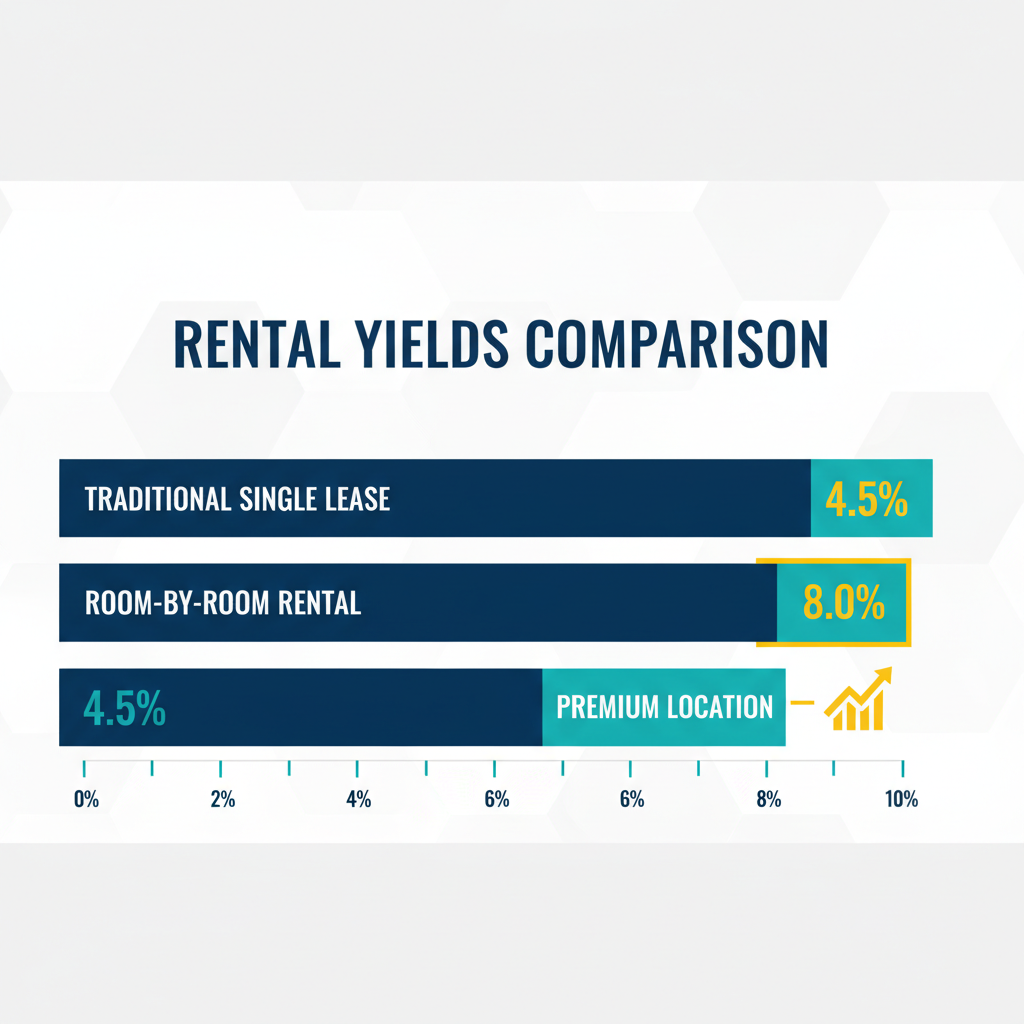
Rental Yield Comparison: Traditional vs Room-by-Room
Let's look at real numbers from a typical Brisbane suburb:
| Rental Strategy | Weekly Income | Annual Income | Gross Yield (on $650k property) |
|---|---|---|---|
| Traditional single lease (4-bed house) | $560 | $29,120 | 4.5% |
| Room-by-room rental (4 bedrooms at $200/week each) | $800 | $41,600 | 6.4% |
| Premium location rooms (4 at $250/week) | $1,000 | $52,000 | 8.0% |
That's potentially double the gross yield without changing the physical property. The difference comes entirely from rental structure and tenant selection.
Data from SQM Research shows average rental yields for houses in major capitals hover around 3-4%, while investors using shared accommodation models report 6-8% gross yields on similar properties.
How House Hacking Works Without Major Renovations
House hacking is a real estate investment strategy where you purchase a property, live in part of it, and rent out the remaining space to offset your mortgage. When done with a standard house, you're essentially becoming a live-in landlord or converting the property to multiple individual leases.
The Basic House Hacking Model
Here's how the simplest version works:
- Purchase a standard 3-5 bedroom house in a high-demand rental area
- Live in one bedroom (if owner-occupied) or rent all rooms separately
- Lease remaining bedrooms individually to working professionals or students
- Collect rent from multiple tenants that collectively exceeds what a single-family lease would generate
- Cover your mortgage and expenses from rental income while building equity
The strategy is legal across Australia when done correctly. According to Odin Mortgage, "House hacking is legal in Australia. There are no laws that specifically prohibit it," though you may need council permits in some areas.
What Makes a House Suitable for Co-Living
Not every property works for room-by-room rentals. Look for these features:
- Multiple bathrooms (minimum 2 for 4-5 tenants)
- Good-sized bedrooms (at least 9-12 square meters per room)
- Functional common areas including kitchen and living space
- Adequate parking (check council requirements)
- Location near transport, universities, or employment hubs
- Zoning that permits this use (most residential zones allow it)
Dragan Dimovski from Buyers Agency Australia frequently advises clients: "The best house-hacking properties aren't the cheapest—they're in locations where young professionals want to live. Proximity to cafes, gyms, and public transport matters more than the age of the kitchen."
Room Configuration Strategies
You have several options for structuring room rentals:
Shared Facilities Model: All tenants share kitchen, bathrooms, and living areas. This is the simplest setup requiring zero modifications. Rent ranges from $150-250/week per room depending on location.
Enhanced Privacy Setup: Add locks to bedroom doors, install separate fridges in a common area, create bathroom schedules. Minor upgrades under $2,000 total. Rent increases 10-15% due to added convenience.
Utilities Management: Decide whether to include utilities in rent (simpler but less profit) or split bills (more management but higher margins). Most successful house hackers include utilities to attract quality tenants and simplify accounting.
Property Selection Criteria for Maximum Returns
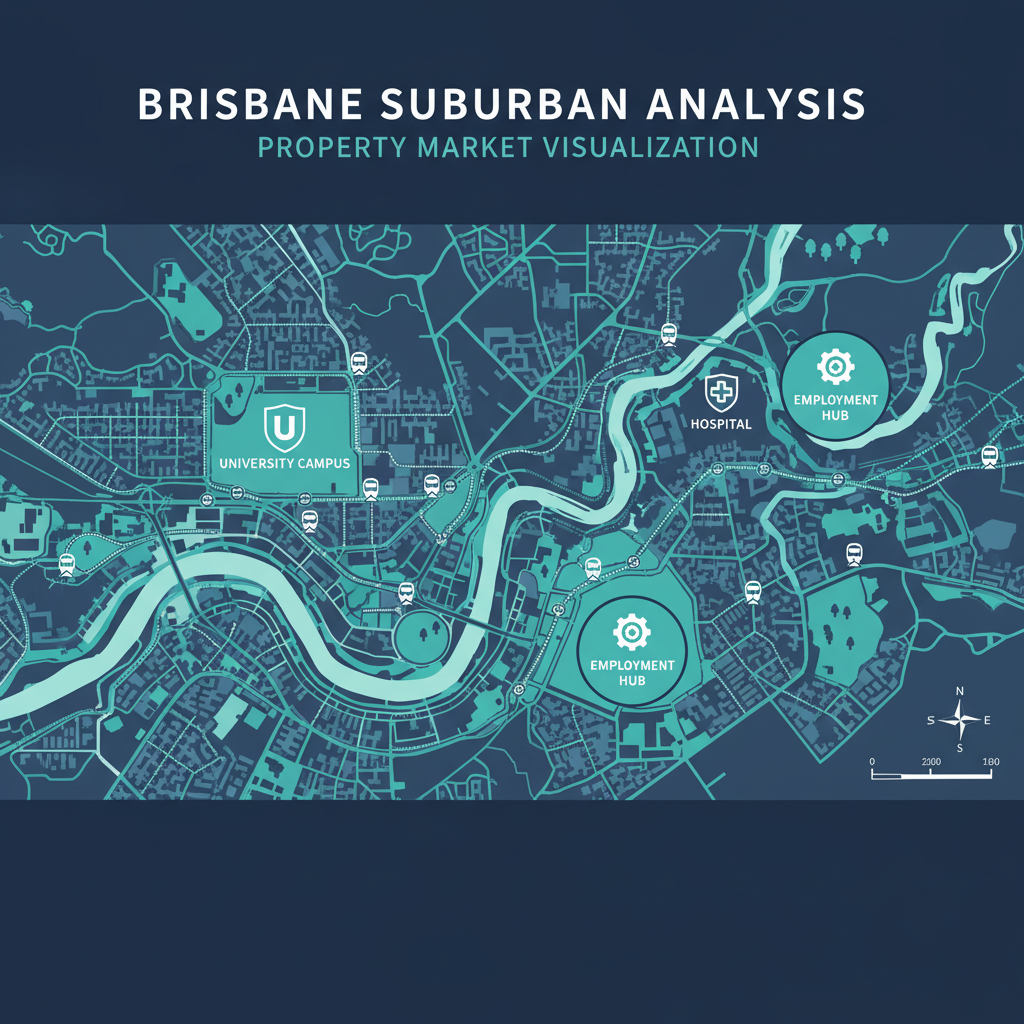
Finding the right property is 80% of success with this strategy. You're not just buying any house—you're buying a future income-producing asset.
Location Selection Framework
Prioritize suburbs with these characteristics:
High Rental Demand Indicators:
- University or TAFE campus within 5km
- Major hospital or medical precinct nearby
- Business parks or employment clusters
- Public transport within walking distance
- Vacancy rates below 2%
Brisbane suburbs like Kelvin Grove, Woolloongabba, and Coorparoo tick multiple boxes. Melbourne's Footscray, Preston, and Brunswick remain strong. In Sydney, areas like Redfern, Newtown, and Parramatta offer opportunities—though price points are higher.
According to CoreLogic data, rental demand remains strongest in inner-ring suburbs within 10km of CBDs, particularly near universities and hospitals.
Property Features That Command Premium Rent
Certain features let you charge $20-40 more per room weekly:
- Air conditioning in bedrooms (adds $25-30/week per room)
- Built-in wardrobes in each bedroom
- Modern kitchen appliances (dishwasher is a big plus)
- Secure parking (even one space adds value)
- Outdoor entertaining area (shared by all tenants)
- High-speed internet already connected
You don't need all these features at purchase. Many can be added affordably. A $3,000 investment in air conditioning can generate an extra $120/week across four rooms—that's $6,240 annually, paying back the investment in under 6 months.
Budget and Finance Considerations
House hacking can work with lower deposits if you're living in the property. Here's what to know:
Owner-Occupied Purchase:
- Minimum deposit: 5% with lenders mortgage insurance
- Can use rental income from other rooms for serviceability
- Lower interest rates than investment loans
- Access to first home buyer grants in some states
Investment Property Purchase:
- Minimum deposit: typically 10-20%
- Lenders assess 75-80% of projected rental income
- Higher interest rates but full tax deductibility
- Depreciation benefits on furnishings and fixtures
Some lenders will accept 100% of proposed rental income when you present a strong case with existing tenancy demand evidence. Speak with a mortgage broker experienced in house-hacking scenarios.
For comparison, rooming houses typically require 60-70% LVR on commercial loans according to Home Loan Experts, while standard houses converted to shared use can access residential lending at 70-80% LVR.
Tenant Selection and Property Management Best Practices
Getting the right mix of tenants makes or breaks this strategy. You're not just filling rooms—you're building a functional household.
Ideal Tenant Profiles
The best co-living tenants are:
- Working professionals aged 25-40 with stable employment
- Graduate students or early-career professionals in healthcare, IT, or education
- Interstate or international workers on 6-12 month contracts
- People transitioning between living situations who need flexibility
Avoid mixing incompatible tenant types. Don't combine party-going students with shift workers who need quiet. Screen for similar lifestyles and schedules.
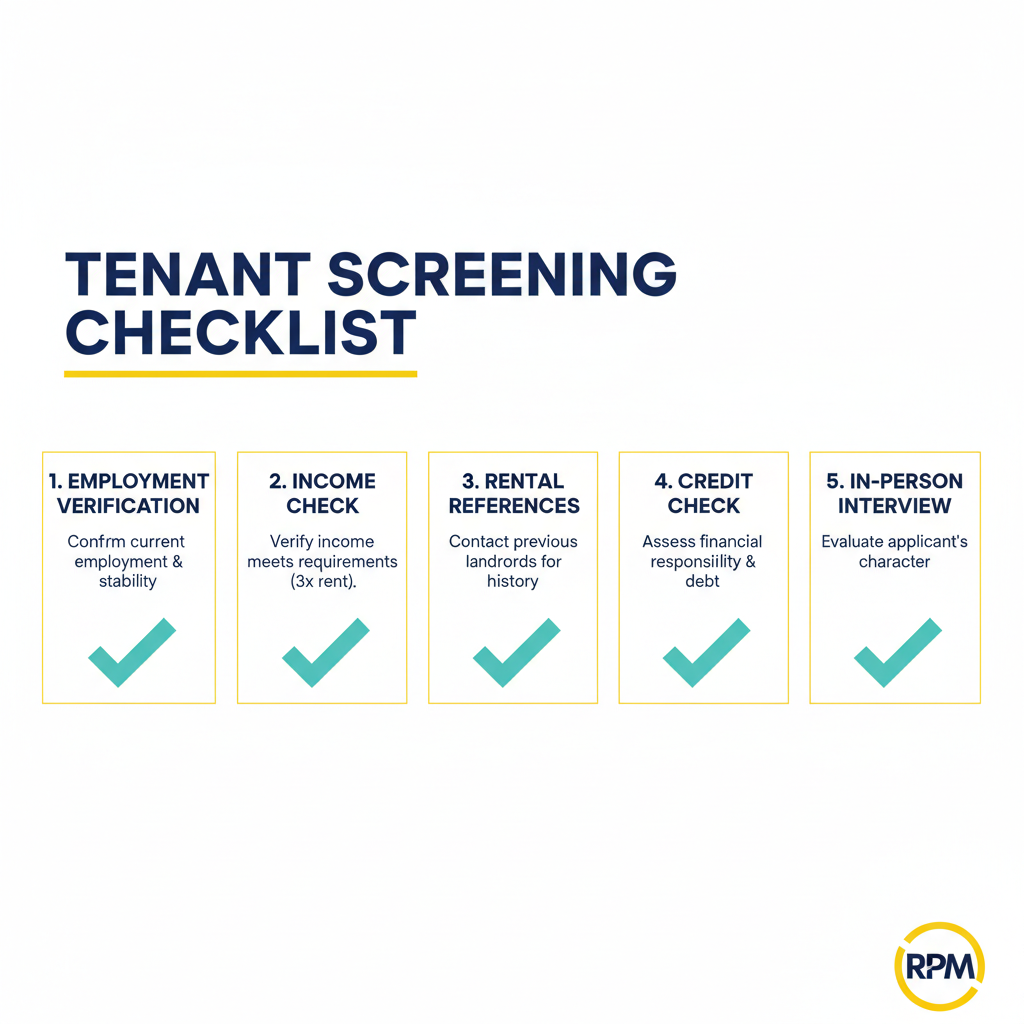
Screening Process
Apply these checks for every tenant:
- Employment verification (minimum 3-month job tenure)
- Income check (rent should not exceed 30% of gross income)
- Rental references from previous landlords
- Credit check for major red flags
- In-person interview to assess compatibility
Create individual lease agreements for each room. This protects you if one tenant leaves—the others' leases remain valid. Standard residential tenancy agreements work fine in most states.
House Rules and Community Management
Set clear expectations upfront:
- Quiet hours (typically 10pm-7am on weekdays)
- Cleaning roster for common areas
- Guest policies (overnight stays, frequency limits)
- Kitchen and bathroom etiquette
- Shared utilities responsibilities
Some investors host monthly house meetings or create WhatsApp groups for easy communication. The goal is to prevent small issues from becoming tenancy disputes.
According to an investor profiled by Strong Money Australia, "I provide some services to the housemates, such as cleaning, management of all bills, fixing things, and all liaising with the real estate agents," which created a buffer to be "a more compassionate head tenant."
Managing Tenancy Turnover
With multiple rooms, you'll have more frequent turnover than single-lease properties. Here's how to minimize vacancy:
- Start marketing 6 weeks before a tenant leaves
- Keep a waitlist of pre-screened applicants
- Offer lease renewal incentives (small rent discount for 12-month renewal)
- Maintain the property well to generate positive word-of-mouth
- Use platforms like Flatmates.com.au specifically designed for room rentals
Because you have multiple income streams, one vacant room impacts only 20-25% of total income, versus 100% vacancy with traditional rentals. This built-in diversification reduces risk significantly.
Legal and Compliance Requirements by State
Regulations vary significantly across Australia. Here's what you need to know before starting.
When Council Approval Is Required
Most states allow room rentals in standard residential zones without special approval, but there are thresholds:
Queensland: Properties accommodating up to 5 unrelated people generally don't need Development Approval as rooming accommodation. Beyond 5 people, it may trigger rooming house regulations. Check Brisbane City Council planning schemes for your specific suburb.
Victoria: Rooming houses with 4+ people require registration and must meet minimum standards under the Residential Tenancies (Rooming House Standards) Regulations. Properties with 3 or fewer tenants typically avoid these requirements.
New South Wales: Boarding houses fall under the Affordable Rental Housing SEPP. Properties with fewer than 6 rooms may operate under standard residential rules, but verify with your local council.
South Australia: Rooming houses are defined as premises where 2+ rooms are available for rent. Designated rooming houses (5+ rooms) face additional registration requirements.
Always check with your local council before purchasing. Some councils have specific overlays or local laws affecting multi-tenant arrangements.
Insurance Considerations
Standard landlord insurance may not cover room-by-room rentals. You need:
- Landlord insurance that covers multiple tenants (not all policies do)
- Public liability coverage for common areas
- Contents insurance if you're providing furnishings
- Loss of rent protection covering multiple lease agreements
Declare your rental arrangement honestly to insurers. Failing to disclose multi-tenant setup can void claims. According to Captain FI, insurance companies have refused claims when property owners ran unauthorized businesses or rental models from their properties.
Tax Implications and Deductions
House hacking creates specific tax scenarios:
If You Live in the Property:
- You cannot claim deductions on the portion you occupy
- Rental income from other rooms is assessable
- Claim expenses proportionally (e.g., 75% of costs if you occupy 25% of the house)
- Capital gains tax may apply when you sell (proportional to rental use)
If It's Pure Investment:
- Full tax deductibility of interest, rates, insurance, maintenance
- Depreciation on building (2.5% annually) and fixtures (various rates)
- Property management fees fully deductible
- Higher rental yields often mean positive cash flow sooner
Consult a property-savvy accountant before your first tax return. The ATO has specific guidance on rental property deductions that applies to room-by-room arrangements.
Financial Modeling: Costs vs Returns
Let's break down the real numbers on a typical house-hacking investment.
Purchase Example: Brisbane Suburb Property
Assume you purchase a 4-bedroom house in Coorparoo (Brisbane) for $680,000:
Purchase Costs:
- Deposit (20%): $136,000
- Stamp duty: $24,250
- Legal and inspection: $3,500
- Total upfront: $163,750
Loan Details:
- Amount: $544,000 at 6.5% (investment rate)
- Principal and interest: $3,435/month
- Interest only: $2,953/month (first 5 years)
Annual Holding Costs:
- Council rates: $2,400
- Insurance: $1,800 (higher for multi-tenant)
- Property management (8%): $3,328
- Maintenance budget: $4,000
- Water/utilities: $2,000 (if included in rent)
- Total annual costs: $13,528 (plus loan repayments)
Income Projection
Rent each of 4 bedrooms at $240/week:
- Weekly income: $960
- Annual income: $49,920
- Less vacancy allowance (5%): $2,496
- Net rental income: $47,424
Annual Cash Flow (Interest Only Loan):
- Income: $47,424
- Less operating costs: $13,528
- Less loan interest: $35,360
- Annual cash flow: -$1,464 (slightly negative)
- Monthly cash flow: -$122
This example shows slight negative gearing—common in higher-priced markets. The tax deductions reduce the real cost further.
Return on Investment Calculation
After 5 years, assuming 5% annual capital growth:
- Property value: $867,675
- Loan balance (interest only): $544,000
- Equity gain: $187,675
- Original investment: $163,750
- Total return: 115% over 5 years
- Average annual return: 23%
This return combines capital growth and cash flow improvements as rents increase. The gross rental yield of 7.3% ($49,920 income on $680,000 purchase) far exceeds the Brisbane median house yield of 4.2%.
Data from Global Property Guide shows average gross rental yields across Australia at 4.92% in Q3 2025, making the 7-8% yields achievable through room-by-room rental significantly above market.
Common Pitfalls and How to Avoid Them
Many first-time house hackers make predictable mistakes. Here's how to sidestep them.
Mistake 1: Ignoring Council Regulations
Some high-yield suburbs have specific zoning restrictions or planning overlays limiting multi-tenant arrangements. Others require minimum room sizes, fire safety measures, or parking provisions.
Solution: Request a planning certificate before making an offer. Speak directly with council planners about your intended use. If regulations are unclear, get it in writing.
Mistake 2: Underestimating Management Time
Managing 4-5 individual tenants requires more effort than one family lease. You're coordinating multiple move-ins, handling more maintenance requests, and mediating housemate issues.
Solution: Either factor in 8-10% for professional property management or calculate the value of your time honestly. Many investors start self-managing then switch to professionals once they understand the workload.
Mistake 3: Poor Tenant Compatibility
Mixing a 21-year-old university student with a 45-year-old healthcare worker rarely works. Different lifestyles, schedules, and expectations create friction.
Solution: Develop a clear tenant profile for your property. Interview prospective tenants together (with existing tenants' input) to assess fit. Similar age ranges and lifestyle preferences reduce conflicts dramatically.
Mistake 4: Inadequate Property Condition
Tenants paying $200-250/week per room have expectations. Dated kitchens, broken appliances, or poor maintenance lead to turnover and bad reviews on rental platforms.
Solution: Budget 5-7% of rental income for ongoing maintenance. Keep common areas fresh with a coat of paint every 2-3 years. Fix issues promptly. Quality tenants pay premium rent for well-maintained properties.
Mistake 5: Assuming High Vacancy Risk Is Acceptable
Some investors think, "If one room is vacant, I still have income from three others." True, but if you're tolerating 20% vacancy regularly, your returns plummet.
Solution: Start marketing vacant rooms 6-8 weeks before a tenant leaves. Build a waitlist. In high-demand locations with good property condition, you should achieve 95%+ occupancy.
How Buyers Agency Australia Identifies Co-Living Opportunities

Finding properties with strong house-hacking potential requires local knowledge, data analysis, and boots-on-the-ground insights.
Buyers Agency Australia applies a systematic approach to identify properties suited for room-by-room rental strategies. The process starts with suburb-level analysis, examining rental demand indicators like proximity to universities, hospitals, and transport infrastructure. Properties within 3km of major employment or education hubs typically achieve 15-20% higher room rents than similar houses further out.
The team then assesses individual properties for layout suitability. A 4-bedroom house with 2 bathrooms generally works better than 5 bedrooms with 1 bathroom. Functional common areas matter—open-plan kitchen and living spaces encourage positive tenant interactions and reduce conflict.
Dragan Dimovski brings 20+ years of investment experience to each property evaluation. His $10M+ personal portfolio includes properties using various rental strategies, giving him firsthand knowledge of what works in different markets. This experience proves invaluable when advising clients on co-living potential.
The agency conducts detailed rental market analysis for each shortlisted property, comparing traditional single-lease income against projected room-by-room returns. They account for management costs, likely vacancy rates, and tenant demand specific to that location.
For investors concerned about regulatory complexity, Buyers Agency Australia coordinates with town planners to verify zoning compliance before purchase. This due diligence prevents costly mistakes where investors buy properties that can't legally operate as intended.
Clients also benefit from the agency's network of property managers experienced in multi-tenant arrangements, mortgage brokers familiar with house-hacking finance, and tax accountants who optimize deduction strategies.
To explore investment properties with co-living potential in your target area, book a free strategy session with the Buyers Agency Australia team. They'll assess your budget, goals, and risk tolerance to identify opportunities that match your investment criteria.
Alternative Strategies: Room Rentals vs Rooming Houses vs BTR
Co-living with a normal house sits on a spectrum of multi-tenant investment strategies. Understanding the alternatives helps you choose the right approach.
Standard Room Rentals (Least Complex)
What it is: Renting individual rooms in a standard house with shared facilities, no structural modifications.
Pros:
- Lowest entry cost and complexity
- No special council approvals in most cases
- Standard residential lending available
- Can start with existing property
Cons:
- Lower yields than purpose-built options (6-8% vs 8-12%)
- Limited to 3-5 tenants in most properties
- Higher management time per dollar of income
- Tenant turnover more frequent
Best for: First-time investors, owner-occupiers wanting to offset mortgages, investors seeking passive income without large capital outlay.
Rooming Houses (Medium Complexity)
What it is: Purpose-designed or converted properties with self-contained rooms, each with ensuite and kitchenette, accommodating 5+ people.
Pros:
- Higher yields (8-12% gross)
- Reduced tenant conflict (more privacy)
- Longer tenant stays
- Strong demand from working professionals
Cons:
- Requires council Development Approval in most states
- Higher construction/conversion costs ($100k-300k+)
- Registration requirements in Victoria and some other states
- Specialist finance needed (60-70% LVR)
- More complex ongoing compliance
Best for: Experienced investors with larger capital, those building property portfolios, investors comfortable with regulatory requirements.
According to High Yield Property Club, "We will not offer our members a rooming house with a return of less than 8% in the Brisbane City Council area."
Build-to-Rent Co-Living (Highest Complexity)
What it is: Large-scale developments (20-100+ units) purpose-built for co-living, usually held long-term by institutional investors.
Pros:
- Highest efficiency and yields at scale
- Professional management infrastructure
- Eligible for government incentives in some states
- Purpose-built for tenant experience
Cons:
- Requires $5M-50M+ capital
- 2-4 year development timeline
- Complex regulatory environment
- Not accessible to individual investors (syndication only)
Best for: Institutional investors, property syndicates, developers with substantial capital and experience.
Knight Frank data shows co-living schemes in the pipeline average 78 units for projects with development approval, scaling to 130 for proposed projects, indicating the institutional nature of this sector.
Which Strategy Fits Your Situation?
Use this decision framework:
Choose standard room rentals if:
- You have $100k-200k for deposit and purchase costs
- You want to test multi-tenant strategies with lower risk
- You're comfortable with moderate management involvement
- You're targeting 6-8% gross yields
Choose rooming house conversion if:
- You have $200k-400k available capital
- You can manage a 6-12 month development process
- You want 8-12% gross yields
- You're building a portfolio of multiple properties
- You're comfortable navigating council approvals
Choose BTR investment (syndicated) if:
- You have $50k-100k to invest passively
- You want completely hands-off investment
- You're willing to accept 5-7% net returns
- You prefer institutional-grade assets
Frequently Asked Questions
Can I use a normal house for co-living without council approval?
In most Australian states, renting individual rooms in a standard residential property to fewer than 5 unrelated people doesn't require special council approval. Once you exceed 4-5 tenants, rooming house regulations may apply. Always verify with your local council before proceeding.
What rental yield can I expect from room-by-room rentals?
Gross rental yields typically range from 6-8% for standard houses with individual room leases, compared to 3-5% for traditional single-family leases. Location, property condition, and tenant quality significantly impact actual returns. Properties near universities or hospitals often achieve the higher end.
Do I need special insurance for multiple tenants?
Yes, standard landlord insurance may not cover room-by-room arrangements. You need a policy that explicitly covers multiple unrelated tenants and shared common areas. Disclose your rental structure to avoid claim issues. Expect premiums 20-30% higher than standard landlord insurance.
How do I handle utilities with multiple tenants?
You have two options: include utilities in room rent (simpler, more attractive to tenants) or split bills between tenants (more administration, higher profit margins). Most successful house hackers include utilities in rent for rooms under $250/week to streamline management and attract quality tenants.
Is house hacking legal if I live in the property?
Yes, house hacking is completely legal in Australia when done correctly. If you live in the property while renting other rooms, you're often subject to fewer restrictions than pure investment arrangements. However, if you're renting the property yourself and subleasing rooms, check your lease agreement for permission.