
If you're building a property portfolio in 2026, the Federal Government is reviewing two major tax policies that have underpinned Australian property investment for decades: negative gearing and the capital gains tax discount. Treasury is modelling targeted reforms ahead of the May budget, including a two-property cap on negative gearing deductions and a reduction in the CGT discount from 50% to 33%. While no final decision has been made, investors need to understand what's being proposed, why these changes matter, and how to prepare strategically for the uncertainty ahead.
We've all been there. You've worked hard to build an investment portfolio, navigated rising interest rates, and played by the rules. Now the rules might be changing.
With Treasurer Jim Chalmers confirming that Treasury is modelling reforms to negative gearing and capital gains tax ahead of the May 2026 budget, property investors across Australia are asking the same question: what does this mean for me?
Here's the thing. Nothing has been legislated yet. But the Senate Select Committee delivered its final report in March 2026, the Parliamentary Budget Office released detailed modelling, and Treasury is actively preparing options for the Federal Budget. The conversation has moved from academic theory to kitchen-table reality for over 2.2 million property investors nationwide.
Whether you're an experienced investor with multiple properties or you're planning your first purchase with Buyers Agency Australia, understanding these proposed changes is critical to making informed decisions in the months ahead.
What Negative Gearing Actually Is
Negative gearing occurs when the cost of owning an investment property exceeds the rental income it generates. The shortfall can be deducted against your other income, including your salary, reducing your overall tax liability.
If you earn $120,000 and your rental property runs at a $15,000 annual loss, you're taxed as though you earned $105,000. At the 37% marginal rate, that saves you $5,550 in tax. The property still costs you money each year, but less than it would without the deduction.
According to ATO data, 1.12 million investors recorded a net rental loss in 2022-23, up from 41.9% to 49.4% of all investors. This jump was driven largely by interest rate increases pushing holding costs above rental income.
Why It Matters for Investors
Negative gearing isn't a loophole. It's how all investment income and losses are treated in the Australian tax system. If your shares run at a loss, you can offset that against other income too. Property just gets more attention because of the dollar amounts involved.
For high-income earners in the top tax bracket (47% including Medicare Levy), every dollar of rental loss generates 47 cents in tax savings. For doctors, IT professionals, and business owners, this makes negative gearing a powerful tool for wealth accumulation.
How the Proposed Two-Property Cap Would Work
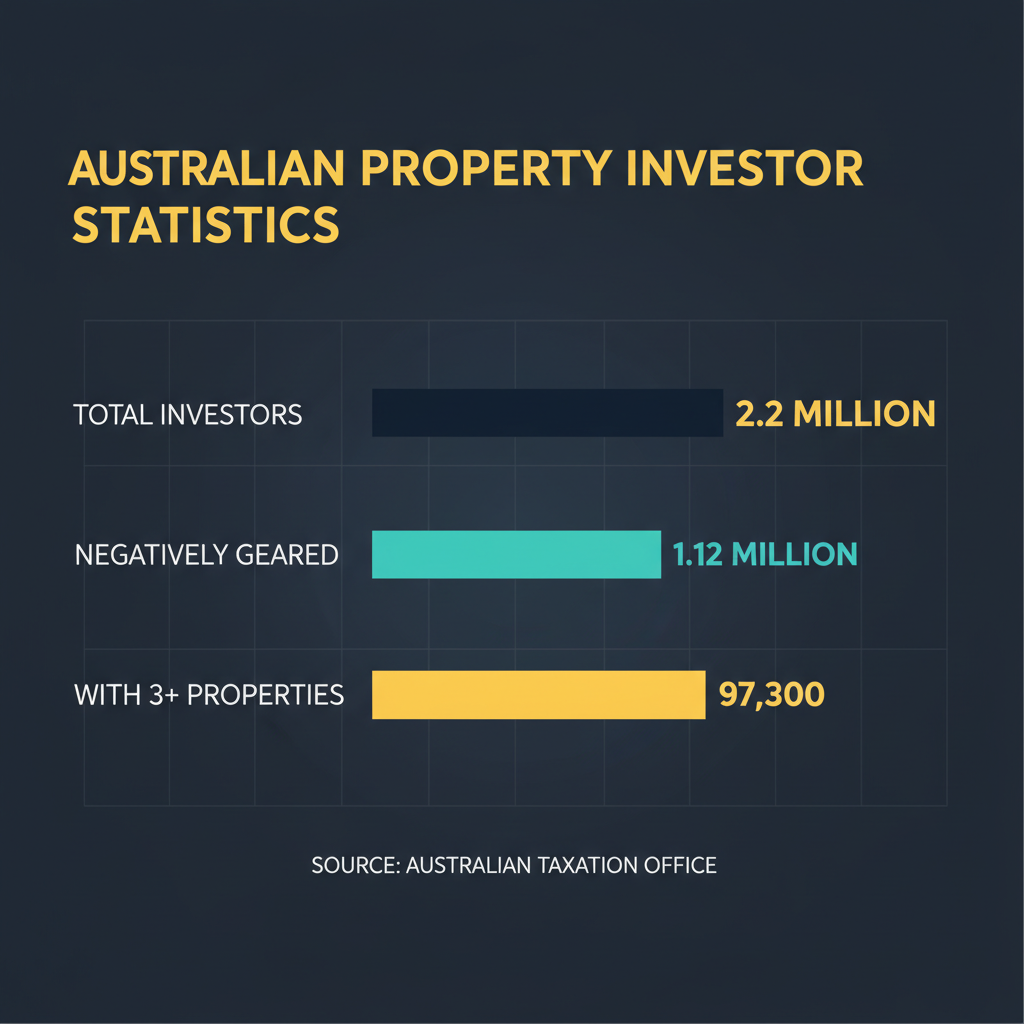
Treasury is modelling rules that would limit negative gearing deductions to a maximum of two investment properties per person. If you own three or more, the rental losses on your additional properties would be quarantined. They could only be offset against future rental income from those properties, not against your salary or wages.
ATO data shows just over 97,300 investors (about 4% of Australia's 2,261,000 investors) have three or more negatively geared properties. The majority of these (60,700) have exactly three negatively geared properties.
If changes go ahead, it's highly likely that existing property investments would be grandfathered. This means the new rules would apply to future purchases only, not to properties you already own. This was the approach Labor took to the 2019 election, and Treasury modelling for the current proposals operates on the same basis.
The Capital Gains Tax Discount Explained
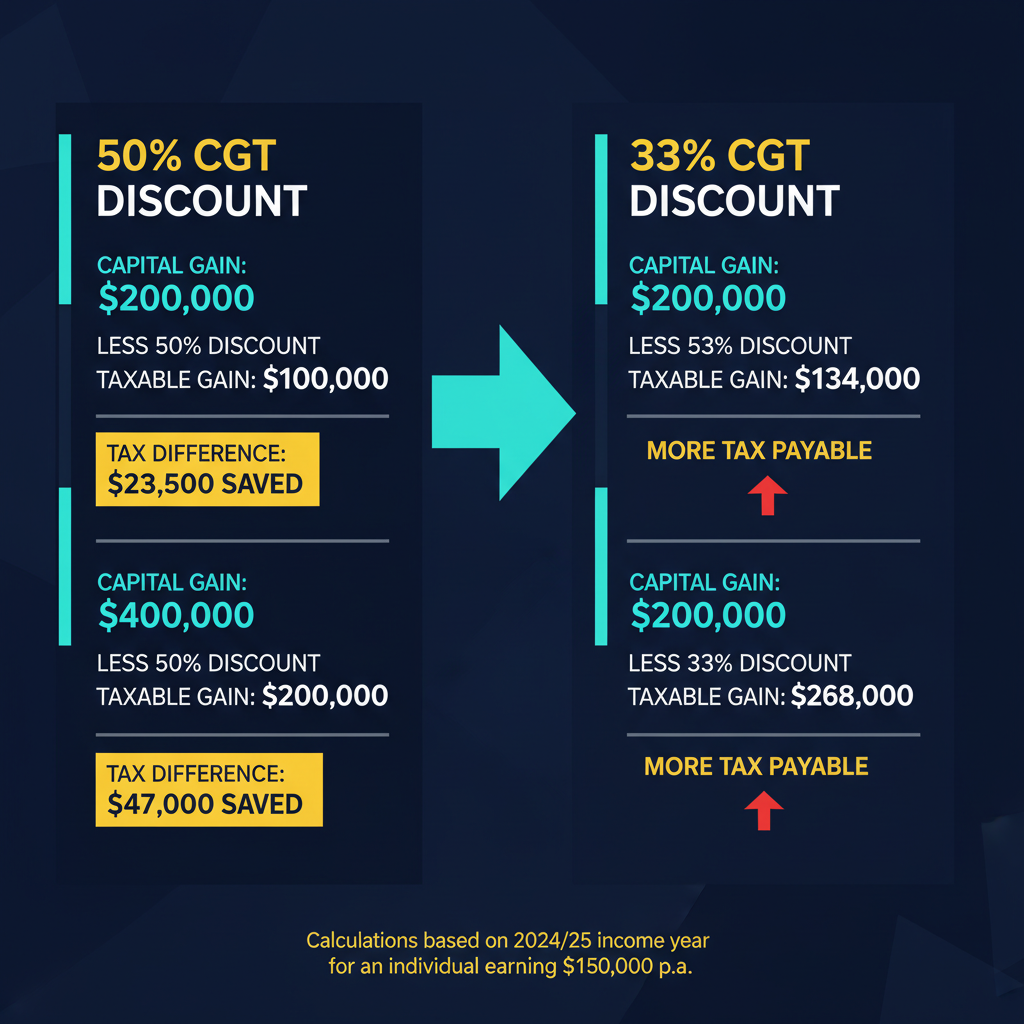
Currently, if you hold an investment property for more than 12 months, you pay CGT on only 50% of the capital gain. The government is exploring a reduction to 33%.
Why the CGT Discount Matters
Capital growth is the endgame for negative gearing. If you sell a property for a $200,000 profit after 10 years, today you'd pay CGT on $100,000. Under the proposed 33% discount, you'd pay CGT on $134,000.
For investors in the 47% tax bracket, that's an extra $15,980 in tax on a $200,000 gain. On a $400,000 gain held 10 years, the difference is roughly $47,000.
It doesn't kill the strategy, but it tightens margins and makes property selection even more critical. Properties need stronger fundamentals to deliver acceptable after-tax returns.
How Other Countries Compare
Australia's CGT discount is not unusually generous by global standards. The US and UK tax capital gains at lower rates (around 0-20% in the US and 18-24% in the UK), well below top income tax rates. Canada allows a 50% discount on capital gains. New Zealand generally does not tax capital gains on long-term investment property unless it was bought for speculative profit from quick resale.
Why These Changes Are Being Discussed Now
The Grattan Institute estimates that reducing the capital gains tax discount from 50% to 33% and capping negative gearing could save the federal budget billions annually. The Parliamentary Budget Office confirms this revenue windfall could exceed $10 billion over the next decade.
Supporters argue the current system favours wealthy multi-property investors over first-home buyers. The Australian Greens argue that existing tax breaks allow cashed-up investors to outbid everyday Australians, artificially inflating demand.
The Case Against Reform
Critics, including the Property Council of Australia and the Real Estate Institute of Western Australia, warn that reducing tax incentives could push investors to raise rents or exit the market, worsening rental supply.
Modelling by Qaive and Tulipwood Economics commissioned by REIA, Master Builders Australia, HIA, and the Property Council shows that removing negative gearing for all new and current rental properties, except for one current property per investor, would reduce GDP by $3.1 billion in net present value terms and reduce dwelling starts by 45,500 over five years.
Impact on Rental Supply
If investors exit the market, rental supply will decline. This will see vacancy rates tighten and increase upward pressure on rents. In markets like Brisbane and Perth where vacancy rates already sit below 1%, this is the last thing tenants need.
Changing the CGT discount is also likely to reduce appetite for investing in property, exacerbating supply constraints over time and making renting more difficult and expensive.
What It Means for Current Property Investors
If you own two or fewer investment properties, the negative gearing cap as proposed wouldn't affect you at all. If you own three or more, you need to run the numbers on what quarantined losses would mean for your annual cash flow.
Tax Strategy in Uncertain Times
On a $200,000 capital gain at the 37% marginal rate, you'd pay $37,000 under current rules versus $49,580 under the proposed discount. That's $12,580 more in tax. Model the CGT scenario for every property you're planning to sell in the next few years.
Tax strategy depends on your individual circumstances. This article gives you the overview, but the specific implications for your portfolio need professional advice. Speak to your accountant or financial adviser about how any proposed changes apply to your situation.
What Good Property Still Looks Like
Good property is good property regardless of the tax settings. A property in a suburb with genuine structural demand, tight supply, and strong tenant activity will still outperform a mediocre one whether the CGT rate is 50% or 33%.
The properties that survive a dual wind-back are high-yield assets: properties that generate real income, assets with genuine scarcity value in tight rental markets, suburbs where vacancy rates sit at 0.7% and tenants are competing for every listing.
If both negative gearing and the CGT discount are wound back simultaneously, deliberately running a cash-flow negative property purely for a discounted capital gain becomes a far less compelling strategy. Properties with strong rental yields hold up better under tighter tax settings.
How to Build a Future-Proof Investment Strategy
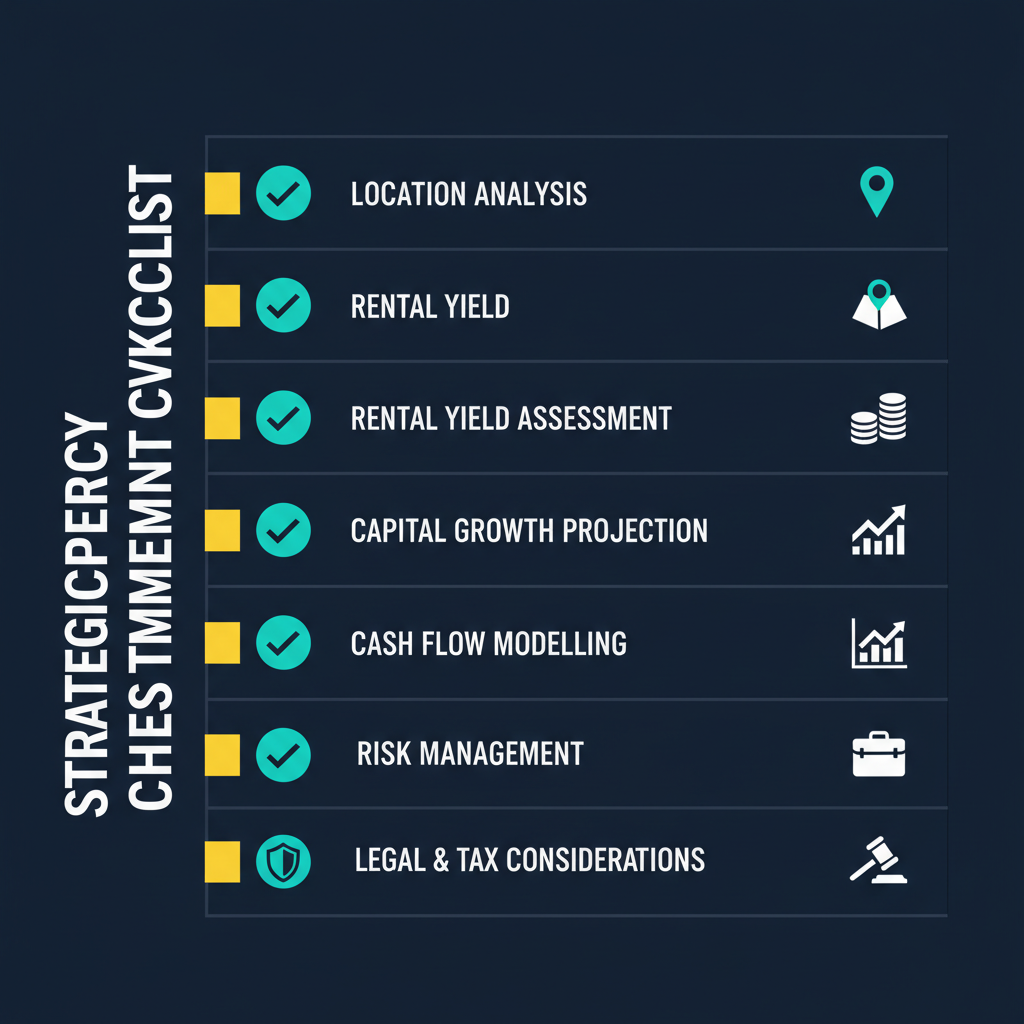
The investors who'll be best positioned regardless of what happens are the ones who buy based on data, hold for the long term, and don't over-leverage on the assumption that tax deductions will always look the same.
Focus on Fundamentals, Not Tax Breaks
Buying something you haven't properly assessed just to beat a tax change, one that may not even materialise in its worst form, is not the move. If you were already planning to buy, there is a sensible case for prioritising the next 60 to 90 days. But the property needs to stack up on its fundamentals.
Dragan Dimovski, founder of Buyers Agency Australia, has spent 20+ years helping investors navigate policy shifts exactly like this. His advice? Don't rely on tax breaks alone. Build portfolios that work with or without negative gearing, focusing on long-term fundamentals like location, infrastructure, and rental demand.
Strategic Property Selection Criteria
Negative gearing demands stable income. If you lose your job, face unexpected repairs, or can't find a tenant, the shortfall becomes a serious problem. In 2026, with interest rates sitting around 3.85% (down from a 2023 peak of 4.35%), many investors are still carrying loans at elevated rates.
A 1% rate increase on a $500,000 loan adds $5,000 per year in interest. That's an extra $416 per month you need to cover. If your property is already negatively geared by $10,000 annually, a rate hike pushes your out-of-pocket loss to $15,000.
Doctors, IT professionals, and business owners with consistent income can weather short-term losses while waiting for capital growth. It's a terrible strategy for those with irregular income, high debt, or tight cash flow. If you can't cover the shortfall for 5 to 10 years, don't negatively gear.
The 10-Year Investment Horizon
Negative gearing is a long game. You're trading short-term cash flow for long-term equity. Over 10 years, a $600,000 property growing at 6% per year becomes a $1.07 million asset. That $470,000 gain (minus CGT) can more than offset a decade of $10,000 annual losses.
But you need patience, discipline, and the right property. Buyers Agency Australia helps investors build 5 to 10-year roadmaps, modelling tax benefits, cash flow, and exit strategies to ensure every purchase aligns with long-term goals.
Why Investors Choose Buyers Agency Australia During Policy Uncertainty

When tax settings are under review and market conditions are shifting, working with an experienced buyers agent in Brisbane, Sydney, Melbourne, or Perth can be the difference between buying a property that survives policy change and buying one that doesn't.
Buyers Agency Australia uses data from CoreLogic, SQM Research, and boots-on-the-ground intel to identify suburbs with strong fundamentals, infrastructure investment, and supply constraints. Dragan's team focuses on buying below market value in high-growth corridors.
Governments can and do change tax rules. If the two-property cap becomes law, investors with larger portfolios face a sudden reduction in deductions. The winners in 2026 will be investors who focus on fundamentals: location, rental demand, capital growth, and asset quality.
They'll work with experts like Buyers Agency Australia to build portfolios that deliver long-term wealth, with or without negative gearing. If you're ready to build a tax-efficient, future-proof property portfolio, book a free strategy session with Buyers Agency Australia today.
Practical Steps Investors Can Take Right Now
As of April 2026, negative gearing and the CGT discount are unchanged. Treasury is modelling reforms. The budget is weeks away. When we know more, the picture will be clearer. In the meantime, focus on what you can control.
Assess Your Current Portfolio
Understand your exposure. If you own two or fewer investment properties, the negative gearing cap as proposed wouldn't affect you at all. If you own three or more, run the numbers on what quarantined losses would mean for your annual cash flow.
Model the CGT scenario. If you're planning to sell in the next few years, the difference between a 50% and 33% CGT discount is real money. Talk to your accountant. Tax strategy depends on your individual circumstances.
Keep Buying Well-Researched Properties
If the numbers stack up, the property is in a strong location, and your strategy aligns with your financial position, negative gearing changes don't change the fundamentals of property investment.
Buying well-researched properties at fair prices in strong locations works regardless of what Canberra decides. If you're buying interstate, the fundamentals of due diligence and location selection matter more than ever.
Document Everything for Your Accountant
The 6-year rule lets you treat a former primary residence as your main residence for CGT purposes for up to six years after you move out and start renting it, meaning you can sell it entirely tax-free within that window. This rule is not currently targeted in the reform discussions, but investors using it should keep their timeline documented and their accountant informed.
Frequently Asked Questions About Property Tax Reform 2026
Will negative gearing be abolished completely?
No. Treasury is modelling a cap limiting deductions to two properties per person, not abolishing it entirely.
When will we know the final details?
The Federal Budget in May 2026 is the key announcement date. Watch for official Treasury statements.
Do these changes apply to existing properties I own?
Likely not. Grandfathering provisions would protect existing holdings, applying new rules to future purchases only.
Should I rush to buy before the budget?
Only if the property genuinely stacks up on fundamentals. Don't buy something poorly assessed just to beat a potential tax change.
How can I protect my portfolio from policy risk?
Focus on high-yield assets in strong locations with tight rental markets. Diversify income sources and maintain cash reserves for rate shocks.
Final Thoughts on Navigating Tax Uncertainty
Negative gearing isn't dead, but it's evolving. With 2026 policy reforms looming, investors need to be smarter, more strategic, and more disciplined than ever. The days of buying any property and banking on tax breaks are over.
The winners in 2026 will be investors who focus on fundamentals: location, rental demand, capital growth, and asset quality. They'll work with experts like Buyers Agency Australia to build portfolios that deliver long-term wealth, with or without negative gearing.
If you're ready to build a tax-efficient, future-proof property portfolio, book a free strategy session with Buyers Agency Australia today. Let's turn market uncertainty into opportunity and build a portfolio that works regardless of what happens in the May budget.
Disclaimer: This article provides general educational information only and does not constitute financial or tax advice. Tax legislation is subject to change. Always consult a qualified financial adviser and registered tax agent for advice specific to your circumstances before making any investment decisions.