Property prices in Australia are not crashing in 2026. Leading forecasters predict continued growth of 4-10% nationally, driven by a structural housing shortage of 200,000-300,000 homes, strong population demand, and limited new supply—despite rising interest rates and worsening affordability.
We've all heard the predictions. Every few years, someone declares that property prices are about to collapse. In 2026, the chorus has grown louder.
Some point to the infamous "18-year cycle" and warn that a crash is overdue. Others cite rising interest rates, stretched affordability, and an economy under pressure. If you're a first-home buyer priced out of the market or an investor watching your equity grow, the question feels urgent: will property prices crash?
Let's be honest. The property conversation in Australia has shifted from excitement to anxiety. This article cuts through the noise with data from CoreLogic, SQM Research, the Reserve Bank of Australia, and leading economists to answer the question definitively. If you're deciding whether to buy now or wait for a crash, Buyers Agency Australia can help you make the right move at the right time.
What Leading Forecasters Are Saying About 2026 Property Prices
National Price Growth Projections Remain Positive
Despite headlines warning of doom, every major forecaster expects property prices to rise in 2026. The range varies, but growth is the consensus.
AMP forecasts national home prices will rise 5-7% in 2026, slowing from 2025's 8.6% but still firmly positive. Domain predicts combined capital city house prices will climb 6% by year's end. KPMG's forecast is even stronger at 7.7% growth nationally.
The Reserve Bank lifted the cash rate to 3.85% in February 2026, and economists are divided on whether further hikes will follow. Yet even with higher-for-longer interest rates, prices are expected to keep climbing.
There's no uniform market. Perth, Brisbane, Adelaide, and Darwin continue to surge with double-digit growth in some cases. Perth alone saw dwelling values jump 2.3% in February 2026, adding $22,500 to the median in one month, according to CoreLogic data. Sydney and Melbourne have cooled, with values flat or slightly negative in recent months, but forecasters expect them to rebound later in 2026.
Why the "Crash" Narrative Keeps Resurging
The myth of the 18-year property cycle has gained traction again. Some commentators count forward from the 2008 global financial crisis and declare 2026 is "due" for a crash.
Here's the problem: the 18-year cycle is pattern recognition, not a forecasting tool. As Property Update notes, "counting years is not a mechanism" for a crash. The 2008 crash was caused by a global credit crisis, not a calendar date.
A property market crash requires specific conditions: widespread forced selling, evaporating buyers, rising unemployment, or a credit event. Australia has none of these in 2026. Unemployment remains around 4.1%, mortgage arrears are below 1%, and lending standards remain strict following post-GFC reforms by APRA.
Affordability is terrible, and that's causing pain—but affordability stress alone doesn't trigger a crash. It slows growth. And that's exactly what we're seeing: growth moderating from 8-9% to 4-7%, not collapsing.
Regional Variations: Where Growth Is Strongest
Australia's property market moves in fragments. While some markets surge, others stall.
Perth, Brisbane, Adelaide, and Darwin are leading. KPMG predicts Perth house prices will soar 13% in 2026, Brisbane 11%, and Adelaide 8.2%. These cities benefit from strong interstate migration, rental yields above 5%, and listings 40-50% below five-year averages.
Sydney and Melbourne are cooling. Affordability has hit a ceiling. Sydney's median house price is forecast to reach $1.92 million by year-end, but monthly growth has stalled. Melbourne, which saw negative monthly growth in late 2025, is expected to recover as interstate migration returns and Victoria's price base remains lower than Sydney's.
Regional areas continue to attract buyers priced out of capitals, but CoreLogic warns some regional markets are at risk of correction as affordability constraints hit less liquid markets. Investors who chased yield into Darwin or smaller regional towns may face volatility.
Buyers Agency Australia specializes in identifying markets with strong fundamentals—jobs growth, infrastructure investment, and sustainable demand—to help investors avoid speculative bubbles.
The Real Drivers of Property Prices in 2026
Housing Shortage: The Structural Elephant in the Room
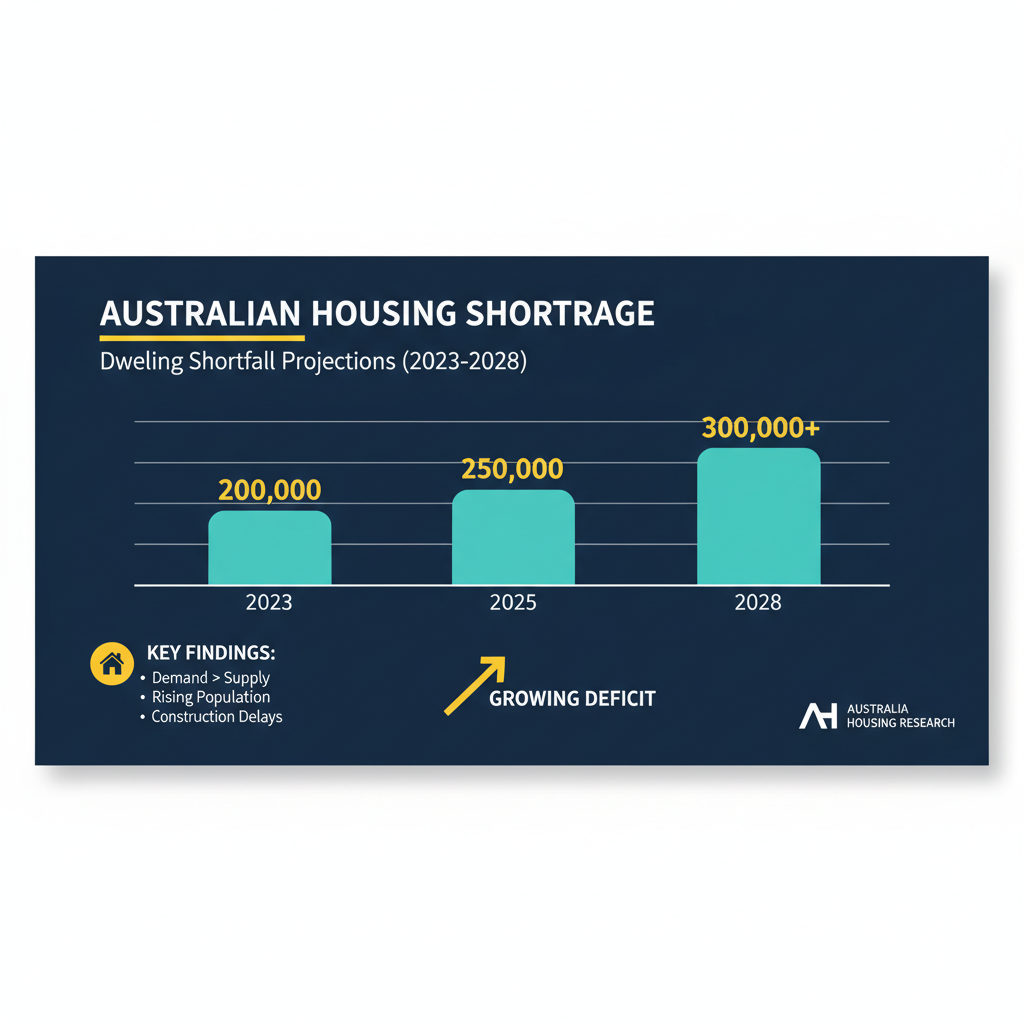
Australia's property market isn't driven by speculation. It's driven by a chronic, decade-long housing shortage.
AMP estimates the accumulated housing shortfall is 200,000-300,000 dwellings. The National Housing Supply and Affordability Council forecasts Australia will build 938,000 new dwellings over the Housing Accord period (2024-2029), leaving a shortfall of 262,000 homes against the 1.2 million target.
To meet demand, Australia needs to build 240,000 homes per year. In December 2025, dwelling approvals ran at just 16,500 per month—well short of the 20,000 monthly run rate required. Over the first 18 months of the Housing Accord, approvals were 20% below target.
The problem isn't lack of demand. It's lack of supply. And supply isn't coming fast enough to cool prices.
Construction productivity has fallen 12% over 30 years, according to the Housing Construction study. Labour shortages, material costs, and lengthy approval processes continue to constrain completions. The average time from approval to completion for a new house is now 12 months, up from 9 months in 2019-20.
Rental vacancy rates sit at 1% nationally, near all-time lows. In Brisbane, vacancies are 0.8%; in Hobart, just 0.3%. When supply is this tight, prices rise. It's economics 101.
Interest Rates: Higher for Longer, But Not a Crash Trigger
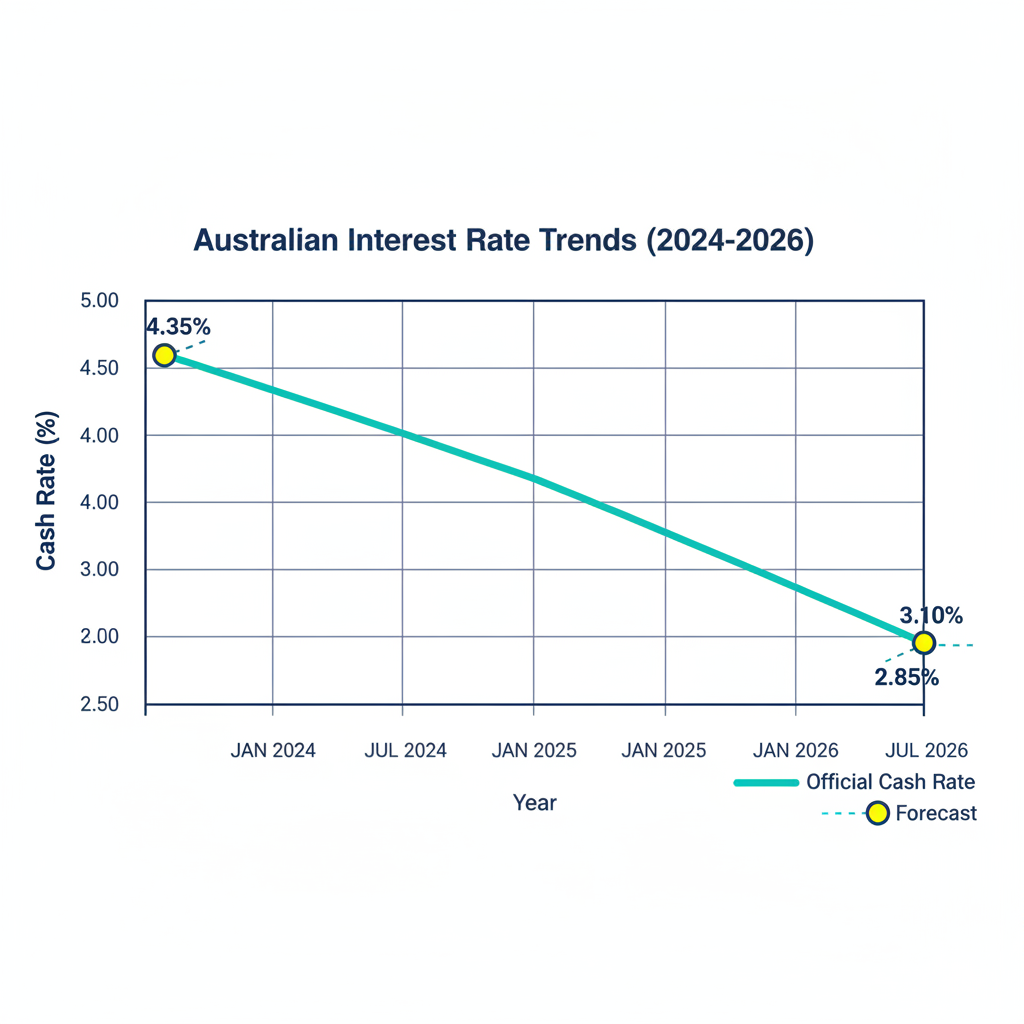
The Reserve Bank's February 2026 rate hike to 3.85% surprised no one. Inflation remains above the RBA's 2-3% target band, driven by persistent services inflation—rent, insurance, healthcare, and education.
Half of leading economists now expect at least one more rate hike in 2026, with some forecasting the cash rate could reach 4.35% by mid-year. Commonwealth Bank and NAB have revised forecasts upward, pricing in a higher-for-longer scenario.
Higher rates reduce borrowing capacity. Each 0.25% rate hike cuts borrowing power by roughly $11,000-12,000 for the average buyer. For a household already stretched, that's significant.
But here's what matters: higher rates slow growth, they don't reverse it. Property prices rose 8.6% in 2025 even as rates sat at 3.6%. The lagged effect of 2025's three rate cuts is still working through the economy, supporting buyer confidence and borrowing capacity.
Mortgage stress is real, but arrears remain below 1%. Australian banks apply strict serviceability buffers, requiring borrowers to prove they can service loans at rates 3% higher than the actual rate. This makes the system more resilient to rate hikes than in past cycles.
Unless unemployment spikes or a credit crisis emerges, higher rates will moderate growth, not trigger a crash. And with the labour market still tight, unemployment rising sharply is unlikely in 2026.
Population Growth and Migration: Demand Stays Strong
Australia's population is forecast to grow from 27.6 million to over 30 million by 2030. That's 3 million more people who need housing.
Net overseas migration has slowed from its 2023 peak of 662,000 to around 423,000 over the year to March 2025, with the government targeting further reductions to 365,000 in 2025-26. But even at these lower levels, migration remains a powerful driver of housing demand.
Interstate migration is reshaping markets. Perth, Brisbane, and Adelaide are attracting movers from Sydney and Melbourne, driven by affordability and lifestyle. Domain reports Melbourne has returned to positive interstate migration for the first time in years, signalling renewed confidence.
First-home buyers are also re-entering the market, supported by the expanded 5% Deposit Scheme and Help to Buy shared equity program. These demand-side policies bring forward purchases and add to competition, particularly at the affordable end of the market.
The combination of population growth, tight rental markets, and government incentives means buyer demand isn't disappearing. It's just shifting to where affordability allows.
Government Policy: Helping or Hurting?
The Albanese government has made housing supply a priority, but progress on the ground is slow. The Housing Australia Future Fund has supported 18,650 homes across two funding rounds, but only 889 had been completed as of late 2025.
First Home Guarantee and Help to Buy schemes are stimulating demand, but critics argue they're driving prices higher without addressing supply. Domain forecasts the 5% Deposit Scheme could lift house prices by up to 6.6% in the first year by enabling purchases with lower deposits and no mortgage insurance.
State-level policies add complexity. Victoria's ban on rental bidding and land tax changes are cooling investor activity in Melbourne. New South Wales has introduced pattern plans and smaller lot sizes to speed approvals, but it's too early to see results.
The policy puzzle won't be solved in 2026. What matters for buyers and investors is navigating the system as it exists today—not waiting for reform that may take years.
What a Real Property Crash Would Require
Forced Selling and Credit Events
A property crash doesn't happen because prices are high. It happens when sellers are forced to sell and buyers disappear.
Forced selling occurs during recessions, when unemployment spikes and borrowers default en masse. It requires a credit event—banks tightening lending, widespread mortgage stress, or a financial crisis.
Australia had none of these in 2026. Unemployment remains low. Banks are well-capitalised. Lending standards are strict. Household savings buffers built during the pandemic are still providing a cushion.
Mortgage arrears sit at just 1%, well below levels that would trigger distressed selling. Even with higher rates, most borrowers are managing repayments. The "mortgage cliff" predicted in 2023 never materialised.
For prices to crash, you'd need a sharp rise in unemployment, a wave of defaults, and a collapse in buyer confidence. None of these are forecast for 2026.
Oversupply: The Missing Ingredient
Every property crash in history has been accompanied by oversupply. Too many homes chasing too few buyers.
Australia has the opposite problem. We have too few homes chasing too many buyers.
Listings remain 40-50% below five-year averages in Perth, Brisbane, and Adelaide. Rental vacancies are at record lows. New dwelling completions are running below demand. The accumulated shortfall is growing, not shrinking.
Until supply catches up with demand—and that's years away—prices have a floor. They may grow more slowly, but they won't collapse.
What Would Derail the Market?
Three scenarios could derail the 2026 outlook: a sharp rise in interest rates to 4.5% or higher, crushing affordability; a spike in unemployment to 6% or above, forcing distressed selling; or a sharp drop in population growth, reducing underlying demand.
None of these are base-case scenarios. But they're risks to monitor. AMP's Shane Oliver notes that "a return to rate hikes could result in a resumption of property price falls," but only if hikes are sustained and severe.
For now, the most likely scenario is slower growth, not a crash.
How Buyers Agency Australia Helps You Navigate 2026

Data-Driven Investment Strategies
Dragan Dimovski and the team at Buyers Agency Australia don't rely on headlines or hype. They use 10-year portfolio modelling, suburb-level data, and boots-on-the-ground market intelligence to identify properties with strong fundamentals.
In a market where Perth is surging and Sydney is cooling, location selection matters more than ever. Buyers Agency Australia helps investors avoid speculative bubbles and focus on markets with sustainable demand drivers: jobs growth, infrastructure investment, and rental yield.
With over 20 years of experience and a $10M+ personal portfolio, Dragan understands what works—and what doesn't—across different market cycles.
Transparent, Fixed-Fee Model
Buyers Agency Australia operates on a transparent, fixed-fee model, so there's no incentive to overpay or rush a purchase. You get unbiased advice focused on long-term wealth creation, not commissions.
Whether you're a first-home buyer trying to get into the market or an investor scaling to 5+ properties, the team provides end-to-end support—from suburb selection and due diligence to negotiation and settlement.
Access to Off-Market Opportunities
In a low-supply market, off-market properties offer a competitive edge. Buyers Agency Australia's network provides access to deals that never hit the public market, reducing competition and improving negotiation outcomes.
With auction clearance rates still strong in most capitals, buyers who rely solely on listed properties face intense competition. Off-market access changes the game.
If you're serious about building wealth through property in 2026, book a free strategy session to discuss your goals and explore opportunities tailored to your budget and risk profile.
Frequently Asked Questions
Will property prices crash in Australia in 2026?
No. Leading forecasters predict 4-10% growth nationally, driven by housing shortages, strong demand, and limited supply despite affordability pressures.
What would cause a property crash in Australia?
A crash requires widespread forced selling (unemployment spike), evaporating buyers (credit crisis), or oversupply. None are present in 2026.
Is now a good time to buy property in Australia?
Yes, for buyers with strong finances and long-term horizons. Supply shortages and population growth support continued price growth, particularly in high-yield markets.
Which cities will see the strongest property growth in 2026?
Perth, Brisbane, Adelaide, and Darwin are forecast for double-digit or high single-digit growth, while Sydney and Melbourne growth will be more modest.
How do interest rate rises affect property prices?
Higher rates reduce borrowing capacity and slow growth, but they don't trigger crashes unless accompanied by unemployment spikes or credit crises.
Final Takeaway: No Crash, But Strategic Thinking Required
Property prices in Australia are not crashing in 2026. The fundamentals—housing shortage, population growth, low unemployment, and strict lending standards—support continued price growth.
Affordability is a real constraint. Growth will be slower and more uneven than in past cycles. But waiting for a crash that isn't coming means missing opportunities in a market where time in beats timing.
If you're ready to invest, focus on markets with strong fundamentals and work with experts who understand the data. Contact Buyers Agency Australia today to explore your options and make 2026 the year you build long-term wealth through property.