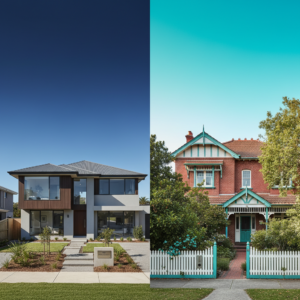
Why We Do Not Recommend Off the Plan or House and Land Packages as an Investment
Off-the-plan apartments and house & land packages promise stamp duty savings and brand-new finishes, but they carry developer profit margins of 15-25%, settlement delays averaging 18-36 months, oversupply risks in fringe locations, and capital growth rates 30-50% below established property benchmarks.
If you're searching for an investment property in Australia, chances are you've been pitched an off-the-plan apartment or a house and land package. The glossy brochures, rental guarantees, and tax benefits sound attractive on paper. But here's the thing: these products are designed to maximize developer profits, not investor returns.
After 20+ years of property analysis, Buyers Agency Australia has seen too many clients lose equity, face valuation shortfalls, and struggle with stagnant capital growth from these purchases. This guide breaks down exactly why we don't recommend off-the-plan or house and land packages for investment, backed by real market data and case studies.
The Hidden Costs Developers Won't Tell You About
When you sign a contract for an off-the-plan apartment or house and land package, you're not just buying a property. You're paying for a developer's profit margin, marketing campaigns, sales commissions, and project financing costs.
Developer Profit Margins Inflate Purchase Prices
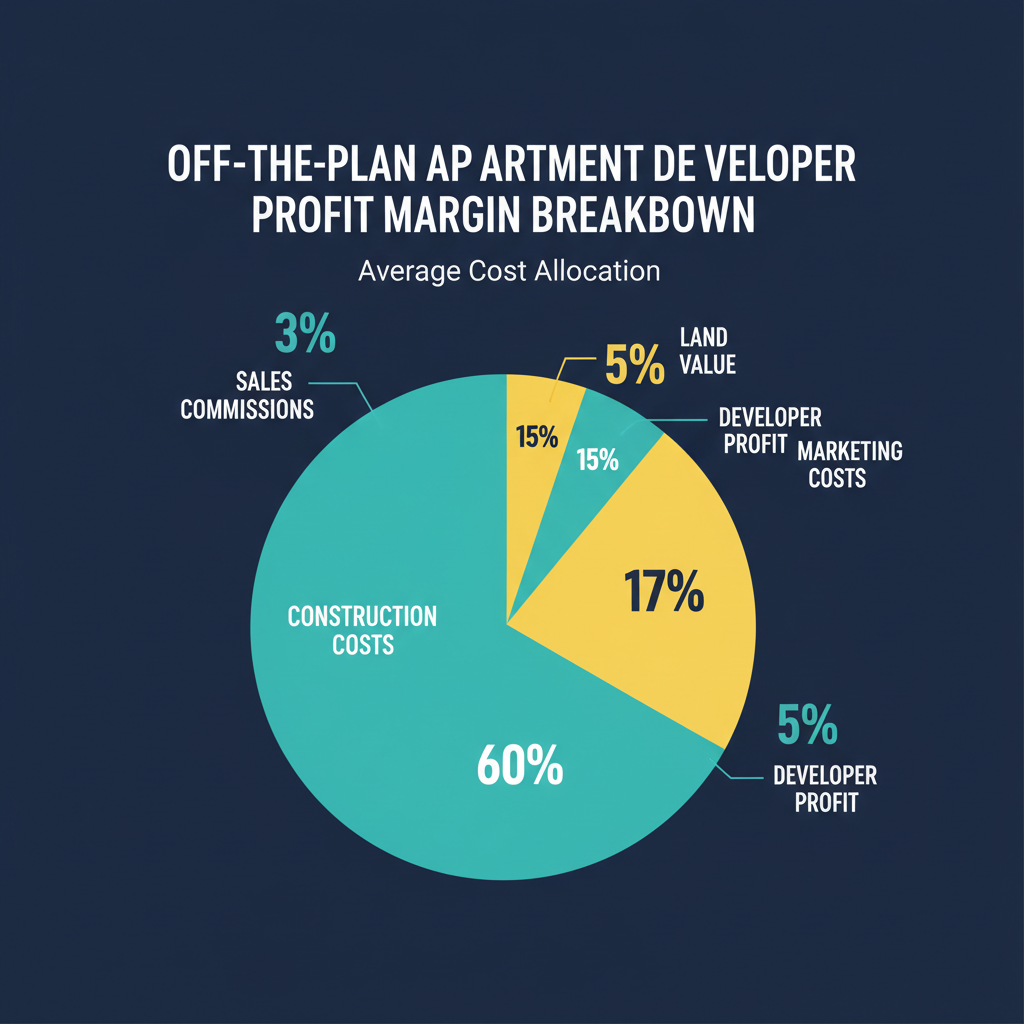
New property developments include a 15-25% profit margin baked into the purchase price. According to industry analysis, the developer's markup is equivalent to 2-3 years of capital growth that you'll never see.
Here's what you're actually paying for:
- Developer profits: 10-15% of the total price
- Marketing costs: 3-5% (display suites, advertising, sales teams)
- Sales commissions: 2-3% to project marketers
- Project financing: Interest costs passed to buyers
A 2020 NSW case study revealed that a buyer purchased an off-the-plan apartment for $850,000 that was valued at only $720,000 at settlement. The buyer lost $130,000 in equity before even taking possession.
You Pay Today's Inflated Prices for Tomorrow's Uncertain Market
Off-the-plan purchases lock you into today's price for a property you won't settle for 18-36 months. If the market softens or oversupply hits your area, you're stuck with an overpriced asset.
Property values can shift dramatically during construction periods. Data from Smart Property Investment shows that "high-rise and off-the-plan apartments continued to struggle due to oversupply."
Settlement Delays Create Financial and Emotional Stress
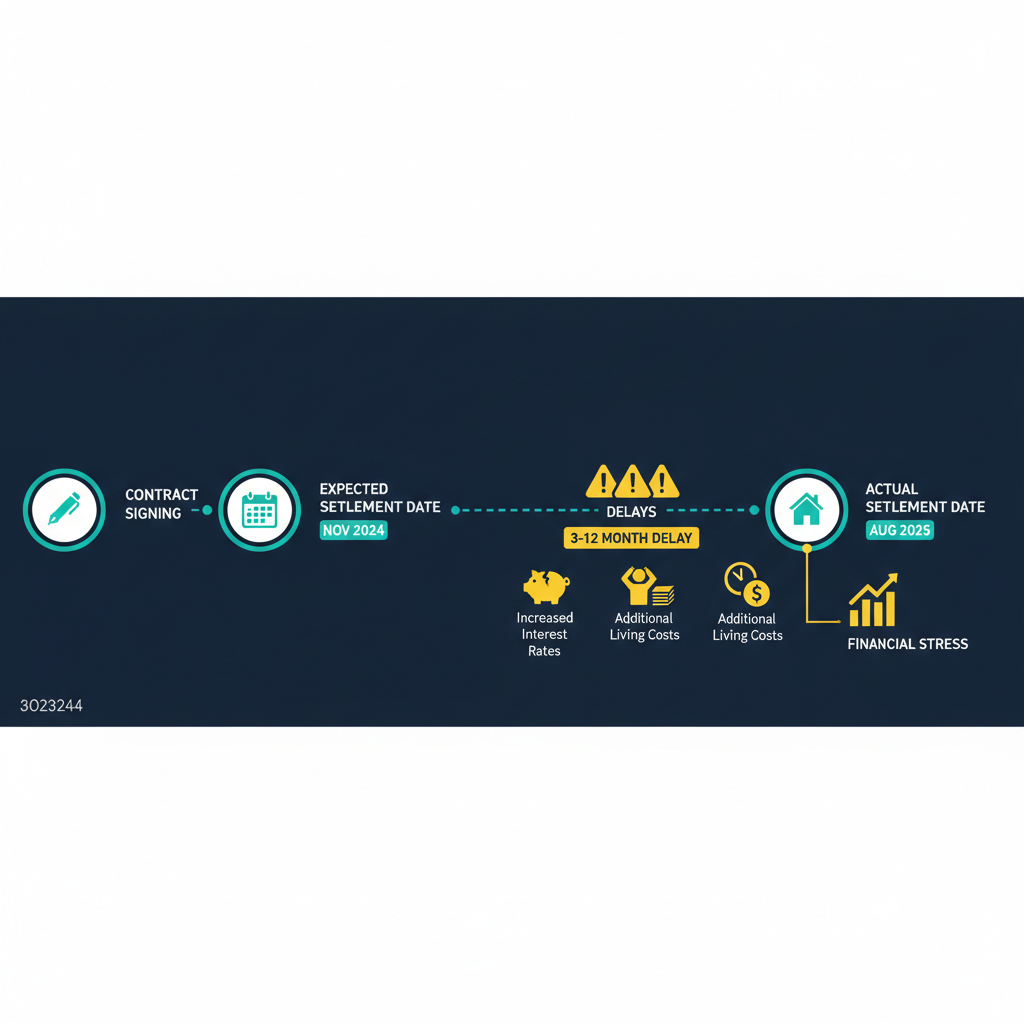
Construction delays are not the exception; they're the norm. Recent data shows approximately 30% of off-the-plan developments in NSW face delays exceeding six months.
Construction Timeline Blowouts Are Common
Australian building data reveals construction times have increased significantly:
| Property Type | 2015/16 Average | 2023 Average | Increase |
|---|---|---|---|
| Houses | 12 months | 16 months | 34% |
| Townhouses | 14 months | 16.4 months | 17% |
| Apartments | 24+ months | 30+ months | 25% |
One Sydney CBD apartment project commenced sales in 2013 with an expected 2017/18 completion. Actual completion occurred in 2021, three years after the initial sunset date. Buyers had their lives on hold for up to eight years.
Financial Consequences of Delays
Extended settlement periods create multiple financial risks:
- Lost rental income: No cash flow while paying interest on deposits
- Finance approval lapses: Pre-approvals expire, forcing buyers to reapply at different rates
- Penalty interest: Late settlement can trigger 8-10% annual interest charges
- Missed market opportunities: Capital tied up while better investments pass by
Approximately 15% of off-the-plan purchases in NSW experience significant settlement delays, and 40% result in financial losses for buyers according to legal case data.
The Sunset Clause Trap
Sunset clauses were meant to protect buyers, but developers have learned to exploit them. Some developers deliberately delay projects to benefit from market price increases, then rescind contracts and resell at higher prices.
In 2019, several developers invoked sunset clauses after property values rose, leaving buyers without properties and fighting to recover deposits.
Valuation Shortfalls at Settlement Can Be Devastating
One of the most common disasters we see with off-the-plan purchases is valuation shortfall at settlement.
The Valuation Gap Problem
When you purchase off-the-plan, the bank won't provide a final valuation until the property is complete. If the completed property values below your purchase price, you'll need to cover the difference in cash.
A Sydney case study from 2016-2020 found that 84% of off-the-plan apartment buyers faced valuation shortfalls at settlement. Many buyers who couldn't make up the difference lost their deposits entirely.
Real-World Valuation Shortfall Example
Purchase scenario:
- Off-the-plan purchase price: $750,000
- Deposit paid: $75,000 (10%)
- Bank valuation at settlement: $680,000
- Approved loan (80% LVR): $544,000
- Cash required to settle: $206,000
- Original cash required: $150,000
- Additional cash shortfall: $56,000
Many buyers simply don't have an extra $56,000 lying around and are forced to forfeit their deposit.
Why Valuations Come in Low
Bank valuers assess completed properties based on actual market conditions, not developer projections. Common reasons for valuation shortfalls include:
- Market softening during construction period
- Oversupply of similar properties in the area
- Quality issues or defects in the completed building
- Smaller-than-advertised square footage or inferior finishes
- Poor building reputation or cladding issues
According to Buyers Agency Australia's free strategy session data, we've seen valuation shortfalls range from $40,000 to $180,000 on individual purchases.
Capital Growth Is Fundamentally Weaker in New Developments
The primary goal of investment property is capital growth. Off-the-plan and house and land packages consistently underperform established properties on this metric.
Land-to-Asset Ratio Matters Most
Property experts universally agree: land drives capital growth, buildings depreciate.
Off-the-plan apartments have minimal land value. You own a fraction of the land beneath a 20-storey tower shared with 200+ other owners. House and land packages in fringe locations have low-value land with limited scarcity.
Established homes in established suburbs offer higher land-to-asset ratios and proven scarcity value.
Location Is Everything
Most house and land packages are located on city outskirts in areas with:
- Abundant land supply (limiting scarcity premium)
- Weaker economic drivers (fewer jobs, lower incomes)
- Lack of established infrastructure (schools, transport, amenities)
- Limited established capital benchmarks
According to Momentum Wealth, the majority of home and land packages are "located on the outskirts of the city, in areas often with abundant supply of land, weaker economic drivers and a lack of infrastructure."
Capital growth is harder to achieve in these locations. Over 30 years, Australian property has averaged 6.4% annual growth, but fringe locations significantly underperform this average.
Established Homes Outperform Over Time
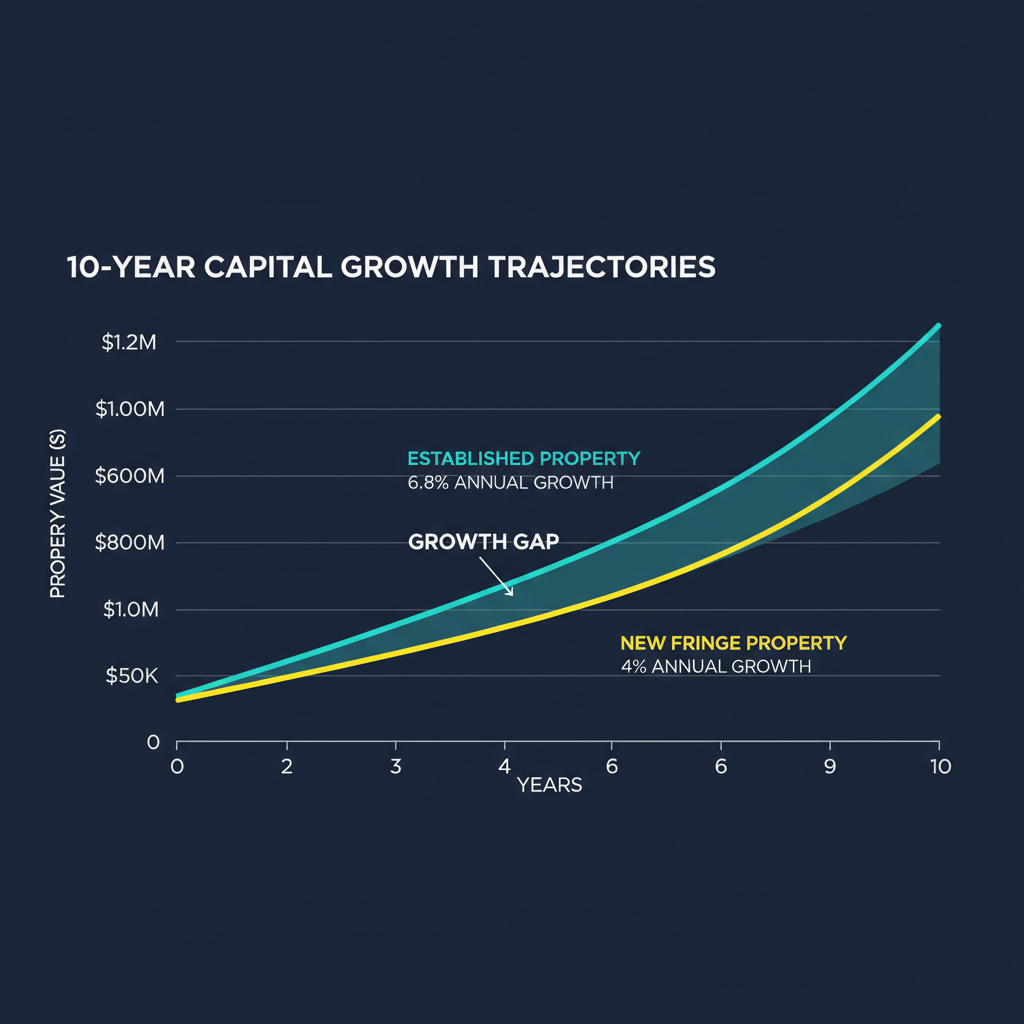
Historical data shows established homes in middle-ring suburbs deliver 30-50% stronger capital growth than new developments in fringe locations.
30-year growth comparison (CoreLogic data):
- Established homes in established suburbs: 6.8% annual average
- New developments in fringe locations: 3-4% annual average
- Difference: 50-80% higher total returns
A $500,000 property growing at 6.8% annually reaches $1.38 million in 15 years. The same property growing at 4% reaches only $900,000. That's a $480,000 difference.
Oversupply Risks Crater Rental Yields and Future Values
When you buy off-the-plan or in a new estate, you're part of a mass delivery of identical properties hitting the market simultaneously.
The Apartment Oversupply Problem
Multiple apartment towers completing at once flood the rental market with hundreds of identical units. This creates:
- Rental competition: 50-100+ similar properties chasing the same tenants
- Downward rent pressure: Landlords forced to drop rents to secure tenants
- Extended vacancy periods: Properties sitting empty for months
- Weak resale values: Too many sellers, not enough buyers
Smart Property Investment reported that "high-rise and off-the-plan apartments continued to struggle due to oversupply and weaker tenant demand" in 2025.
Over 60% of off-the-plan buyers in NSW expressed regret, citing inflated prices as a key factor.
House and Land Estate Saturation
New housing estates release hundreds of lots simultaneously, creating the same oversupply dynamic:
- Every property looks identical
- No scarcity value
- Rental yields drop as supply exceeds demand
- Resale competition is fierce
When every street has 3-5 properties for rent, landlords compete on price, not quality.
Building Quality and Defects Add Risk and Expense
When you buy established, what you see is what you get. With off-the-plan, you're buying based on plans and marketing images, not reality.
The Quality Uncertainty Problem
You won't know the actual quality of finishes, materials, or workmanship until completion. Common issues include:
- Inferior appliances or fittings substituted
- Smaller-than-advertised room sizes
- Poor natural light or aspect
- Cladding or fire safety issues
- Structural defects requiring expensive remediation
Nearly 25% of off-the-plan buyers report defects or quality issues upon completion.
Limited Recourse for Defects
Most off-the-plan contracts stipulate buyers cannot delay settlement due to minor defects. You must settle and then chase repairs, which can take months or years.
High-profile cases of defects like cladding issues, water ingress, and structural problems have made headlines. These issues devastate property values and create ongoing costs for owners.
Builder and Developer Insolvency Risk
Approximately 10% of off-the-plan projects in NSW experience developer insolvency or financial difficulties. If your builder goes bust mid-construction, your deposit is at risk and completion can be delayed indefinitely.
Depreciation Benefits Are Overrated and Temporary
One of the most commonly cited benefits of buying new is depreciation tax benefits. Let's look at the reality.
Depreciation Math Doesn't Justify Poor Capital Growth
Yes, you can claim higher depreciation deductions on new properties. But this benefit is temporary and doesn't offset poor capital growth.
Depreciation example:
- New property depreciable value: $450,000
- Annual depreciation claim: ~$15,000-$20,000
- Tax benefit at 37% rate: ~$5,500-$7,400 per year
- Total 10-year tax benefit: ~$55,000-$74,000
Now compare to capital growth:
Capital growth comparison (10 years):
- Established property ($600,000 at 6.8% growth): Gains $512,000
- New property ($650,000 at 4% growth): Gains $312,000
- Capital growth difference: $200,000
The depreciation tax benefit of $55,000-$74,000 doesn't come close to offsetting the $200,000 capital growth difference.
According to established property investment principles, established homes in inner and middle-ring suburbs deliver superior long-term wealth creation even without depreciation benefits.
Depreciation Recapture Reduces Net Benefit
When you sell, the ATO may recapture depreciation at up to 25%, further reducing the net benefit. Strategic investors using Buyers Agency Australia's expertise focus on properties that deliver 10-year portfolio growth, not short-term tax tricks.
The Rental Guarantee Illusion
Many off-the-plan developments offer rental guarantees to attract investors. These guarantees are marketing tools, not genuine benefits.
How Rental Guarantees Work
The developer offers to guarantee rental income for 1-2 years. Sounds great, right?
Here's the catch: the cost of the guarantee is built into your purchase price. You're essentially paying yourself with your own borrowed money.
What Happens When the Guarantee Ends
Once the guarantee expires:
- Rental rates drop to true market levels (often 15-30% lower)
- Vacancy periods emerge as oversupply hits
- Cash flow turns negative
- Investors realize they overpaid
Industry experts warn that rental guarantees are "tricks such promotions" used to promote house and land packages as investment products when they are not.
How Buyers Agency Australia Identifies Investment-Grade Property

After 20+ years of property analysis and having built a $10M+ personal portfolio, Dragan Dimovski and the Buyers Agency Australia team have developed a proven framework for identifying properties that deliver long-term wealth.
Our Investment Property Selection Framework
We focus on properties with:
1. High land-to-asset ratio
Established homes on valuable, scarce land
2. Proven capital growth suburbs
Middle-ring locations with 10+ years of consistent 6-8% annual growth
3. Strong economic fundamentals
- Above-average household incomes
- Employment diversity
- Infrastructure investment
- Owner-occupier demand
4. Scarcity and limited supply
Areas where new supply is constrained by geography, zoning, or development costs
5. Established benchmarks
Suburbs with precedent for higher values nearby
6. Off-market opportunities
We access properties before public listing, reducing competition and securing better value
The 10-Year Portfolio Modeling Approach
Unlike project marketers selling whatever inventory developers need to move, we model each property's likely performance over 10 years based on:
- Historical growth patterns
- Demographic trends
- Infrastructure pipelines
- Supply and demand dynamics
- Economic forecasts
This approach has helped clients build multi-property portfolios that consistently outperform market averages.
Our transparent, fixed-fee model means we're never incentivized to sell you the wrong property. We only succeed when you succeed.
Case Study: Established vs Off-the-Plan Investment
Client A: Off-the-Plan Apartment
- Purchase price: $550,000 (2018)
- Settlement: 2020 (2-year delay)
- Bank valuation: $490,000
- Cash shortfall required: $38,000
- 2025 value: $520,000
- Total gain: -$30,000 (loss)
Client B: Established Home (Buyers Agency Australia sourced)
- Purchase price: $580,000 (2018)
- Settlement: 4 weeks
- Immediate rental income: $520/week
- 2025 value: $920,000
- Total gain: $340,000 (58% increase)
The difference speaks for itself.
When House and Land Packages Might Work (Rarely)
We're not saying house and land packages are never appropriate. There are rare scenarios where they make sense.
The Exception: Infill Locations with Limited Supply
If a house and land package is located in an established, tightly held suburb with genuine scarcity and strong demand fundamentals, it might be worth considering.
Key criteria:
- Located in established middle-ring suburb
- Limited alternative supply
- High owner-occupier demand
- Strong economic drivers
- Proven capital growth history
These opportunities are rare. Most house and land packages are in fringe locations with abundant supply.
For Owner-Occupiers, Not Investors
House and land packages can work for owner-occupiers who:
- Want to design their own home
- Don't mind living in fringe locations
- Are not concerned about capital growth
- Value new home warranties and low maintenance
For investors seeking long-term wealth creation, established property in established suburbs remains the superior strategy.
What to Do If You've Already Purchased Off-the-Plan
If you've already signed an off-the-plan contract, you have options.
Review Your Contract Immediately
Engage a property lawyer to review:
- Sunset clauses and your rights
- Conditions precedent
- Developer obligations
- Exit clauses
Some contracts include cooling-off periods (10 business days in NSW for off-the-plan) or sunset clause protections.
Monitor Your Finance Approval
Stay in touch with your lender and ensure your finance approval remains current. If your financial circumstances change or lending policies tighten, address this early.
Arrange Independent Valuation Pre-Settlement
Before settlement, arrange an independent valuation to identify any potential shortfall early. This gives you time to negotiate with the developer or explore alternatives.
Consider Assignment if Permitted
Some contracts allow you to assign (on-sell) the contract before settlement. If property values have risen, this might allow you to exit with minimal loss.
Seek Expert Advice
Contact Buyers Agency Australia for a confidential review of your situation. We've helped clients navigate off-the-plan challenges and develop strategies to minimize losses.
The Smarter Investment Strategy: Established Property in Proven Locations
The evidence is overwhelming: established homes in established suburbs deliver superior long-term investment returns.
Why Established Property Wins
Immediate certainty:
You see exactly what you're buying. No surprises at settlement.
Immediate rental income:
Cash flow starts immediately, not in 2-3 years.
Proven capital growth:
Historical data demonstrates consistent appreciation.
Higher land value:
Scarcity drives long-term wealth creation.
No developer margin:
You pay market value, not inflated new property prices.
No construction risk:
No delays, no valuation shortfalls, no builder insolvency.
Renovation opportunity:
Add value through strategic improvements.
Focus on Inner and Middle-Ring Suburbs
The best long-term investment properties are located in:
- Inner suburbs: 5-10km from CBD, high amenity, scarce supply
- Middle-ring suburbs: 10-20km from CBD, established infrastructure, owner-occupier demand
These locations consistently outperform fringe areas by 30-50% over 10-20 year periods.
Off-Market Property Access
Many of the best investment properties never hit the public market. Buyers Agency Australia has developed relationships with agents, developers, and private sellers to access off-market opportunities before competition drives up prices.
Off-market properties often offer:
- Better value (no public auction competition)
- Less emotional bidding
- More time for due diligence
- Stronger negotiating position
Our FastTrack Event provides insights into how we source and evaluate these opportunities.
Frequently Asked Questions
Q: Are off-the-plan apartments ever a good investment?
Rarely. They carry developer margins, oversupply risks, and weak capital growth. Established property consistently outperforms.
Q: What if I get a rental guarantee with my house and land package?
Rental guarantees are marketing tactics with costs built into your purchase price. They expire after 1-2 years.
Q: Can I get a buyers agent to review an off-the-plan contract?
Yes. Buyers Agency Australia offers contract review services to identify risks and help you make informed decisions.
Q: What's the biggest risk with off-the-plan purchases?
Valuation shortfall at settlement. If the bank values the property below your purchase price, you must cover the gap in cash.
Q: How much do developers mark up off-the-plan prices?
Developer profit margins typically range from 15-25%, plus 3-5% marketing costs, resulting in 20-30% total markup over true market value.
Key Takeaways: Why We Don't Recommend Off the Plan or House and Land Packages
- Developer margins inflate prices by 20-30%, eliminating your first 2-3 years of capital growth
- Settlement delays averaging 18-36 months create financial stress and lost opportunities
- 84% of off-the-plan buyers in one study faced valuation shortfalls, requiring tens of thousands in extra cash
- Capital growth is 30-50% weaker in fringe locations compared to established middle-ring suburbs
- Oversupply craters rental yields when hundreds of identical properties hit the market simultaneously
- Building quality uncertainties and defects affect 25% of off-the-plan completions
- Depreciation tax benefits don't offset poor capital growth; the math doesn't work
- Established homes in proven locations deliver superior long-term wealth creation
Property investment is a long-term wealth strategy, not a short-term tax minimization game. Focus on what drives wealth: scarce land in locations with proven demand and consistent capital growth.
If you're serious about building a property portfolio that delivers genuine wealth, book a free strategy session with Buyers Agency Australia. We'll show you exactly how to identify investment-grade properties that outperform the market over 10-20 year horizons.
Don't fall for glossy brochures and developer sales tactics. Get expert guidance from Australia's leading buyer's advocates and start building real wealth through property.