Australia's property investment landscape in 2026 is driven by supply-constrained markets, infrastructure investment, and interstate migration, with Brisbane recording 15.7% annual growth, Perth house prices exceeding $1 million, and regional Queensland delivering yields above 5%. Investors who prioritise data-driven suburb selection and off-market opportunities are capturing both capital growth and rental returns ahead of the market.
The question keeping most investors awake isn't whether property is a good investment. It's where.
With Sydney's median house price sitting at $1.76 million, Melbourne recovering from years of stagnation, and Brisbane's median now above $1.15 million, location has never been more critical. The difference between buying in the right suburb versus the wrong one can mean $200,000+ in equity over five years, or worse, negative cash flow and stagnant values.
This isn't about chasing headlines or "hot tips" from social media. It's about understanding which Australian markets have the fundamentals to deliver consistent, long-term returns through 2026 and beyond. Buyers Agency Australia works with investors every day to identify these pockets of opportunity, often securing properties before they hit the open market.
Understanding Australia's Property Market Conditions in 2026
Current Interest Rate Environment and Affordability Pressures
February 2026 marked a turning point when the RBA raised the cash rate to 3.85%, the first increase in over two years. While economists had anticipated rate cuts throughout 2025, inflation remained stubbornly above the 2-3% target band, with trimmed mean inflation at 3.3% according to the RBA's latest data.
Here's what this means for property investors right now.
Borrowing capacity has contracted. The typical investor can service roughly 10-12% less debt than they could 12 months ago. APRA's debt-to-income (DTI) ratio restrictions, implemented in February 2026, now limit loans to 6 times annual income for most borrowers. A household earning $150,000 can generally borrow up to $900,000, down from approximately $1 million previously.
Affordability constraints are reshaping demand. Sydney's mortgage-to-income ratio sits at the 96th percentile of its historical range, meaning nearly a full annual wage is required to service an 80% LVR mortgage on the median dwelling. This explains why middle-ring and outer suburbs are outperforming premium markets across Sydney and Melbourne.
Supply shortages continue to support prices. According to KPMG's latest residential property outlook, national house prices are forecast to rise 7.7% in 2026, with Brisbane and Perth leading at 11% and 13% respectively.
Population Growth and Interstate Migration Trends
Australia's population reached 27.54 million in March 2025, up 1.6% year-on-year, driven by 315,900 net overseas migrants. Queensland is the clear winner, attracting over 25,000 net interstate migrants annually, with Western Australia also recording strong inflows.
The numbers tell the story:
- Brisbane gained 44,000 new residents in 2025-26, pushing vacancy rates below 1% across most suburbs
- Perth recorded population growth of 2.3% per annum, the fastest of any capital city
- Melbourne lost 31,678 residents to interstate migration but gained 184,619 from overseas
- Sydney remains a net loser to Brisbane and Perth but continues to attract international arrivals
Where people move, property demand follows. But not all growth corridors are equal.
Supply Constraints: Why New Housing Can't Keep Up
The construction sector is in crisis. New dwelling commencements in Western Australia totalled just 16,900 in 2025, well below the pre-COVID average of 25,000. Builder insolvencies, material cost inflation, and labour shortages have created a structural undersupply that won't resolve quickly.
Brisbane's housing supply is running at approximately 40% of equilibrium levels, with only 5,000 active listings when a balanced market should have 12,000-13,000. This supply-demand mismatch is the single biggest driver of capital growth across Queensland and Western Australia right now.
What this means for investors: Properties in established, supply-constrained suburbs with infrastructure connectivity will continue to outperform new estates on the urban fringe. Dragan Dimovski from Buyers Agency Australia has been warning clients about this dynamic for over 12 months.
Key Factors to Consider When Choosing Property Investment Locations
Capital Growth vs Rental Yield: Finding the Right Balance
Most investors fall into one of two camps: growth chasers or yield hunters. Smart investors understand you need both.
Capital growth is how you build wealth. A property purchased at $600,000 that grows 8% annually will be worth $1.03 million in seven years. That's $430,000 in equity you didn't have to save.
Rental yield is how you hold the property through market cycles. A positively geared investment cash flows from day one, reducing financial stress and giving you capacity to expand your portfolio.
Here's a framework that works:
- High growth, moderate yield (4-5%): Brisbane middle-ring suburbs, Perth middle-ring coastal corridors
- Moderate growth, high yield (5.5-7%): Regional Queensland centres (Townsville, Mackay, Cairns)
- Balanced growth + yield (4.5-5.5%): Adelaide growth corridors, Newcastle, Ipswich
Buyers Agency Australia specialises in identifying properties that deliver both metrics, often through off-market acquisitions where vendor motivation creates below-market entry points.
Infrastructure Investment and Economic Drivers
Infrastructure doesn't just improve lifestyle—it creates measurable property value uplift. The data proves it.
Brisbane's infrastructure boom is unprecedented outside of Olympic host cities:
- Cross River Rail ($6.8 billion) opens mid-2026, connecting 10 stations and cutting CBD commute times
- Brisbane Metro ($1.5 billion) launched in December 2025, linking eight employment hubs
- 2032 Olympic venues ($7.1 billion) including Victoria Park stadium will transform transport corridors
Suburbs within 2km of new Cross River Rail stations have already outperformed Brisbane's median by 3-5% annually since construction began.
Perth's economic diversification is often overlooked. While mining remains important, renewable energy, construction, and logistics sectors are driving employment growth. The state's unemployment rate of 3.6% is below the national average, supporting rental demand and wage growth.
Western Sydney Airport (opening 2026) has reshaped growth corridors around Leppington, Austral, and Marsden Park. Properties within the airport precinct have recorded gains exceeding 26% annually according to recent CoreLogic data.
Rental Demand and Vacancy Rates
Vacancy rates are the canary in the coal mine for rental markets. Below 2% signals strong landlord conditions; above 3% means tenant choice and rental stagnation.
Here are February 2026 vacancy rates across key investment markets:
- Brisbane: 0.9% (critically tight)
- Perth: 0.8% (record low)
- Adelaide: 0.4% (tightest in the country)
- Sydney: 1.6% (moderate pressure)
- Melbourne: 1.8% (easing from pandemic lows)
These numbers explain why Brisbane rents rose 8.33% annually while wages grew just 3-4%. Tight rental markets give landlords pricing power, protecting cash flow even when interest rates rise.
Regional Queensland consistently delivers rental yields above 5%, often 5.5-6% in centres like Townsville and Mackay. These markets attract FIFO workers, defence personnel, and healthcare professionals—tenant demographics that value stability over short-term mobility.
Economic Stability and Employment Growth
Property follows jobs. Always has, always will.
Queensland's economy is diversifying beyond tourism and mining. Healthcare employment in Brisbane grew 8% in 2025, education sector roles increased 6%, and professional services continue expanding. The state's population growth of 1.5% annually is creating structural demand for housing that supply simply can't meet.
Western Australia's mining sector remains robust, but it's the infrastructure spending ($4.2 billion annually) and population growth (2.3% per annum) that's driving Perth's property market. Unlike the boom-bust cycles of the 2010s, this growth appears more sustainable.
Melbourne and Sydney remain employment powerhouses, but high entry prices and slower growth rates make them challenging for new investors. First-home buyers are increasingly looking at growth corridors 40-50km from the CBD, where affordability and infrastructure convergence create long-term value.
Top States and Regions for Investment Property in 2026
Queensland: Leading the Nation in Growth and Opportunity
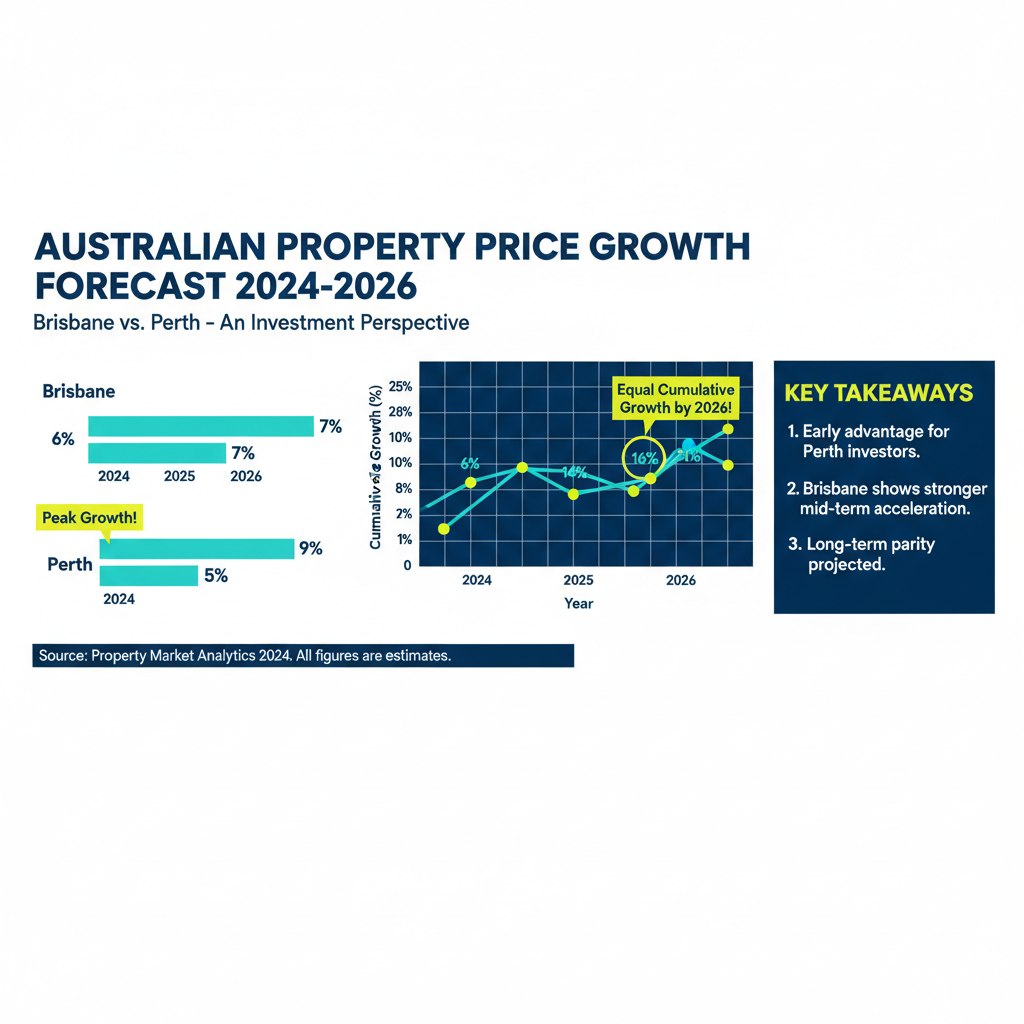
Queensland has recorded the strongest property price growth of any Australian state over the past year, with dwelling values up 9.59% according to the latest data. This isn't speculation—it's supply and demand economics playing out in real time.
Brisbane's median dwelling value hit $1,054,555 in February 2026, with house values rising 15.1% annually and unit values outpacing at 18.3%. The city is forecast to see continued growth of 10-11% through 2026 according to KPMG's residential outlook.
Here's why Queensland dominates right now:
Interstate migration is accelerating. Over 25,000 people moved from NSW and Victoria to Queensland in 2024-25, most seeking affordability and lifestyle. This creates sustained rental demand and supports capital growth.
Olympic infrastructure is reshaping connectivity. The 2032 Olympics aren't just about sporting venues. They're driving $7+ billion in transport, stadium, and precinct upgrades that will benefit property owners for decades.
Rental yields remain strong. While Brisbane houses deliver 3.5% yields, regional centres like Cairns (5.5%+), Townsville (5%+), and Mackay (5.8%+) offer genuine cash flow opportunities.
Supply constraints are severe. Brisbane has only 5,000 active listings when equilibrium sits at 12,000-13,000. Until construction ramps up significantly, upward price pressure will persist.
Properties in middle-ring Brisbane suburbs (8-15km from CBD) are particularly attractive right now. Suburbs like Coorparoo, Nundah, and Woolloongabba combine transport connectivity, established amenity, and vacancy rates below 1%.
Western Australia: Perth's Structural Scarcity Cycle
Perth crossed a psychological threshold in January 2026 when the median house price exceeded $1 million for the first time. Unit values aren't far behind at $699,814, up 20.1% annually.
This isn't a speculative bubble. It's a structural scarcity cycle driven by:
Chronic undersupply: Perth has approximately 5,000 active listings when a balanced market needs 12,000-13,000. That's 40% of equilibrium, creating intense competition for available stock.
Affordability advantage: Even at $1 million, Perth remains 30-45% cheaper than Sydney and Melbourne, attracting interstate buyers and investors priced out of eastern markets.
Population growth: WA recorded net migration of over 80,000 in 2025, driven by mining sector employment, renewable energy investment, and lifestyle appeal.
Economic diversification: Perth's economy is no longer dependent on mining cycles. Renewable energy, infrastructure investment, and professional services are creating employment stability.
REIWA forecasts Perth house prices to rise 10%+ in 2026, with units potentially outperforming at 15-20% due to affordability pressures pushing buyers into medium-density options.
Middle-ring suburbs like Maddington (yields 5.2% for houses, 6.28% for units), Baldivis, and Ellenbrook are delivering the rare combination of capital growth and strong rental returns.
Adelaide: Yields and Affordability Combined
Adelaide consistently flies under the radar, but the numbers don't lie. The city recorded 8.2% house price growth in 2025 and maintains some of the tightest rental conditions in Australia with vacancy rates at 0.4%.
Key Adelaide investment characteristics:
- Strong rental yields: Suburbs like Eyre deliver 5%+ yields with median house prices around $600,000
- Relative affordability: Adelaide's median remains accessible for investors building multi-property portfolios
- Employment growth: Defence sector expansion, healthcare, and renewable energy projects are supporting job creation
- Interstate migration: Adelaide is attracting buyers from Melbourne and Sydney seeking lifestyle and value
Growth suburbs like Davoren Park recorded 28% annual growth in 2024, though investors should conduct thorough due diligence on any suburb posting extreme short-term gains.
Regional Queensland: High-Yield Cash Flow Opportunities
If you're building a portfolio and need cash flow to service debt, regional Queensland deserves serious attention.
Townsville combines defence employment (Lavarack Barracks), healthcare (Townsville Hospital), and education (James Cook University) to create diversified rental demand. Gross yields sit around 5-6%, with properties available well below $500,000.
Mackay serves the Bowen Basin coal mining region and offers yields exceeding 5.5%. The suburb of Mount Pleasant delivered 26.3% annual growth with a median house price of $660,000.
Cairns benefits from healthcare expansion, tourism recovery, and southern migration. Rental yields consistently exceed 5%, supported by tight vacancy rates and limited new supply.
Gladstone is seeing renewed interest due to LNG sector employment and hydrogen industry investment. Boyne Island recorded 24.7% annual growth with yields around 5.7%.
Regional markets carry different risk profiles than capital cities. They're more dependent on local economic drivers and can be more volatile during downturns. However, for investors who understand these dynamics and select carefully, the cash flow benefits can be substantial.
Specific Suburb Examples and Investment Opportunities
Brisbane Inner and Middle-Ring Suburbs
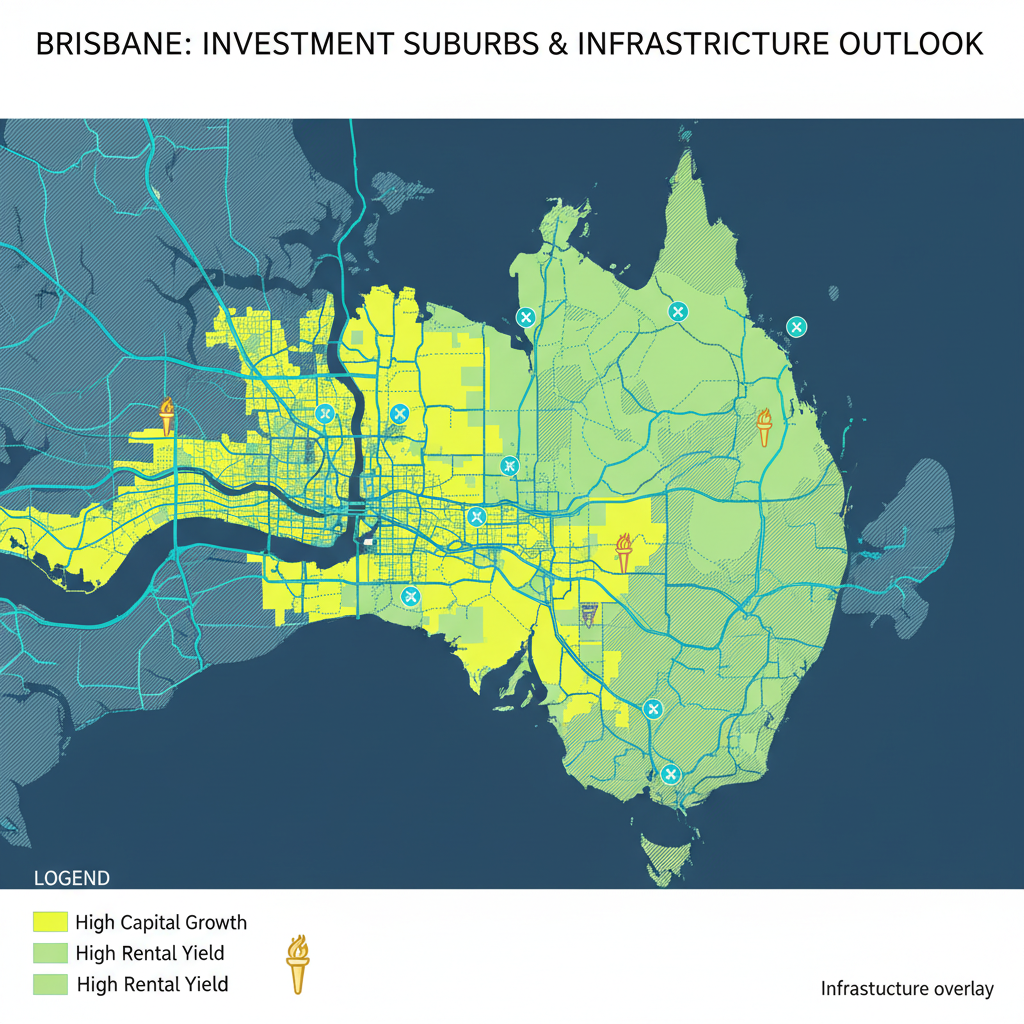
Brisbane's sweet spot for investors sits in the 8-20km radius from the CBD. These suburbs offer established infrastructure, transport connectivity, and the lifestyle amenity that owner-occupiers (your future buyers) seek.
Coorparoo delivers a village atmosphere just 5km from the CBD with a median house price of $1.8 million and units at $725,000. Direct motorway access and the upcoming Buranda Cross River Rail station make this suburb a long-term hold.
Nundah combines character homes, aviation heritage, and the Airport Link tunnel for seamless CBD access. Properties here are tightly held, with vacancy rates below 1% supporting rental growth.
Woolloongabba is being transformed by Cross River Rail and the Gabba redevelopment. Investors who secure property here now will benefit from infrastructure uplift through the next decade.
Chermside offers both houses and units at more accessible price points than inner suburbs, with Westfield shopping centre, excellent schools, and strong public transport.
Perth Growth Corridors and Coastal Suburbs
Perth's property market has shifted from outer-fringe dominance to middle-ring momentum over the past 12 months.
Alkimos remains one of Perth's most consistently mentioned growth suburbs, combining coastal proximity with new estates and improving infrastructure. It's popular with first-home buyers and young families.
Ellenbrook benefits from improved transport links and established community infrastructure. Prices remain below Perth's median, offering entry points for investors building portfolios.
Maddington (20km southeast of CBD) delivers exceptional yields at 5.2% for houses and 6.28% for units, with median house prices around $620,000. Annual growth of 8.96% makes this a balanced opportunity.
Applecross and Carlisle represent middle-ring established suburbs with coastal lifestyle appeal and limited new supply. These areas attract long-term owner-occupiers, supporting stable capital growth.
Regional Growth Centres Worth Watching
Newcastle, NSW is attracting Sydney buyers priced out of coastal markets. The city offers lifestyle, beaches, and infrastructure at a fraction of Sydney's cost.
Geelong, VIC benefits from Melbourne's growth pressure and local employment in manufacturing, healthcare, and education. The Suburban Rail Loop (when complete) will further improve connectivity.
Toowoomba, QLD serves as Queensland's inland capital, with diversified employment, education institutions, and consistent rental demand. Mount Lofty recorded 24.4% annual growth with a median of $960,000.
Wagga Wagga, NSW offers stability through RAAF Base, Charles Sturt University, and healthcare employment. Yields are solid and tenant demographics are stable.
Investment Risks to Avoid in 2026
Oversupply Risks in High-Density Precincts
Not all growth suburbs are created equal. High-rise apartment precincts with 500+ units under construction simultaneously carry serious oversupply risk.
When multiple towers settle within 6-12 months, rental markets flood with competing properties. Vacancy rates spike, rents fall, and capital growth stagnates. Melbourne's Docklands and Brisbane's inner-city apartment market have experienced this dynamic repeatedly.
Red flags to watch for:
- Multiple construction cranes visible within 500m radius
- High proportion of investor-owned units (above 60%)
- Limited owner-occupier appeal or lifestyle amenity
- Homogenous apartment stock with minimal differentiation
- Weak employment or transport connectivity
Buyers Agency Australia's due diligence process includes construction pipeline analysis to identify suburbs at risk of oversupply before clients commit.
Buying in Declining or Volatile Markets
Some Australian property markets remain structurally challenged:
Mining towns dependent on single industries can deliver spectacular yields during boom periods but crash when commodity cycles turn. Towns like Moranbah, Dysart, and Newman offer 9-12% yields but have experienced 30-50% value declines during mining downturns.
Remote regional centres with population decline struggle to maintain property values over time. Always check ABS population trends over 5-10 years before investing in regional locations.
Suburbs with concentrated public housing or declining amenity often underperform over long timeframes, despite appearing affordable on price-per-square-meter metrics.
Ignoring Property Condition and Maintenance Costs
A cheap property isn't a good deal if it costs $80,000 to make it rentable.
Older homes with:
- Asbestos cladding requiring remediation
- Outdated electrical systems needing full rewiring
- Structural issues (stumps, foundations, roofing)
- Plumbing that doesn't meet current codes
All of these issues eat into cash flow and delay rental income. Buyers Agency Australia conducts building and pest inspections on every property before recommending purchase, protecting clients from costly surprises.
Overleveraging Without Cash Flow Buffer
The February 2026 interest rate rise caught some investors off guard. Those holding negatively geared properties with minimal cash reserves suddenly faced monthly shortfalls of $500-1,000+ per property.
Smart investors maintain:
- 3-6 months of holding costs in liquid cash reserves
- Rental income covering at least 80% of mortgage costs
- Borrowing capacity below maximum limits to allow for rate rises
- Diversified income sources beyond rental returns
Property investment is a long-term wealth-building strategy, not a get-rich-quick scheme. Conservative structuring protects your portfolio through market cycles.
How Dragan Dimovski and Buyers Agency Australia Identify High-Yield, High-Growth Properties
Data-Driven Suburb Selection Process
Dragan Dimovski has over 20 years of experience in property investment and buyer advocacy. His methodology isn't based on gut feel—it's built on rigorous data analysis across multiple indicators:
Supply-demand analysis: Tracking active listings, days on market, clearance rates, and construction pipeline data to identify undersupplied markets
Economic fundamentals: Employment growth, population trends, infrastructure investment, and industry diversification across target regions
Rental market metrics: Vacancy rates, rental yield trends, tenant demographics, and rental growth trajectories
Capital growth history: 5, 10, and 20-year growth patterns adjusted for market cycles and economic conditions
Risk assessment: Oversupply risk, economic concentration, natural disaster exposure, and market volatility indicators
This multi-factor analysis helps Buyers Agency Australia consistently identify suburbs 12-24 months before they hit mainstream investor attention.
Access to Off-Market Properties and Pre-Market Opportunities
Here's a truth most investors don't realise: the best properties rarely hit major listing portals.
Why? Because agents call their buyer's agent network first. Properties that meet investment criteria—good land-to-asset ratio, strong rental demand, motivated vendors—get snapped up before public marketing begins.
Buyers Agency Australia maintains relationships with over 300 selling agents across Brisbane, Perth, Sydney, Melbourne, and regional centres. When a quality property comes to market, Dragan's team often gets first call.
Off-market advantages include:
- Less competition from emotional owner-occupier buyers
- Vendor motivation often creates below-market opportunities
- Faster due diligence and settlement timelines
- Ability to negotiate terms beyond just price
Clients working with Buyers Agency Australia gain access to this hidden market, often securing properties 5-10% below comparable sales simply through early access and strategic negotiation.
Negotiation Strategies That Secure Below-Market Prices
Most buyers leave money on the table during negotiations. They either:
- Offer asking price to "secure" the property
- Make emotional decisions under auction pressure
- Fail to identify vendor motivation points
- Don't understand recent comparable sales data
Dragan's negotiation approach is built on information asymmetry and strategic positioning:
Pre-negotiation research identifies every comparable sale in the past 6 months, vendor purchase price and hold period, days on market trends, and agent sales history.
Structured offers lead with evidence-based pricing, not emotion. If comparable sales support $680,000, that's the opening position—regardless of asking price.
Contingency management uses building and pest clauses, finance conditions, and settlement flexibility as negotiation levers beyond price.
Walking away is always an option. When vendors aren't realistic, Buyers Agency Australia moves to the next opportunity. There's always another deal.
This disciplined approach has saved clients hundreds of thousands of dollars across their portfolios.
End-to-End Support from Search to Settlement

Buying investment property shouldn't feel like a second job. For time-poor professionals, managing property search, inspections, due diligence, negotiations, and settlement while running a business or working full-time is overwhelming.
Buyers Agency Australia provides complete project management:
- Strategy session: Define investment goals, risk tolerance, and target returns
- Market identification: Shortlist 3-5 suburbs matching your criteria
- Property search: Access off-market and pre-market opportunities
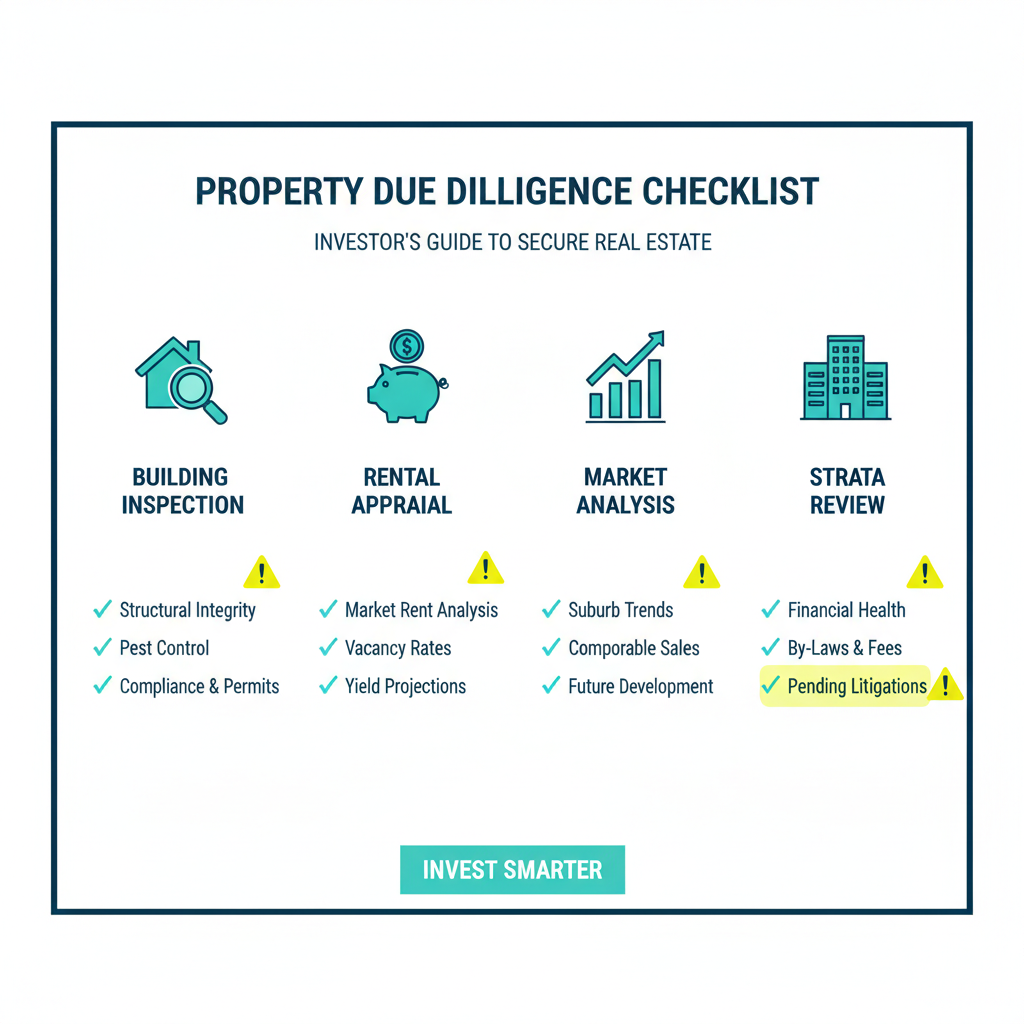
- Due diligence: Building and pest inspections, strata review, rental appraisals
- Negotiation: Evidence-based offers and strategic positioning
- Settlement coordination: Liaison with conveyancers, lenders, and agents
- Post-settlement: Property management connections and portfolio review
Clients receive regular updates throughout the process and have direct access to Dragan's team for questions and guidance.
Book a free strategy session to discuss your investment goals and discover how Buyers Agency Australia can help you build long-term wealth through property.
Frequently Asked Questions
Which Australian city is best for property investment in 2026?
Brisbane and Perth lead for capital growth potential, with Brisbane forecast at 10-11% and Perth at 10-13% growth in 2026. Regional Queensland offers superior rental yields above 5%.
What rental yield should I target for investment property?
Aim for minimum 4-4.5% gross yield in capital cities and 5-6% in regional centres. Balance yield with capital growth potential rather than chasing extreme yields in volatile markets.
Are regional properties better investments than capital cities?
Regional properties typically deliver higher rental yields but slower capital growth and higher tenant turnover. They suit experienced investors building cash flow portfolios, while capital cities offer long-term wealth creation.
How much deposit do I need for investment property in 2026?
Most lenders require 20% deposit for investment loans to avoid LMI. With APRA's DTI restrictions, having 25-30% deposit improves borrowing capacity and interest rate negotiation.
Should I use a buyer's agent for investment property?
Buyer's agents provide market knowledge, off-market access, and negotiation expertise that typically save 3-7% on purchase price, easily covering their fees while reducing emotional decision-making risks.