Top 9 Brisbane Suburbs for Buying Investment Property This Year
Brisbane is entering 2026 with strong investment fundamentals: a 10.8% annual house value increase, vacancy rates below 1%, and major infrastructure projects reshaping demand across the city. For investors, this creates genuine opportunity, but choosing the right suburb requires more than following the headlines.
If you're searching for the best Brisbane suburbs for buying investment property this year, you're joining thousands of investors drawn by the city's compelling mix of affordability, rental demand, and long-term capital growth.
Brisbane's median house price has more than doubled in the past decade to $1.09 million, yet it still offers better value than Sydney or Melbourne while delivering superior yields. With infrastructure spending exceeding $25 billion and Queensland absorbing the lion's share of interstate migration, Brisbane's investment story is far from over.
This guide breaks down exactly how we selected 9 standout suburbs, the data that backs them, and what type of investor each one suits best.
How we selected suburbs
We didn't rely on hype or marketing lists. Our methodology combines six rigorous data sources and decades of on-the-ground market experience from Buyers Agency Australia to identify suburbs with genuine investment merit.
Data sources and methodology
Every suburb recommendation in this guide was evaluated using recent data from CoreLogic, SQM Research, PropTrack, OpenAgent, and local government infrastructure registers.
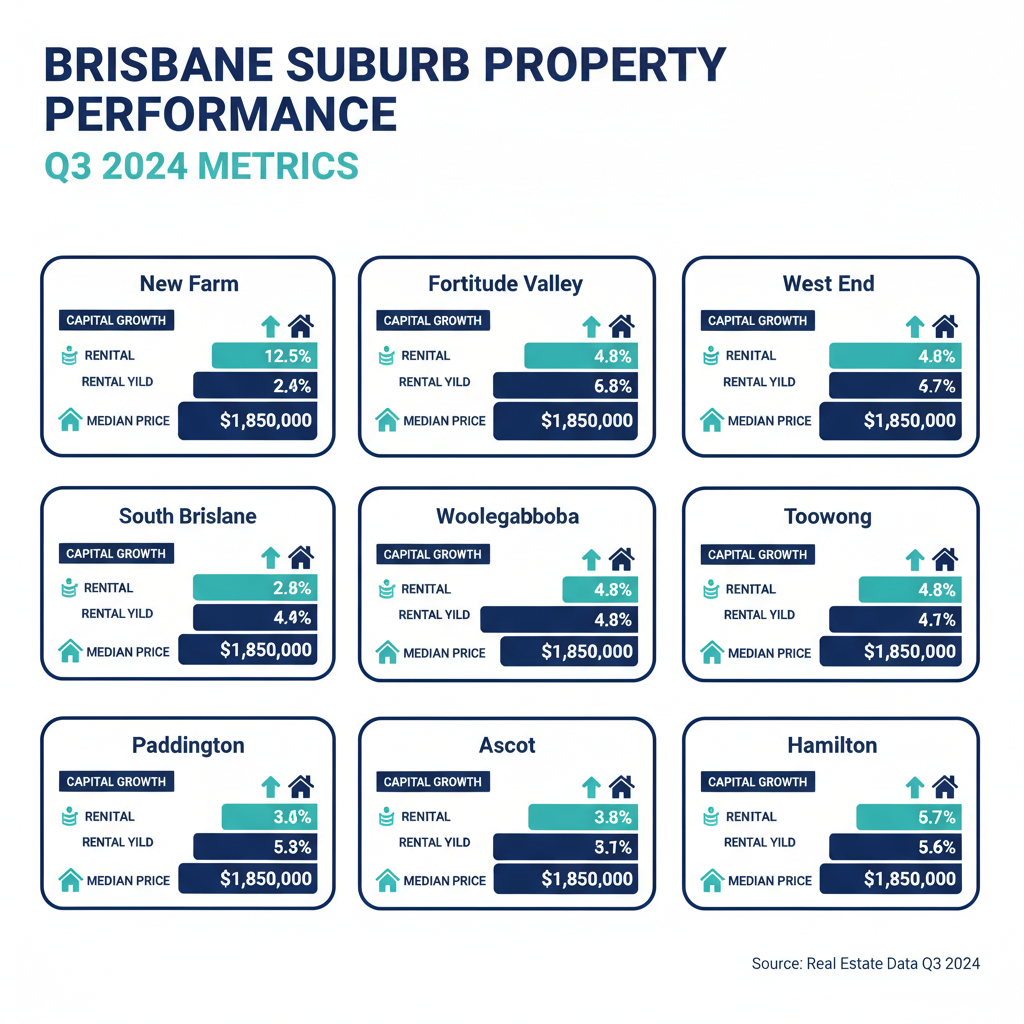
We tracked five key metrics: 12-month capital growth, gross rental yield, vacancy rate, median house price, and proximity to confirmed infrastructure projects.
Suburbs were shortlisted only if they met minimum thresholds: rental yield above 3.5%, vacancy below 1.5%, and evidence of either transport upgrades, employment hubs, or supply constraints.
Capital growth vs rental yield balance
Some investors chase high yield. Others want maximum capital growth. The reality is you rarely get both in the same suburb.
Inner and middle-ring suburbs typically deliver stronger capital growth (8-12% annually) but lower yields (3-4%). Outer suburbs and emerging corridors offer higher yields (4-6%) but slower appreciation.
We've included both types in this list, clearly labeling which strategy each suburb supports. Your choice depends on your investment horizon, cash flow needs, and risk tolerance.
The best investment suburbs share three characteristics: limited new supply, improving amenity, and diverse buyer demand (not just investors).
Infrastructure investment as a growth driver
Infrastructure is one of the most reliable indicators of future demand. We prioritized suburbs benefiting from Cross River Rail, Brisbane Metro, Olympic precinct upgrades, and major road projects scheduled for completion by 2027.
According to the Queensland Audit Office, the state has committed $16.4 billion to major capital projects, with Brisbane absorbing the largest share.
Suburbs near new stations, upgraded hospitals, and university precincts consistently outperform because infrastructure reduces friction (commute time, access to jobs) and increases liveability.
We cross-referenced every suburb against confirmed project timelines to ensure the infrastructure catalyst is real, funded, and imminent.
Vacancy rates and rental demand
Vacancy rates below 1% signal chronic undersupply. Brisbane's city-wide vacancy sits at 0.9%, but some suburbs are even tighter.
Low vacancy means faster leasing, less downtime, and upward rent pressure. For investors, it reduces holding risk and improves cash flow certainty.
We excluded suburbs with vacancy above 2% or declining rent growth, even if capital growth looked strong. A property that sits vacant for weeks erodes your yield fast.
Sustainable rental demand comes from employment hubs, universities, hospitals, and lifestyle appeal. We favored suburbs with multiple demand drivers over single-industry towns.
Top 9 suburbs explained
Each suburb below includes current median prices, 12-month growth, rental yield, key strengths, potential risks, and the investor profile it suits best.
1. Moorooka – Affordable entry with strong yield
Key stats and performance
Moorooka is gaining serious traction with unit investors. The median unit price sits at $700,000, up 27% in 12 months.
Rental yield is 4.5%, one of the highest in inner Brisbane. Vacancy is below 1%.
The suburb is 8km from the CBD, well-serviced by bus and rail, and offers a residential feel with easy access to major shopping centers and parks.
Pros and cons
Strengths: High rental yield, diverse community, close to transport, affordable entry point, strong annual growth.
Risks: Limited land for houses (most opportunities are units), some streets closer to industrial zones, not as "blue chip" as inner-city alternatives.
Best for
Moorooka suits first-time investors seeking positive or near-positive cash flow in a growth corridor. It's ideal for buyers who want exposure to Brisbane's middle ring without stretching to $1 million.
If you're building a portfolio and need strong yield to service debt, Moorooka delivers.
2. Scarborough – Coastal lifestyle with capital upside
Key stats and performance
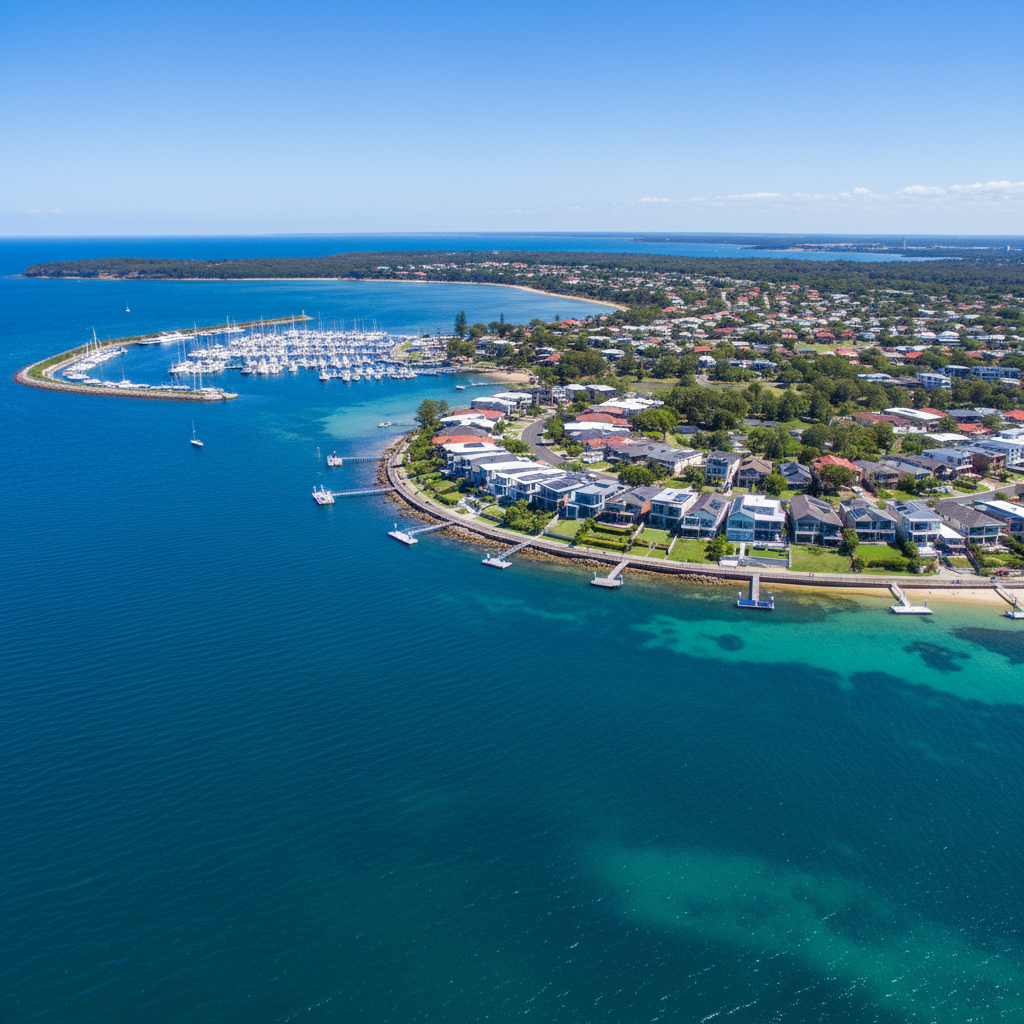
Scarborough, on the Redcliffe Peninsula, posted 29.1% growth over 12 months. The median unit price is $902,500.
Five-year appreciation is 88.8%. Rental yield is 4.0%.
The suburb offers coastal charm, seaside dining, and direct access to Moreton Bay. It's popular with retirees, sea-changers, and young families.
Pros and cons
Strengths: Exceptional recent growth, lifestyle appeal, strong owner-occupier demand, improved rail connectivity to CBD.
Risks: Unit-heavy market, potential oversupply from new developments, distance from CBD (approx 40km), less appeal for corporate renters.
Best for
Scarborough suits investors targeting lifestyle-driven capital growth rather than maximum yield. It's a strong choice for those who believe Brisbane's coastal fringe will continue to attract buyers from Sydney and Melbourne.
If you're comfortable with moderate yield in exchange for appreciation, Scarborough fits.
3. Underwood – Family demand and infrastructure growth
Key stats and performance
Underwood is a standout for house investors. Median house price is $1.15 million, up 22.6% annually.
Rental yield is 3.6%. The suburb sits between Brisbane and the Gold Coast, with strong retail and infrastructure development.
Families are drawn by quality schools, parks, and community amenities.
Pros and cons
Strengths: Strategic location, family appeal, ongoing infrastructure investment, stable rental market.
Risks: Yield is moderate, entry price above $1 million, some streets affected by traffic noise from major roads.
Best for
Underwood suits investors with higher capital targeting family-friendly houses. It's ideal for those seeking stable, long-term tenants and moderate capital growth rather than speculative plays.
If you're buying for a 7-10 year hold and want tenant quality over yield, Underwood works.
4. Bray Park – Affordability meets demand
Key stats and performance
Bray Park, in Brisbane's north, has seen 12% annual capital growth. The median house price is approximately $690,000, with units around $510,000.
Rental yield for houses is 4.2%, and units push above 4.5%. Vacancy is 0.4%.
The suburb benefits from the Kippa-Ring rail line and is attracting first-home buyers and investors in equal measure.
Pros and cons
Strengths: Ultra-low vacancy, affordable entry, strong first-home buyer demand, rising lifestyle amenity, rail connectivity.
Risks: Outer-ring location, slower appreciation than inner suburbs, some older housing stock.
Best for
Bray Park suits budget-conscious investors and first-timers who need positive cash flow and affordable entry. It's a strong rentvesting market.
If you're stretching to buy and need rental income to help cover repayments, Bray Park is one of the few sub-$700k house markets still delivering.
5. Coorparoo – Inner-city lifestyle and tenant appeal
Key stats and performance
Coorparoo, just 3.5km south-east of the CBD, offers a vibrant village atmosphere, walkable dining, and excellent public transport.
Median townhouse and unit prices have grown steadily. Rental yield for units is 4.2%.
The suburb benefits from limited new supply and strong demand from professionals, downsizers, and young families.
Pros and cons
Strengths: Inner-city location, lifestyle appeal, low days on market, high tenant quality, strong owner-occupier competition.
Risks: Entry price for quality stock is high, limited house stock, unit market more competitive.
Best for
Coorparoo suits investors seeking inner-city exposure without CBD-level pricing. It's ideal for townhouse or boutique apartment investors targeting high-income tenants.
If you want strong tenant demand and low vacancy in a proven lifestyle precinct, Coorparoo delivers.
6. Paddington – Blue-chip heritage appeal
Key stats and performance
Paddington is a premium inner suburb known for heritage Queenslanders, tree-lined streets, and a thriving café culture.
Median house prices exceed $1.6 million. Capital growth has been consistent, driven by scarcity and owner-occupier demand.
Rental yield is lower (2.8-3%), but long-term appreciation is strong.
Pros and cons
Strengths: Blue-chip location, character homes, limited supply, strong capital growth, high-quality tenants.
Risks: High entry price, low yield, renovation costs for older stock, competitive market.
Best for
Paddington suits high-net-worth investors prioritizing capital growth and portfolio quality over yield. It's a "buy and hold" suburb for those who can afford to carry a property.
If you're building a legacy portfolio and want scarcity-driven growth, Paddington is a top choice.
7. Nundah – Northern gentrification play
Key stats and performance
Nundah, 8km north of the CBD, is undergoing rapid gentrification. Unit values jumped 22.8% in 2025.
The suburb benefits from Westfield Chermside proximity, airport access, and a booming village center with new cafes and retail.
Rental yield for units is 4.3%. Vacancy is tight.
Pros and cons
Strengths: Rapid gentrification, strong transport links, lifestyle improvement, affordable relative to inner city, high growth momentum.
Risks: Unit-heavy, some older apartment stock, gentrification not yet complete in all pockets.
Best for
Nundah suits investors targeting early-stage gentrification suburbs. It's ideal for buyers who want exposure to improvement-driven growth at a lower entry price than established inner suburbs.
If you're comfortable with change and want to ride the gentrification wave, Nundah offers strong upside.
8. Tarragindi – Established family favorite
Key stats and performance
Tarragindi, 6km south of the CBD, is an upscale suburb with leafy streets and a close-knit community.
Median house price is $1.61 million, up 21.1% annually. Rental yield is 2.8%.
The suburb attracts professionals and families seeking proximity to the CBD, quality schools, and Ken Fletcher Park.
Pros and cons
Strengths: Established, high owner-occupier appeal, strong capital growth, family-friendly, close to CBD.
Risks: High entry price, low yield, competitive market, limited stock turnover.
Best for
Tarragindi suits investors with capital seeking stable, long-term growth in a proven suburb. It's ideal for those building a low-risk, high-quality portfolio.
If you're less concerned with yield and more focused on long-term wealth creation in a "safe" suburb, Tarragindi fits.
9. Bracken Ridge – Northern affordability hotspot
Key stats and performance
Bracken Ridge, 18km north of the CBD, is landlocked with limited development sites. Median house price is approximately $850,000.
Rental yield for units exceeds 4.5%. Vacancy is below 1%.
The suburb is attracting first-home buyers due to the expanded 5% Deposit Scheme and strong family appeal.
Pros and cons
Strengths: Landlocked (limited supply), affordable, strong first-home buyer demand, rail access, low vacancy.
Risks: Outer-ring location, slower capital growth, older housing stock in parts.
Best for
Bracken Ridge suits first-time investors and rentvesting buyers who need affordability and positive cash flow. It's a strong entry market.
If you're targeting the sub-$1 million house market and want tenant demand backed by the Deposit Scheme, Bracken Ridge is a smart play.
How Buyers Agency Australia helps investors

Choosing the right suburb is just the start. Securing the right property at the right price requires local expertise, market access, and negotiation skill.
Buyers Agency Australia specializes in data-driven investment strategies across all major Australian capitals, including Brisbane.
Led by Dragan Dimovski, who has 20+ years of experience and a $10M+ personal portfolio, the team combines boots-on-the-ground market knowledge with rigorous 10-year portfolio modeling.
Investment strategy and portfolio modeling
Buyers Agency Australia doesn't just help you buy a property. They build a 10-year wealth creation roadmap tailored to your goals, cash flow, and risk tolerance.
Every recommendation is backed by suburb fundamentals, rental demand analysis, and capital growth projections.
The team uses a transparent, fixed-fee model (no commissions), so advice is aligned with your outcome, not a sale price.
If you're serious about building a high-performing Brisbane portfolio, book a free strategy session to discuss your goals.
Access to off-market properties
Many of the best investment properties never hit the public market. Buyers Agency Australia has established relationships with agents across Brisbane, providing access to off-market listings before they're advertised.
This reduces competition, improves negotiation leverage, and often delivers better value.
For investors targeting inner-city townhouses or tightly-held family suburbs, off-market access is a game-changer.
Negotiation and due diligence
Securing the property is only half the battle. Negotiating the right price and completing thorough due diligence protects your downside.
Buyers Agency Australia handles building and pest inspections, contract review, strata analysis (for units), and suburb risk assessment (flood, noise, future development).
They also negotiate on your behalf, using market data and comparable sales to ensure you don't overpay.
If you're time-poor or investing interstate, this end-to-end service removes stress and reduces risk.
Ongoing support and market updates
The relationship doesn't end at settlement. Buyers Agency Australia provides ongoing market updates, portfolio reviews, and strategic advice as your circumstances evolve.
Whether you're considering a second purchase, refinancing, or selling, the team stays with you for the long term.
For investors who want a trusted advisor rather than a transactional service, this ongoing support delivers real value.
If you're ready to take the next step, contact Buyers Agency Australia to discuss your Brisbane investment strategy.
Frequently asked questions
What is the best Brisbane suburb to buy investment property in 2026?
There's no single best suburb. Moorooka offers high yield, Scarborough delivers lifestyle-driven growth, and Paddington provides blue-chip capital appreciation. Your choice depends on budget, cash flow needs, and investment horizon.
Are Brisbane property prices still rising in 2026?
Yes. Major banks forecast 4-11% growth for Brisbane in 2026. Demand remains strong, vacancy rates are below 1%, and infrastructure spending continues. Affordability constraints may moderate the pace, but growth is expected.
What rental yield is considered good in Brisbane?
Anything above 4% is considered good in Brisbane. The city-wide average is 4.02%. Yields above 4.5% are strong, typically found in outer suburbs or unit markets.
Should I buy a house or unit for investment in Brisbane?
Units offer higher yields (4.5-5.5%) and lower entry prices, making them ideal for cash flow. Houses deliver stronger capital growth and broader tenant appeal. Your choice depends on your strategy and budget.
How do I find off-market investment properties in Brisbane?
Off-market properties are accessed through buyer's agents with established networks. Buyers Agency Australia provides exclusive access to off-market listings across Brisbane. Book a session to explore current opportunities.
Key takeaways
Brisbane's investment landscape in 2026 is shaped by tight vacancy, strong interstate migration, and a $25 billion infrastructure pipeline. The 9 suburbs in this guide offer diverse strategies: high yield (Moorooka, Bray Park), lifestyle growth (Scarborough), family appeal (Underwood), and blue-chip quality (Paddington).
Successful investing requires more than picking a suburb. You need rigorous due diligence, negotiation skill, and long-term strategy. Buyers Agency Australia combines all three, helping investors build wealth through data-driven property selection and transparent, fixed-fee advice.
If you're ready to buy investment property in Brisbane this year, book your free strategy session today.