The Reserve Bank of Australia raised the cash rate by 25 basis points to 4.1% in March 2026, marking the second consecutive hike in 2026. This reverses cuts made in 2025 and pushes rates to their highest level since April 2025, driven by sticky inflation sitting at 3.8% and Middle East conflict risks.
If you're a property investor or first-home buyer, you've likely felt the whiplash. After three rate cuts through 2025, the RBA's sudden pivot back to tightening has sent shockwaves through the market. The question everyone's asking is the same: is this the trigger that finally crashes Australian property prices?
The truth is more complex than the headlines suggest. While borrowing capacity is shrinking and affordability is hitting breaking point in Sydney and Melbourne, Australia's housing supply shortage, robust migration levels, and investment-grade market fundamentals are creating a split-speed market. Buyers Agency Australia has tracked these cycles for over 20 years, and here's what the data actually says about what's coming next.
What the March 2026 RBA Rate Hike Really Means
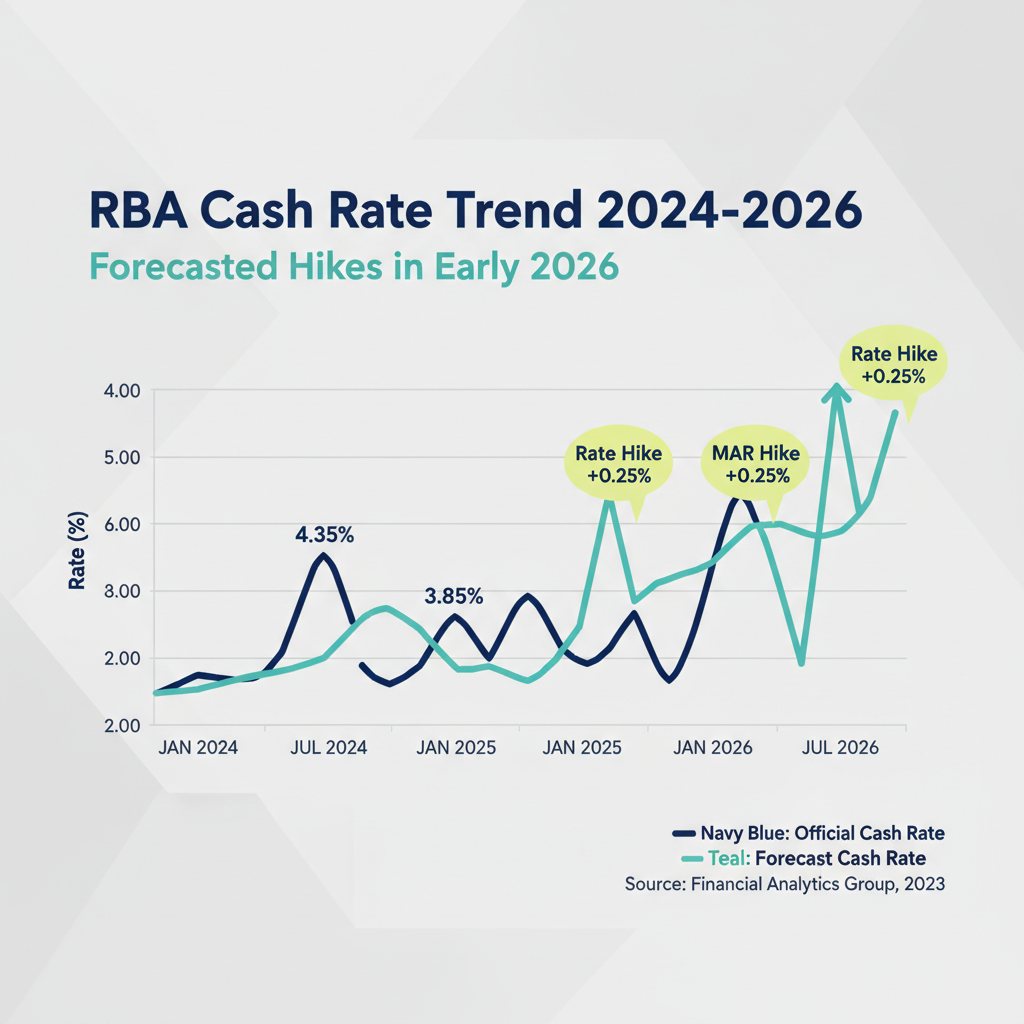
The RBA's March 2026 rate decision was anything but unanimous. The board voted 5-4 to increase the cash rate target to 4.1%, highlighting deep division over whether to act now or wait for more data.
Why the RBA Raised Rates Again
Governor Michele Bullock made it clear in her post-decision press conference: inflation is too high, and the RBA can't afford to lose further control. January 2026 inflation held at 3.8%, well above the RBA's 2-3% target band, with trimmed mean inflation rising to 3.4%.
Domestic demand has been stronger than forecast. Fourth-quarter GDP growth hit 2.6%, exceeding expectations. Unemployment remains low at levels that typically fuel wage growth. The labour market is tighter than anticipated, and capacity pressures are greater than the RBA previously assessed.
But the real wildcard is geopolitical. The war in the Middle East has closed the Strait of Hormuz, sending oil prices from US$70 per barrel to over US$100. Petrol prices in Australia have jumped 15% in weeks, adding direct inflationary pressure. The RBA forecast inflation could peak at 4.2% by mid-2026, with risks tilted to the upside.
How This Compares to Previous Tightening Cycles
This isn't the first time the RBA has reversed course. But the speed of the pivot is unusual. Just months after delivering the third rate cut in August 2025, the bank is now unwinding those gains.
Historically, property markets have proven resilient during tightening cycles when supply remains constrained. The 2022-2023 rate rise cycle saw Sydney and Melbourne prices dip temporarily, but mid-sized capitals like Brisbane, Perth, and Adelaide powered through with double-digit gains. The question isn't whether rates matter. It's whether supply shortages and migration can offset the borrowing capacity hit.
What Borrowers Are Facing Right Now
For a household with a $700,000 mortgage, the March rate hike adds roughly $100 per month to repayments. That's on top of February's increase. For renters, the pain is indirect but real: landlords facing higher servicing costs often pass increases through via rent rises.
Mortgage stress is climbing. CommBank's household spending data showed a February dip, though March rebounded slightly. The key stress point is households with mortgages, where affordability is now worse than at any point in the last two decades.
Will Australian Property Prices Crash in 2026
Let's address the headline question directly: are we heading for a property market crash?
Defining a Property Market Crash vs Correction
A correction typically means price declines of 5-10% over 6-12 months. A crash implies sustained falls of 20%+ that fundamentally reshape the market. Australia hasn't experienced a national crash since the early 1990s recession.
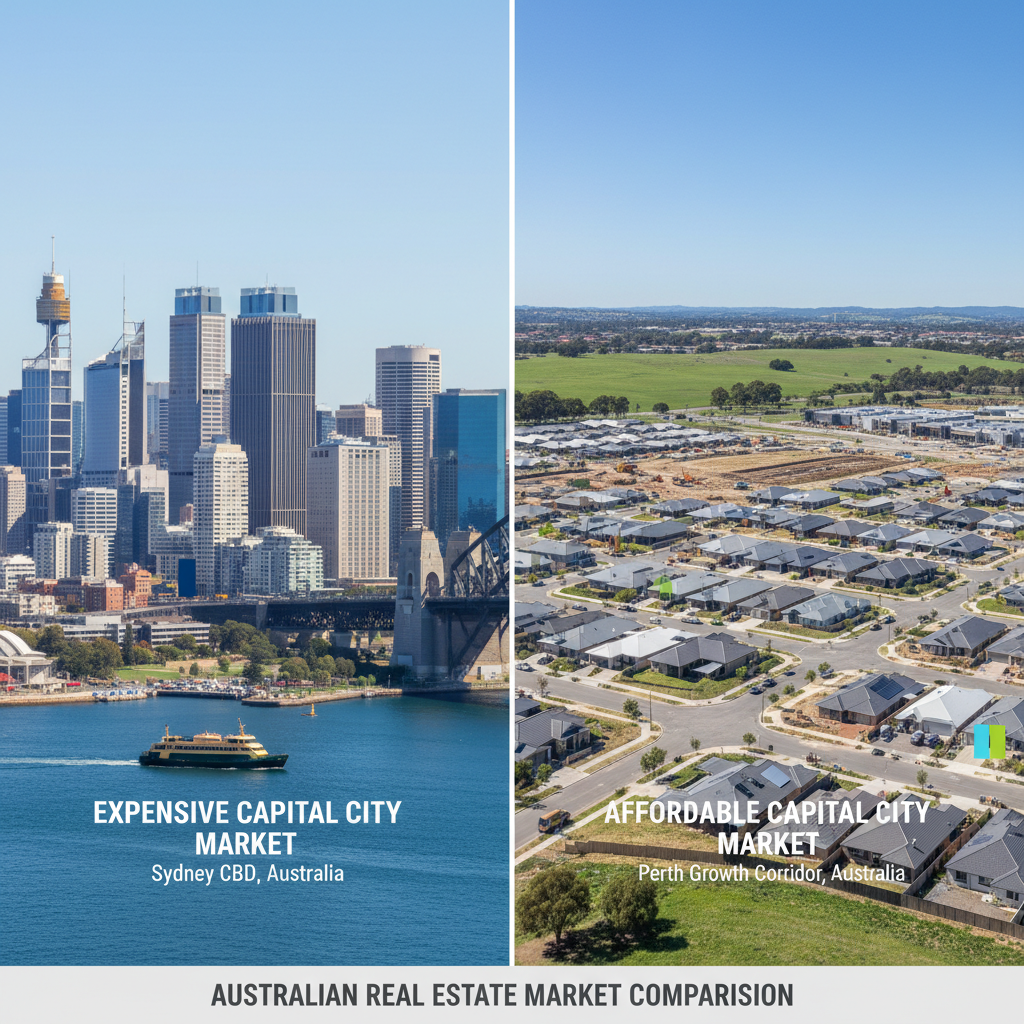
What we're seeing now is divergence, not collapse. Sydney and Melbourne are losing momentum. National home values rose just 0.8% in February 2026, and Sydney prices fell 0.3% over the month. But Perth, Brisbane, Adelaide, and Darwin continue reporting boomtime results, with Perth up 1.8% and Adelaide up 2.0% in February alone.
Historical Context: How Australian Property Has Responded to Rate Rises
Australian property has tripled in value every 20 years since World War II, requiring an average annual growth rate of 6%. That compounding has survived recessions, rate cycles, and crises.
The 2022-2023 rate rise cycle saw Sydney prices fall roughly 10% from peak to trough, but they've since recovered and hit new highs. Melbourne lagged but is forecast to return to pre-pandemic highs and push beyond them in 2026. The reality is that short-term rate shocks matter, but long-term supply-demand fundamentals matter more.
Key Metrics to Watch in 2026
If you're serious about tracking crash risk, watch these indicators:
- Auction clearance rates: Sydney and Melbourne clearance rates cooled from August 2025 highs, but remain above long-term averages.
- Days on market: National median sits at 28 days, a sign demand is still running ahead of supply.
- Rental vacancy rates: National vacancy at 1.7%, well below the 3% level that signals balanced supply.
- Building approvals: Down 6.4% in October 2025, with the Housing Accord 20% behind target after 18 months.
- Credit growth: Investor lending surged 26% since 2021, with more than 205,000 new investor loans in the past year.
None of these metrics suggest a crash. They suggest a two-speed market where affordability constraints slow growth in expensive cities, but supply shortages keep floors under prices.
Key Risks That Could Push Prices Down
While a crash seems unlikely, risks are real. Here's what could tip the balance.
Further Interest Rate Rises
The RBA's next meeting is May 4-5. By then, the board will have Q1 trimmed mean CPI data. If inflation prints at 0.9% quarterly instead of 0.8%, another 25bp hike becomes more likely. Markets are pricing a live risk of rates hitting 4.35% by mid-2026.
If oil prices stay elevated and inflation expectations become unanchored, the RBA could be forced into a more aggressive tightening cycle. That would materially reduce borrowing capacity and demand, particularly in Sydney and Melbourne where affordability is already stretched.
Recession Risk and Unemployment
Governor Bullock acknowledged that the RBA doesn't want to trigger a recession, but if inflation can't be controlled, "we're going to have to deal with that, possibly."
If unemployment rises from current lows to 5% or higher, forced sales could increase. But right now, unemployment remains subdued, wage growth is solid, and household savings rates are above average. The labour market would need to deteriorate significantly to trigger distressed selling.
Borrowing Capacity Squeeze
Every 25bp rate rise reduces borrowing capacity by roughly 2%. Two hikes in two months means first-home buyers and upgraders face a material reduction in what they can borrow.
APRA has also ramped up macroprudential controls, requiring lenders to assess loan serviceability at higher buffer rates. This compounds the rate rise impact, especially for buyers stretching into expensive markets.
Forced Sales and Investor Exits
Investor loans have surged, but if rental yields compress further and capital growth stalls, some leveraged investors may exit. However, rental vacancy rates near record lows and rising rents (up 5.9% on a six-month annualised basis in December 2025) suggest investor fundamentals remain strong.
Forced sales typically require unemployment spikes or credit crunches. Neither is evident right now.
Support Factors That Could Keep Prices Rising
Despite rate rises, several structural forces are propping up the market.
Chronic Housing Supply Shortage
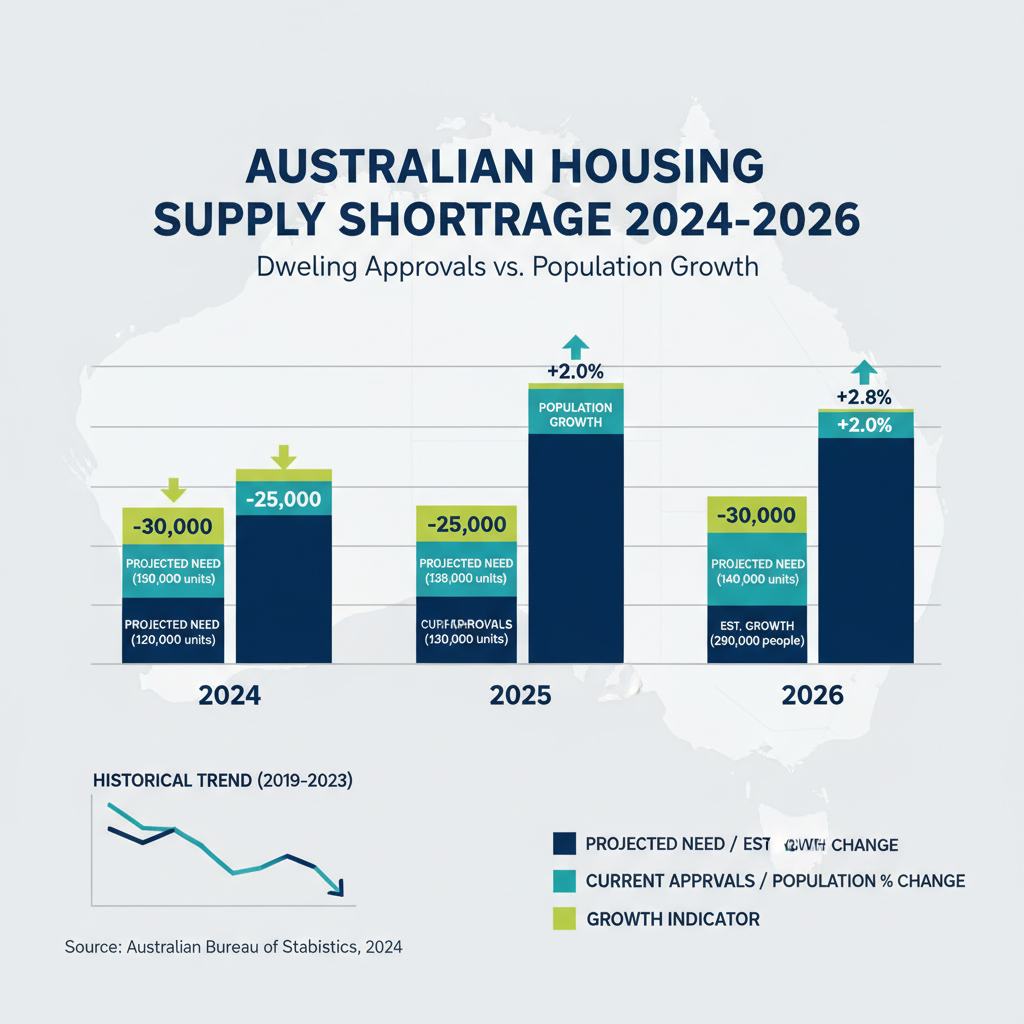
Australia's cumulative housing shortage sits between 200,000 and 300,000 dwellings, according to AMP chief economist Shane Oliver. The National Housing Accord target of 1.2 million new homes by mid-2029 is already 20% behind schedule.
Dwelling approvals in 2025 totaled 195,700, roughly 44,000 fewer than the 240,000 annual run rate required. Construction costs have surged 62-77% in key precincts over four years, labour shortages persist, and planning approvals take months or years in major cities.
This isn't a short-term blip. It's a structural supply crisis that underpins price support for years to come.
Migration and Population Growth
Australia's population is forecast to exceed 30 million by 2030, up from 27.6 million today. That's 3 million additional people requiring housing.
Net overseas migration remains elevated, with permanent and long-term arrivals concentrated in Sydney, Melbourne, Brisbane, and Perth. Migration-driven rental demand is the primary driver of rental market tightness, outweighing interest rates and affordability cycles.
Government Buyer Support Programs
The expanded 5% Deposit Scheme allows first-home buyers to purchase with a 5% deposit and no lenders mortgage insurance. The Help to Buy Scheme, launched in December 2025, allows the federal government to take a 30-40% equity stake in a property purchase.
Both policies bring forward demand and increase how much buyers can pay, particularly in the lower quartile of the market. Domain noted that properties below the expanded deposit guarantee price caps have seen a clear divergence in growth trends, even before the scheme went live.
These demand-side policies don't solve supply shortages, but they do support price floors in entry-level segments.
Rental Market Tightness Driving Investor Demand
Rental vacancy rates sit at 1.6% nationally, near record lows. Advertised rents rose 5.9% on a six-month annualised basis. Median weekly rent in Q4 2025 reached $681 nationwide, up 5.2% year-on-year.
For investors, the combination of strong rental yields, capital growth potential, and structural undersupply creates a compelling case. Investor lending is growing much faster than owner-occupier lending, with more than 205,000 new investor loans written in the past year.
What Strategic Investors Should Do Right Now
If you're an investor navigating this environment, here's the playbook.
Focus on Investment-Grade Properties in Supply-Constrained Markets
Perth, Brisbane, and Adelaide demonstrate the strongest fundamentals. Perth is forecast to lead house-price growth at 12.8% in 2026, followed by Brisbane at 10.9% and Darwin at 10.5%. These markets combine supply constraints, migration inflows, and relative affordability.
Melbourne and Sydney offer value for contrarian buyers. Melbourne's comparatively lower price base and forecast 6.8% growth in 2026 make it an attractive re-entry point for long-term investors. Sydney's status as a major jobs hub supports underlying demand, even as affordability constraints slow short-term momentum.
Avoid Emotional Properties and Speculation Traps
Chasing government stimulus, buying off-the-plan apartments in oversupplied precincts, or stretching finances without cash buffers are the costliest errors in this environment.
Investment-grade properties are owner-occupier desirable, in supply-constrained suburbs, within 10-15km of employment hubs, and demonstrate historical capital growth. Emotional properties are trendy, overpriced, or in fringe locations with no long-term demand drivers.
Maintain Cash Reserves and Borrowing Buffers
Aim for a minimum 20% deposit to avoid lenders mortgage insurance. Maintain an additional six-month cash reserve for vacancy, repairs, and interest rate increases.
If rates rise another 50bp, can you still service the loan comfortably? If not, you're overextended.
Consider Off-Market Opportunities
Off-market properties account for roughly 30% of all sales in Australia. These deals bypass auction competition, reduce emotional bidding, and often deliver better value.
Working with a buyers agency with established agent networks and off-market access can unlock properties that never hit public portals. This is particularly valuable in tight supply markets where quality stock is absorbed before it's advertised.
10-Year Portfolio Modeling Over Short-Term Timing
Strategic timing matters less than strategic selection. Australia's property market has delivered 6% average annual growth for decades. The question isn't whether to buy. It's what to buy, where to buy it, and why.
A 10-year portfolio model accounts for rate cycles, supply dynamics, and migration trends. It positions you to weather short-term volatility and capture long-term compounding.
How Buyers Agency Australia Helps Investors Navigate Rate Volatility

With over 20 years of experience and a $10M+ personal portfolio, Dragan Dimovski and the Buyers Agency Australia team have guided investors through multiple rate cycles.
Data-Driven Investment Strategies
We don't guess. We model. Our 10-year portfolio modeling accounts for supply constraints, migration trends, infrastructure pipelines, and capital growth drivers. We identify suburbs before they boom, not after.
Our transparent, fixed-fee model means we're aligned with your long-term success, not chasing commissions on overpriced stock.
Off-Market Deal Access
Our agent network across all major Australian capitals gives us access to off-market opportunities that never reach public auction. This reduces competition, removes emotional bidding, and delivers better value.
We've secured properties for clients 5-10% below market value by negotiating directly with vendors before listings go live.
End-to-End Advocacy
From initial strategy session through settlement, we handle due diligence, negotiations, building inspections, and contract review. For time-poor professionals, this removes the stress and complexity of property investment.
We're not selling you a property. We're building your wealth strategy.
Book Your Free Strategy Session
If you're serious about investing in 2026, book a free strategy session and let's build your roadmap. Whether you're scaling from one property to five or entering the market for the first time, we'll show you how to position for long-term success.
Frequently Asked Questions
Will Australian property prices crash in 2026?
Unlikely. Supply shortages, migration, and rental market tightness support price floors. Expect divergence, not crash.
How do rising interest rates affect property prices?
Rising rates reduce borrowing capacity and demand, but supply constraints and migration can offset impacts in tight markets.
Should I wait to buy property until rates fall?
Strategic selection matters more than timing. Australia's 200,000-300,000 dwelling shortage supports ongoing price appreciation.
What are the best cities to invest in 2026?
Perth, Brisbane, and Adelaide forecast the strongest growth. Melbourne offers contrarian value for long-term investors.
How much deposit do I need to invest in property in 2026?
Aim for 20% deposit plus six-month cash reserves to avoid mortgage insurance and buffer rate rises.