
A Property Investor’s Guide to Building Equity: Creating Wealth Through Smart Asset Strategy
Property equity is the difference between your property’s current market value and what you still owe on your mortgage. Understanding this number is critical because it determines how quickly you can expand your portfolio, access better investment opportunities, and move from one property to multiple.
Yet many investors still ask: How much equity do I actually have, and how can I use it to build long-term wealth?
The answer isn’t as simple as plugging numbers into a calculator. Property equity plays a major role in how you scale your portfolio without needing to save for another deposit each time. For investors in 2026, equity has become the bridge between owning one property and building a multi-asset strategy that generates passive income and capital growth. But accessing that equity requires understanding usable equity, loan-to-value ratios, and how lenders assess your borrowing capacity.
This guide breaks down everything you need to know about property equity in Australia, from basic calculations to advanced strategies that experienced investors use to scale faster. Whether you’re a first-time investor or looking to add your next property, understanding equity is one of the most important steps you can take.
Let’s start with the fundamentals before moving into the strategic applications that separate average investors from those building genuine wealth.
What Is Property Equity and Why Does It Matter
Understanding the Basic Equity Formula
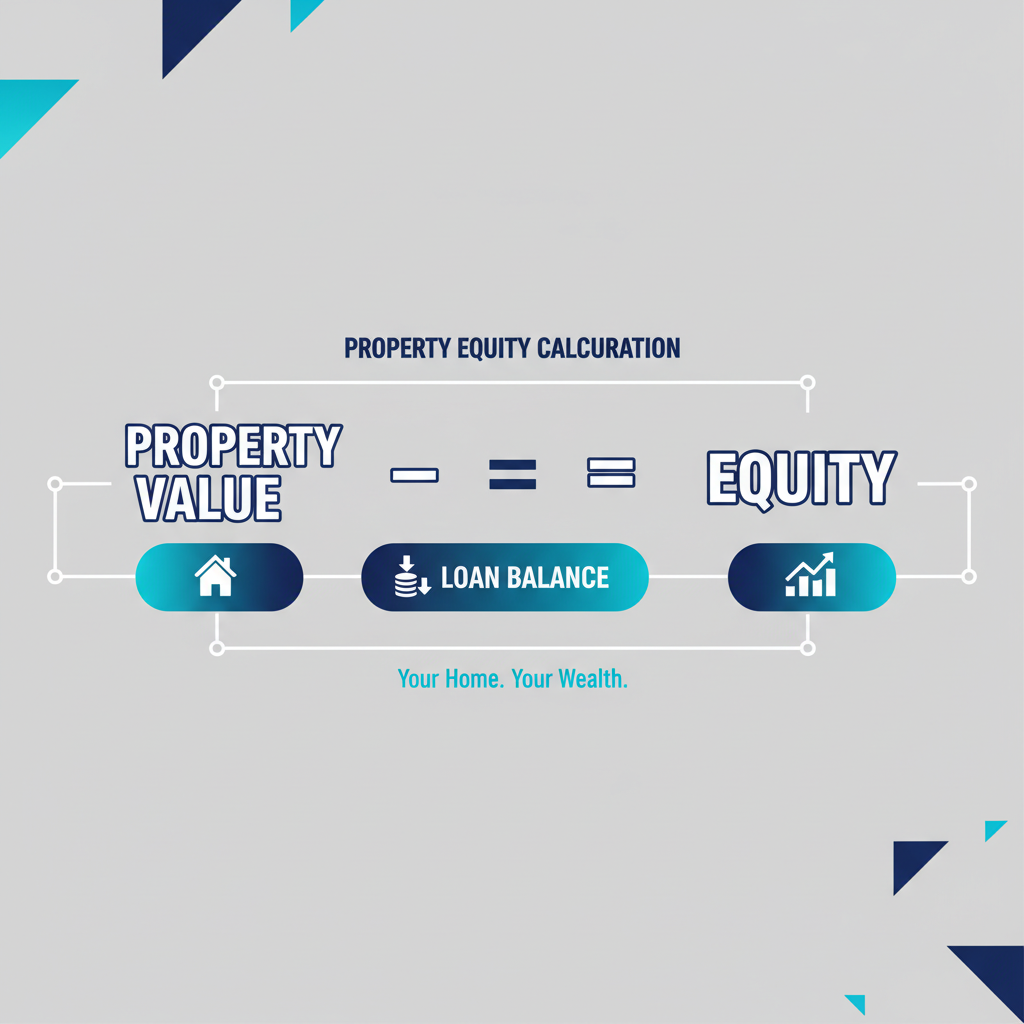
Property equity represents the portion of your property that you own outright. It’s calculated by subtracting your outstanding mortgage balance from your property’s current market value.
The formula is straightforward. If your property is valued at $700,000 and you owe $300,000 on your mortgage, your equity is $400,000. This number changes constantly as you pay down your loan and as property values fluctuate in the market.
What matters most is that this equity can be accessed and used to fund your next investment without needing to sell your existing property.
How Equity Grows Over Time
Equity builds through two primary mechanisms. The first is paying down your mortgage principal with each repayment. The second is capital growth, which occurs when your property increases in value over time.
In markets like Brisbane, Perth, and Adelaide, property values increased by 9-13% in 2025 according to Propertyology’s 2026 market outlook. This means investors who purchased years ago have seen substantial equity growth without lifting a finger.
The longer you hold investment-grade property in strong locations, the more your equity compounds. This is why time in the market beats timing the market for long-term wealth creation.
The Difference Between Total Equity and Usable Equity
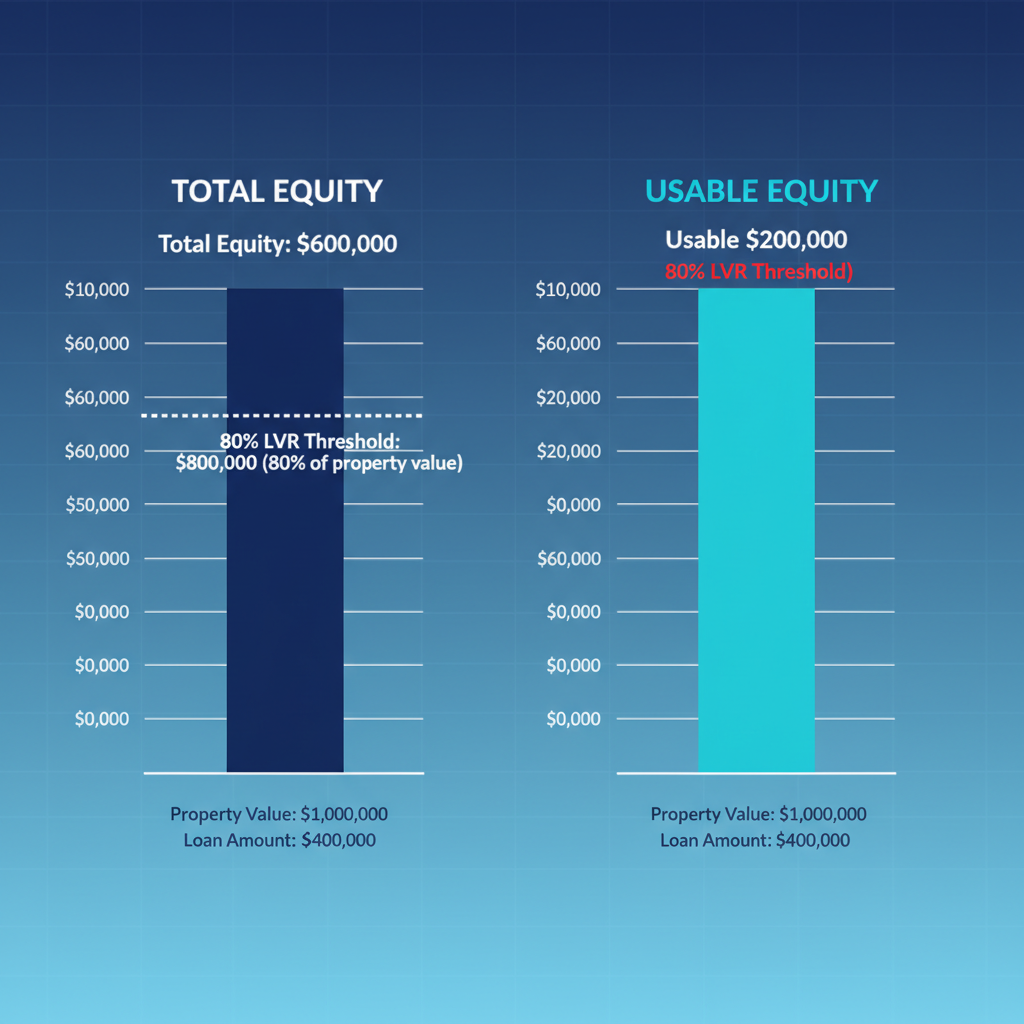
Many investors make a critical mistake by assuming all their equity is accessible. Lenders distinguish between total equity and usable equity, and the difference matters when you’re ready to buy your next property.
Usable equity is the amount lenders will actually allow you to borrow against your property while maintaining a buffer. Most banks lend up to 80% of your property’s value, meaning they require you to maintain at least 20% equity as a safety margin.
Using the previous example, if your property is worth $700,000, 80% of that value is $560,000. Subtract your $300,000 mortgage, and your usable equity is $260,000. This is the amount you can potentially access without paying Lenders Mortgage Insurance (LMI).
Understanding this distinction is crucial before you approach lenders or start searching for your next investment property. Buyers Agency Australia helps investors map out their usable equity and borrowing capacity before they begin property searches, ensuring every dollar is strategically deployed.
How to Calculate Your Property Equity Step by Step
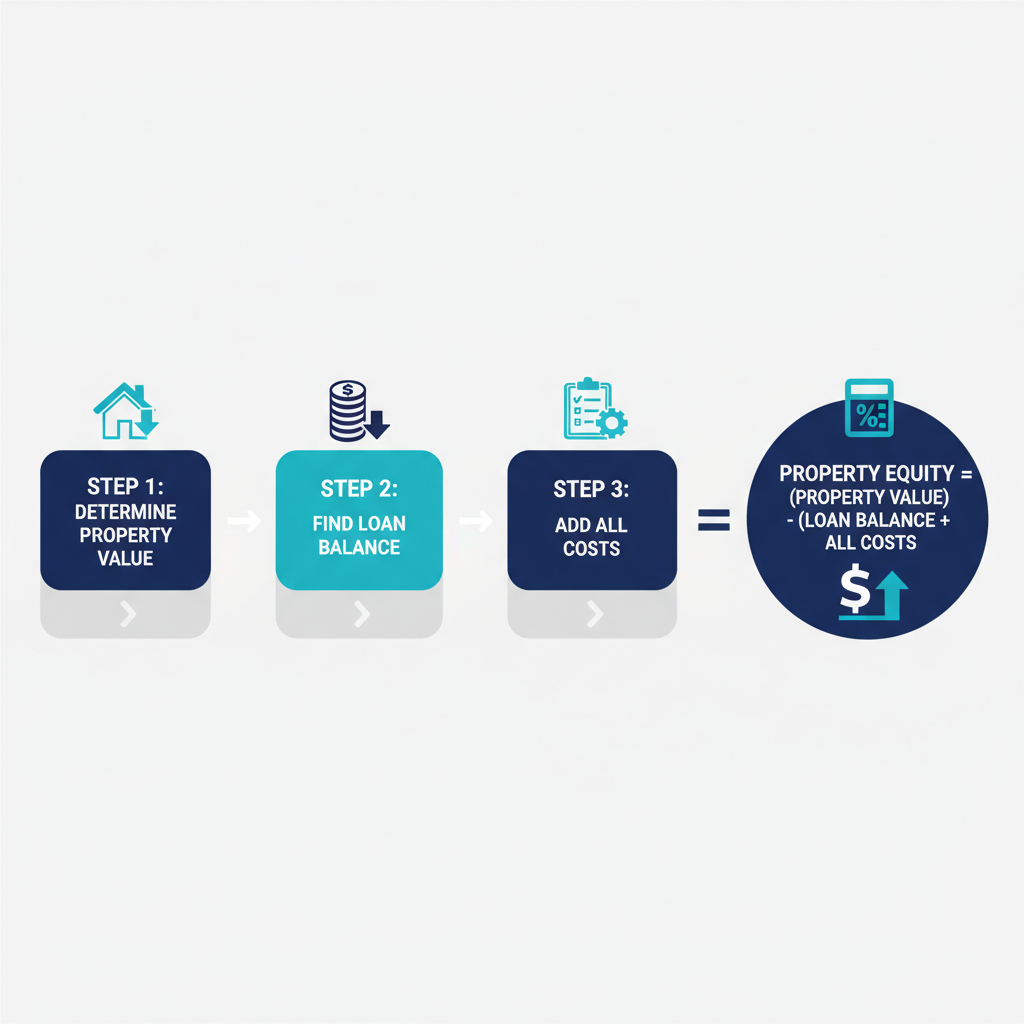
Step One: Determine Your Property’s Current Market Value
The first step in calculating equity is knowing what your property is worth today. Purchase price is irrelevant unless you bought recently. What matters is current market value.
You have several options for determining this. Online property estimators like CoreLogic or Domain provide free estimates based on recent sales data. Real estate agents can provide a market appraisal, though these may be optimistic if they’re hoping to list your property.
The most accurate method is a formal bank valuation, which lenders require when you apply to access equity. These valuations are conservative and based on comparable sales in your area, ensuring the figure reflects what the property would sell for quickly if needed.
Step Two: Calculate Your Outstanding Loan Balance
Next, you need to know exactly how much you owe. This includes your primary mortgage and any other debts secured against the property, such as home equity loans or lines of credit.
Your current mortgage statement shows your outstanding balance. If you have multiple loans against the property, add them all together. Don’t forget to include any liens or legal judgments registered against the title, as these reduce your accessible equity.
This number decreases every time you make a repayment, though most of your early payments go toward interest rather than principal. As your loan matures, a larger portion of each payment reduces the principal, accelerating your equity growth.
Step Three: Apply the Equity Formula
Once you have both numbers, the calculation is simple. Subtract your total debt from your property’s current market value.
If your property is valued at $800,000 and you owe $450,000, your total equity is $350,000. This represents your ownership stake in the property.
But remember, this is total equity, not usable equity. To calculate what you can actually access, multiply your property value by 80% (or whatever LVR your lender allows), then subtract your loan balance.
In this example, 80% of $800,000 is $640,000. Subtract your $450,000 loan and you have $190,000 in usable equity. This is what you can potentially borrow to fund your next investment.
Step Four: Account for Costs and Buffers
Accessible equity isn’t just about the numbers. Lenders also assess your borrowing capacity based on income, expenses, and existing debts.
Even if you have $190,000 in usable equity, you still need to service the new loan. Lenders apply a serviceability buffer, typically adding 2-3% to current interest rates when assessing whether you can afford repayments.
You should also factor in purchase costs for your next property. Stamp duty, conveyancing fees, building inspections, and loan establishment fees can add 5-7% to the purchase price. If you’re buying a $400,000 investment property, budget an additional $20,000-$28,000 for these costs.
This is where working with specialists like Buyers Agency Australia becomes valuable. Their team helps investors calculate true borrowing capacity and ensure equity is deployed efficiently across the right investment opportunities. You can explore your options through their free strategy session.
Understanding Loan-to-Value Ratio and Lending Limits
What Is LVR and Why Lenders Use It
Loan-to-Value Ratio (LVR) measures how much you’re borrowing relative to your property’s value. It’s expressed as a percentage and is one of the key metrics lenders use to assess risk.
An LVR of 80% means you’re borrowing 80% of the property’s value and have 20% equity. The lower your LVR, the less risk you pose to lenders, which often translates to better interest rates and loan terms.
In 2026, the average Australian borrower has an LVR of 60.6%, according to analysis from Money.com.au. This suggests most homeowners have built substantial equity positions over recent years of strong capital growth.
The 80% LVR Threshold and LMI
Most lenders will lend up to 80% of a property’s value without requiring Lenders Mortgage Insurance. This insurance protects the lender if you default, and it can cost thousands to tens of thousands of dollars depending on your loan size.
If you want to borrow more than 80% of your property’s value, you’ll typically need to pay LMI. Some lenders extend to 90% or even 95% LVR, but higher ratios mean higher costs and more restrictive lending criteria.
For investors, staying at or below 80% LVR is generally the sweet spot. It maximizes borrowing capacity without incurring unnecessary costs, and it preserves equity buffers that protect you if property values dip temporarily.
How LVR Affects Your Borrowing Capacity
Your LVR directly impacts how much equity you can access. Using our earlier example, a property worth $800,000 with a $450,000 loan has an LVR of 56.25%.
This means you’re well below the 80% threshold and have significant borrowing capacity. You could increase your loan to $640,000 (80% of $800,000) and release $190,000 in usable equity.
But if your LVR was already 75%, your borrowing capacity would be much more limited. You’d only be able to access an additional $40,000 before hitting the 80% threshold.
This is why investors who start early and buy in growth markets have such a significant advantage. Their properties appreciate faster, reducing their LVR and creating more accessible equity for future purchases.
Recent Changes to Lending Standards in 2026
Australian lending standards have tightened in early 2026. From February 1, APRA introduced new debt-to-income ratio limits, capping high-risk loans at 20% of new lending for each bank.
Loans with a debt-to-income ratio above six times annual income are now considered high-risk. For an investor earning $75,000 annually, this means loans above $450,000 face additional scrutiny, according to The Conversation.
These changes won’t affect most investors with strong equity positions and diversified income sources. But they do make it harder for borrowers who are already heavily leveraged or have limited serviceability.
This is another reason why understanding your equity position early and structuring loans correctly matters. The lending environment continues to evolve, and investors who stay informed and work with experienced advisors like Buyers Agency Australia maintain their competitive advantage.
Strategic Ways to Use Property Equity for Portfolio Growth
Using Equity as a Deposit for Your Next Investment
The most common and powerful way investors use equity is as a deposit for their next property. Instead of saving for years to accumulate another 20% deposit, you can access equity from your existing property immediately.
This strategy allows you to enter the market sooner, which is crucial in appreciating markets. According to Search Property’s 2026 guide, with around $100,000 in usable equity, many quality investment properties become achievable.
The process works like this. You refinance your existing loan or take out an equity release loan for $100,000. You use this as the deposit on a $400,000-$500,000 investment property. You now own two properties with separate loan structures, both contributing to your long-term wealth.
One critical factor is ensuring the new property generates positive or neutral cash flow. Rental income should cover most or all of the loan repayments, meaning you’re not funding the investment from your salary. This makes the strategy sustainable as you scale beyond two properties.
Renovations to Manufacture Additional Equity
Smart investors don’t just wait for capital growth. They actively manufacture equity through strategic renovations that increase property values.
Spending $50,000 on a kitchen and bathroom renovation might increase your property’s value by $80,000-$100,000 in the right market. This creates instant equity that can be accessed for your next investment.
The key is choosing renovations with high return on investment. Cosmetic updates like painting, flooring, and modern fixtures typically deliver 80-120% returns. Major structural changes or luxury finishes often deliver lower returns unless you’re in prestige markets.
According to Property Update’s analysis, savvy investors in 2026 are manufacturing equity through value-adding strategies rather than relying solely on market appreciation. This gives you control over your portfolio growth rather than hoping for market conditions to align.
Debt Recycling to Convert Non-Deductible Debt
Debt recycling is an advanced strategy that converts non-tax-deductible home loan debt into tax-deductible investment debt. It’s particularly powerful for high-income investors looking to build wealth while reducing their tax liability.
Here’s how it works. As you pay down your home loan, you redraw equivalent amounts and invest them in income-producing assets like shares or investment properties. The interest on the redrawn funds becomes tax-deductible because it’s used for investment purposes.
Over time, your non-deductible home loan decreases while your tax-deductible investment loan increases. Your portfolio grows and you benefit from tax deductions on interest payments, as explained by Fox Mortgages.
This strategy requires careful structuring and professional advice to ensure compliance with ATO requirements. When executed correctly, it can significantly accelerate wealth creation for investors in higher tax brackets.
Building a Multi-Property Portfolio Through Strategic Equity Release
The most successful investors use equity systematically to build diversified portfolios across multiple markets. Rather than putting all their eggs in one basket, they spread risk and opportunity across different property types and locations.
A typical strategy might look like this. You buy your first investment property in a growth corridor like Brisbane. After three years, the property has appreciated 30% and you’ve paid down the principal. You now have $150,000 in usable equity.
You use that equity as a deposit on a second property in a different market, perhaps Perth or regional Queensland. Three years later, both properties have grown and you’ve paid down more principal. Now you have equity in two properties that can fund your third purchase.
This compounding effect is how investors build substantial wealth over 10-20 years. Each property contributes to the next, creating a snowball effect that accelerates over time.
Buyers Agency Australia specializes in helping investors identify the right properties and markets for each stage of this journey. Their 20+ years of experience and data-driven approach ensures every purchase adds genuine value to your portfolio. Learn more about their methodology through their contact page.
How Buyers Agency Australia Helps Investors Maximize Equity Strategy

Data-Driven Property Selection for Maximum Growth
Not all properties are created equal when it comes to equity growth. Buyers Agency Australia uses comprehensive market analysis to identify properties with the highest probability of long-term capital appreciation.
Their team analyzes infrastructure projects, employment trends, population growth, and supply constraints to pinpoint markets entering growth phases. This removes the guesswork and emotional decision-making that costs many investors thousands in missed opportunities.
With over 20 years of experience and a personal portfolio exceeding $10 million, founder Dragan Dimovski understands what separates investment-grade property from poor performers. This expertise is applied to every client’s portfolio strategy, ensuring equity is deployed into assets that genuinely build wealth.
Transparent Fixed-Fee Model That Protects Your Equity
Unlike traditional agents who work on commission, Buyers Agency Australia operates on a transparent fixed-fee model. This means their advice isn’t influenced by the sale price of the property, protecting your interests at every stage.
When you’re using precious equity to fund your next purchase, every dollar matters. Commission-based models create conflicts of interest where agents benefit from you paying more. Fixed fees eliminate this problem entirely.
This structure is particularly valuable when accessing equity through refinancing or equity release loans. You want advisors who prioritize your long-term portfolio performance over short-term transaction volume.
End-to-End Support from Equity Calculation to Settlement
Building wealth through property equity isn’t just about buying properties. It’s about structuring loans correctly, understanding tax implications, and coordinating with mortgage brokers, accountants, and conveyancers.
Buyers Agency Australia provides comprehensive support throughout the entire process. They help you calculate usable equity, connect you with preferred mortgage brokers who understand investment lending, and ensure every transaction is structured to maximize tax efficiency.
This holistic approach is what separates strategic investors from those who stumble through the process. Having experienced professionals coordinate every element means nothing falls through the cracks and your equity is deployed efficiently.
For investors ready to take the next step, the FastTrack event provides in-depth education on property investment strategy and portfolio structuring. It’s an opportunity to learn directly from the team and connect with other serious investors building long-term wealth.
Access to Off-Market Opportunities That Accelerate Equity Growth
Some of the best investment opportunities never hit public listing sites. Buyers Agency Australia’s extensive network provides access to off-market properties that aren’t available to the general public.
These properties often come with less competition, allowing you to negotiate better prices and terms. Paying $30,000-$50,000 less for an investment property means you start with instant equity before the market even recognizes the asset’s true value.
Off-market access also means you can move quickly when opportunities arise. In competitive markets, properties sell within days of listing. Having a buyer’s agent who knows about opportunities before they’re advertised gives you a significant advantage.
This is particularly valuable when you’re using equity from multiple properties to scale your portfolio. Speed and access matter, and Buyers Agency Australia’s relationships across major Australian markets provide both.
Common Equity Mistakes That Cost Investors Thousands
Overextending and Compromising Cash Flow
The biggest mistake investors make with equity is accessing too much too quickly without considering serviceability. Just because you have $200,000 in usable equity doesn’t mean you should borrow it all at once.
Every dollar you borrow increases your loan repayments. If rental income doesn’t cover these repayments, you’re funding the shortfall from your salary. This might be sustainable for one property, but it becomes dangerous as you scale.
Conservative investors maintain cash flow buffers and ensure each property is neutral or positive. This protects you during vacancy periods, interest rate increases, or unexpected maintenance costs.
Buying the Wrong Property in the Wrong Market
Accessing equity is only valuable if you deploy it into quality assets. Too many investors waste their equity on properties in declining markets, poorly located assets, or oversupplied apartment buildings.
These properties deliver low capital growth, poor rental yields, and limited future equity. Instead of building wealth, you’ve locked up capital in an underperforming asset that limits your ability to grow further.
This is why independent, data-driven advice matters. Buyers Agency Australia’s research identifies markets with strong fundamentals and properties with genuine scarcity value. This ensures your equity works hard from day one.
Ignoring Tax Implications and Structuring
How you structure loans when accessing equity has significant tax consequences. Interest on investment property loans is tax-deductible, but only if the loan is properly structured for investment purposes.
Mixing personal and investment debt, or refinancing incorrectly, can compromise your tax deductions and cost you thousands annually. This is why working with accountants who understand property investment is essential.
Buyers Agency Australia coordinates with your existing advisors or can refer trusted professionals who specialize in investment property tax strategy. This integrated approach ensures your equity release is structured correctly from the start.
Failing to Reassess Equity Positions Regularly
Property values change constantly, as do interest rates and lending criteria. Investors who calculated their equity three years ago and haven’t reassessed since are likely sitting on more accessible equity than they realize.
Regular equity reviews allow you to capitalize on market movements and adjust your strategy as opportunities emerge. This might mean accelerating your next purchase, refinancing to better rates, or restructuring loans to improve cash flow.
Making equity review part of your annual financial planning ensures you’re always optimized and ready to move when the right opportunities appear.
Frequently Asked Questions About Property Equity
How much equity do I need to buy my next investment property?
Most investors need around $100,000 in usable equity to purchase a property in the $400,000-$500,000 range. This covers the 20% deposit plus associated purchase costs without requiring Lenders Mortgage Insurance.
Can I access equity without refinancing my entire loan?
Yes, you can take out a separate equity loan or line of credit secured against your property. This keeps your original loan intact while providing access to funds. Speak with a mortgage broker about the best structure for your situation.
How long does it take to build enough equity for another property?
This depends on market conditions and how quickly you pay down your loan. In strong growth markets like Brisbane or Perth, investors might build $100,000-$150,000 in equity within 3-5 years through appreciation alone.
What happens to my equity if property prices drop?
Your equity decreases if your property’s value declines. This is why buying investment-grade property in strong markets with long-term fundamentals matters. Short-term fluctuations are normal, but quality assets recover and continue appreciating over time.
Do I need to pay capital gains tax when I access equity?
No, accessing equity through refinancing or loans is not a taxable event. You only pay capital gains tax when you sell the property. The interest on investment loans is typically tax-deductible, reducing your overall tax liability.
Conclusion: Taking Control of Your Property Equity Strategy in 2026
Understanding property equity is one thing. Using it strategically to build long-term wealth is another.
The investors who succeed in 2026 and beyond are those who view equity as their most powerful portfolio growth tool. They calculate it accurately, access it strategically, and deploy it into investment-grade properties that compound wealth over time.
This isn’t about speculation or taking unnecessary risks. It’s about understanding the numbers, working with experienced professionals, and making informed decisions that align with your long-term financial goals.
If you’re ready to take control of your equity strategy and start building a portfolio that generates genuine wealth, the next step is clear. Book a free strategy session with Buyers Agency Australia to map out your equity position, identify your next opportunity, and create a roadmap for the coming years. Visit their free strategy session page to get started today.