Property investment in Australia remains one of the most reliable paths to long-term wealth creation, offering investors the dual benefits of rental income and capital growth while providing tax advantages unavailable in many other asset classes.
If you're searching for a proven way to build wealth that doesn't rely on the stock market or a single income stream, you're in the right place.
Property investment has created more wealth for everyday Australians than almost any other investment vehicle. With median dwelling values rising 9.4% annually through early 2026 and rental yields staying strong due to chronic housing shortages, the fundamentals remain solid. But here's the thing: successful property investment isn't about chasing hot suburbs or following social media hype. It's about strategy, research, and understanding the market dynamics that truly drive returns.
This guide walks you through everything you need to know about property investment in Australia, from the first-time buyer taking the plunge to the intermediate investor looking to scale a portfolio. We'll cover the critical factors like location selection, rental yield versus capital growth, finance structures, and how to avoid the costly mistakes that derail so many beginners. You'll also get current market insights for 2026, including which cities are outperforming and where Buyers Agency Australia sees the best opportunities for long-term investors.
Why Australians Choose Property Investment Over Other Assets
The Wealth-Building Power of Bricks and Mortar
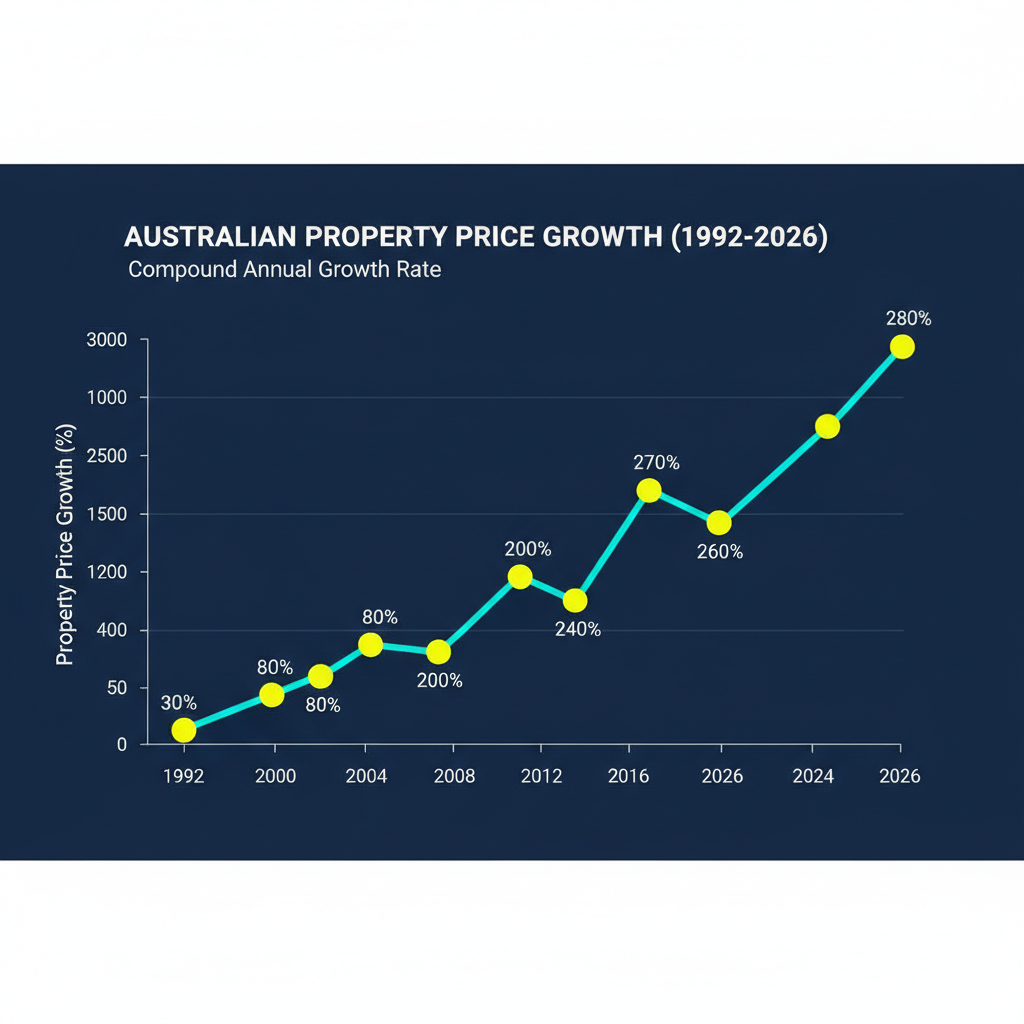
Australians have a deep cultural affinity with property investment, and it's not hard to see why. Over the past three decades, national dwelling prices have increased at an average annual rate of 5.4%, according to CoreLogic data through 2026.
That's significantly higher than inflation, which has averaged around 2-3% over the same period. What makes property especially attractive is that it's a tangible asset. Unlike shares or cryptocurrency, you can see it, touch it, and rent it out for monthly income.
Property also allows investors to use something called positive leverage. This means borrowing money to magnify your returns. For example, if you put down a 20% deposit on a $600,000 property and it grows 6% in value, you've gained $36,000 on your $120,000 investment. That's a 30% return on your actual cash, not just the property value.
Tax Benefits That Reduce Your Investment Costs
Australia's tax system offers several incentives for property investors. Negative gearing allows you to deduct rental losses against your taxable income, which can be particularly beneficial for high-income earners.
Depreciation on the building structure and fixtures also provides non-cash deductions that improve cash flow. For example, a new or recently renovated property can deliver $10,000 to $20,000 in depreciation deductions annually for the first few years.
Capital gains tax discounts mean if you hold an investment property for more than 12 months, you only pay tax on 50% of the capital gain when you sell. These tax advantages, when used strategically, can significantly improve your after-tax returns.
Rental Demand Continues to Strengthen Across Australia
Australia's rental market remains undersupplied heading into 2026. National vacancy rates sit at just 1.4%, well below the long-term average of 2.5-3%.
This tight supply is driving rent growth. National rents increased 5.2% annually through late 2025, with regional areas seeing even stronger growth at 6.2%. Rising rents translate directly to higher yields for investors and stronger cash flow.
Population growth continues to fuel demand. Australia's population is forecast to exceed 30 million by 2030, meaning close to 3 million more people will need somewhere to live over the next few years. Net overseas migration remains strong despite government efforts to moderate temporary arrivals, and this ongoing demand underpins long-term investment fundamentals.
How to Get Started with Property Investment in Australia
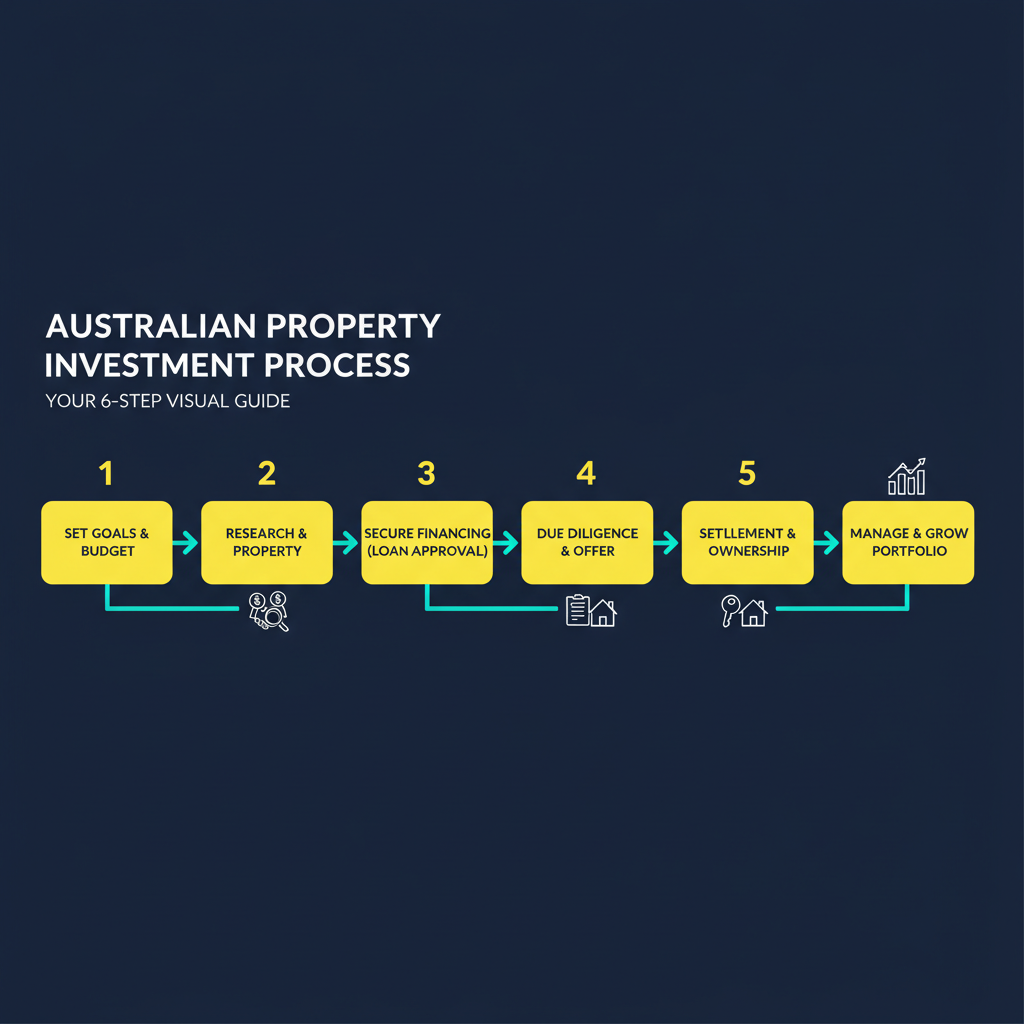
Step 1: Clarify Your Investment Goals and Timeline
Before you start searching for properties, you need to be crystal clear about what you're trying to achieve. Are you looking for immediate cash flow through high rental yields? Or are you focused on long-term capital growth to build equity over 10-20 years?
Your investment goal will determine everything else: where you buy, what type of property you target, and how you structure your finance. For example, investors focused on cash flow often target regional markets with yields above 6%, while those prioritising capital growth typically look at established suburbs in capital cities with strong infrastructure and owner-occupier appeal.
You also need to think about your timeline. Property is not a short-term play. You should be prepared to hold any investment for at least 7-10 years to ride out market cycles and capture meaningful growth.
Step 2: Understand Your Borrowing Capacity and Deposit Requirements
Most Australian investors in 2026 need a deposit of at least 10-20% of the property value to secure finance. A 20% deposit avoids Lenders Mortgage Insurance (LMI), which can add $10,000 to $30,000+ to your upfront costs.
Your borrowing capacity depends on your income, existing debts, living expenses, and the lender's assessment criteria. With APRA's new debt-to-income (DTI) limits capping high-DTI lending at 20% of new loans, borrowing capacity is more restricted than in previous years, particularly for investors.
Get pre-approval before you start shopping. This tells you exactly what you can afford and shows sellers you're a serious buyer. Pre-approval also helps you move quickly when the right property comes up, which matters in competitive markets.
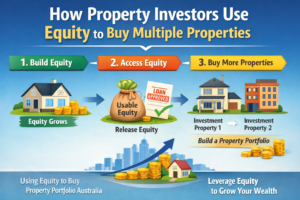
If you already own a home, you may be able to use equity from that property as a deposit for your investment. This is one of the fastest ways to scale a portfolio without needing to save additional cash.
Step 3: Research Locations Based on Fundamentals, Not Hype
Location is the single most important factor in property investment success. The right location can deliver strong capital growth and consistent rental demand for decades. The wrong location can leave you with vacancies, stagnant values, and regret.
Focus on areas with strong economic fundamentals. Look for job growth, infrastructure investment, population increases, and limited new housing supply. These are the factors that drive both capital growth and rental demand.
Avoid chasing "hot suburbs" based on recent price growth alone. By the time a suburb hits the headlines, the easy gains are often behind you. Instead, look for suburbs that are undergoing transformation: gentrifying areas with improving demographics, new transport links, or hospital/university precincts that attract stable tenant demand.
In 2026, Brisbane, Perth, and Adelaide continue to show strong growth momentum due to relative affordability, interstate migration, and economic strength. Sydney and Melbourne remain patchy, with pockets of strong performance in supply-constrained areas but slower growth overall.
Step 4: Choose the Right Property Type for Your Strategy
Once you've identified a target location, you need to decide what type of property to buy. Houses typically offer stronger long-term capital growth than units because of the land component, which appreciates over time.
Units and apartments can deliver higher rental yields and lower entry prices, making them attractive for cash-flow-focused investors or those with limited capital. However, they're more exposed to oversupply risk and typically experience weaker capital growth over the long term.
Townhouses and duplexes can offer a middle ground: better yields than houses, with more land than units. For first-time investors, a well-located house in an established suburb with good transport links and owner-occupier appeal is often the safest bet.
Avoid properties that require major renovations unless you have experience and a clear budget. Beginners should look for properties that are "rent-ready" with minimal work required.
Step 5: Conduct Thorough Due Diligence Before You Commit
Due diligence is where many first-time investors cut corners, and it costs them dearly. Never skip building and pest inspections. Hidden structural issues or termite damage can cost tens of thousands to fix and destroy your returns.
Review the contract carefully with a conveyancer or solicitor. Look for special conditions, settlement deadlines, zoning restrictions, and any clauses that could create unexpected costs or obligations.
Research recent sales in the area to confirm you're not overpaying. Check vacancy rates, average rental yields, and days on market for rental properties to ensure tenant demand is strong. If you're buying a unit, review the strata report for sinking fund balances, upcoming special levies, and building defects.
This is where working with an experienced buyers agent can save you from costly mistakes. They know what red flags to look for and have access to off-market deals and suburb-level data that most investors never see.
Key Factors That Drive Property Investment Success
Location: Why It Matters More Than Any Other Factor
You've probably heard the saying "location, location, location." It's a cliché because it's true. A well-located property in a growth corridor will outperform a cheaper property in a declining area every single time.
What makes a location great for investment? Start with proximity to employment hubs, transport infrastructure, quality schools, and lifestyle amenities. Properties within 20 minutes of CBDs or major employment centres typically see stronger demand from both tenants and buyers.
Look for areas with constrained supply. Inner and middle-ring suburbs of capital cities often have limited new development opportunities due to zoning, topography, or heritage overlays. This supply constraint supports long-term value growth.
Population growth is another critical driver. Areas attracting young families, professionals, and migrants tend to see consistent rental demand and price appreciation. Check ABS migration data and local council population forecasts to identify growth corridors.
Rental Yield: Calculating Your Return on Investment
Rental yield is the annual rent you receive expressed as a percentage of the property's value. It's calculated as: (Annual rent ÷ Property value) × 100.
For example, a $600,000 property renting for $550 per week generates $28,600 in annual rent, which is a gross yield of 4.77%. A yield of 4% or higher is generally considered solid in Australian capital cities, while regional areas can deliver 6-8%+.
Gross yield doesn't tell the full story. You need to factor in holding costs like council rates, strata fees, property management, insurance, maintenance, and interest on your loan. Net yield (after expenses) gives you a truer picture of cash flow.
High-yield properties provide better cash flow and reduce the amount you need to contribute out-of-pocket each month. This is particularly important for investors building multiple-property portfolios, where serviceability and cash flow management become critical.
Capital Growth: Building Equity Over the Long Term
Capital growth is the increase in your property's value over time. It's the primary driver of wealth creation in Australian property investment. Over the past 30 years, national median dwelling values have grown at 6.8% annually, according to CoreLogic data.
Compounding is where the magic happens. A property purchased for $600,000 that grows at 6% per year will be worth over $1 million in 10 years and close to $2 million in 20 years. That equity can be used to purchase additional properties, fund renovations, or provide financial security in retirement.
Capital growth is driven by location fundamentals, not speculation. Focus on areas with strong owner-occupier demand, gentrifying suburbs, and supply constraints. These are the locations where locals are willing to pay a premium to live, which drives long-term value appreciation.
Don't expect linear growth. Property moves in cycles. You'll experience flat periods and even short-term declines. That's normal. The key is to hold quality assets through the cycles and let time work in your favour.
Finance Structure: Interest-Only vs Principal and Interest
How you structure your investment loan has a major impact on cash flow and tax efficiency. Most investors choose interest-only loans for investment properties because it minimises monthly repayments and maximises tax deductions.
With interest-only, you're not reducing the loan balance, but you're keeping more cash in your pocket each month. This improves serviceability and makes it easier to qualify for additional loans when you're ready to expand your portfolio.
Principal and interest loans reduce your debt over time, which builds equity faster and provides a safety buffer if property values fall. However, repayments are higher, which can strain cash flow, particularly if you own multiple properties.
Consider using an offset account linked to your investment loan. Any funds you park in the offset reduce the interest you pay, without locking up your cash. This gives you flexibility to access funds quickly if needed, while still reducing your interest costs.
Property Management: Why DIY Often Costs More Than It Saves
Many first-time investors think they'll save money by managing their property themselves. In reality, DIY property management usually costs more than it saves due to longer vacancy periods, lower rents, and compliance mistakes.
Professional property managers know the local market. They can price your property correctly, attract quality tenants quickly, and handle maintenance issues efficiently. They also understand tenancy laws and keep you compliant with state regulations.
Property management fees typically range from 5-8% of weekly rent plus leasing fees. For a property renting at $500 per week, you're paying $25-$40 per week for professional management. That's a small price for peace of mind and maximised returns.
Your time is valuable. Unless property management is your profession, your time is almost certainly better spent on your career, business, or finding your next investment opportunity.
Property Investment Strategies for Australian Investors
Buy and Hold: The Time-Tested Wealth Builder
Buy and hold is the most common and reliable property investment strategy in Australia. The concept is simple: purchase a well-located property, rent it out, hold it for the long term, and let capital growth and rental income do the heavy lifting.
This strategy works because it captures the full benefit of compounding growth over multiple property cycles. Properties held for 15-20+ years can increase in value several times over, while rents rise with inflation and income growth.
The key is buying the right property in the right location from the start. Focus on areas with strong fundamentals, owner-occupier appeal, and limited supply. These properties will weather market downturns better and deliver more consistent growth over time.
Patience is essential. You won't get rich overnight with buy and hold. But if you can hold quality assets for decades, you'll be rewarded with substantial equity and potentially life-changing wealth.
High-Yield Strategy: Targeting Positive Cash Flow
A high-yield strategy focuses on generating strong rental income relative to property value. Investors using this approach typically target regional areas, mining towns, or lower-priced suburbs where yields of 6-8%+ are achievable.
Positive cash flow (where rent exceeds all holding costs) provides a financial buffer and makes it easier to expand your portfolio without straining serviceability. It's particularly attractive for retirees or investors looking to replace active income with passive rental income.
The trade-off is typically weaker capital growth. High-yield areas often have lower price growth because they're less desirable to owner-occupiers or experience economic volatility. This means you're trading long-term wealth accumulation for immediate cash flow.
In 2026, regional Queensland, Western Australia, and parts of South Australia continue to offer strong yields due to mining activity, agricultural strength, and relative affordability. Townsville, Geraldton, and Port Lincoln are examples of markets delivering yields above 6%.
Value-Add Strategy: Renovations and Subdivisions
Value-add strategies involve buying properties below market value and increasing their worth through renovations, subdivisions, or rezoning. This approach can create instant equity and significantly boost returns.
Renovations that add bedrooms, modernise kitchens and bathrooms, or improve street appeal can increase property values by 10-30% or more. Subdividing a large block into two or more lots can unlock even greater value, particularly in high-demand locations.
This strategy requires expertise, capital, and time. You need to accurately estimate renovation costs, understand council approval processes, and manage contractors effectively. Beginners often underestimate costs and timelines, turning potential profits into losses.
If you're new to property investment, it's usually smarter to start with a rent-ready property and build experience before attempting value-add projects. Once you have a solid foundation, strategic renovations and subdivisions can be powerful wealth accelerators.
How Buyers Agency Australia Helps Investors Build Long-Term Wealth

Data-Driven Research and Suburb Selection
Dragan Dimovski and the team at Buyers Agency Australia have over 20 years of experience identifying high-performing investment opportunities across every major Australian capital city.
They don't rely on gut feel or guesswork. Every recommendation is backed by rigorous data analysis, including vacancy rates, rental yields, historical capital growth, demographic trends, infrastructure pipelines, and supply constraints.
This research-driven approach means you're investing based on fundamentals that drive long-term returns, not short-term hype or speculation. It's the difference between buying a property and buying a strategic asset.
Access to Off-Market Opportunities
Many of the best investment properties never hit the public market. Sellers prefer the privacy and speed of off-market sales, and buyers agents with strong networks can access these opportunities before they're advertised.
Buyers Agency Australia actively identifies off-market deals across Brisbane, Sydney, Melbourne, Perth, and Adelaide. However, they reject over 90% of off-market opportunities because they don't meet their strict investment criteria.
Just because a property is off-market doesn't mean it's a good deal. The team only presents opportunities that stack up on fundamentals, offer genuine value, and align with your specific investment goals and risk profile.
Transparent Fixed-Fee Model with No Commissions
Unlike selling agents who work for vendors and are incentivised to maximise price, Buyers Agency Australia works exclusively for buyers. They charge a transparent fixed fee, not a commission based on purchase price.
This fee structure eliminates conflicts of interest and ensures the advice you receive is genuinely in your best interests. The goal is to help you buy the right property at the best possible price, not to inflate the sale price.
Clients typically save far more through expert negotiation, avoiding overpriced properties, and identifying value opportunities than they pay in fees. It's an investment in expertise that pays for itself many times over.
End-to-End Support from Search to Settlement
Buying an investment property involves dozens of steps, from finance pre-approval to contract reviews, building inspections, negotiations, and settlement. For time-poor professionals and first-time investors, the process can be overwhelming.
Buyers Agency Australia provides end-to-end support throughout the entire journey. They handle property search, due diligence, negotiations, and coordinate with conveyancers, building inspectors, and lenders on your behalf.
This hands-off approach means you get expert guidance without needing to become a property expert yourself. You can focus on your career and family while the team handles the heavy lifting.
Ready to start building your property portfolio? Book a free discovery call with Buyers Agency Australia today.
Common Mistakes First-Time Investors Must Avoid
Buying with Your Heart Instead of Your Head
The biggest mistake new investors make is buying emotionally rather than analytically. You're not looking for a home you'd want to live in. You're looking for an asset that delivers strong returns based on objective fundamentals.
This means ignoring personal preferences like interior design, street appeal, or whether you'd enjoy living there. What matters is whether the property will attract quality tenants, deliver solid rental yields, and appreciate in value over time.
Investors who buy emotionally often overpay for properties, choose the wrong locations, or over-capitalise on renovations that don't add value. Stay disciplined, focus on the numbers, and let logic drive your decisions.
Chasing Hot Suburbs Based on Recent Price Growth
Every property cycle, inexperienced investors pile into "hot suburbs" that have just delivered strong price growth. By the time a suburb makes headlines, the opportunity has usually passed and competition has driven prices beyond fair value.
Smart investors look for suburbs before they boom, not after. This requires understanding the fundamentals that drive growth: infrastructure investment, demographic shifts, gentrification, and supply constraints.
The crowd is usually late. When everyone is talking about a suburb, you've probably missed the best buying window. Focus on fundamentals, not hype, and you'll consistently find better value opportunities.
Neglecting Due Diligence to Save Time or Money
Skipping building inspections, pest reports, or contract reviews to save a few hundred dollars is a false economy. Hidden defects, structural issues, or unfavourable contract terms can cost tens of thousands to fix or result in financial penalties.
In fast-moving markets, investors feel pressure to act quickly. But rushing due diligence to beat other buyers is how you end up with a lemon. Always insist on thorough inspections and professional legal advice before you commit.
If you're using a buyer's agent, they'll coordinate all due diligence for you and identify red flags before you make an offer. This professional oversight can save you from catastrophic mistakes.
Overleveraging Without a Financial Buffer
Borrowing at the absolute maximum of your capacity leaves no room for error. If interest rates rise, rents fall, or you experience extended vacancies, you can quickly find yourself in mortgage stress.
Smart investors maintain financial buffers: an emergency fund to cover 6-12 months of expenses, offset accounts to reduce interest costs, and borrowing capacity held in reserve for future opportunities or unexpected costs.
Don't tie up every dollar in property deposits and renovations. Liquidity and flexibility are just as important as maximising returns. The ability to weather short-term challenges is what separates successful long-term investors from those forced to sell at the worst possible time.
Expecting Instant Results in a Long-Term Game
Property investment is not a get-rich-quick scheme. Many beginners expect rapid capital growth and panic when values stagnate for six or twelve months. But property moves in long cycles, and short-term fluctuations are normal.
Successful investors take a 10-20 year view. They understand that flat periods are part of the cycle and that compounding growth happens over decades, not months. Impatience leads to poor decisions like selling too early or over-trading between properties.
If you're not prepared to hold a property for at least 7-10 years, you're probably not ready to invest yet. Patience and discipline are the secret weapons that turn average investors into wealthy ones.
2026 Market Insights: Where to Invest in Australia

Brisbane: Sustained Growth with Affordability Advantages
Brisbane continues to attract interstate migrants from Sydney and Melbourne seeking more affordable housing and lifestyle benefits. The city recorded 1.7% monthly price growth through late 2025, driven by tight supply and strong demand.
The lead-up to the 2032 Olympics is fueling infrastructure investment across South East Queensland. New rail links, road upgrades, and urban renewal projects are transforming suburbs like Woolloongabba, Bowen Hills, and Coorparoo into higher-density precincts with strong investment appeal.
Rental yields remain solid at 4-5% for houses and 5-6% for units, while vacancy rates sit well below the long-term average. For investors seeking a balance of growth and yield, Brisbane offers compelling opportunities in both established inner suburbs and growth corridors like Springfield and Ripley Valley.
Perth: Strongest Growth Momentum but Entering Later Cycle Stage
Perth delivered the strongest capital growth of any Australian capital in 2025, with values rising over 16% annually. Median house prices now exceed $690,000, up from historic lows just a few years ago.
The boom has been driven by mining sector strength, interstate migration, and chronically low housing supply. New dwelling approvals remain well below demand, which continues to support price growth.
However, Perth is now in a later cycle stage. The easy gains are behind us, and affordability is deteriorating. Investors entering now need to be selective: focus on supply-constrained suburbs within 15km of the CBD or growth corridors linked to infrastructure like the Forrestfield Airport Link.
Areas like Wellard, Geraldton, and Port Hedland still offer yields above 5%, but investors should be cautious about markets heavily exposed to single-industry risk.
Adelaide: Steady Growth with Strong Fundamentals
Adelaide has quietly become one of Australia's most consistent performers, with values rising 10-14% annually through 2025-2026. The city offers relative affordability compared to Sydney and Melbourne while maintaining solid economic fundamentals.
Interstage migration, defence sector investment, and constrained housing supply are driving demand. Vacancy rates remain low, and rental yields of 4.5-5.5% make Adelaide attractive for investors prioritising both growth and cash flow.
Look for established suburbs within 10km of the CBD, areas near defence precincts like Edinburgh, and growth corridors in Adelaide's north and south. Adelaide's undersupply problem won't be solved quickly, which supports a multi-year growth runway.
Sydney and Melbourne: Patchy Performance Requires Selectivity
Sydney and Melbourne are experiencing slower, more uneven growth in 2026 compared to mid-sized capitals. Both cities saw slight monthly value declines through late 2025 as affordability constraints and higher price points reduced buyer activity.
However, pockets within both cities continue to perform strongly. Sydney's supply-constrained inner and middle-ring suburbs with good transport links still attract owner-occupiers willing to pay a premium. Melbourne's recovery is concentrated in areas like Coburg, Geelong, and infrastructure-linked corridors around the Metro Tunnel.
Yields in Sydney and Melbourne typically sit at 3-4% for houses, making these markets more suitable for growth-focused investors with longer timeframes rather than cash-flow seekers. Selectivity is critical: avoid oversupplied apartment precincts and focus on established suburbs with strong owner-occupier demand.
Regional Markets: Higher Yields but Greater Volatility
Regional Australia delivered 9.7% value growth in 2025, outpacing combined capital cities at 8.2%. Regional Queensland and Western Australia led the pack with growth above 12%, driven by mining activity, agricultural strength, and lifestyle migration.
Regional markets often offer yields of 6-8%+, significantly higher than capital cities. This makes them attractive for investors prioritising cash flow and portfolio diversification across geographies.
However, regional markets are typically more volatile and exposed to economic cycles. Mining towns can boom and bust based on commodity prices, while smaller regional centres may lack the employment diversity to sustain long-term growth.
If you're considering regional investment, focus on larger centres with diverse economies, strong infrastructure, and population growth. Examples include Townsville, Geelong, Newcastle, and Wollongong. Avoid small towns dependent on single industries or lacking employment depth.
Frequently Asked Questions About Property Investment in Australia
How much money do you need to start investing in property in Australia?
Most investors need $100,000 to $150,000 in savings or usable equity for a deposit and costs on a $600,000-$750,000 property.
What is a good rental yield for investment property in Australia?
A gross rental yield of 4%+ is solid in capital cities, while regional areas can deliver 6-8% or higher.
Should I buy a house or unit for investment?
Houses typically deliver stronger long-term capital growth, while units offer higher yields and lower entry costs. Choose based on your strategy.
Is negative gearing still worth it in 2026?
Yes, negative gearing remains a valuable tax strategy for high-income earners, allowing rental losses to offset taxable income and reduce tax bills.
How long should I hold an investment property?
Aim to hold investment properties for at least 7-10 years to capture meaningful capital growth and ride out market cycles.
Take the First Step Toward Financial Freedom Today
Property investment in Australia remains one of the most reliable paths to long-term wealth, but success requires strategy, research, and expert guidance.
Whether you're a first-time buyer looking to get started or an experienced investor ready to scale your portfolio, the fundamentals haven't changed: focus on location, understand your numbers, avoid emotional decisions, and take a long-term view.
The best time to invest is when you're financially prepared, properly educated, and have access to expert advice. Waiting for the "perfect" market timing often means missing years of compounding growth.
Buyers Agency Australia has helped hundreds of investors identify high-performing properties across Brisbane, Sydney, Melbourne, Perth, and Adelaide. With over 20 years of experience, a transparent fixed-fee model, and access to off-market opportunities, they remove the guesswork and stress from property investment.
Ready to start building long-term wealth through property? Book your free strategy session today and discover how Buyers Agency Australia can help you find your next investment opportunity with confidence.