How to Invest in Property in Australia A StepbyStep Guide for 2026
Investing in property in Australia requires a minimum 20% deposit for investment purchases, access to approximately $100,000 in savings or usable equity, and a clear strategy balancing capital growth potential with rental yield to build long-term wealth in the 2026 market.
If you're exploring how to invest in property in Australia, you're joining thousands of Australians who recognize real estate as one of the most reliable paths to wealth creation. Property values have historically tripled every 20 years across Australian markets, requiring just 6% average annual growth.
But the 2026 market is different from previous cycles. Interest rates are stabilizing between 2.8% and 4%, dwelling values rose 8.6% in 2025, and cities like Perth, Brisbane, and Adelaide are delivering compound growth approaching 90% over five years. Meanwhile, Buyers Agency Australia is helping investors cut through the complexity with transparent, fixed-fee advocacy and data-driven location strategies.
This guide walks you through every step needed to successfully invest in property in Australia in 2026, from determining your deposit and securing finance to selecting high-growth markets and structuring your purchase for maximum tax efficiency.
Understanding the 2026 Australian Property Market
National Market Trends Shaping Investment Decisions
The Australian property market entered 2026 with record-high national dwelling values following three RBA rate cuts in 2025. According to CoreLogic's January 2026 data, home values rose 0.8% nationally, accelerating from 0.6% growth in December.
But these headline numbers mask significant regional variation. Five out of eight capital cities achieved 6%+ annual growth in 2025, led by Darwin at 18%, Perth at 13%, and Brisbane at 12%. Meanwhile, Melbourne and Sydney are recovering from slower periods but showing renewed momentum as affordability constraints ease relative to other capitals.
For investors learning how to invest in property in Australia, 2026 offers a tale of two markets. Mid-sized capitals with strong employment fundamentals, infrastructure pipelines, and relative affordability are expected to continue outperforming. Sydney and Melbourne face affordability headwinds but benefit from deep liquidity, population scale, and diverse economic bases.
The supply-demand imbalance remains Australia's defining market characteristic. National vacancy rates sit at just 0.8%, and rental markets are extremely tight across all capitals. Housing completions lag population growth by an estimated 200,000 to 300,000 dwellings, creating structural support for both capital growth and rental demand through 2026 and beyond.
Interest Rate Environment and Borrowing Capacity
Interest rate stability is reshaping investor confidence in 2026. After three cuts in 2025 brought the cash rate to 3.6%, the RBA is expected to hold rates steady through most of 2026, with forecasts suggesting the cash rate will hover between 2.8% and 4%.
This creates a 'new normal' for borrowers. Rather than speculating on rate movements, investors can now focus on fundamental property selection, knowing repayment obligations will remain relatively predictable. However, APRA's tightening debt-to-income (DTI) limits mean borrowing capacity faces new constraints, particularly for investors using trust structures or seeking to build multi-property portfolios.
Lending serviceability assessments now stress-test borrowers at rates 3% above the actual loan rate. An investor borrowing at 6.5% will be assessed at 9.5%, significantly reducing maximum loan amounts compared to pre-2023 standards. This makes deposit size and income verification more critical than ever when learning how to invest in property in Australia.
Government Policy Impacts on Property Investors
Government policy continues to tilt toward first-home buyers rather than investors in 2026. The expanded 5% First Home Guarantee Scheme and the new Help to Buy shared equity program are bringing an estimated 40,000 additional first-home buyers into the market annually.
These policies create both opportunity and competition. On one hand, increased buyer activity lifts overall market liquidity and supports price growth. On the other, investors now compete directly with government-subsidized buyers at the sub-$750,000 price point where many entry-level investment properties sit.
Stamp duty relief for first-home buyers varies significantly by state. Queensland offers $30,000 grants plus stamp duty exemptions on homes under $700,000. South Australia abolished stamp duty entirely for first-home buyers purchasing new builds. Tasmania provides full stamp duty exemption on properties up to $750,000 through June 2026.
For investors, the key takeaway is clear: competitive advantage in 2026 comes from superior market knowledge, expert negotiation, and strategic property selection rather than government assistance. This is precisely where Buyers Agency Australia's investment approach delivers value.
Determining Your Investment Deposit and Finance Strategy
Minimum Deposit Requirements for Investment Property
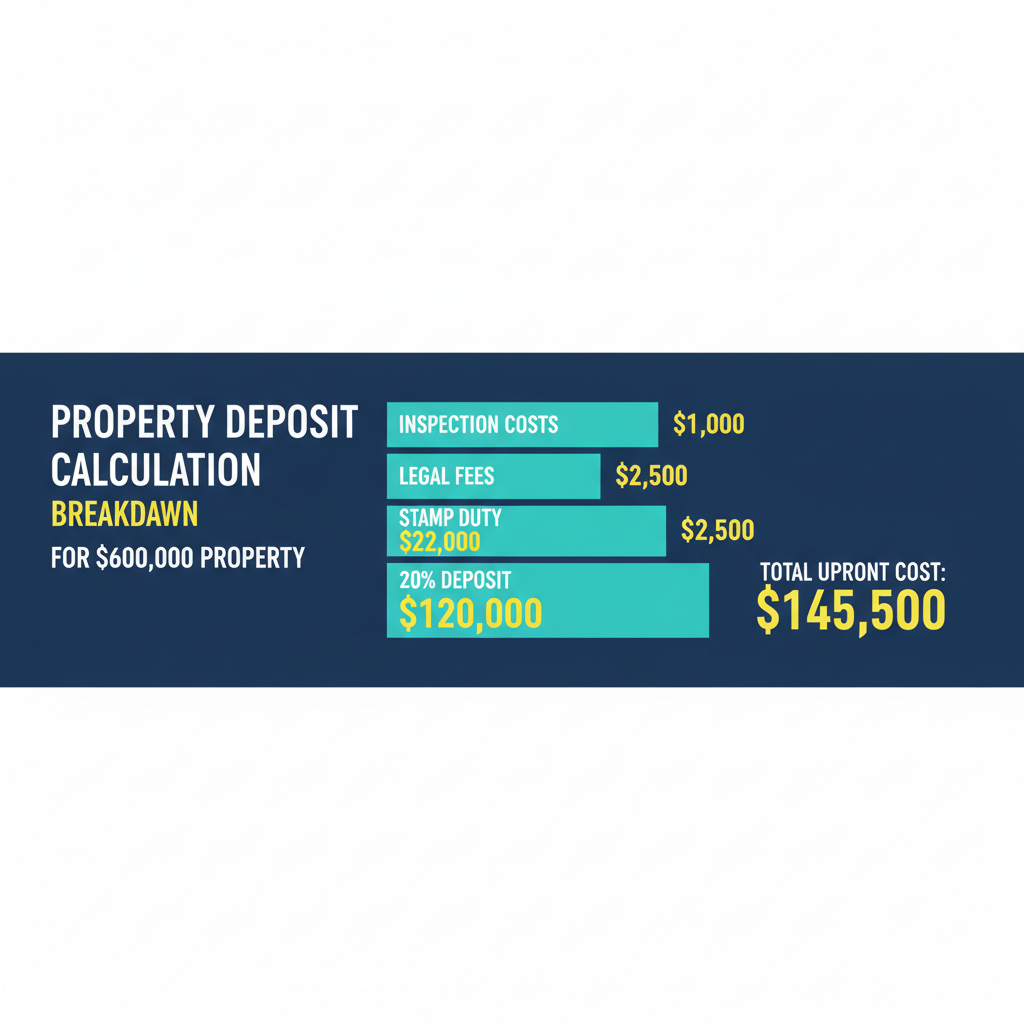
The benchmark deposit for buying investment property in Australia is 20% of the purchase price. This threshold allows you to avoid Lenders Mortgage Insurance (LMI) while securing standard interest rates from most lenders.
For a $600,000 investment property, you'll need $120,000 in deposit plus an additional $20,000 to $30,000 to cover stamp duty, legal fees, building and pest inspections, and other transaction costs. Total upfront capital required: approximately $140,000 to $150,000.
Some lenders will approve investment loans with deposits as low as 10%, but this triggers LMI premiums ranging from $10,000 to $20,000+ depending on loan size and LVR. While capitalizing LMI preserves your cash today, it adds $30,000 to $40,000 in interest costs over a 30-year loan term at 6%.
The strategic question isn't whether you can buy with a lower deposit but whether you should. In strong growth markets like Brisbane and Perth, paying LMI to enter 12 months earlier can deliver capital gains exceeding the LMI cost. In flat or uncertain markets, waiting to accumulate 20%+ may be prudent.
Using Equity from Existing Property
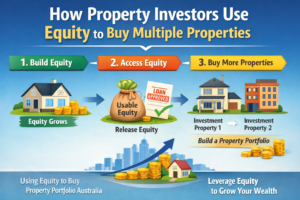
For investors who already own property, accessing existing equity is often the fastest path to investment property purchase without needing to save additional cash deposits.
Equity is the difference between your property's current value and your outstanding loan balance. Lenders typically allow you to borrow up to 80% of your property's value. Here's a worked example:
- Current home value: $800,000
- Existing loan balance: $400,000
- Maximum borrowing at 80% LVR: $640,000
- Less existing loan: $400,000
- Accessible equity: $240,000
This $240,000 can fund the deposit and purchase costs for a $600,000 investment property with no cash required. You'll establish a separate investment loan for the new property while increasing the loan against your home.
Equity access strategies require careful cash flow management. You're now servicing two loans, and lenders assess both when determining serviceability. This is where working with experienced mortgage brokers and property strategists like those at Buyers Agency Australia becomes invaluable.
Government Grants and Schemes for Property Investors
While most government assistance targets first-home buyers rather than investors, strategic investors can structure purchases to access grants in specific circumstances.
The First Home Owner Grant (FHOG) provides $10,000 to $30,000 depending on state, but requires you to occupy the property as your principal place of residence for 6 to 12 months. Some investors use an 'owner-occupier-first' strategy: purchase with the FHOG, live in the property for the required period, then convert it to an investment property while buying their next home.
This approach requires discipline and doesn't suit everyone. You must genuinely intend to occupy the property (FHOG fraud carries severe penalties), and you'll delay building your investment portfolio. But for first-time investors, capturing a $30,000 Queensland FHOG or $50,000 Northern Territory HomeGrown grant can provide a significant equity boost that accelerates future purchases.
State-by-state FHOG summary for 2026:
- Queensland: $30,000 for new homes under $750,000 (extended to June 30, 2026)
- New South Wales: No active FHOG (stamp duty concessions only)
- Victoria: $10,000 for new homes in regional areas
- South Australia: $15,000 for new homes (no price cap)
- Western Australia: $10,000 for new homes under $750,000 metro/$1M regional
- Northern Territory: $50,000 for new homes (no price cap, until September 2026)
For detailed FHOG eligibility and application processes, visit firsthome.gov.au.
Choosing the Right Investment Property Location
Capital City vs Regional Investment Opportunities
The capital city versus regional debate dominated property investment conversations in 2026. While regional markets delivered 9.7% growth in 2025 compared to 8.2% across combined capitals, long-term data consistently shows capital cities outpace regional areas over 20+ year periods.
Capital cities offer:
- Deeper buyer pools when you eventually sell
- Greater employment diversity supporting rental demand
- Superior infrastructure investment and amenity
- More robust markets during downturns
Regional markets counter with:
- Lower entry prices ($400,000–$550,000 vs $700,000–$1.2M)
- Higher gross rental yields (5%–7% vs 3%–4.5%)
- Lifestyle migration supporting population growth
- Targeted infrastructure creating pockets of genuine opportunity
The sophisticated approach isn't choosing one or the other but understanding which capital suburbs and which regional towns offer the best risk-adjusted returns for your specific strategy. Buying a $400,000 house in a mining-dependent regional town 300km from the nearest capital carries vastly different risk than buying in Geelong (Melbourne's fastest-growing corridor) or the Sunshine Coast (Queensland's infrastructure boom).
High-Growth Suburbs and Emerging Markets
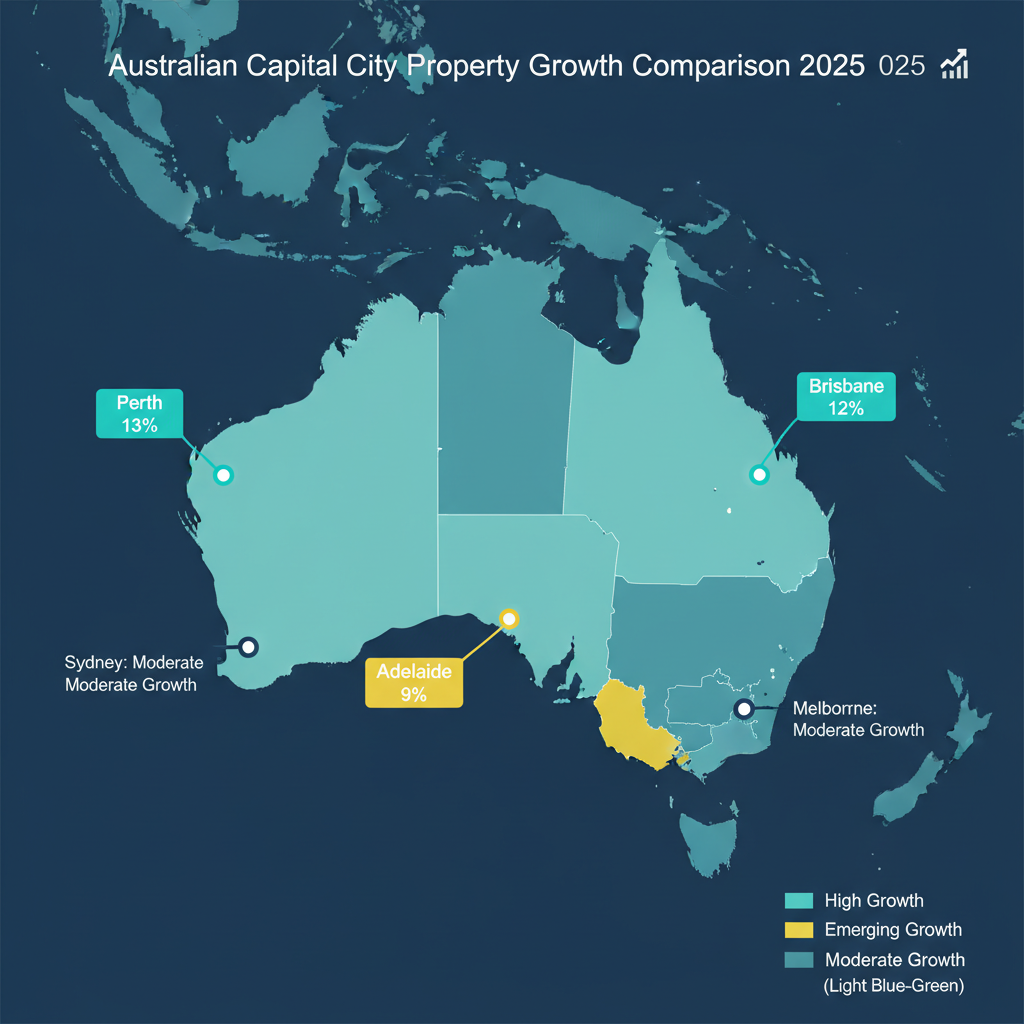
According to Propertyology's 2026 market outlook, Adelaide, Brisbane, and Perth will underpin 6%+ growth in house values through 2026, assuming stable interest rates. Sydney and Hobart may also achieve 6% growth, while Melbourne and Canberra face milder improvement.
Specific suburbs showing strong fundamentals in early 2026 include:
Brisbane Growth Corridors:
- Chermside: Major retail hub, hospital precinct expansion, and Olympic infrastructure investment
- Kedron: Proximity to airport and gateway upgrades
- Carindale: Established affluence with limited new supply
Perth Opportunity Zones:
- Maddington: Median house price $620,000, 8.96% annual growth, 5.2% yield
- Baldivis: Family market 45km south, infrastructure expansion
- Ellenbrook: Established community, improving connectivity
Adelaide Steady Performers:
- Prospect: Inner-north gentrification, sub-$750,000 entry
- Glenelg: Beachside lifestyle, permanent demand
- Morphett Vale: Southern growth corridor, affordability play
Remember that individual suburbs within cities can deliver dramatically different results. In Brisbane, inner-ring suburbs like Paddington and New Farm trade on different fundamentals than outer growth areas like Greater Flagstone or Ripley Valley.
Infrastructure Projects Driving Property Values
Infrastructure investment creates tangible property value uplift, but timing matters. The peak capital growth typically occurs before major infrastructure completes, as sophisticated buyers price in future amenity improvements.
Major projects shaping 2026 investment decisions:
Melbourne Metro Tunnel (Opened December 2025):
Full services commenced February 2026, creating winners in Sunshine, Pakenham, and Cranbourne East. Properties within 800m of new stations saw 4%–8% growth premiums in the 18 months preceding opening.
Brisbane Olympic Infrastructure (2032):
Brisbane City, South Bank, Hamilton, and Albion continue benefiting from pre-Olympic investment. However, investors should note that Olympic host cities often experience price softening 2–3 years post-event as speculative demand evaporates.
Sydney Western Sydney Airport (Opening 2026):
Badgerys Creek, Rossmore, and surrounding suburbs experienced 15%–25% growth 2022–2025. Future gains may moderate as the 'infrastructure premium' is now priced in.
Perth Metronet Expansion:
Forrestfield-Airport Link and Yanchep Rail Extension continue supporting northern and eastern corridor growth. Morley, Bayswater, and Ellenbrook benefit from improved connectivity.
The smartest infrastructure plays involve identifying the next major project 2–5 years before construction rather than buying after announcements make headlines.
Understanding Property Investment Tax Strategies
Negative Gearing and Its Benefits
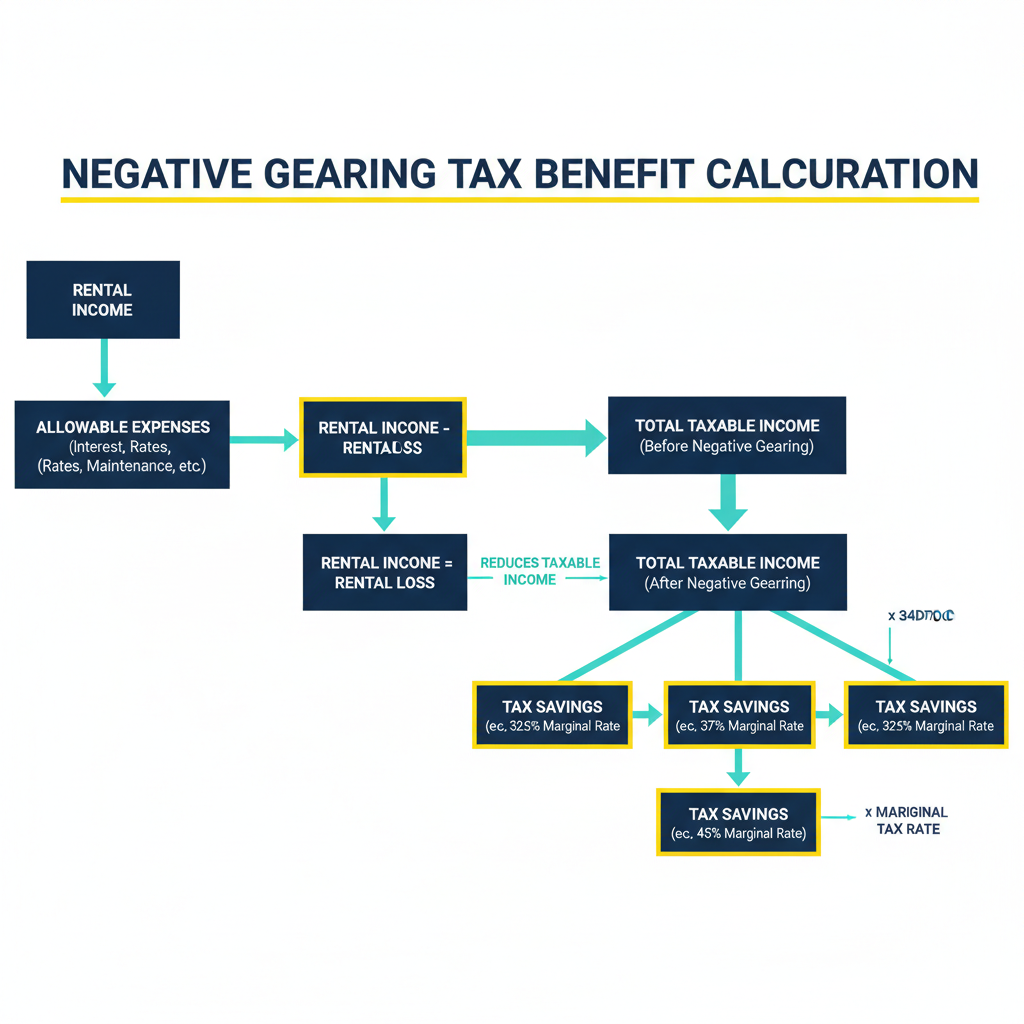
Negative gearing remains Australia's most widely used property tax strategy in 2026. Approximately 1 million Australians negatively gear roughly 2 million investment properties, claiming an average $8,700 annual deduction translating to roughly $2,700 in after-tax benefit.
Negative gearing occurs when your investment property costs more to own than it generates in rent, creating a loss you can claim as a tax deduction against your salary or other income.
Simple negative gearing example:
- Annual rental income: $26,000
- Annual interest (6% on $540,000): $32,400
- Other expenses (rates, insurance, management): $6,000
- Total rental loss: $12,400
If you earn $120,000 annually (37% tax bracket including Medicare levy), this $12,400 loss reduces your taxable income to $107,600, saving you $4,588 in tax. Your out-of-pocket holding cost is $7,812 per year rather than $12,400.
Negative gearing benefits high-income earners more than low-income earners due to progressive tax rates. Someone earning $200,000 (47% bracket) saves $5,828 on the same $12,400 loss, while someone earning $60,000 (21% bracket) saves only $2,604.
Despite recurring political debate, negative gearing remains unchanged as of 2026. The ACTU proposed limiting it to one investment property in August 2025, but both major parties ruled out changes. According to Property Investment Professionals' analysis, the probability of abolition through 2030 remains low.
Capital Gains Tax and the 50% Discount
When you eventually sell your investment property, you'll pay Capital Gains Tax (CGT) on the profit. However, Australia's 50% CGT discount for assets held 12+ months creates powerful wealth-building incentives.
CGT calculation example:
- Purchase price (2026): $600,000
- Purchase costs (stamp duty, legal): $30,000
- Cost base: $630,000
- Sale price (2036): $1,200,000
- Selling costs (agent, legal): $30,000
- Net proceeds: $1,170,000
- Capital gain: $540,000
With the 50% discount, only $270,000 is added to your taxable income in the sale year. At 37% marginal rate, your CGT bill is approximately $99,900. After 10 years of negative gearing tax benefits totaling $45,880 (illustrative), your after-tax gain is approximately $440,100.
The 50% CGT discount does not apply to properties held less than 12 months, so investors should plan hold periods carefully. Selling at 11 months costs you half your capital gain in additional tax—a $270,000 mistake on the example above.
CGT is calculated in the financial year you settle the sale, not the year you sign the contract. Strategic investors coordinate settlement timing with other income events (taking parental leave, sabbatical years, retirement) to minimize marginal tax rates in the CGT year.
Depreciation and Tax Deductions for Property Investors
Depreciation allows you to claim the declining value of your investment property's building structure and fixtures as annual tax deductions, even though you haven't spent any cash.
Australia's depreciation rules split deductions into two categories:
Division 43 (Capital Works): Building structure depreciation
- 2.5% annual deduction for buildings constructed post-September 1987
- 4% annual deduction for buildings constructed pre-September 1987
- Only available for the original owner of new builds constructed after May 2017
Division 40 (Plant and Equipment): Fixtures and fittings
- Hot water systems (typically 5–7 year effective life)
- Ovens, cooktops, dishwashers (6–8 years)
- Carpet, blinds, air conditioning (5–10 years)
- Availability depends on purchase date and building age
A quantity surveyor prepares a depreciation schedule detailing your property's claimable deductions. For a $600,000 property with $450,000 building value and $50,000 in plant and equipment, first-year depreciation might total $15,000–$18,000.
At 37% marginal rate, this creates $5,550–$6,660 in tax savings without spending a dollar. Depreciation schedules cost $600–$1,200 but typically pay for themselves within weeks through increased refunds.
For detailed depreciation rules, visit the ATO's rental property deductions guidance.
Working with a Buyers Agent for Investment Property
What a Buyers Agent Does for Property Investors
A buyers agent (also called a buyer's advocate) is a licensed professional who works exclusively for property buyers rather than sellers. Unlike selling agents who have a legal duty to maximize sale prices for vendors, buyers agents have a fiduciary duty to secure the best possible outcome for purchasers.
For investors learning how to invest in property in Australia, buyers agents provide:
- Market research and suburb analysis: Identifying high-growth locations matching your investment criteria
- Off-market property access: Connecting you to properties never publicly advertised
- Property shortlisting: Inspecting and evaluating properties on your behalf
- Due diligence coordination: Building and pest inspections, contract reviews, strata reports
- Negotiation and bidding: Securing properties at or below market value
- Settlement support: Managing the transaction through to completion
Dragan Dimovski and the team at Buyers Agency Australia bring over 20 years of investment property experience and a personal $10M+ portfolio to every client engagement. Rather than charging percentage-based fees that create conflicts of interest, the agency operates on a transparent fixed-fee model aligned with client outcomes.
Buyers Agent Fees and Fee Structures
Buyers agent fees in Australia typically range from $8,000 to $30,000+ depending on property price, location, and service scope. Two main fee models dominate the market:
Percentage-based fees: 1%–3% of purchase price
- $600,000 property = $6,000–$18,000
- $1,000,000 property = $10,000–$30,000
- Creates incentive misalignment (higher price = higher fee)
Fixed-fee model: Set fee regardless of purchase price
- Typical range: $12,000–$18,000 for full service
- Aligned with buyer outcomes (lower price = same fee)
- Preferred by sophisticated investors
Buyers Agency Australia operates exclusively on fixed fees, ensuring their economic incentive aligns with yours: securing the best property at the lowest defensible price. When you save $30,000 through expert negotiation, you keep the full $30,000 rather than paying a percentage back to your buyers agent.
Additional fee considerations:
- Retainer vs success-based: Some agents charge upfront retainers ($3,000–$5,000) credited against final fees
- Search-only vs full-service: Search-only services ($5,000–$8,000) provide research without bidding
- Buyer-paid vs vendor-paid: Buyers agents are always buyer-paid (avoiding conflict of interest)
For detailed fee breakdowns and service inclusions, visit Buyers Agency Australia's fee structure page.
How Dragan Dimovski and Buyers Agency Australia Support Investors

Dragan Dimovski's approach to property investment advocacy centers on three principles: data-driven selection, transparent pricing, and long-term portfolio modeling.
Unlike agencies that recommend properties based on vendor relationships or commission arrangements, Buyers Agency Australia's proprietary 10-year portfolio modeling projects cash flow, equity growth, and tax outcomes across entire investment lifecycles. This quantitative framework ensures every purchase aligns with your specific wealth-creation goals.
The agency's investment process:
Discovery and Strategy (Weeks 1–2):
Comprehensive financial assessment, goal setting, borrowing capacity analysis, and investment criteria development. Clients receive a documented investment strategy serving as their portfolio roadmap.
Market Research and Property Identification (Weeks 2–4):
Data analysis across target markets, off-market property sourcing, and shortlist creation. The team inspects properties personally, presenting only opportunities meeting strict investment criteria.
Due Diligence and Offer (Weeks 4–6):
Building and pest inspections, contract reviews, comparable sales analysis, and negotiation strategy development. Dragan's team presents offers and manages vendor negotiations through to exchange.
Settlement and Handover (Weeks 6–8):
Finance approval coordination, settlement management, and property handover. Clients receive comprehensive documentation supporting tax claims and depreciation schedules.
Buyers Agency Australia's national coverage spans all major Australian capital cities, with particular strength in Brisbane, Perth, and Sydney growth corridors where the team's boots-on-the-ground relationships deliver consistent off-market access.
For investors serious about building wealth through property, working with a buyers agent isn't an expense—it's an investment that typically pays for itself through superior property selection and negotiation outcomes.
Step-by-Step Property Investment Process for 2026
Step 1: Set Your Investment Goals and Strategy
Successful property investment starts with clarity about what you're trying to achieve. Are you building passive income to supplement your salary? Creating long-term wealth through capital growth? Generating equity to fund future purchases?
Your goal determines your strategy:
Capital Growth Focus:
- Target blue-chip suburbs in major capitals
- Accept lower rental yields (3%–4%)
- Plan 7–10 year hold periods
- Prioritize land value over building value
- Best for high-income earners able to fund negative gearing
Cash Flow Focus:
- Target regional markets and outer suburbs
- Seek rental yields 5.5%+
- Consider dual-income properties (duplexes, townhouses)
- Prioritize tenant demand over prestige
- Best for lower-income investors or approaching retirement
Hybrid Approach:
- Balance growth potential with reasonable yield
- Target growth corridors with infrastructure investment
- Seek properties $550,000–$750,000 range
- Most popular strategy for building scalable portfolios
Document your strategy in writing. When you're considering a property that doesn't fit your criteria, your written strategy provides discipline to walk away from emotional decisions.
Step 2: Get Pre-Approval and Confirm Borrowing Power
Securing pre-approval before property searching delivers three critical advantages:
- Budget certainty: Know exactly what you can afford
- Competitive edge: Vendors and agents take pre-approved buyers seriously
- Speed to settlement: Move quickly when the right property appears
Pre-approval (also called conditional approval) involves submitting full financial documentation to a lender who assesses your borrowing capacity and issues formal approval subject to property valuation.
Documents required:
- Payslips (2–3 months) or tax returns (2 years for self-employed)
- Bank statements (3–6 months all accounts)
- Current asset and liability statement
- Identification documents
- Employment verification
Borrowing capacity in 2026 faces tighter constraints than previous years due to APRA's debt-to-income limits and higher serviceability buffers. A household earning $150,000 might borrow $650,000–$750,000 for an investment property depending on existing debts and living expenses.
Pre-approval typically lasts 90 days, though some lenders offer 120-day approvals. Start your property search immediately after approval to maximize the validity period.
Working with an experienced mortgage broker saves time and improves approval rates. Brokers access 30–40 lenders compared to the 1–2 banks most borrowers approach directly, and they understand which lenders favor which borrower profiles.
Step 3: Research Markets and Shortlist Properties
Property research separates successful investors from those who buy on emotion and regret later. Effective research examines macro market trends, suburb fundamentals, and individual property characteristics.
Macro market analysis:
- Economic growth and employment trends
- Population growth and migration patterns
- Interest rate trajectory
- Government policy impacts
- Supply and demand balance
Suburb fundamentals:
- Median price trends (5-year history)
- Days on market and auction clearance rates
- Rental vacancy rates and yield
- Infrastructure projects and rezoning
- Demographic profile and socioeconomic indicators
Individual property evaluation:
- Land size and configuration
- Building quality and condition
- Street appeal and position
- Comparable sales analysis
- Rental demand indicators
Data sources for 2026 research include CoreLogic, Domain, SQM Research, and Australian Bureau of Statistics. Paid subscription services like Suburbtrends and Pricefinder provide deeper analytics.
For time-poor professionals, engaging a buyers agent eliminates hundreds of hours of research while ensuring you don't miss critical red flags that only experience identifies.
Step 4: Conduct Due Diligence and Make an Offer
Once you've identified a property meeting your investment criteria, thorough due diligence protects you from costly mistakes.
Essential due diligence:
- Building and pest inspection: Identifies structural issues, timber pests, and safety hazards ($400–$600)
- Contract review: Solicitor or conveyancer examines sales contract for unfavorable terms ($800–$1,500)
- Strata report (units/townhouses): Reviews body corporate financials, meeting minutes, and building condition ($150–$300)
- Title search: Confirms legal ownership and identifies easements or covenants ($30–$100)
- Comparable sales analysis: Validates asking price against recent market transactions (free via agents or paid services)
Red flags requiring caution or renegotiation:
- Structural cracks, subsidence, or water damage
- Asbestos (particularly pre-1990 buildings)
- Unapproved modifications or building code violations
- Strata deficits or special levies upcoming
- Flood zones or bushfire-prone land
- Properties with tenant-in-place below market rent
Negotiation in 2026's market requires sophisticated strategy. In high-demand markets, offers must be competitive yet defensible. In softening markets, patience and multiple offers often secure 5%–10% discounts.
Dragan Dimovski's negotiation approach combines comprehensive comparable sales analysis with vendor motivation research, auction psychology expertise, and boots-on-the-ground agent relationships cultivated over 20+ years. The result: consistent buyer savings averaging $25,000–$50,000 below asking prices across 2024–2025 transactions.
Step 5: Exchange Contracts and Complete Settlement
After offer acceptance, the formal purchase process involves exchanging contracts and progressing to settlement.
Exchange of contracts:
- Buyer and seller sign identical contracts
- Buyer pays 10% deposit (held in trust)
- 'Cooling off' period begins (0–5 days depending on state)
- Building and pest, finance, and other conditions commence
Condition satisfaction period (typically 14–21 days):
- Complete all due diligence
- Obtain formal finance approval
- Property valuation by lender
- Address any issues identified
- Proceed unconditional or terminate contract
Settlement (typically 30–90 days from exchange):
- Final loan approval and documents signed
- Solicitor/conveyancer coordinates settlement
- Balance of purchase price paid to vendor
- Ownership transfers to buyer
- Keys and property handover
Post-settlement actions for investors:
- Establish landlord insurance ($300–$600 annually)
- Engage property manager (7%–8% of weekly rent)
- Commission depreciation schedule ($600–$1,200)
- Set up record-keeping for tax purposes
- Notify ATO of rental property commencement
Many new investors underestimate post-purchase costs. Budget $5,000–$10,000 for immediate repairs, cleaning, minor upgrades, and first-tenant marketing. Even 'investment-ready' properties typically need minor work.
Common Property Investment Mistakes to Avoid
Buying in the Wrong Location
Location determines 80% of your investment's long-term performance. No amount of cosmetic renovation or property management can overcome a fundamentally poor location choice.
Common location mistakes:
- Chasing high yields in remote regional towns: 8% yield means nothing if capital values fall 10%
- Buying in single-industry towns: Mining and tourism-dependent markets face boom-bust volatility
- Ignoring infrastructure timelines: Buying 'near' future infrastructure 10 years before construction delivers no value
- Falling for developer marketing: Master-planned estates on city fringe offer lifestyle, not investment performance
- Buying sight-unseen: Never purchase investment property without personal inspection or trusted representative
Location research requires looking beyond current prices to understand future value drivers. Is the suburb attracting families or losing population? Are employers expanding or contracting? Is the government investing or neglecting infrastructure?
Buyers Agency Australia's suburb scoring methodology analyzes 40+ data points across economic, demographic, infrastructure, and supply categories to objectively rank investment potential across Australia's 400+ township markets.
Underestimating Holding Costs
Negative gearing sounds attractive until you realize you're funding $500–$1,000 monthly shortfalls from your salary. Many investors underestimate true holding costs and face financial stress when interest rates rise or tenants vacate.
Realistic holding cost budget for $600,000 property:
- Loan interest (6% on $480,000): $28,800 annually
- Council rates: $1,800
- Water charges: $1,200
- Building insurance: $1,000
- Landlord insurance: $500
- Property management (8% of $26,000 rent): $2,080
- Repairs and maintenance: $2,000
- Strata fees (if applicable): $2,000–$8,000
- Total annual costs: $39,380–$45,380
- Less rental income: $26,000
- Annual shortfall: $13,380–$19,380
- Less tax benefit (37% bracket): $4,950–$7,170
- After-tax holding cost: $8,430–$12,210
Can you comfortably fund $700–$1,000 monthly from your salary for 5–10 years? If interest rates rise 1% (adding $4,800 annually), can you still afford the property?
Successful investors maintain 6–12 month emergency buffers covering tenant vacancies, unexpected repairs, and rate increases. Don't extend yourself so far that a single financial setback forces property sale at an inopportune time.
Ignoring Tax Obligations and Structuring
Property ownership structure (individual, joint, trust, company) creates dramatically different tax outcomes. Many investors purchase in their personal name by default without considering whether alternative structures better suit their circumstances.
Individual ownership:
- Simplest structure
- Full access to 50% CGT discount
- Losses offset personal income
- No asset protection from lawsuits
Joint ownership (tenants in common):
- Can split ownership unequally (e.g., 99% high-income, 1% low-income spouse)
- Losses flow to respective owners
- Requires careful documentation
Trust ownership:
- Provides asset protection
- Flexible income distribution
- More complex administration ($1,500–$3,000 annually)
- Limited bank lending in 2026 due to APRA restrictions
Company ownership:
- CGT discount unavailable
- Losses trapped in company
- Generally unsuitable for residential property
The 'right' structure depends on your income, asset protection needs, estate planning goals, and future investment intentions. Restructuring after purchase is expensive or impossible, so obtain accounting and legal advice before exchange.
For comprehensive structuring guidance, consult Buyers Agency Australia's recommended accounting partners who specialize in property investment tax strategy.
Frequently Asked Questions
How much deposit do I need to invest in property in Australia?
The standard deposit for investment property is 20% of the purchase price plus transaction costs. For a $600,000 property, you need $120,000 deposit plus $20,000–$30,000 for stamp duty, legal fees, and inspections—approximately $140,000–$150,000 total.
Can I use my superannuation to invest in property?
Yes, through a Self-Managed Super Fund (SMSF), but strict rules apply. The property must be held solely for retirement benefit provision, cannot be lived in by you or related parties, and requires specialist SMSF administration.
What are the best cities for property investment in 2026?
Brisbane, Perth, and Adelaide show strongest fundamentals with 6%+ forecast growth supported by local economic strength and relative affordability. Sydney and Melbourne offer long-term stability but face near-term affordability constraints.
Is negative gearing still available in 2026?
Yes, negative gearing remains unchanged despite recurring political debate. Approximately 1 million Australians negatively gear investment properties, claiming rental losses against salary income to reduce taxable income and annual tax bills.
How do I find high-growth investment properties?
High-growth properties combine strong location fundamentals (employment diversity, population growth, infrastructure investment) with individual property characteristics (land size, scarcity, owner-occupier appeal). Working with experienced buyers agents provides access to off-market opportunities and expert market analysis.
Start Building Your Property Portfolio with Expert Support
Learning how to invest in property in Australia in 2026 requires more than reading guides—it demands expert execution, market-specific knowledge, and disciplined strategy.
Dragan Dimovski and the Buyers Agency Australia team have helped hundreds of investors build multi-million dollar portfolios through data-driven property selection, transparent fixed-fee advocacy, and comprehensive 10-year portfolio modeling.
Whether you're purchasing your first investment property or scaling from one to five+ properties, the agency's national coverage, off-market access, and 20+ years of investment experience deliver results that consistently exceed the modest engagement fee.
Ready to move from research to action? Book a free strategy session to discuss your investment goals, review your borrowing capacity, and receive personalized market recommendations tailored to your wealth-creation objectives.
For time-poor professionals who recognize that expert guidance accelerates results while minimizing costly mistakes, working with Buyers Agency Australia isn't an expense—it's the smartest investment you'll make in your property journey.