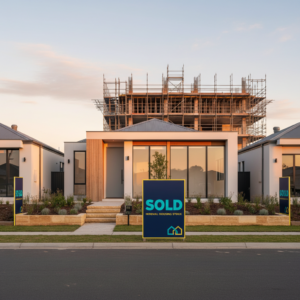
Property hotspots Australia are suburbs experiencing or about to experience above-average capital growth driven by infrastructure investment, population growth, and limited housing supply. Identifying these areas early, before prices spike, requires analyzing leading indicators including new transport projects, supply-demand ratios, rental vacancy rates, and demographic shifts.
If you're searching for Buyers Agency Australia's services, you already know the stress of trying to pick the right suburb at the right time. Missing a boom by 12 months can cost tens of thousands in lost equity.
The truth is, most investors only recognize property hotspots after median prices have already jumped. By then, entry points are expensive and rental yields have compressed. Smart investors track infrastructure announcements, days on market, and auction clearance rates well before the crowd arrives.
This guide reveals the practical, data-backed methods professional buyers agents use to uncover high growth suburbs Australia before capital growth accelerates.
What Is a Property Hotspot
Defining a Hotspot vs General Market Growth
A property hotspot is a suburb or region delivering price growth significantly above the national or state average. While Australian dwelling values rose 8.6% nationally in 2025 according to CoreLogic, genuine hotspots posted double-digit gains.
Perth led all capitals with 13% annual house price growth, while Brisbane achieved 9%. These aren't random spikes. They reflect concentrated demand meeting constrained supply.
Hotspots differ from general market movements. National trends lift most areas slowly. Hotspots surge due to localized catalysts: a new rail line, rezoning, or sudden population inflows.
Short-Term Hotspots vs Sustainable Growth Areas
Some hotspots flame out quickly. Regional towns that boomed during COVID-19 saw prices flatten by late 2025 as workers returned to cities.
Sustainable property investment hotspots combine multiple growth drivers. Western Sydney suburbs near the new airport, for example, benefit from transport upgrades, employment hubs, and ongoing rezoning. That layered demand supports multi-year growth cycles.
Short-term hotspots rely on one trigger, often speculative. Sustainable areas stack infrastructure, jobs, and population growth over 5 to 10 years.
Why Timing Matters for Investors
Buying before a boom multiplies returns. Leppington in Sydney's southwest posted a 17.67% 10-year average annual growth rate, rewarding early entrants who purchased before the Western Sydney Airport announcement.
Once a suburb hits the "Hot 100" lists, competition intensifies. Auction clearance rates climb, vendor discounting shrinks, and days on market fall. Late arrivals pay premium prices for compressed yields.
Timing also impacts borrowing capacity. Entering early lets you secure finance at lower valuations, then refinance against equity gains to fund the next purchase.
Core Characteristics of Australian Hotspots
Hotspots share recurring traits. They sit in growth corridors with confirmed infrastructure spending. Ripley, Plainland, and Logan Central in Queensland's southeast all benefit from transport links between Brisbane, Ipswich, and the Gold Coast.
Affordability relative to neighboring suburbs drives spillover demand. Ashbury in Sydney's inner west offers period homes at $2.23 million, well below adjacent Dulwich Hill, attracting buyers priced out of premium pockets.
Tight rental markets signal strong tenant demand. Suburbs with vacancy rates below 1.5% and rising rents indicate undersupply, a precursor to capital growth. Darwin's rental vacancy sat at 0.76% in late 2025, fueling 18% house price growth that year.
Signs a Suburb Is About to Boom
Rising Buyer Enquiry and Auction Activity
Increased buyer competition appears before price spikes. Track auction clearance rates in your target suburbs. Rates above 70% suggest demand outstrips supply.
Adelaide's clearance rate hit 81% in late 2025, the highest among capitals. That intensity preceded 8% annual house price growth. When clearance rates climb consistently over three months, momentum is building.
Days on market also reveal urgency. Perth properties averaged 31 days on market in December 2025, down from 40+ days a year earlier. Faster sales indicate buyers fear missing out.
Vendor Discounting Trends
Vendor discounting measures the gap between listing price and final sale price. Low discounts mean buyers are meeting or exceeding asking prices.
Nationally, capital city vendors discounted 2.9% in late 2025. In hotspots, discounting often falls below 2% or disappears entirely. Adelaide vendors barely discounted in 2025 as buyer demand stayed strong.
Rising asking prices alongside shrinking discounts confirm seller confidence. Monitor this across 10 to 20 recent sales in your suburb to spot the trend early.
Media Coverage and Developer Interest
Developers and institutional investors move before retail buyers. Large land purchases, rezoning applications, and new project launches signal professional confidence.
Austral in Sydney's southwest saw master-planned communities expand rapidly, anticipating 55,000 future residents. Developer activity preceded the suburb's price surge.
Media attention follows, not leads. By the time national outlets feature a suburb, early gains are gone. Use developer announcements and Infrastructure Australia project lists to front-run the headlines.
Changes in Rental Demand and Yields
Rising rents indicate tenant competition. National rents jumped 5.4% annually to January 2026, but hotspots exceeded 7%.
Gross rental yields above 5% in capital cities or 6% regionally attract investors. Maddington in Perth offered 5.2% yields for houses and 6.28% for units in 2025, drawing cash-flow focused buyers.
Watch rental vacancy rates monthly. A drop from 2% to 1% signals tightening supply. Cairns held below 1.5% vacancy for five years, supporting both rent and price growth.
Infrastructure and Population Growth
How Transport Projects Drive Demand
Transport infrastructure reshapes property values. Sydney Metro West, connecting Parramatta to the CBD, boosted interest in Westmead and Strathfield well before completion.
Melbourne's Suburban Rail Loop and Metro Tunnel, opening late 2025, increased demand in Box Hill and West Melbourne. Properties near new stations see price premiums of 10% to 20% once projects are confirmed.
Road upgrades matter too. The M12 Motorway linking Western Sydney Airport to the motorway network supports growth in Oran Park and Leppington. Monitor state infrastructure pipelines for upcoming projects.
Employment Hubs and Economic Zones
Jobs drive housing demand. Western Sydney's Bradfield City Centre, a 60-hectare commercial precinct near the new airport, will create thousands of jobs and pull workers westward.
Regional hubs with diversified economies outperform single-industry towns. Townsville, Cairns, and Mackay combine defense, education, health, and tourism, creating resilient demand.
Proximity to universities also supports rental demand. Charles Darwin University in Millner and Rapid Creek underpins Darwin's tight rental market and strong yields.
Population Growth and Migration Patterns
Queensland recorded the highest net interstate migration, gaining 24,015 people in the year to March 2025. Suburbs absorbing these inflows, like Griffin and Petrie in Greater Brisbane, experience sustained demand.
Overseas migration also concentrates in capitals. NSW gained 96,761 net overseas migrants in the year to March 2025, the highest nationally. This influx supports rental and purchase demand in Sydney's affordable outer suburbs.
Australia's population grew 1.6% annually in 2025, adding 423,400 people. Western Australia's 2.3% growth rate, fastest among states, fueled Perth's property boom.
Schools, Hospitals, and Lifestyle Amenities
Families prioritize school catchments. Suburbs with highly rated public and private schools command premiums. Griffith and Red Hill in Canberra fall within top-tier catchments, supporting consistent demand.
Hospital expansions signal government investment. The Liverpool Hospital redevelopment, completing in 2027, improves amenity in Sydney's southwest and attracts healthcare workers.
Lifestyle amenities, parks, retail precincts, and cultural hubs, improve liveability. Urban renewal projects like Brisbane's Queens Wharf and Adelaide's Lot Fourteen reshape entire suburbs, driving gentrification and price growth.
Supply vs Demand
Reading Vacancy Rates and Stock Levels
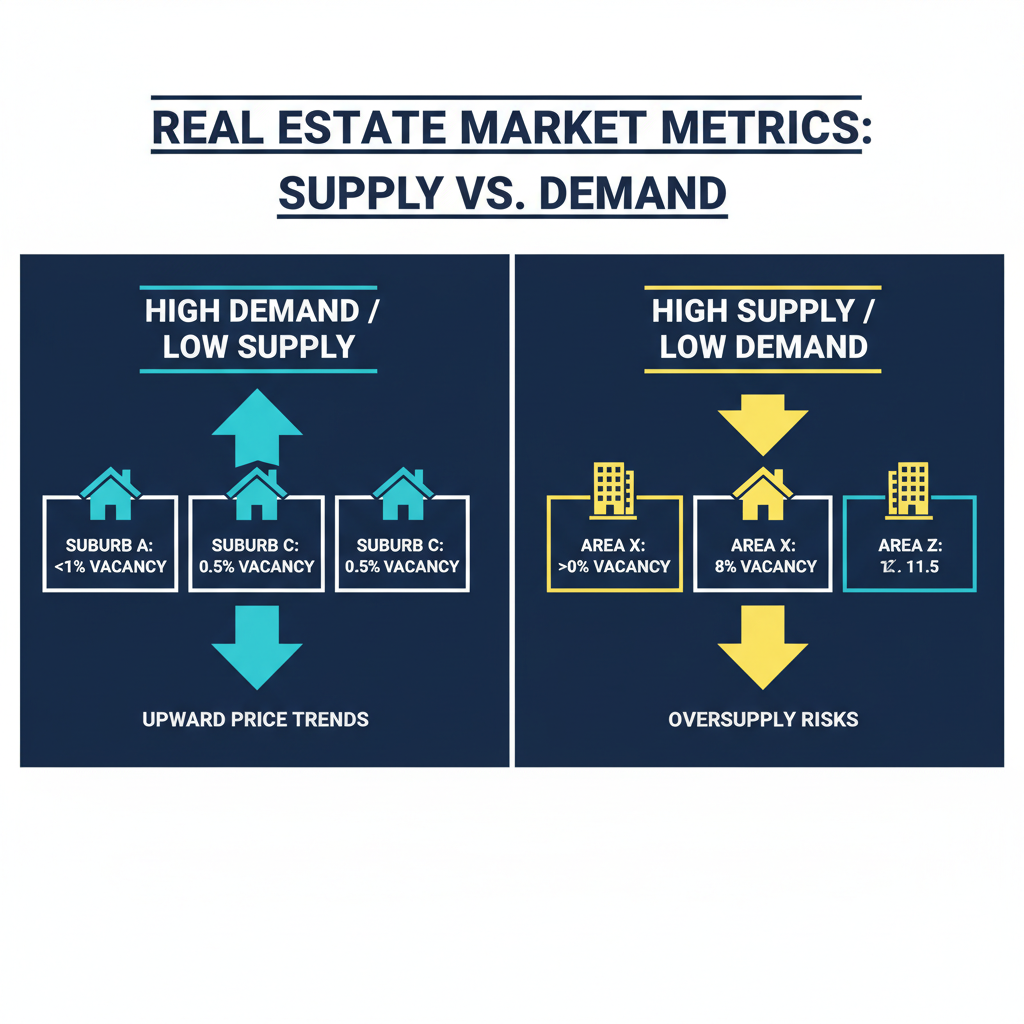
Rental vacancy rates below 2% indicate tight supply. National vacancy eased to 1.7% in January 2026, but hotspots often sit below 1%.
Perth's vacancy rate remained under 1% through 2025, supporting 13% annual price growth. Brisbane's 0.76% vacancy drove both rent and price increases.
Stock on market (SOM) measures properties for sale as a percentage of total dwellings. SOM below 0.3% signals low supply. Adelaide's 0.20% SOM in late 2025 meant buyers faced limited choice, intensifying competition.
Days on Market as a Demand Signal
Properties selling quickly indicate strong buyer interest. Adelaide's median 23 days on market in 2025 reflected high demand.
Compare current days on market to the 12-month average. A drop from 40 to 25 days over two quarters signals accelerating demand. Combine this with rising clearance rates for confirmation.
Slow-selling properties, over 60 days, suggest weak demand or oversupply. Avoid suburbs where days on market are trending upward unless prices have corrected significantly.
New Dwelling Approvals vs Population Growth
Building approvals reveal future supply. NSW dwelling approvals fell 18.8% in June 2024, worsening the supply-demand imbalance. Fewer approvals today mean tighter stock in 18 to 24 months.
Compare annual approvals to population growth. If a suburb adds 5,000 people annually but approves only 500 dwellings, undersupply intensifies.
Monitor completion rates too. Approved projects don't always finish. Construction cost inflation and labor shortages have delayed many developments, keeping actual supply below forecasts.
Identifying Oversupply Risks
Oversupply kills capital growth. Suburbs with heavy apartment approvals relative to demand face prolonged price stagnation.
Melbourne's inner-city apartment market suffered oversupply post-COVID, with values rising only 2% in 2025 versus 8% for Adelaide houses. Check rental yields and vacancy. If yields fall and vacancy rises simultaneously, oversupply is likely.
Regional towns with single major employers face oversupply risk if that employer downsizes. Diversified economies buffer this risk.
Common Investor Mistakes
Chasing Last Year's Hotspot
Buying after a suburb has already boomed locks in peak prices. Melonba in Sydney's northwest posted 192.9% growth over five years, but median prices hit $1.26 million by 2025. Late entrants face lower yields and slower future growth.
Hotspots rotate. Perth and Darwin led in 2025, but Sydney and Melbourne may rebound in 2026 as affordability improves. Focus on emerging areas, not yesterday's winners.
Ignoring Rental Yield and Cash Flow
Capital growth alone doesn't sustain portfolios. Negative cash flow strains budgets, especially if interest rates rise.
Target suburbs offering both growth and yield. Maddington in Perth delivered 8.96% annual price growth and 5.2% rental yield in 2025. That balance supports long-term holding.
Calculate after-tax cash flow before buying. Factor in rates, insurance, property management, and loan costs.
Overlooking Local Market Cycles
National trends don't dictate local performance. Sydney's median grew 6.4% annually to January 2026, but individual LGAs ranged from -4% to +13%.
Research the specific suburb and LGA. Markets within markets mean neighboring postcodes can diverge significantly. Use CoreLogic or PropTrack data for granular suburb-level insights.
Buying Based on Emotion, Not Data
Personal preferences distort investment decisions. A beachside lifestyle suburb might suit you, but if supply is high and employment limited, growth will lag.
Successful investors separate lifestyle from strategy. Use data: vacancy rates, infrastructure timelines, population forecasts, and employment trends. Let the numbers guide the decision, then visit the top three candidates.
How Buyers Agents Identify Property Hotspots Early

Dragan Dimovski's Data-Driven Approach to Suburb Selection
Buyers Agency Australia, led by Dragan Dimovski, combines 20+ years of market experience with a disciplined, data-first methodology. Dragan's approach filters out hype and focuses on measurable growth drivers.
Every suburb undergoes a multi-layer analysis: infrastructure pipeline, demographic trends, employment growth, and historical price cycles. This framework identifies suburbs 12 to 24 months before mainstream recognition.
Dragan's $10M+ personal portfolio proves the model works. He applies the same rigor to client searches, ensuring investors enter markets early with strong fundamentals.
Proprietary Research and Off-Market Networks
Buyers agents access data retail investors miss. Dragan monitors government infrastructure budgets, rezoning applications, and developer pre-sales.
Off-market networks provide early access to properties before public listing. In tight markets like Adelaide and Perth, off-market deals often transact at slight discounts, preserving equity from day one.
Proprietary databases track sales, rents, and yields suburb by suburb, updated weekly. This real-time intelligence lets buyers agents spot inflection points, rising rents, falling days on market, and increasing clearance rates, before the broader market reacts.
Case Study: Identifying Western Sydney Airport Beneficiaries
When the Western Sydney Airport was announced, Dragan and his team immediately mapped the infrastructure corridor. They identified Austral, Leppington, and Oran Park as primary beneficiaries.
By analyzing transport links, rezoning plans, and population projections, Buyers Agency Australia helped clients secure properties in these suburbs before median prices surged. Leppington's 17.67% 10-year growth rate validated the early call.
This case demonstrates the value of forward-looking analysis. Waiting for media confirmation cost later buyers tens of thousands in lost equity.
Why Independent Advice Beats Sales-Driven Recommendations
Real estate agents represent vendors. Their incentive is to sell the listed property, not necessarily to find you the best deal.
Buyers agents represent you. They're paid a fixed fee or percentage by the buyer, aligning interests. Dragan's fixed-fee model removes conflicts, ensuring recommendations are based solely on investment merit.
This independence matters most in emerging hotspots. A sales agent may push a suburb where they have listings. A buyers agent searches nationally, recommending the highest-value opportunity regardless of location.
Using Market Data and Tools

CoreLogic, SQM Research, and PropTrack Insights
CoreLogic provides the Home Value Index, tracking monthly price movements across all Australian regions. Their hedonic methodology adjusts for property attributes, giving accurate growth readings.
SQM Research publishes rental vacancy data and asking rents, updated monthly. This reveals tightening or loosening rental markets before prices react.
PropTrack, owned by REA Group, offers property reports, price estimates, and demand heatmaps. Use these tools to shortlist suburbs, then verify with on-ground research.
Government Infrastructure Announcements
Monitor Infrastructure Australia's Major Public Infrastructure Pipeline. The $242 billion pipeline for 2024-25 to 2028-29 includes transport, utilities, and social infrastructure.
State government budgets detail upcoming projects. The Queensland Government forecasts 500,000 additional people in Brisbane by 2046, driving sustained demand.
Subscribe to infrastructure newsletters and set Google Alerts for "infrastructure investment Australia" and your target states. Early awareness creates a 12 to 18-month advantage.
Rental Yield Calculators and Cash Flow Models
Calculate gross rental yield by dividing annual rent by purchase price. Yields above 5% in capitals or 6% regionally indicate strong cash flow potential.
Build a detailed cash flow model including loan repayments (principal and interest), property management (7-8% of rent), rates, insurance, and maintenance (1% of property value annually).
Use conservative rent assumptions. If the market rent is $600 per week, model at $580 to account for vacancy and rent-free periods. Stress-test against interest rate rises of 1% to 2%.
Suburb Comparison Dashboards
Create a comparison spreadsheet tracking 5 to 10 suburbs. Columns should include median price, annual growth, rental yield, vacancy rate, days on market, clearance rate, population growth, and upcoming infrastructure.
Rank each suburb on a score of 1 to 10 for each metric. Average the scores to identify top performers. Update quarterly as new data arrives.
This dashboard forces objective comparison and prevents emotional attachment to a single suburb.
Comparing Capital Cities and Regional Markets
Perth's 13% Growth vs Sydney's 6.4%
Perth led capitals with 13% annual house price growth in 2025, driven by population growth (2.3% annually), tight supply, and a recovering mining sector.
Sydney's 6.4% growth reflected affordability constraints and slower interstate migration. Median prices at $1.29 million limited buyer pools.
For investors, Perth offered higher growth and better yields (4-5% gross) in 2025. Sydney's appeal lies in long-term stability and larger tenant pools.
Brisbane's Olympic Infrastructure Boom
Brisbane's 2032 Olympics triggered a $6.3 billion infrastructure pipeline including Cross River Rail and Brisbane Metro. Suburbs like Coorparoo and Herston benefit directly.
Brisbane's 0.76% rental vacancy and 9% annual price growth in 2025 attracted interstate investors. Affordability relative to Sydney and Melbourne remains a key draw.
The "Golden Arc" from Sunshine Coast to Gold Coast offers diversified opportunities, from lifestyle coastal suburbs to inland growth corridors.
Adelaide and Darwin's Turnaround Stories
Adelaide posted 8% annual house price growth in 2025 after years of underperformance. Undersupply, interstate migration, and infrastructure investment drove the rebound.
Darwin recorded 18% growth in 2025, the highest among capitals. Rental vacancy below 1%, defense sector growth, and infrastructure upgrades supported the surge.
Both cities prove that patient investors who buy in undervalued markets before the inflection point can capture outsized gains.
Regional Hubs: Cairns, Townsville, Geelong
Regional cities with diversified economies outperform one-industry towns. Cairns combines tourism, health, and education. Its rental vacancy stayed below 1.5% for five years.
Townsville benefits from defense, logistics, and university employment. Median house prices around $500,000 offer affordability and yields above 5%.
Geelong, undergoing infrastructure upgrades to support a projected 500,000 population, offers proximity to Melbourne and lifestyle appeal. Target regional hubs with hospitals, universities, and transport links.
Building Your Hotspot Checklist
Minimum Criteria for Investment-Grade Suburbs
Establish non-negotiable criteria. Population growth above state average, rental vacancy below 2%, median days on market under 30, and confirmed infrastructure within 5km.
Target suburbs with owner-occupier majorities (over 60%). High renter proportions can signal oversupply or investor-dominated markets prone to volatility.
Seek employment diversity. Suburbs reliant on one employer or industry face higher risk. Look for health, education, government, and private sector jobs.
Weighting Growth Drivers: Infrastructure, Jobs, Demographics
Not all drivers weigh equally. Major transport infrastructure (new rail, airport) typically has the strongest price impact, 15-20% premiums.
Employment hubs rank second. New business parks or hospital expansions create sustained demand. Demographics (aging population, young families) influence property type demand more than total price growth.
Assign weights in your scoring model: infrastructure 40%, employment 30%, demographics 20%, affordability 10%. Adjust based on your strategy (growth vs yield).
Setting Realistic Timeframes for Capital Growth
Property cycles run 7 to 10 years from trough to peak. Expecting 20% annual growth every year is unrealistic.
Plan for 6-8% average annual growth over a full cycle in well-selected suburbs. Some years will deliver 12-15%, others 2-3%. The compound effect builds wealth.
Hold for at least 7 to 10 years to ride through downturns and capture the next upswing. Short-term flips incur transaction costs (stamp duty, agent fees) that erode returns.
Avoiding Analysis Paralysis
Data overload stalls decisions. Set a research deadline, typically 4 to 6 weeks for suburb selection.
Once three suburbs score above 8/10 on your checklist, move to property inspections. Perfect data never exists. Reasonable confidence is enough.
Remember, delaying 6 months in a rising market can cost more than a 5% purchase price mistake. Buyers Agency Australia can compress your timeline by providing expert shortlists and negotiating on your behalf.
Next Steps: Working with Buyers Agency Australia
What to Expect from a Free Strategy Session
A free strategy session with Buyers Agency Australia begins with understanding your goals: capital growth, cash flow, portfolio size, and risk tolerance.
Dragan and his team review your current position, borrowing capacity, and investment timeline. They'll outline a tailored search strategy, including target cities, suburb criteria, and property types.
The session is no-obligation. You'll leave with a clear roadmap and actionable next steps, whether you engage immediately or continue researching independently.
How the Search and Negotiation Process Works
Once engaged, Buyers Agency Australia conducts the suburb analysis, shortlisting 3 to 5 high-conviction areas based on your criteria.
They search on-market and off-market listings, inspecting properties on your behalf. You receive detailed reports with photos, price analysis, rental estimates, and risk assessments.
When you approve a property, Dragan negotiates directly with the vendor or agent. His 20+ years of experience and market knowledge often secure prices below asking, preserving your equity from day one.
Understanding Fixed-Fee vs Commission Models
Buyers Agency Australia operates on a transparent fixed-fee model. You know the cost upfront, regardless of purchase price.
Commission models (percentage of purchase price) can create conflicts. Higher prices mean higher fees, potentially misaligning interests.
Fixed fees ensure the focus stays on finding the right property at the right price, not inflating the purchase to boost commission.
Client Success Stories and Portfolio Growth
Clients of Buyers Agency Australia have built portfolios across Perth, Brisbane, and Adelaide, capitalizing on the 2023-2025 growth cycles.
One investor secured a property in Leppington before the Western Sydney Airport announcement, achieving 17% average annual growth over 10 years.
Another client purchased in Maddington, Perth, enjoying 8.96% annual capital growth and 5.2% rental yield, combining cash flow with equity growth.
These results stem from disciplined suburb selection, off-market access, and expert negotiation, core pillars of Dragan's methodology.
Frequently Asked Questions
What defines a property hotspot in Australia?
A property hotspot is a suburb experiencing above-average price growth driven by infrastructure, population growth, and limited supply, typically delivering double-digit annual gains.
How far in advance can you predict a hotspot?
With infrastructure announcements and demographic data, professional buyers agents can identify emerging hotspots 12 to 24 months before mainstream recognition and price acceleration.
Are regional hotspots as reliable as capital city ones?
Regional hotspots can deliver strong growth but carry higher risk. Choose diversified regional hubs with hospitals, universities, and multiple employers rather than single-industry towns.
What's the biggest mistake first-time investors make?
Chasing last year's hotspot is the most common error. By the time media coverage peaks, early gains are gone and entry prices are inflated.
How do buyers agents add value in hotspot identification?
Buyers agents access proprietary data, off-market networks, and infrastructure pipelines, identifying suburbs 12-24 months early and negotiating below-market prices, preserving equity from day one.
Key Takeaways
Identifying property hotspots Australia before prices boom requires systematic analysis of infrastructure, population growth, and supply-demand metrics. Early identification, 12 to 24 months ahead, multiplies equity gains.
Monitor leading indicators: auction clearance rates, days on market, rental vacancy, and vendor discounting. Combine these with government infrastructure announcements and population forecasts.
Avoid common mistakes: chasing last year's hotspot, ignoring cash flow, and making emotional decisions. Use data-driven checklists and score suburbs objectively.
Working with an independent buyers agent like Buyers Agency Australia provides access to proprietary research, off-market properties, and expert negotiation, compressing your research timeline and securing better prices.
Start your journey today with a free strategy session to discover high-growth opportunities tailored to your investment goals. Whether you're targeting Perth's momentum, Brisbane's Olympic boom, or Adelaide's turnaround, expert guidance turns data into actionable strategy and long-term wealth.